Key Findings
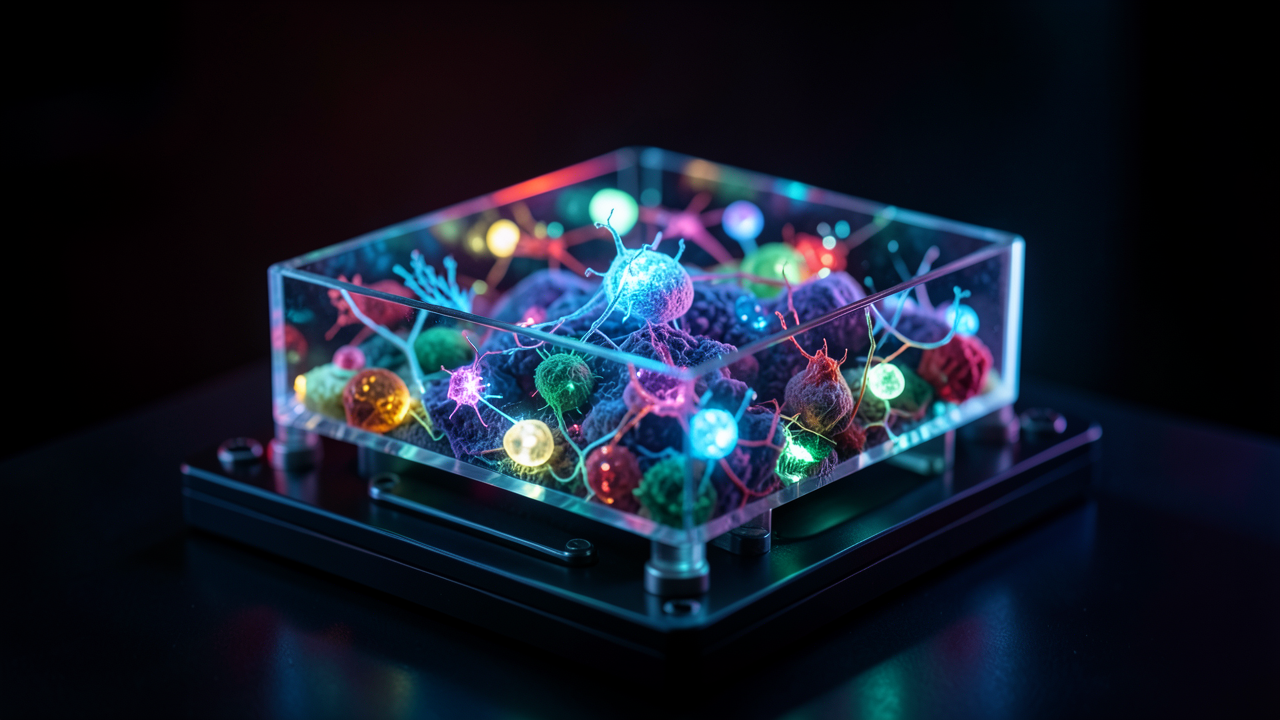
A research team at the Brazilian National Center for Research in Energy and Materials (CNPEM) has developed a groundbreaking microfluidic-based microscopic platform for 3D cell culture. This innovative device possesses the capability to more faithfully mimic the complex structure and physiological functions of human tissues compared to conventional 2D cell cultures and animal models. This advancement dramatically improves the accuracy of toxicology testing and efficacy evaluation for drug candidates, nanomaterials, and environmental pollutants, making a significant contribution to reducing animal testing and enhancing research ethics.
Technical/Clinical Details
The developed platform constructs 3D cell culture models on microfluidic chips, integrating intricate fluidic channels and chambers. This design enables cells to engage in three-dimensional interactions closely resembling the in vivo environment, exhibiting tissue-specific physiological responses. Researchers have successfully co-cultured various cell types (e.g., hepatocytes, neurons, tumor cells) within this system, recreating complex biological processes such as angiogenesis and tissue remodeling. Crucially, the platform allows for detailed analysis of drug metabolic pathways and toxicity mechanisms, providing more reliable data during drug discovery’s lead optimization phase and toxicology screening. This capability reduces the failure rate of costly and time-consuming animal studies, thereby accelerating progression to clinical trials.
Background & Context
Animal testing in pharmaceutical development has long faced ethical concerns, alongside issues of poor predictability for human outcomes. Approximately 90% of drug candidates fail in clinical trials, partly due to biological differences between animal models and humans. Against this backdrop, the development of in vitro models like ‘organ-on-a-chip’ and 3D cell culture has intensified. CNPEM’s technology offers a highly biomimetic system, enhancing the efficiency and reliability of drug discovery research and marking a significant ethical advancement in animal welfare. It actively promotes research and development compliant with the international ‘3R principles’ (Replacement, Reduction, Refinement).
Strategic Significance & Outlook
The microfluidic 3D cell culture platform developed by CNPEM holds the potential to revolutionize drug discovery and toxicology research. Future applications are expected to expand to the development of multi-organ-on-a-chip systems and the creation of complex disease-specific in vitro models (e.g., tumor microenvironments, neurodegenerative disease models). This will contribute to the advancement of personalized medicine, with potential use as a tool for predicting individual patient drug responses. The widespread adoption of this technology will enable faster and more cost-effective research and development across pharmaceutical companies, chemical manufacturers, and environmental science sectors, ultimately leading to safer and more effective products for society.
Source: https://www.eurekalert.org/news-releases/1144285
Get our weekly technology intelligence — free
Receive an infographic that lets you judge at a glance whether each field’s analysis report is worth reading.
Subscribe Free — Weekly Tech Intelligence
By subscribing, you’ll receive Troy-Technical’s weekly technology intelligence newsletter.
- Your email and selected fields are used only to deliver the newsletter.
- We never share your information with third parties.
- You can unsubscribe anytime via the link in each email.
See our Privacy Policy for details.
Takes about a minute · Unsubscribe anytime





Comments