Key Findings: Aspen Neuroscience Publishes Preclinical Data for Parkinson’s Disease iPSC Therapy Sasineprocel in Cell Stem Cell
Aspen Neuroscience has announced the publication of detailed preclinical data for Sasineprocel, its investigational autologous induced pluripotent stem cell (iPSC)-derived cell therapy for Parkinson’s disease, in the internationally renowned academic journal Cell Stem Cell. This publication reinforces the scientific and technological foundation of Sasineprocel, the company’s leading pipeline candidate, significantly elevating its potential as a disease-modifying therapeutic approach for Parkinson’s patients.
Technical & Clinical Details: Personalized Dopaminergic Neuron Replacement Therapy from Patient-Derived iPSCs
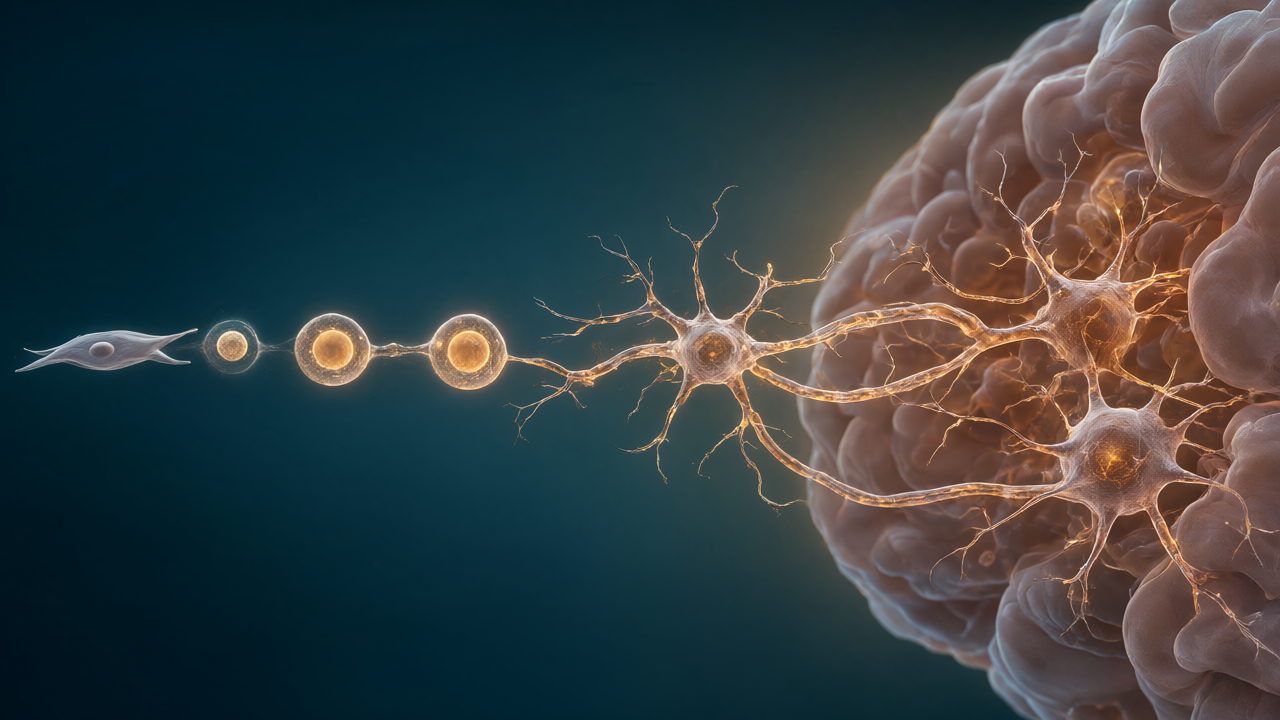
Sasineprocel is an innovative personalized medicine approach aimed at replacing the degenerated dopaminergic neurons that underlie the pathophysiology of Parkinson’s disease. This therapy involves first establishing iPSCs from the patient’s own skin cells. These iPSCs are then precisely differentiated into dopaminergic neurons, which produce dopamine—a neurotransmitter essential for alleviating Parkinson’s symptoms. The differentiated cells are subsequently transplanted into specific regions of the patient’s brain (typically the striatum), with the expectation of restoring lost neuronal function, slowing disease progression, and improving symptoms. The preclinical data published in Cell Stem Cell are presumed to detail the purity, viability, and functional characteristics (e.g., dopamine production capability, integration into neural circuits) of the iPSC-derived dopaminergic neurons, as well as their efficacy in improving disease symptoms in animal models. This data provides a strong scientific rationale for advancing into human clinical trials, focusing on both safety and efficacy.
Background & Context: Unmet Needs in Parkinson’s Disease Treatment and iPSC Innovation
Parkinson’s disease is a progressive neurodegenerative disorder with increasing prevalence in aging populations, characterized by motor symptoms such as tremor, bradykinesia, and postural instability, alongside non-motor symptoms. Current treatments are primarily symptomatic and do not halt disease progression or fundamentally modify the underlying pathology. Amidst this high unmet medical need, cell replacement therapy using iPSC technology is considered one of the most promising approaches, offering the potential to slow disease progression or restore function by directly replacing lost cells. Autologous iPSC therapy, utilizing a patient’s own cells, offers the significant advantage of a reduced risk of immune rejection.
Strategic Significance & Outlook: Clinical Trial Design and Regulatory Consultations
The publication in Cell Stem Cell represents a crucial milestone for Aspen Neuroscience, poised to accelerate the clinical development of Sasineprocel. Moving forward, the company is expected to disclose detailed clinical trial designs, primary endpoints, and patient selection criteria as it progresses into later phases of clinical trials. Continuous consultation with regulatory authorities, particularly the FDA, will be essential to formulate appropriate clinical development strategies for verifying both safety and efficacy. If Sasineprocel demonstrates positive results in clinical trials, it could be brought to market as a groundbreaking treatment, dramatically improving the quality of life for Parkinson’s patients. Progress in this area will also significantly influence the development of iPSC-based therapies for neurodegenerative diseases in general.
Get our weekly technology intelligence — free
Receive an infographic that lets you judge at a glance whether each field’s analysis report is worth reading.
Subscribe Free — Weekly Tech Intelligence
By subscribing, you’ll receive Troy-Technical’s weekly technology intelligence newsletter.
- Your email and selected fields are used only to deliver the newsletter.
- We never share your information with third parties.
- You can unsubscribe anytime via the link in each email.
See our Privacy Policy for details.
Takes about a minute · Unsubscribe anytime





Comments