

Key Findings
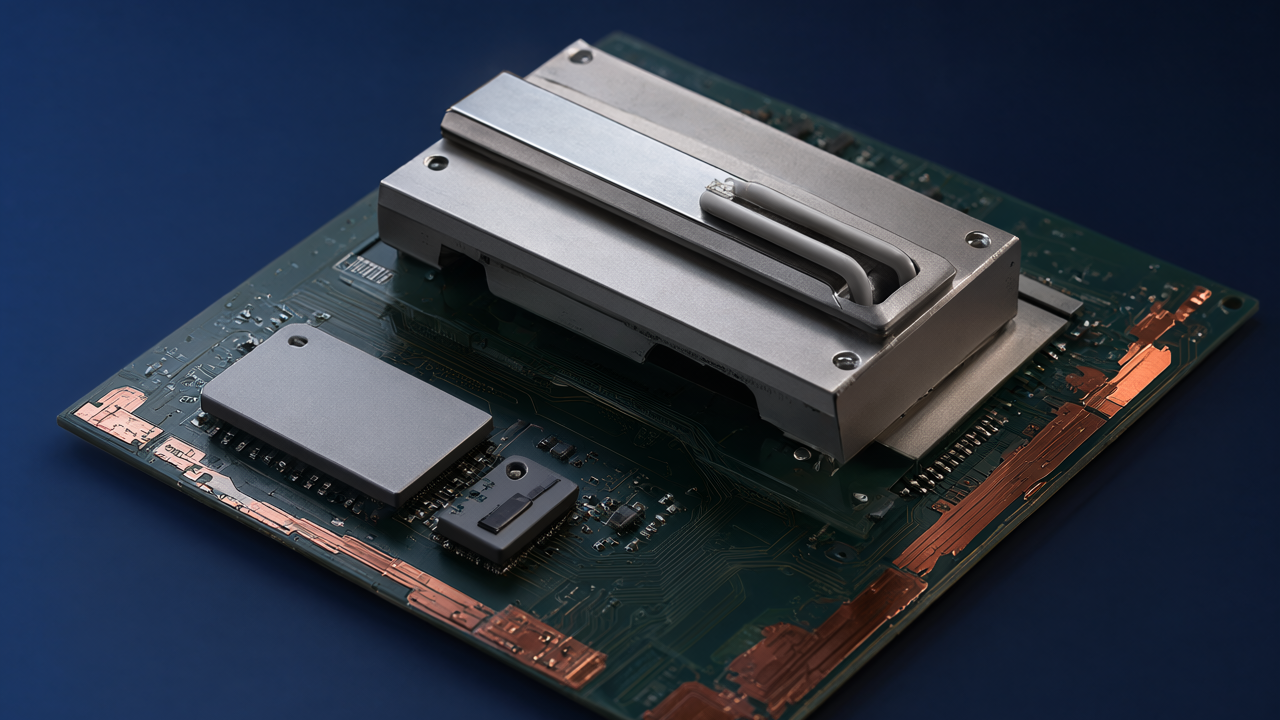
Infineon Technologies has commenced sampling its Smart Power Stage (SPS) chips for AI accelerators, capable of delivering up to 120 Amperes (A) of high current. This new power stage achieves an industry-leading power density of 2A/mm² within a compact 6x6x0.8mm package, contributing to enhanced AI chip performance and power efficiency. This innovation is specifically designed for integration with vertical power delivery architectures and liquid cooling systems in AI data centers.
Technical / Clinical Details
The SPS chip, now being sampled by Infineon, is engineered to provide the high efficiency and density required for the core voltage regulators (VRM) of AI accelerators. Key technical features include:
- 120A High Current Capability: Each SPS chip can independently supply up to 120 Amperes, meeting the extremely high power demands of AI chips. This is expected to simplify VRM circuits and reduce implementation area.
- Industry-Leading Power Density (2A/mm²): Achieving this power density in a small 6x6x0.8mm package saves valuable space on AI server boards, allowing for more AI chips and memory.
- Integrated OptiMOS 6 MOSFETs: Integrating high-efficiency OptiMOS 6 power MOSFETs minimizes energy loss during power conversion, improving the overall power efficiency of the AI accelerator.
- Optimization for Vertical Power Delivery Architectures: Power delivery to AI chips is shifting from traditional horizontal routing to Vertical Power Delivery (VPD), which supplies power directly from the back of the PCB to the chip. This SPS chip is designed with VPD compatibility in mind, minimizing resistance in the power delivery path and reducing noise.
- Integration with Liquid Cooling Systems: Integration with liquid cooling systems, essential for high-heat AI chips, is also considered. Placing SPS chips closer to heat sources improves cooling efficiency and supports stable operation of AI systems.
These features are crucial for maximizing the performance of AI accelerators and reducing data center operating costs and environmental impact.
Background & Context
The rapid proliferation of generative AI has led to an explosive demand for high-performance AI accelerators, such as Nvidia’s H100/H200 and next-generation AI chips. These AI chips consume thousands of watts of power, and their stable supply and efficient thermal management are the biggest challenges for data centers. Traditional VRM solutions have struggled to meet such power demands and high-density requirements. Leading power semiconductor companies like Infineon are developing innovative power stage technologies to solve these challenges, playing a critical role in physically supporting AI data center infrastructure. Vertical Power Delivery and liquid cooling are rapidly emerging as standard technologies for next-generation AI infrastructure.
Future Outlook
Infineon’s sampling of the 120A SPS chip will significantly impact the power delivery infrastructure of AI data centers. This high-power-density, high-efficiency power stage will enable enhanced AI chip performance, facilitating the development and deployment of larger and more complex AI models. In the future, Infineon’s power stages, integrated into vertical power delivery architectures and liquid cooling systems, are expected to become standard components in AI data centers, contributing to further high-density integration, improved energy efficiency, and enhanced reliability. Through this technology, Infineon will establish its position as a key player leading power efficiency and performance in the AI era.
Source: https://www.thelec.net/news/articleView.html?idxno=14217
Get our weekly technology intelligence — free
Receive an infographic that lets you judge at a glance whether each field’s analysis report is worth reading.
Subscribe Free — Weekly Tech Intelligence
By subscribing, you’ll receive Troy-Technical’s weekly technology intelligence newsletter.
- Your email and selected fields are used only to deliver the newsletter.
- We never share your information with third parties.
- You can unsubscribe anytime via the link in each email.
See our Privacy Policy for details.
Takes about a minute · Unsubscribe anytime