


Key Findings
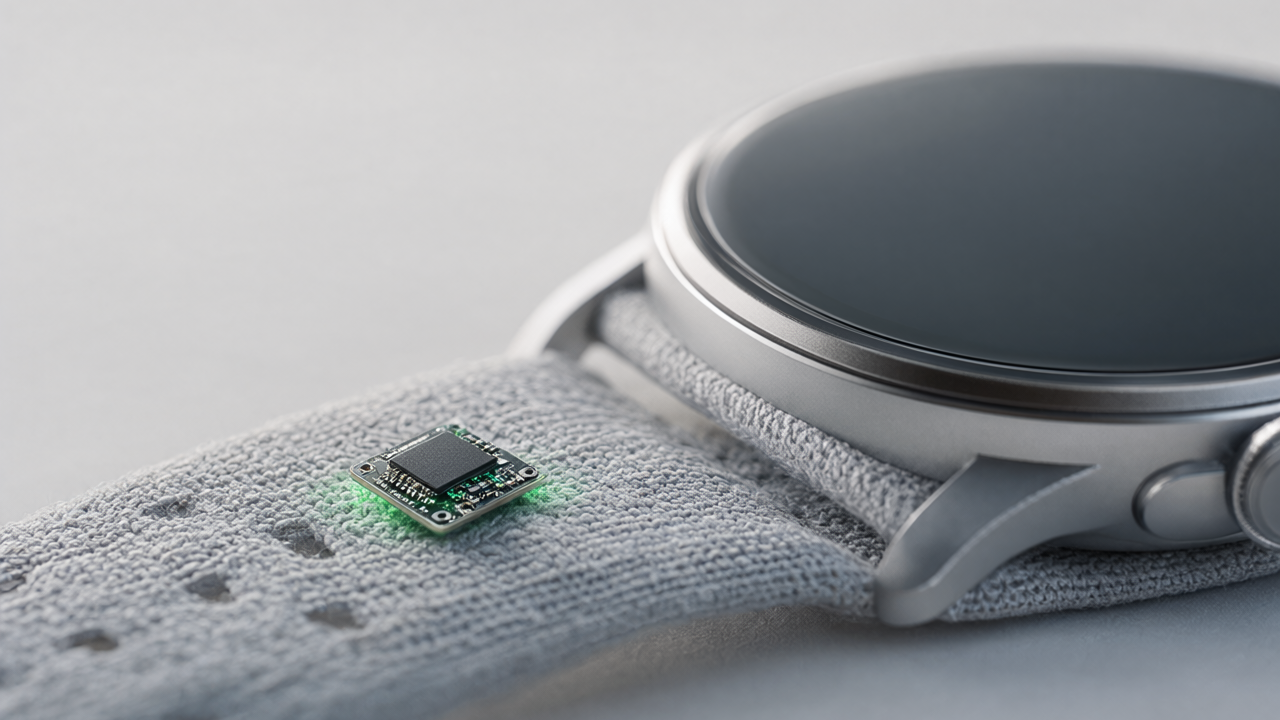
Qualcomm has achieved a significant breakthrough by integrating 1-bit AI model support into its latest Snapdragon wearable platforms, demonstrating up to an 80% reduction in power consumption for AI processing. This pioneering development enables sophisticated on-device AI capabilities in power-constrained, compact devices such as smartwatches, drastically boosting performance and efficiency across the wearable sector.
Technical / Clinical Details
The 1-bit AI models introduced by Qualcomm represent a neural network’s parameters using just a single bit, a radical departure from conventional 32-bit floating-point or 8-bit integer models. This dramatically shrinks computational complexity and memory footprint. Consequently, power required for AI operations is cut by up to 80%, alongside a substantial decrease in memory usage. This technology empowers efficient execution of complex AI tasks—such as voice recognition, health monitoring, and gesture recognition—within the limited resources of wearable devices. By enabling AI inference to occur entirely on-device, it eliminates latency associated with cloud reliance, accelerates response times, and bolsters the privacy protection of personal data.
Background & Context
The wearable device market has consistently grappled with significant challenges posed by battery life and form factor constraints. Concurrently, there is a surging demand for more personalized and intelligent functionalities, elevating the necessity for on-device AI. Qualcomm’s adoption of 1-bit AI models marks a pivotal stride in addressing these conflicting requirements. The broader AI chip market is increasingly prioritizing edge AI, with a particular demand for low-power, high-performance solutions. Qualcomm is leveraging its proven edge AI expertise from the mobile sector to strengthen its leadership in wearables.
Future Outlook
The deployment of this technology positions Snapdragon-powered wearable devices to deliver extended battery life coupled with enhanced AI capabilities. Smartwatches are poised to evolve beyond mere notification tools into sophisticated health assistants and interactive companions. Furthermore, by demonstrating the viability of 1-bit models in edge AI, this innovation is expected to find applications across a wide array of IoT devices and low-power embedded systems. Qualcomm, through this technology, is set to drive standardization and innovation not only in the wearable market but also across the broader edge AI ecosystem.
Source: https://www.thelec.net/news/articleView.html?idxno=14188
Get our weekly technology intelligence — free
Receive an infographic that lets you judge at a glance whether each field’s analysis report is worth reading.
Subscribe Free — Weekly Tech Intelligence
By subscribing, you’ll receive Troy-Technical’s weekly technology intelligence newsletter.
- Your email and selected fields are used only to deliver the newsletter.
- We never share your information with third parties.
- You can unsubscribe anytime via the link in each email.
See our Privacy Policy for details.
Takes about a minute · Unsubscribe anytime