Key Findings
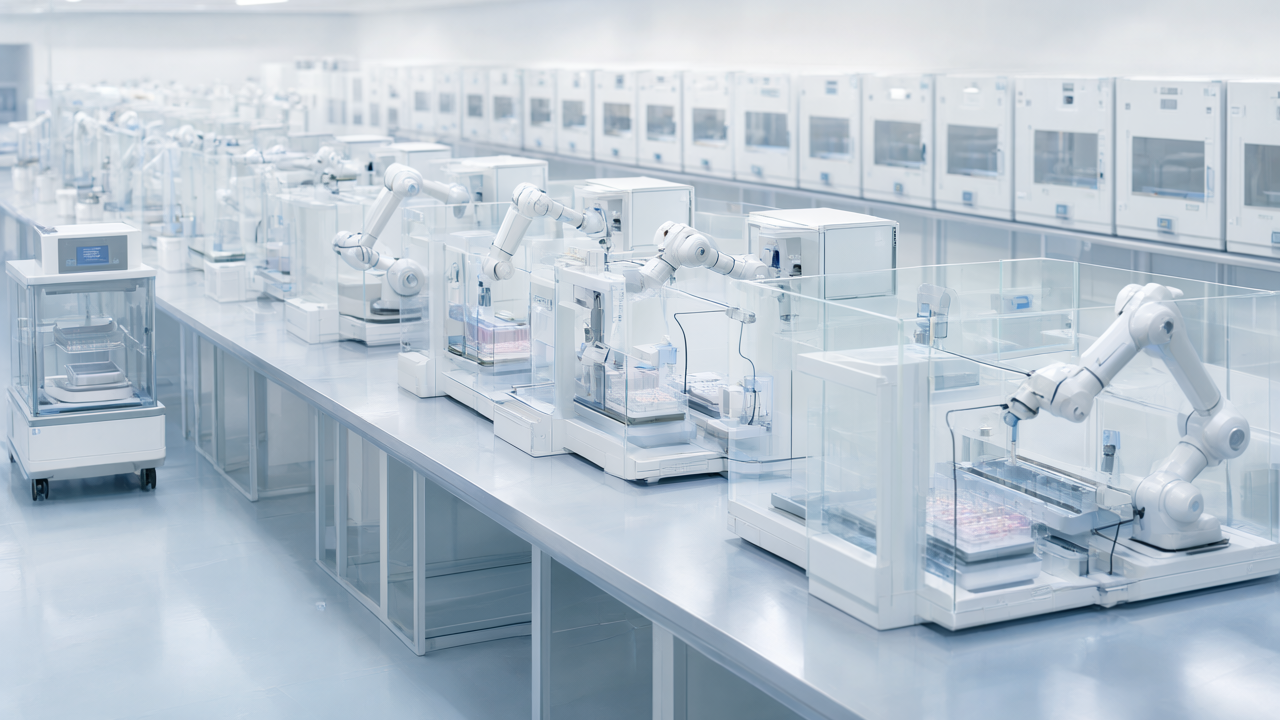
Danaher Corporation has announced the launch of its inaugural AI-powered autonomous lab at Abcam, a move expected to dramatically accelerate life sciences research, especially in the discovery of critical affinity reagents such as antibodies. This innovative lab aims to deliver an impressive 8x faster discovery process and a tenfold increase in annual reagent generation capabilities.
Technical / Clinical Details
At the core of this autonomous lab is an integrated AI system that autonomously designs, builds, and tests reagents. The results from these tests are then fed back into the AI, enabling a continuous loop of learning and design optimization for subsequent reagent generations. This closed-loop system minimizes human intervention, allowing for rapid iteration and the identification of optimal reagents with unprecedented speed.
- **8x Faster Discovery**: The integration of AI and robotic automation drastically cuts down the time required for traditional antibody discovery workflows.
- **10x Increase in Reagent Generation**: Through process automation and AI-driven optimization, the lab can produce a significantly higher volume of reagents annually, addressing critical demands in research and development.
The facility combines technologies and expertise from various Danaher operating companies, along with contributions from Automata for device orchestration and advanced robotic automation. This synergy not only enhances the speed, scale, and quality of research but also establishes a more sustainable and efficient platform for future scientific breakthroughs.
Background & Context
The discovery of affinity reagents, such as antibodies, is a foundational yet often time-consuming and costly bottleneck in biopharmaceutical development and life sciences research. The rapid availability of high-quality reagents is crucial for advancing drug discovery, diagnostics, and fundamental biological understanding. The convergence of AI and robotics offers a transformative solution to these challenges, fundamentally reshaping the research and development paradigm. Faster and more efficient reagent discovery directly translates to quicker market entry for new diagnostics and therapies, ultimately benefiting patients by providing novel medical solutions sooner.
Strategic Significance & Outlook
Danaher’s establishment of this AI-powered autonomous lab signifies a critical shift in the life sciences sector, demonstrating how AI and automation can transcend mere efficiency gains to fundamentally alter the quality and pace of scientific discovery. This move is expected to bolster drug development pipelines and potentially enable research previously deemed unfeasible. It is anticipated that this model will be replicated across other research domains and industries, further accelerating the overall process of scientific innovation. This represents a significant step towards realizing personalized and precision medicine, making it a key development for researchers, engineers, and investors alike.
Get our weekly technology intelligence — free
Receive an infographic that lets you judge at a glance whether each field’s analysis report is worth reading.
Subscribe Free — Weekly Tech Intelligence
By subscribing, you’ll receive Troy-Technical’s weekly technology intelligence newsletter.
- Your email and selected fields are used only to deliver the newsletter.
- We never share your information with third parties.
- You can unsubscribe anytime via the link in each email.
See our Privacy Policy for details.
Takes about a minute · Unsubscribe anytime