


Key Findings
Synapse AI has launched Cognito-X, a multimodal large language model featuring a 1 million token context window and a 25% improvement in complex problem-solving benchmarks for real-world physical interactions. In robotics, ETH Zurich researchers achieved a 98% success rate in humanoid navigation across unstructured terrains using a reinforcement learning framework that anticipates obstacles 150ms in advance. Additionally, the OpenVis Alliance released OrionNet 2.0, enabling real-time volumetric video reconstruction at 60 FPS with a 30% reduction in volumetric error rates.
Technical Details
- Causal AI: MIT and DeepMind developed “CausalGraph-Net,” a deep learning architecture for climate modeling that identifies causal relationships with 92% accuracy.
- Edge Hardware: QuantumFabric’s Q-AI Edge Processor implements 256-bit post-quantum encryption for model weights and inferences, while increasing on-device inference speeds by 15% for NLP and vision tasks.
- Multimodal Models: QuantumSynapse AI introduced “NexusMind,” integrating text, image, audio, and sensor data for situated reasoning.
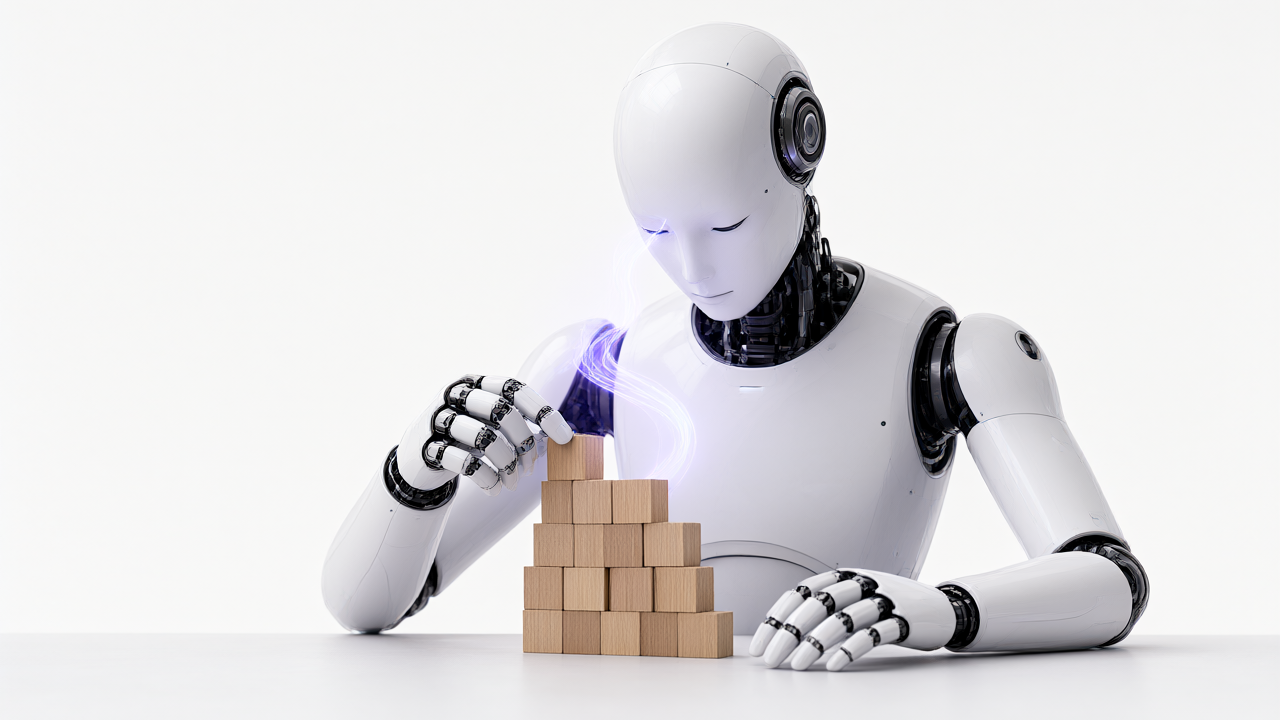
- Robotic Manipulation: OmniDex Robotics’ “Artisan” utilizes a 3D-aware neural network to handle deformable objects in unstructured environments.
Background & Context
The industry is moving toward “integrated intelligence.” This is evidenced by the OpenTensor Collective’s release of TensorFlow-Edge v3.0, which provides native support for photonic AI accelerators and neuromorphic processing units (NPUs). On the ethical front, Stanford HAI proposed “FairFlow,” an adaptive regularization technique for federated learning designed to ensure equitable performance across demographic subgroups.
Significance & Outlook
The transition from predictive AI to proactive interaction is driven by the integration of embodied reasoning and secure hardware. The combination of high-fidelity 3D reconstruction via OrionNet 2.0 and quantum-resistant edge processing ensures that decentralized AI applications can operate securely and realistically. These advancements move AI beyond mere correlation toward a deeper understanding of underlying physical and causal mechanisms.
Source: https://latentmusings.com/ai-timeline
Get our weekly technology intelligence — free
Receive an infographic that lets you judge at a glance whether each field’s analysis report is worth reading.
Subscribe Free — Weekly Tech Intelligence
By subscribing, you’ll receive Troy-Technical’s weekly technology intelligence newsletter.
- Your email and selected fields are used only to deliver the newsletter.
- We never share your information with third parties.
- You can unsubscribe anytime via the link in each email.
See our Privacy Policy for details.
Takes about a minute · Unsubscribe anytime