

Key Findings
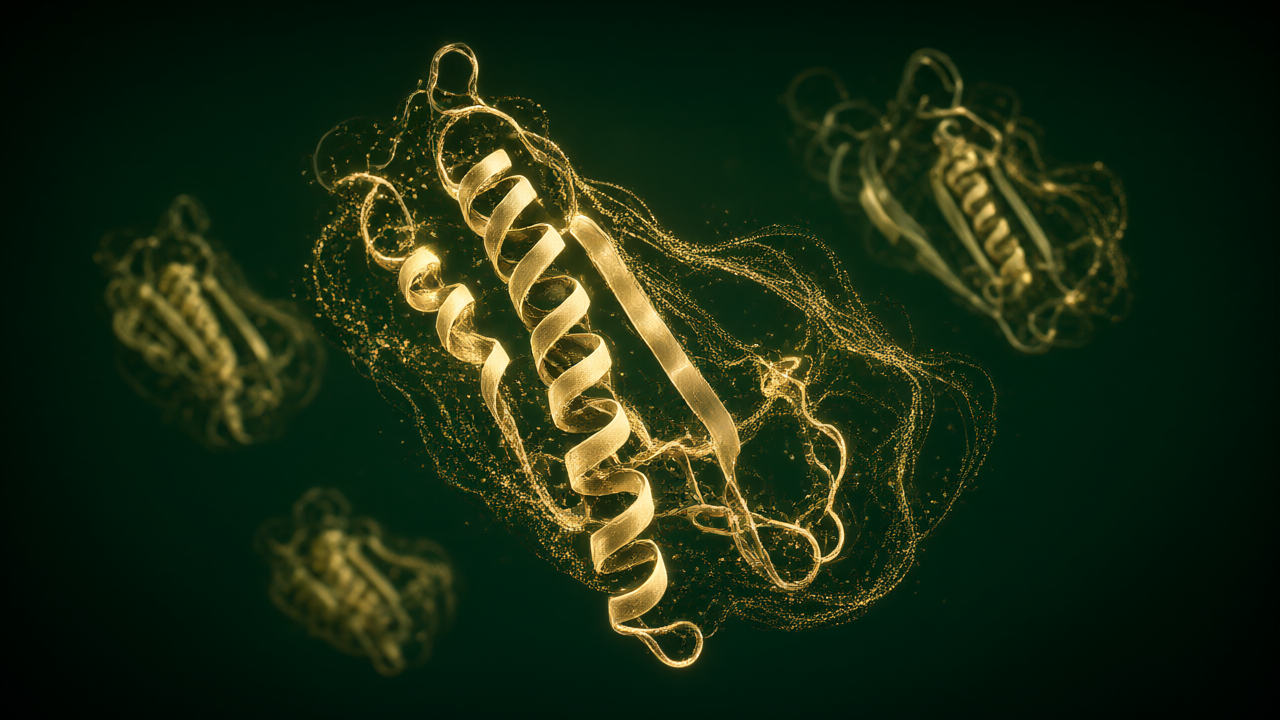
RFD4-Proteina has demonstrated significant performance gains over previous baselines, achieving five-fold to 10-fold higher design success rates and generating protein candidates five to 10 times faster. Lab bench tests confirmed these improvements across four benchmark suites: protein binding, small-molecule binding, enzyme scaffolding, and DNA binding. Researchers reported that tasks previously taking months, such as designing a pesticide-degrading enzyme or controlling glycan attachment to proteins, were completed in under a week or a few days.
Technical Details
Built on Nvidia’s NVIDIA BioNeMo™ platform, RFD4-Proteina combines programmable protein design with search capabilities. The model concurrently refines a protein’s sequence and structure alongside interacting molecules, ensuring that changes in one element lead to corresponding changes in others. Its architecture derives from two primary sources: the IPD’s RosettaFold Diffusion (a guided diffusion model) and Nvidia’s Proteina-Complexa (a generative model for protein binder design). Proteina-Complexa utilizes a pretrained flow-based generative model built on the La-Proteina AI model for atomistic design and incorporates inference-time optimization.
Background & Context
The project was led by UW PhD students Nathaniel Corley, Maxwell Kazman, and Rafi Brent, with visiting student Kieran Didi. Funding was provided by several organizations, including the Howard Hughes Medical Institute, the Grantham Foundation, Schmidt Sciences, and the Gates Foundation, the latter of which committed $25,748,619 via a November 2025 grant. The model is released under the Berkeley Software Distribution (BSD-3) license and is available through partners including Google Cloud, Amazon Bio Discovery, OpenAI, Anthropic’s Claude Science, Hugging Face, Databricks, Benchling, Nebius, and Tamarind Bio.
Significance & Outlook
By remaining open-source, RFD4-Proteina allows researchers to prioritize candidates for lab testing more efficiently. Nobel laureate David Baker notes that the model shifts the field from discovering natural proteins to designing entirely new ones. Potential applications extend beyond medicine and drug discovery to sustainability, including the creation of bioplastics and new methods for breaking down polymers and pesticides.
Get our weekly technology intelligence — free
Receive an infographic that lets you judge at a glance whether each field’s analysis report is worth reading.
Subscribe Free — Weekly Tech Intelligence
By subscribing, you’ll receive Troy-Technical’s weekly technology intelligence newsletter.
- Your email and selected fields are used only to deliver the newsletter.
- We never share your information with third parties.
- You can unsubscribe anytime via the link in each email.
See our Privacy Policy for details.
Takes about a minute · Unsubscribe anytime