


Key Findings
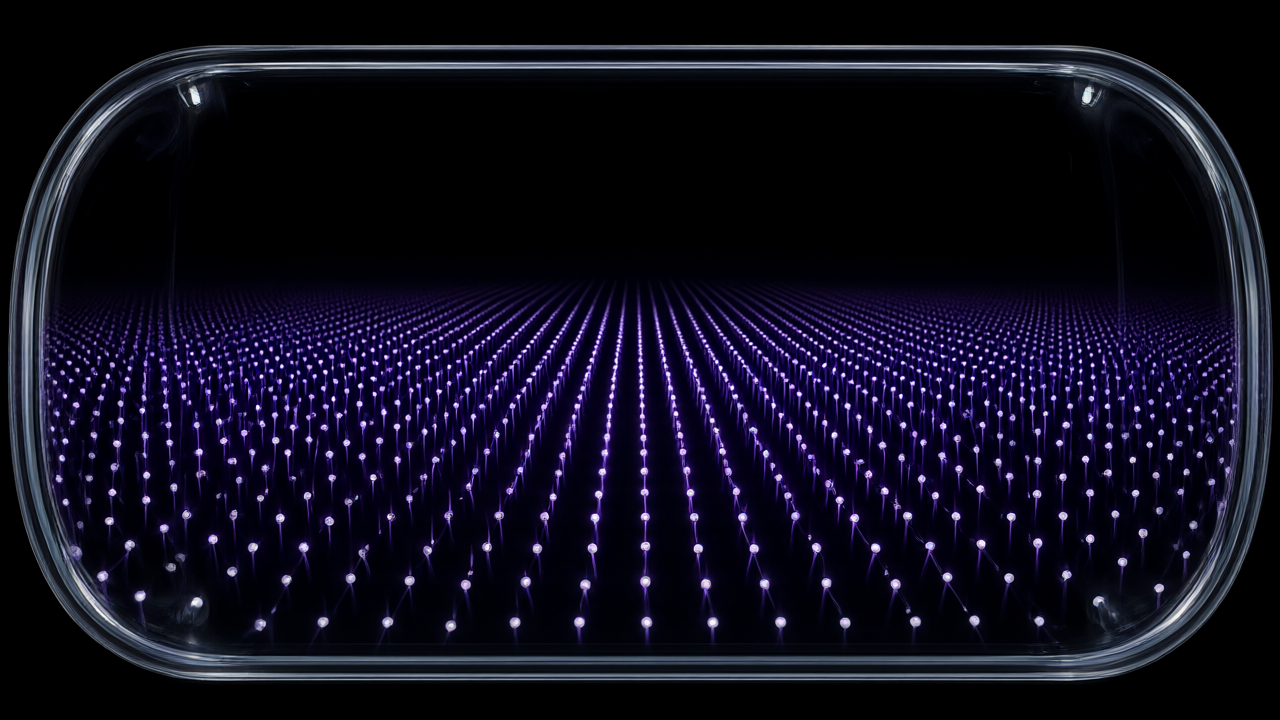
A comprehensive review published on arXiv (arXiv:2608.05010) reveals that China has matched or exceeded international peers in raw physical gate metrics and hardware scaling. Notable achievements include two-qubit gate fidelities exceeding 99.8%, constant-time parallel array rearrangements, and the trapping of over 11,000 atoms using metasurface-generated tweezer arrays.
Technical Details
- USTC: In August 2025, Pan Jianwei’s group implemented an AI-driven, constant-time atom rearrangement protocol, assembling 2,024-atom 2D and 3D arrays within 60 milliseconds. The system achieved a two-qubit gate fidelity of 99.84%, single-qubit fidelity of 99.97%, and readout fidelity of 99.92%.
- Tsinghua University: Zhai Hui’s group trapped an average of 11,022 neutral atoms across an 18,225-site grid using a 2-cm-diameter planar metasurface chip. Using the “Zhui Feng” graph neural network algorithm, sorting times for 10,000-atom scales were reduced to under 20 milliseconds.
- Fudan University & APM: Fudan developed quantum annealing architectures for NP-hard problems using 1,000-atom hardware. The Innovation Academy for Precision Measurement Science and Technology (APM) pioneered 87 Rb– 85 Rb entangling gates and fiber-array architectures.
Commercial Landscape
Several startups have moved toward deployable hardware. Zhongke Kuyuan launched Hanyuan 2 in 2026, a dual-core machine supporting over 500 optical tweezers with T2 coherence times exceeding 300 ms and a domestic component localization rate over 80%. Taiyi Liangsheng, founded in early 2026, focuses on 171 Yb platforms and has secured over ¥400 million in financing. Liangyi Wanxiang demonstrated a 500+ atom platform with 99.5% two-qubit fidelity, targeting a 1,000-qubit fault-tolerant platform by 2027. Additionally, Zhongqi Wuliang and Xuanxiang Technology are validating a million-tweezer metasurface optical chip.
Significance and Outlook
China has closed the gap in hardware scaling and supply chain maturity for lasers and vacuum systems. However, a significant gap remains in system-level quantum error correction and practical algorithmic fault tolerance compared to U.S. ventures, such as QuEra and Harvard, which have demonstrated transversal logical gates across 48 logical qubits.
Get our weekly technology intelligence — free
Receive an infographic that lets you judge at a glance whether each field’s analysis report is worth reading.
Subscribe Free — Weekly Tech Intelligence
By subscribing, you’ll receive Troy-Technical’s weekly technology intelligence newsletter.
- Your email and selected fields are used only to deliver the newsletter.
- We never share your information with third parties.
- You can unsubscribe anytime via the link in each email.
See our Privacy Policy for details.
Takes about a minute · Unsubscribe anytime