


Key Findings
In a Phase 1 study of JNJ-6143, 75% (12 out of 16) of patients with measurable disease achieved a confirmed complete or partial response based on RECIST criteria. Among 38 patients receiving the 50-mg once-daily dose, 77% achieved a confirmed reduction in prostate-specific antigen (PSA) levels of at least 50%, with 48% seeing reductions of at least 90%. At the time of analysis, 71% of patients in the 50-mg cohort remained on treatment with a median follow-up of 5.6 months.
Technical Details
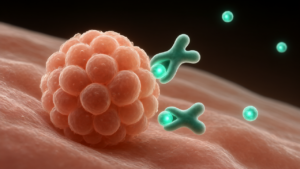
JNJ-6143 (formerly HLD-0915) is the first molecule from Johnson & Johnson’s Regulated Induced Proximity Targeting Chimera (RIPTAC) platform to enter clinical studies. It is a novel, once-daily oral small molecule designed to trigger cancer cell death via a targeted dual-protein lock. This mechanism links the androgen receptor (AR)—a tumor-selective protein highly expressed in prostate cancer cells—with BRD4, an essential cell survival protein, thereby disrupting cancer cell function.
Background and Context
The study targeted patients with advanced prostate cancer who had received a median of four prior therapies, including chemotherapy and PSMA-targeted radioligand therapy. This population includes those with metastatic androgen pathway modulation-resistant prostate cancer (mAPMR), also known as metastatic castration-resistant prostate cancer (mCRPC), where median overall survival is approximately two to three years. The Phase 1 trial (NCT06800313) was designed to evaluate safety and anti-tumor activity to identify the optimal dose for further development.
Significance and Outlook
The most common treatment-related adverse events were elevated cholesterol (18%), nausea (16%), and elevated triglyceride levels (16%). Adverse events led to dose interruption in 11% of patients, dose reduction in 3%, and discontinuation in 3%. Based on these data, the 50-mg once-daily dose will proceed to a Phase 2 study (NCT07832292) in metastatic prostate cancer. The company intends to further explore the RIPTAC platform across various other cancer types.
Source: https://www.aol.com/articles/johnson-johnson-reports-75-tumor-073000000.html
Get our weekly technology intelligence — free
Receive an infographic that lets you judge at a glance whether each field’s analysis report is worth reading.
Subscribe Free — Weekly Tech Intelligence
By subscribing, you’ll receive Troy-Technical’s weekly technology intelligence newsletter.
- Your email and selected fields are used only to deliver the newsletter.
- We never share your information with third parties.
- You can unsubscribe anytime via the link in each email.
See our Privacy Policy for details.
Takes about a minute · Unsubscribe anytime