

Key Findings
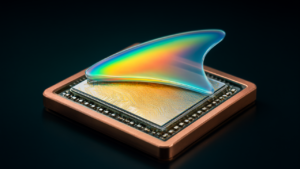
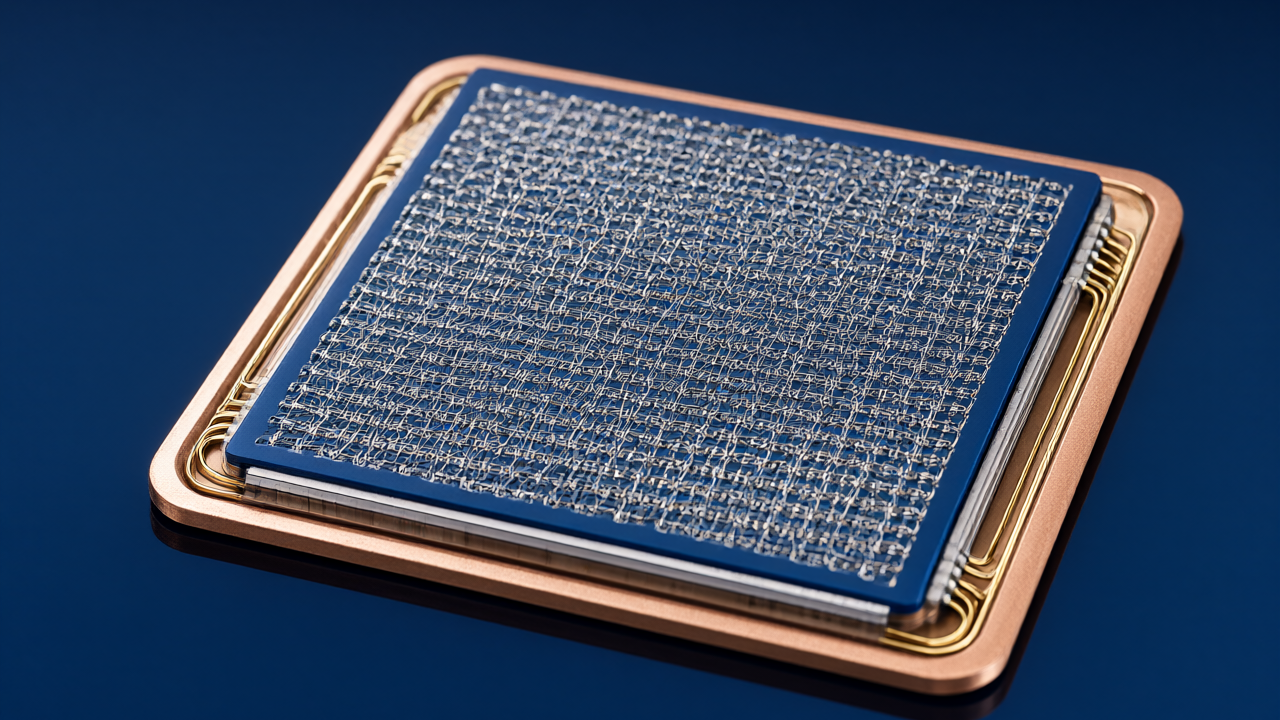
IBM has reported significant technical progress toward its 2029 goal of deploying “Starling,” a fault-tolerant quantum computer. The most critical achievement is a redesigned processor that reduces the number of Josephson junctions from approximately 5,000 to 2,000. Based on a 99.95% individual junction success rate, IBM projects that the proportion of fully functional chips will improve fourfold, rising from roughly 1 in 12 to 1 in 3.
Technical Details
- Processor Architecture: By reducing qubit connectivity from 6 to 5, IBM improved logical error rates by 20 to 100 times. The “c-coupler” length was extended to 20mm, and wiring layers were increased from 2 to 3.
- Error Correction: Utilizing quantum Low-Density Parity-Check (qLDPC) codes, IBM aims to reduce physical qubit requirements by a factor of 10 compared to previous methods. The “Relay-BP” decoder has reached the performance levels required for Starling.
- Hardware Integration: IBM is developing a dedicated ASIC using a 2nm nanosheet process to execute the decoder algorithm in real-time. For inter-processor connectivity, “l-couplers” have demonstrated an average error rate of 1% (best result 0.7%), though the target for Starling is 0.1%.
- Cryogenic Infrastructure: A new rectangular modular cryostat has been introduced to allow side-by-side expansion. This system supports flexible wiring, with one section accommodating up to 1.54km of cabling.
Background & Context
Quantum computers utilize qubits to process information via superposition, but they are highly sensitive to environmental noise. To combat this, IBM uses “logical qubits,” which distribute information across multiple physical qubits to detect and correct errors. The Starling project follows a phased roadmap: the “Kookaburra” modular processor in 2026 and the “Cockatoo” multi-module system in 2027.
Significance & Outlook
The transition to a modular architecture—combining quantum memory and Logical Processing Units (LPU)—is designed to lower manufacturing risks and increase yield. The ultimate success of Starling depends on integrating these individual breakthroughs in cryogenic control, real-time error correction, and large-scale cooling into a single stable system by 2029.
Source: https://www.solnews.co.kr/news/articleView.html?idxno=85172
Get our weekly technology intelligence — free
Receive an infographic that lets you judge at a glance whether each field’s analysis report is worth reading.
Subscribe Free — Weekly Tech Intelligence
By subscribing, you’ll receive Troy-Technical’s weekly technology intelligence newsletter.
- Your email and selected fields are used only to deliver the newsletter.
- We never share your information with third parties.
- You can unsubscribe anytime via the link in each email.
See our Privacy Policy for details.
Takes about a minute · Unsubscribe anytime