

Key Findings
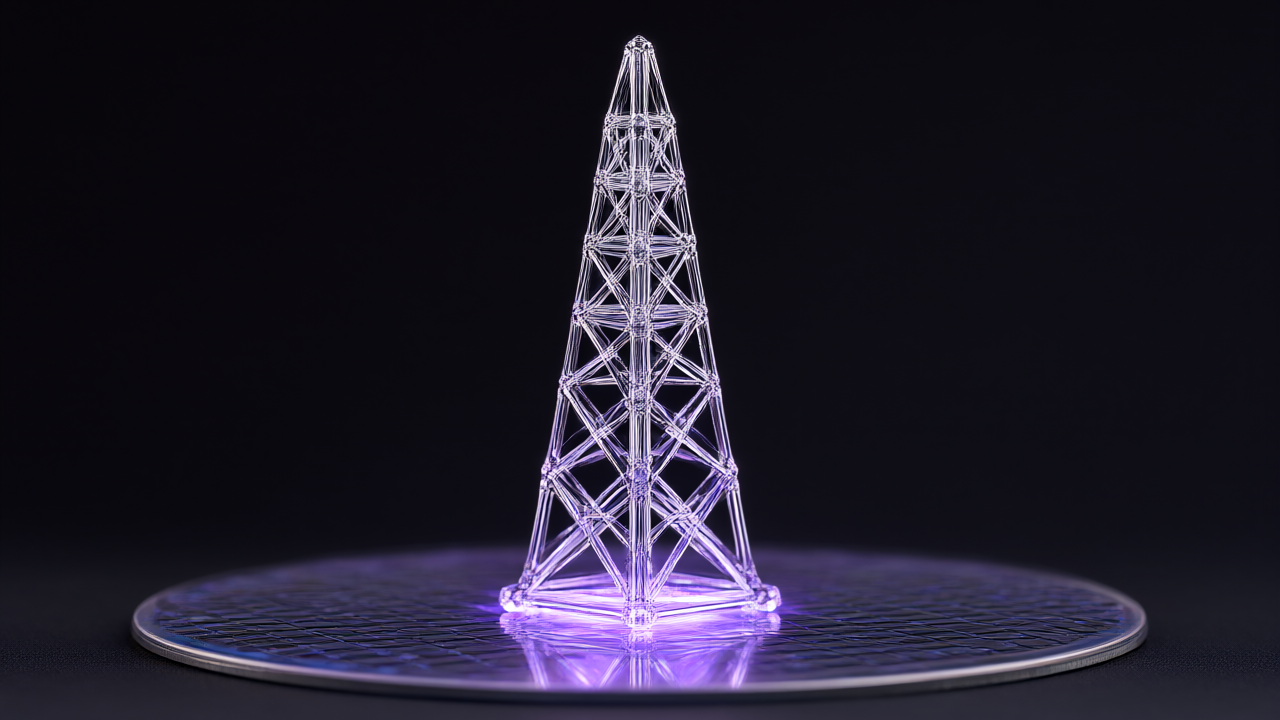
The study reports a record tensile strength of 5.94 ± 0.45 GPa for 3D nanoprinted silica glass when heated to 1000°C, with a modulus of approximately 77 GPa. These values roughly triple the strength of pyrolytic carbon and exceed the strongest commercial glass fibers. The researchers successfully mapped the transition of the material from a rubber-like hybrid polymer to a brittle, transparent glass through a controlled heat treatment process.
Technical Details
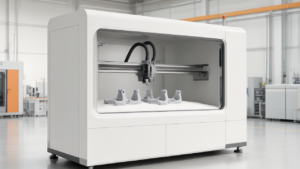
The team utilized a Nanoscribe Photonic Professional GT2 to print parts using a resin based on polyhedral oligomeric silsesquioxane (POSS), combined with an acrylate from Sartomer and a photoinitiator. The conversion process followed these stages:
- Untreated: Rubber-like behavior with 129 MPa tensile strength and over 60% elongation.
- 300°C: Increased stiffness and strength (4 to 6 times) due to heat-driven crosslinking.
- 440°C: Material became brittle and ceramic-like; tensile strength reached the gigapascal range, while elongation dropped to about 9%.
- 700°C to 1000°C: Tensile strength rose from 4.17 ± 0.46 GPa to 5.94 ± 0.45 GPa.
Infrared spectroscopy confirmed that the silica network became the main load-bearer at 440°C, with a dense fused silica spectrum appearing after 700°C. This network formed more than 500°C below the melting point of SiO2. Mass loss stabilized above 600°C, with a remaining mass of approximately 32%.
Background & Context
While 2PP is a leading method for small-scale polymer printing, converting these prints to glass often relies on empirical heating schedules. Previous methods include the 2021 University of Freiburg approach using Glassomer (silica nanoparticles in a binder) and a 2018 Vilnius University process using SZ2080 to create glass-ceramics via sintering at 1500°C. Unlike these nanoparticle-based routes, the KIT method converts molecular POSS cages.
Significance & Outlook
The ability to stop heat treatment at specific intervals allows for the tuning of stiffness and strength across two orders of magnitude. This flexibility is particularly useful for microsystems containing temperature-sensitive components, such as conductive aluminum layers. The study concludes that a self-supporting inorganic network must form before the organic framework breaks down to ensure high-fidelity precision.
Get our weekly technology intelligence — free
Receive an infographic that lets you judge at a glance whether each field’s analysis report is worth reading.
Subscribe Free — Weekly Tech Intelligence
By subscribing, you’ll receive Troy-Technical’s weekly technology intelligence newsletter.
- Your email and selected fields are used only to deliver the newsletter.
- We never share your information with third parties.
- You can unsubscribe anytime via the link in each email.
See our Privacy Policy for details.
Takes about a minute · Unsubscribe anytime