Key Findings
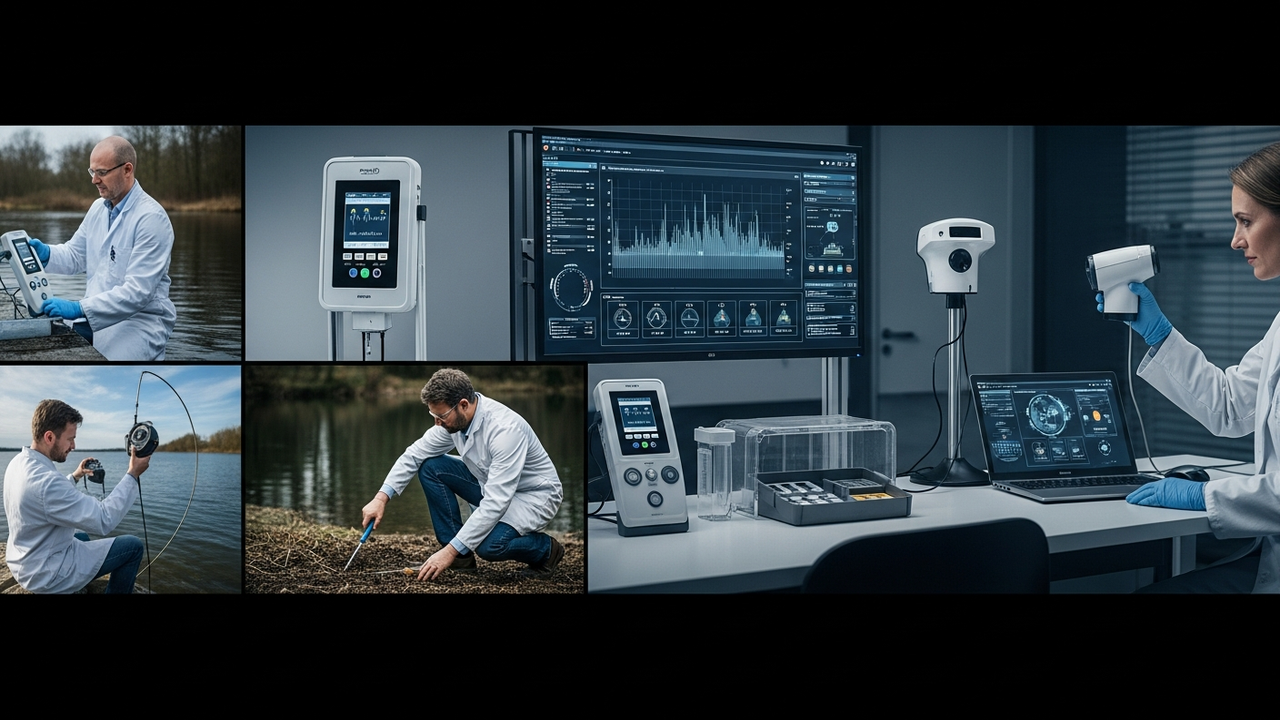
Point-of-care testing (POCT) technologies are increasingly leveraging their speed, simplicity, and on-site capabilities to expand into the field of environmental diagnostics. Once primarily used in medical settings for pathogen and biomarker detection, POCT is now emerging as an indispensable tool for monitoring water, soil, and air quality, and for rapidly responding to hazardous material incidents. This development represents a significant advancement in environmental protection and public health.
Technical & Clinical Details
- Rapid On-Site Analysis: POCT technologies eliminate the need for specialized laboratory equipment, allowing for direct sample analysis at the site of concern. This capability provides swift data acquisition during contamination events or emergencies, dramatically accelerating the identification of pollution sources, assessment of contamination scope, and formulation of response strategies.
- Diverse Environmental Media Applications:
- Water Quality Monitoring: POCT can monitor a wide range of water parameters in real-time, including heavy metals, pesticides, and bacteria in drinking water, as well as antibiotic residues in wastewater. For example, microfluidic-based biosensors can detect waterborne pathogens within minutes.
- Soil Diagnostics: In agriculture, rapid analysis of soil nutrient levels, pH, pathogens, and pesticide residues enables informed decision-making for precision agriculture and soil remediation efforts. Portable sensors provide instantaneous field data, promoting smart farming practices.
- Air Pollution Monitoring: Sensor networks are being developed for real-time surveillance of airborne pollutants such as PM2.5 and VOCs (volatile organic compounds), and even for detecting biological agents that could pose bioweapon threats.
- Cost-Effectiveness and Ease of Use: POCT devices typically require minimal reagents and complex instrumentation, leading to lower operational costs. They are designed for easy operation by non-specialized personnel, which is particularly advantageous in resource-limited areas or emergency situations.
Background & Industry Context
With global environmental pollution issues intensifying, the importance of environmental monitoring has never been greater. Traditional environmental analysis often involved collecting samples, sending them to specialized laboratories, and waiting for time-consuming results. This approach proved inadequate, especially during emergencies or when dynamic environmental changes needed to be captured. The introduction of POCT technologies is a breakthrough that overcomes these temporal and spatial constraints, enabling faster and more accurate environmental management. The advancements in digitalization and IoT technologies further enhance data collection and analysis from POCT sensors, fostering new applications in smart cities and smart agriculture.
Strategic Significance & Outlook
The future of POCT technologies in environmental diagnostics is poised for further evolution through the integration of AI and machine learning. This will improve the accuracy of anomaly detection and predictive analysis from sensor data, making early warning systems for environmental risks a reality. Furthermore, advancements in self-calibration and low-power consumption technologies will facilitate long-term, autonomous operation of sensor networks. Through collaboration among governments, industries, and research institutions, these technologies are expected to provide sustainable solutions to global environmental challenges, significantly contributing to human health and ecological preservation.
Get our weekly technology intelligence — free
Receive an infographic that lets you judge at a glance whether each field’s analysis report is worth reading.
Subscribe Free — Weekly Tech Intelligence
By subscribing, you’ll receive Troy-Technical’s weekly technology intelligence newsletter.
- Your email and selected fields are used only to deliver the newsletter.
- We never share your information with third parties.
- You can unsubscribe anytime via the link in each email.
See our Privacy Policy for details.
Takes about a minute · Unsubscribe anytime







Comments