Key Findings
Researchers have developed a novel in vivo bioorthogonal ligation strategy that generates functional antibody-drug conjugate (ADC) click constructs after systemic administration. This modular platform is designed to reverse drug resistance in heterogeneous tumors by significantly enhancing targeted drug delivery. Its efficacy has been demonstrably proven through improved anti-tumor activity observed in preclinical models.
Technical / Clinical Details
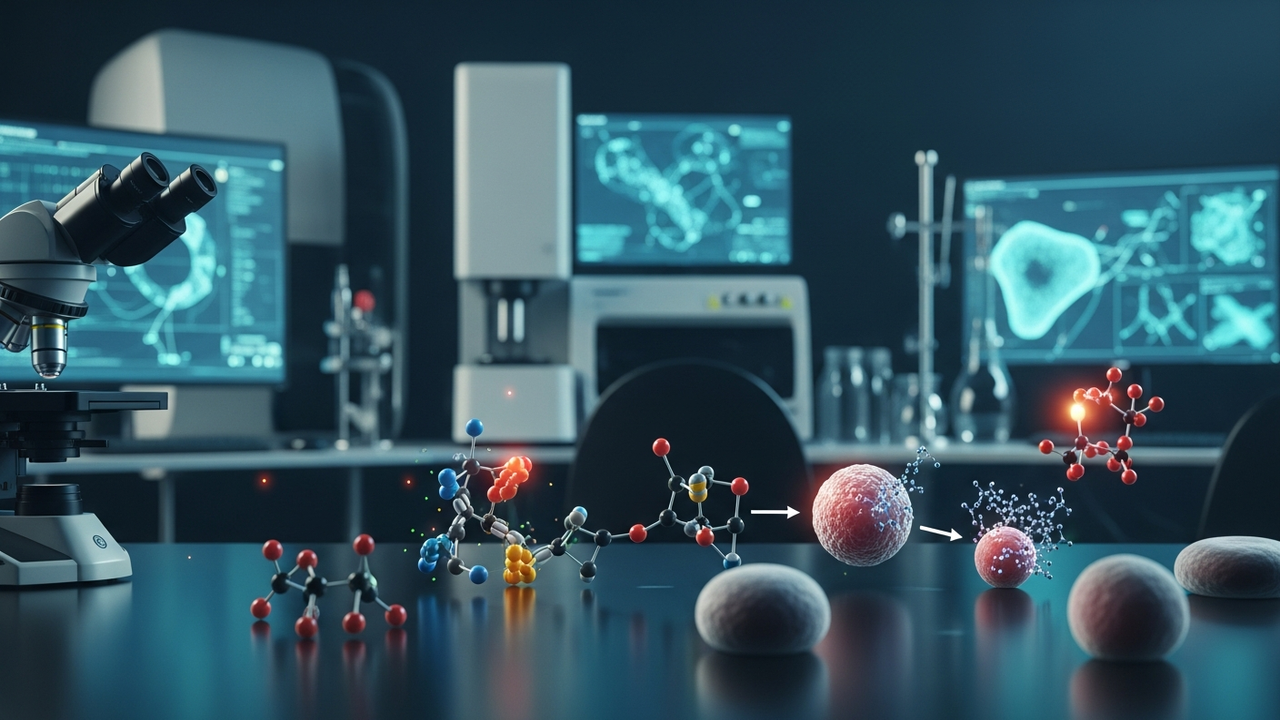
This innovative approach is based on a pre-targeting strategy. First, an antibody component (e.g., an antibody fragment or a targeting ligand) is administered and allowed to bind specifically to markers on cancer cell surfaces. Subsequently, a separate drug component (containing the payload and a reactive chemical handle) is administered systemically. These two components then undergo a selective and efficient ‘click’ reaction (bioorthogonal ligation) in vivo, forming a functional ADC directly at the tumor site. This system allows for enhanced stability of the ADC in systemic circulation while achieving high payload concentration specifically within the tumor microenvironment. A key challenge for existing ADCs has been the difficulty in achieving uniform drug distribution within heterogeneous tumors and overcoming resistance mechanisms such as drug efflux pumps or decreased target antigen expression. This modular in vivo click technology offers a potential solution by optimizing drug concentration in the tumor microenvironment and improving delivery efficiency to diverse tumor cell populations. In preclinical models, superior anti-tumor effects were observed in tumors with specific drug resistance mechanisms compared to conventional ADCs, highlighting its significant potential for overcoming resistance.
Background & Context
Antibody-drug conjugates have achieved considerable success as targeted cancer therapeutics; however, tumor heterogeneity and the emergence of drug resistance remain major challenges limiting their overall efficacy. Treatment effectiveness is reduced when cancer cells develop resistance to the payload or when ADCs fail to reach all tumor cells uniformly. In vivo bioorthogonal chemistry, a technique that allows specific chemical reactions to occur within living systems without interfering with native biomolecules, has garnered significant attention in drug delivery systems (DDS). This research applies bioorthogonal chemistry to ADCs, presenting a new paradigm to overcome these challenges and achieve more precise and potent cancer therapies.
Strategic Significance & Outlook
This modular in vivo antibody-ADC click platform offers a promising strategy for overcoming drug resistance in cancer treatment. Successful clinical translation of this technology could provide new therapeutic options for patients who have failed existing ADC therapies or whose tumors have developed resistance. The approach aims to simultaneously improve treatment safety and efficacy by enhancing tumor specificity and reducing systemic toxicity. Furthermore, its modularity, allowing rapid testing of various antibody and payload combinations, will accelerate new drug development. This innovative DDS technology holds the potential to significantly reshape the future direction of next-generation cancer therapeutics.
Source: https://pubmed.ncbi.nlm.nih.gov/42457957/
Get our weekly technology intelligence — free
Receive an infographic that lets you judge at a glance whether each field’s analysis report is worth reading.
Subscribe Free — Weekly Tech Intelligence
By subscribing, you’ll receive Troy-Technical’s weekly technology intelligence newsletter.
- Your email and selected fields are used only to deliver the newsletter.
- We never share your information with third parties.
- You can unsubscribe anytime via the link in each email.
See our Privacy Policy for details.
Takes about a minute · Unsubscribe anytime



Comments