Key Findings
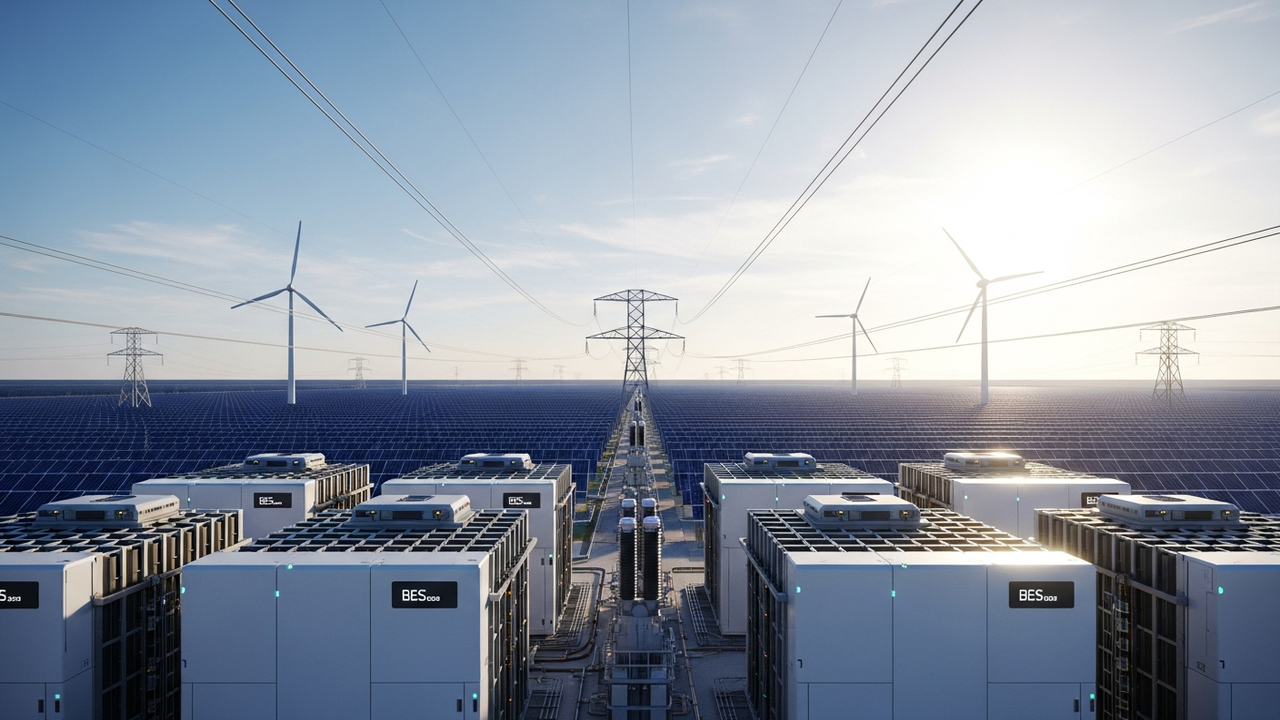
India is implementing a series of significant policies to accelerate the adoption of Battery Energy Storage Systems (BESS) and bolster domestic manufacturing capabilities. The government has introduced an exemption for inter-state transmission system (ISTS) charges for BESS projects co-located with renewable energy power plants that commence commercial operation by June 2028. Additionally, the Union Budget for 2026-27 included customs duty exemptions for inputs required for BESS manufacturing, providing strong support for establishing a domestic battery supply chain and enhancing production capacity.
Policy & Business Details
- ISTS Charge Exemption: Applicable to BESS projects co-located with renewable energy power plants and commissioned by June 2028. This measure reduces the integration costs for renewables and storage, improving project economics.
- Customs Duty Exemption: Introduced in the 2026-27 Union Budget for intermediate inputs necessary for BESS manufacturing. The objective is to incentivize domestic manufacturing of BESS components and systems, thereby lowering costs.
- Domestic Manufacturing Capacity Target: Leading Indian conglomerates are pursuing plans to establish over 200 GWh of battery manufacturing capacity by 2030, intended to meet demand for both electric vehicles (EVs) and grid-scale storage.
- Strategic Goals: To reduce import dependence for battery cells and deploy energy storage at a pace aligned with the needs of the domestic power grid.
These policies are part of a comprehensive strategy by India to enhance energy security and support its rapidly expanding renewable energy market.
Background & Industry Context
India faces the dual challenges of rapid economic growth and increasing electricity demand, alongside a national push for renewable energy adoption as a climate change mitigation strategy. Solar power, in particular, has seen rapid proliferation, but its intermittency poses challenges for grid stabilization. BESS is an essential technology for absorbing fluctuations in renewable energy output and maintaining power system stability. However, India currently relies heavily on imported battery cells, leading to concerns about supply chain vulnerability. The newly announced tax exemptions and manufacturing capacity enhancement measures serve as powerful incentives to build a domestic BESS ecosystem and increase energy self-reliance.
Strategic Significance & Outlook
The proactive policy support from the Indian government and investment plans by domestic corporations position India to become a significant player in the global battery manufacturing and energy storage markets. The ISTS charge exemption will substantially improve the economic viability of renewable energy-attached BESS projects, accelerating their deployment. Furthermore, customs duty exemptions for BESS manufacturing will foster domestic technological development and the formation of production hubs, contributing to job creation and economic growth. If the target of over 200 GWh manufacturing capacity by 2030 is realized, India will be able to reduce import dependence and pursue its energy transition at its own pace. This foreshadows India’s emergence as a new supply hub in the global energy storage market.
Source: https://xbattery.energy/learn/grid-scale-bess
Get our weekly technology intelligence — free
Receive an infographic that lets you judge at a glance whether each field’s analysis report is worth reading.
Subscribe Free — Weekly Tech Intelligence
By subscribing, you’ll receive Troy-Technical’s weekly technology intelligence newsletter.
- Your email and selected fields are used only to deliver the newsletter.
- We never share your information with third parties.
- You can unsubscribe anytime via the link in each email.
See our Privacy Policy for details.
Takes about a minute · Unsubscribe anytime








Comments