Key Findings
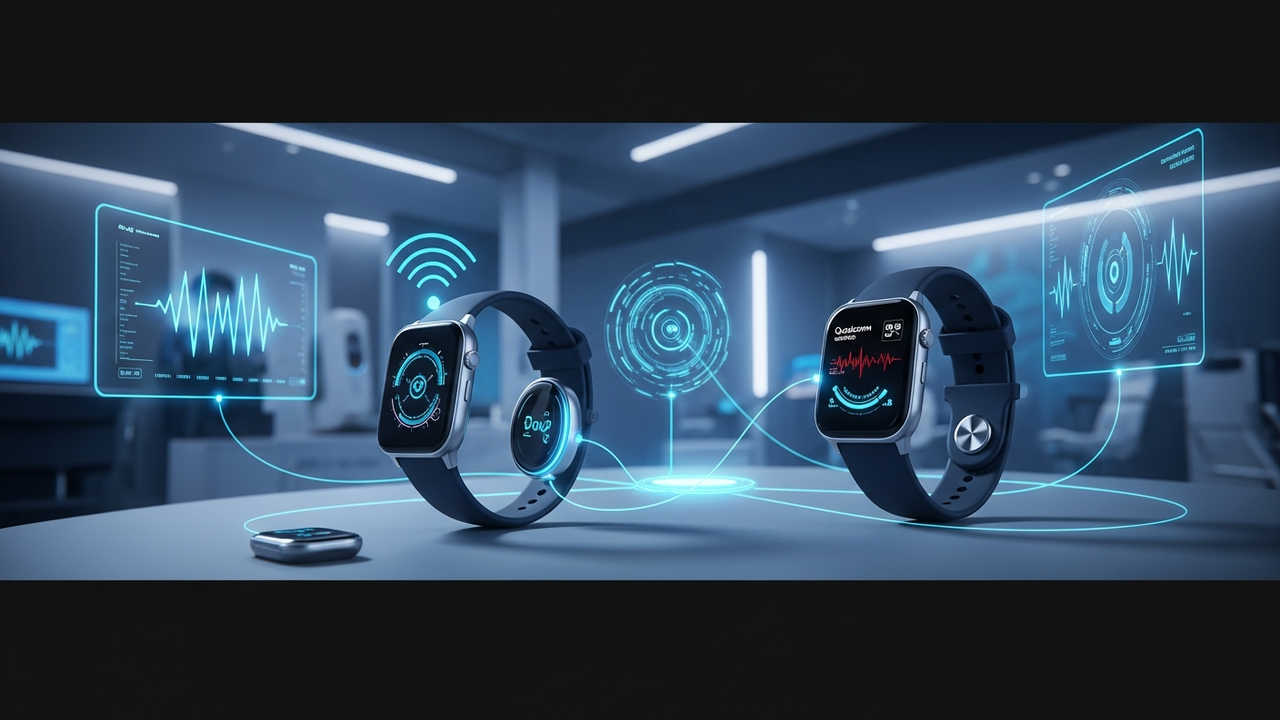
At its annual “Galaxy Unpacked July 2026” event, Samsung unveiled an ambitious vision for a preventive, personalized, and connected digital health future, underpinned by health innovation and strategic partnerships. Central to Samsung’s announcement is the advancement of research into a new “Health Foundation Model” that combines biosignal intelligence, wearable AI, and optimized personal health insights. This model aims to interpret complex biosignals collected from diverse wearable devices at a high level, enabling more accurate health state predictions and continuous management previously unattainable with conventional healthcare. Furthermore, an expanded partnership with Qualcomm was revealed, featuring Snapdragon processors in the next generation of Galaxy products (smartphones, smartwatches, intelligent eyewear) to dramatically enhance the AI experience.
Technical & Clinical Details
- Health Foundation Model: This model integrates and analyzes multiple biosignals, such as heart rate variability, sleep patterns, activity levels, and stress levels, in real-time using advanced AI algorithms. This provides deep insights into an individual’s overall health status that cannot be obtained from single biomarkers alone.
- Wearable AI and Biosignal Intelligence: Samsung’s wearable devices will feature edge AI capabilities, processing and analyzing biosignals directly on the device. This ensures immediate delivery of personalized feedback without data transfer delays, while also protecting privacy. Biosignal intelligence refers to the ability to predict disease risks or alert users to specific health changes based on this data.
- Collaboration with Qualcomm Snapdragon: Snapdragon processors’ advanced AI engines and processing power will enhance biosignal processing and AI model execution in Samsung’s wearable devices. This enables efficient execution of more complex AI tasks and improves the responsiveness and power efficiency of devices.
Background & Industry Context
The digital health and wearable technology market is experiencing rapid growth since the COVID-19 pandemic, with surging demand for preventive and remote care. Consumers are seeking more personalized and proactive approaches to their health management, and wearable devices are playing a central role. Major technology companies like Samsung are building comprehensive health platforms that integrate AI and biosensor technology, aiming to deepen collaboration with medical institutions and drive a paradigm shift from traditional “treatment-centric” to “prevention-centric” healthcare. The collaboration with Qualcomm underscores that hardware-level AI performance enhancement is essential for realizing this vision.
Strategic Significance & Outlook
The vision presented by Samsung at Galaxy Unpacked suggests a future where smart devices are not just information tools but “personal companions” for individual health. Moving forward, the company’s Health Foundation Model and Qualcomm’s technology are expected to evolve into more sophisticated preventive care services, personalized disease management programs, and automated emergency alert systems. This will lead to improved early detection and management of chronic diseases, contributing to extended healthy lifespans, as well as enhanced efficiency and cost reduction across the entire healthcare system. The expansion of AI capabilities to new device form factors like smart eyewear holds the potential to redefine next-generation user interfaces and healthcare experiences.
Get our weekly technology intelligence — free
Receive an infographic that lets you judge at a glance whether each field’s analysis report is worth reading.
Subscribe Free — Weekly Tech Intelligence
By subscribing, you’ll receive Troy-Technical’s weekly technology intelligence newsletter.
- Your email and selected fields are used only to deliver the newsletter.
- We never share your information with third parties.
- You can unsubscribe anytime via the link in each email.
See our Privacy Policy for details.
Takes about a minute · Unsubscribe anytime








Comments