Key Findings
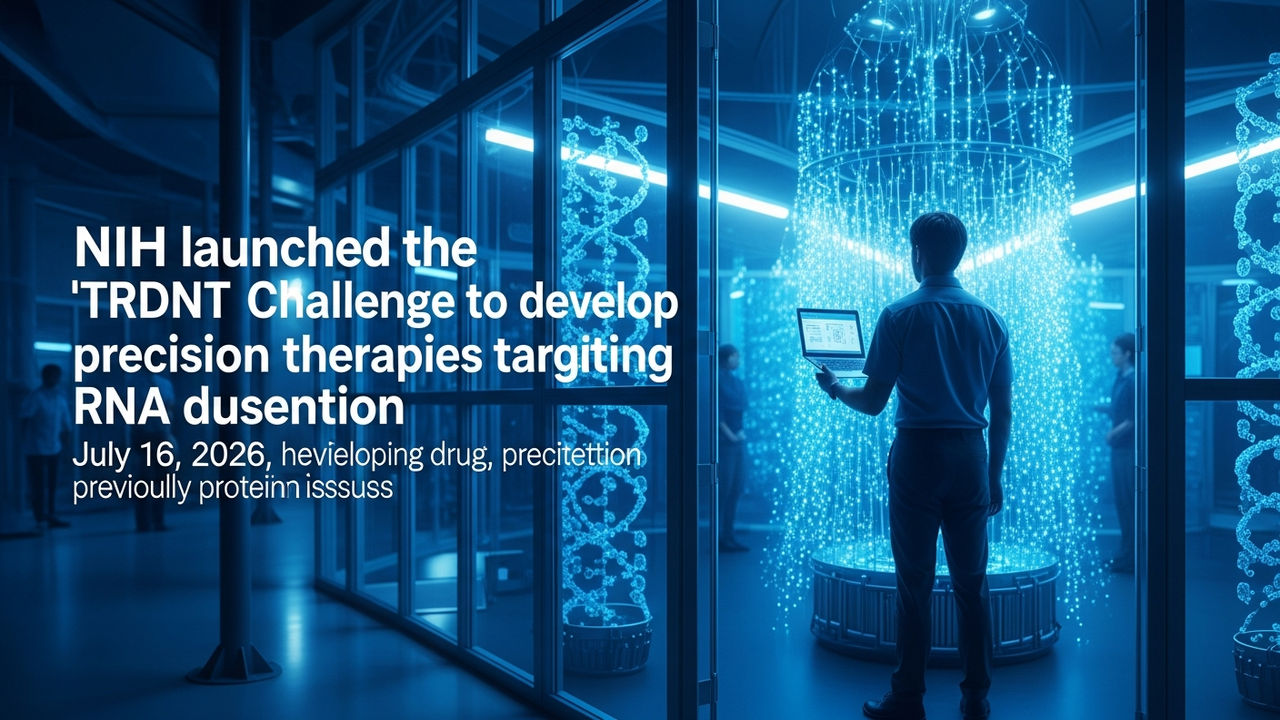
The National Institutes of Health (NIH) has launched Phase I of its ‘Targeting RNA in Disease with Novel Technologies (TRDNT) Challenge.’ This initiative is designed to stimulate and promote the development of novel classes of RNA-targeting technologies, aiming to accelerate the creation of precision RNA therapeutics for protein targets difficult to address with conventional drugs, and for intractable diseases fundamentally driven by RNA dysfunction. The TRDNT Challenge is poised to significantly expand the frontier of RNA medicine and provide innovative treatment options for diseases with high unmet medical needs.
Technical and Policy Details
The TRDNT Challenge focuses on developing new therapeutic approaches that directly target RNA molecules to modulate their function, structure, or expression levels in order to treat diseases. This encompasses several key technological areas:
- Technologies for direct RNA degradation or inactivation: Including siRNAs, ASOs, and RNase H activating agents that degrade or block translation of specific RNA molecules.
- Technologies modulating RNA-protein interactions: Small molecules targeting RNA-binding proteins (RBPs) or methods that alter the function of proteins with RNA-binding domains.
- Technologies modifying RNA structure or function: Such as RNA editing, splicing modulation, or the utilization of novel circular or self-amplifying RNA platforms.
- Innovations in RNA delivery technologies: Developing new LNP, peptide, polymer, or exosome-based systems for efficient and safe RNA delivery to extrahepatic organs or specific cell types.
Phase I of the challenge solicits innovative ideas and feasible proof-of-concept proposals. The NIH plans to select the most promising proposals and provide resources for further development and validation. This initiative encourages broad participation from academia, biotechnology companies, and industry, aiming to integrate diverse expertise and resources to accelerate progress in the RNA therapeutics field.
Background and Context
Traditional drug discovery has primarily focused on protein targets. However, diseases caused by RNA dysfunction—such as those involving non-coding RNAs that constitute a large portion of the human genome, or abnormal mRNA splicing—have remained challenging for existing pharmaceuticals. While RNA therapeutics have demonstrated their therapeutic value through the clinical success of mRNA vaccines, siRNAs, and ASOs, many unmet medical needs persist. Key challenges hindering the widespread application of RNA medicines include targeted delivery to specific cell types, reduction of off-target effects, and toxicity management.
The TRDNT Challenge is a strategic effort to overcome these hurdles and establish RNA as a next-generation therapeutic target. It reflects the U.S. government’s commitment to supporting biotechnology innovation and strengthening its leadership in treating debilitating diseases.
Strategic Significance and Outlook
The success of the TRDNT Challenge will have a profound impact on the development of new diagnostics and therapies for diseases. Advancements in precision RNA-targeting therapeutics are expected to lead to breakthrough treatments for many disease areas that have been historically difficult to treat, including neurodegenerative disorders, rare diseases, and various cancers. This challenge provides an opportunity for scientists and innovators to combine a deep understanding of RNA biology with cutting-edge technologies, ultimately contributing to improving patients’ quality of life. RNA medicines are poised to continue their evolution as powerful tools for achieving personalized medicine.
Source: https://www.nih.gov/challenges/targeting-rna-disease-novel-technologies-trdnt-challenge
Get our weekly technology intelligence — free
Receive an infographic that lets you judge at a glance whether each field’s analysis report is worth reading.
Subscribe Free — Weekly Tech Intelligence
By subscribing, you’ll receive Troy-Technical’s weekly technology intelligence newsletter.
- Your email and selected fields are used only to deliver the newsletter.
- We never share your information with third parties.
- You can unsubscribe anytime via the link in each email.
See our Privacy Policy for details.
Takes about a minute · Unsubscribe anytime








Comments