Key Findings
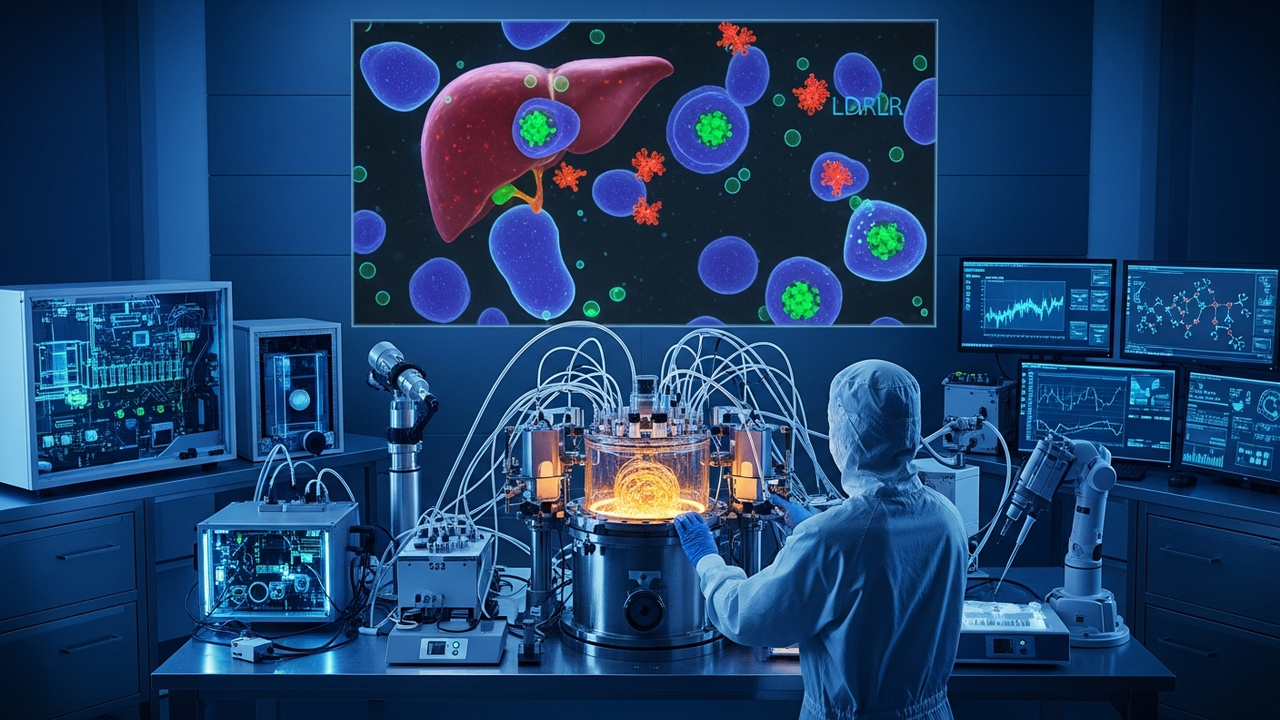
A preprint research article published in bioRxiv reports a significant breakthrough in the design and validation of an aptamer-functionalized lipid nanoparticle (LNP) platform capable of enabling hepatocyte-selective genome editing delivery. The research team demonstrated the high performance of this platform using a multilevel-validated CRISPR LDLR (Low-Density Lipoprotein Receptor) knockout HepG2 model. This advancement holds immense promise for expanding the possibilities of gene therapy for liver diseases.
Technical / Clinical Details
In this study, ionizable lipid nanoparticles (LNPs) were engineered to co-encapsulate Cas9 mRNA (the blueprint for the Cas9 genome-editing enzyme) and LDLR-targeting guide RNA (the sequence for specific gene cleavage in the CRISPR-Cas9 system). Crucially, the surface of these LNPs was modified with a TLS11a aptamer. The TLS11a aptamer, a short DNA or RNA sequence, specifically binds to certain receptors highly expressed on the surface of hepatocytes, acting like a ‘GPS’ to selectively guide the LNPs to liver cells. This modification overcomes the non-specific liver uptake typically observed with conventional LNPs, ensuring efficient delivery of the genome-editing components to the intended hepatocytes. Furthermore, the research team established a multilevel-validated LDLR-knockout HepG2 cell model using CRISPR technology. This model serves as an invaluable tool for evaluating LNP delivery systems and analyzing the pathophysiology of LDLR-mediated lipid metabolic disorders. This modular aptamer-guided LNP system demonstrates high versatility, making it applicable to gene therapy and RNA therapy for various liver diseases.
Background & Context
Genome editing technologies, particularly the CRISPR-Cas9 system, hold revolutionary potential for treating genetic diseases, but one of the biggest challenges for clinical application is the safe and efficient delivery of genome editing tools to specific target cells. LNPs have gained widespread recognition for their efficacy as nucleic acid delivery platforms, notably with the success of RNA vaccines. However, ensuring high specificity for particular organs or cell types has remained a significant hurdle. This research successfully addressed this challenge by functionalizing LNPs with aptamers, achieving a substantial improvement in delivery specificity to a crucial cell type within a vital organ like the liver. This significantly broadens the potential of gene therapy for lipid metabolic disorders, liver cancer, and other inherited liver diseases.
Strategic Significance & Outlook
The establishment of this aptamer-functionalized LNP platform represents a major breakthrough in hepatocyte-selective mRNA delivery and is expected to have a profound impact on future gene therapies for liver diseases. As this system transitions from preclinical research to clinical trials and demonstrates human safety and efficacy, gene therapy is anticipated to become more precise and target-specific. The LDLR-knockout HepG2 model will also serve as a valuable research tool for elucidating the pathomechanisms of lipid metabolic disorders and screening novel therapeutic agents. This technology is predicted to contribute to the advancement of personalized medicine and the creation of new therapeutic options for previously untreatable liver diseases.
Source: https://www.biorxiv.org/content/10.64898/2026.07.21.739738v1
Get our weekly technology intelligence — free
Receive an infographic that lets you judge at a glance whether each field’s analysis report is worth reading.
Subscribe Free — Weekly Tech Intelligence
By subscribing, you’ll receive Troy-Technical’s weekly technology intelligence newsletter.
- Your email and selected fields are used only to deliver the newsletter.
- We never share your information with third parties.
- You can unsubscribe anytime via the link in each email.
See our Privacy Policy for details.
Takes about a minute · Unsubscribe anytime









Comments