Key Findings
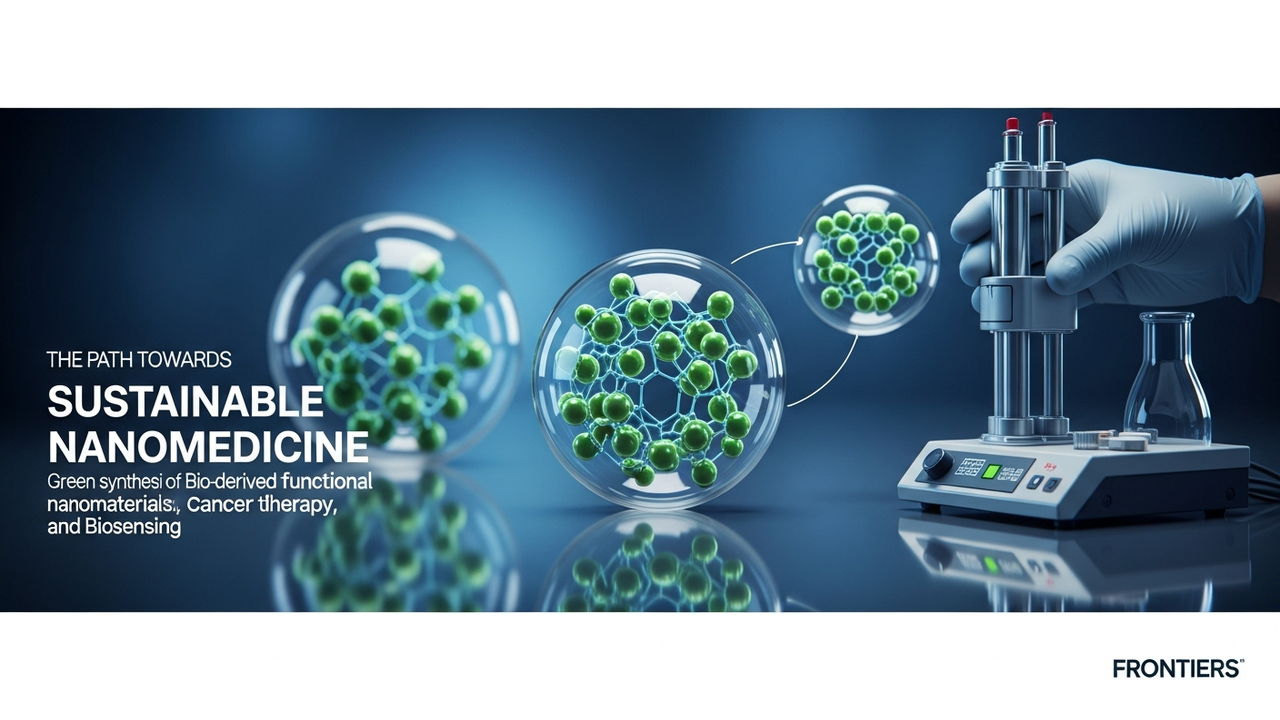
The green synthesis of functional nanomaterials, particularly using biological resources such as plant extracts and microorganisms, represents a significant breakthrough for realizing sustainable nanomedicine. A review published in the journal Frontiers details how these bio-derived nanoparticles, owing to their enhanced surface functionalities and biocompatibility, exhibit superior performance across diverse biomedical applications including drug delivery, antimicrobial therapy, cancer treatment, bioimaging, biosensing, and tissue engineering.
Technical / Clinical Details
Green synthesized nanomaterials offer an environmentally friendly and less toxic alternative to conventional chemical synthesis methods. Biomolecules present in plant extracts or microbial metabolites act as reducing and stabilizing agents, facilitating nanoparticle formation. This approach enables the synthesis of various functional nanomaterials, such as gold, silver, and titanium dioxide nanoparticles. These nanomaterials interact efficiently with biological systems due to their high surface-to-volume ratio and tunable physicochemical properties.
Specific applications include drug delivery systems, where surface-functionalized magnetic nanoparticles are demonstrated to efficiently transport drugs to specific target cells or tissues, minimizing side effects while enhancing therapeutic efficacy. For cancer treatment, nanoparticles can be loaded with anticancer drugs and selectively accumulated at tumor sites, increasing local drug concentration and reducing systemic toxicity. In antimicrobial therapies, bio-derived nanoparticles exhibit effective antimicrobial activity by damaging bacterial cell membranes or inhibiting metabolic pathways. For bioimaging and biosensing, nanoparticles serve as fluorescent probes or provide highly sensitive detection platforms, contributing to early disease diagnosis and real-time biomolecule monitoring. In tissue engineering, nanostructured scaffolds promote cell proliferation and differentiation, aiding in the regeneration of damaged tissues.
However, the review stresses that even with green synthesis, the safety of nanomaterials critically depends on their physicochemical properties (size, shape, surface charge, etc.) and long-term in-vivo behavior, degradability, and toxicity. Therefore, rigorous safety assessments and standardized testing protocols are indispensable for advancing their application in nanomedicine.
Background & Context
With growing global emphasis on Sustainable Development Goals (SDGs), there is an increasing demand for environmentally conscious materials science, especially in nanomaterial synthesis based on green chemistry principles. Traditional nanomaterial synthesis often involves the use of hazardous chemicals and high energy consumption, posing significant environmental burdens. Green synthesis addresses these challenges by offering cleaner and more sustainable manufacturing processes, thereby enhancing the societal acceptance of nanotechnology. The pharmaceutical and medical device industries are constantly seeking safer and more efficient therapeutic and diagnostic methods, and functional nanomaterials represent a potent tool to meet these needs.
Strategic Significance & Outlook
Moving forward, the green synthesis of bio-derived functional nanomaterials is expected to evolve towards more efficient and scalable synthesis processes, and the construction of more complex, multi-functional nanosystems. Research will accelerate on surface modification techniques to further enhance targeting capabilities for specific diseases and on material design to optimize biocompatibility. Furthermore, comprehensive studies on the long-term safety and in-vivo fate of green-synthesized nanomaterials are crucial to pave the way for clinical applications. These advancements will propel nanomedicine towards a future that offers greener, more personalized, and effective treatment options for patients.
Source: https://www.frontiersin.org/journals/chemistry/articles/10.3389/fchem.2026.1890004/pdf
Get our weekly technology intelligence — free
Receive an infographic that lets you judge at a glance whether each field’s analysis report is worth reading.
Subscribe Free — Weekly Tech Intelligence
By subscribing, you’ll receive Troy-Technical’s weekly technology intelligence newsletter.
- Your email and selected fields are used only to deliver the newsletter.
- We never share your information with third parties.
- You can unsubscribe anytime via the link in each email.
See our Privacy Policy for details.
Takes about a minute · Unsubscribe anytime