Key Findings
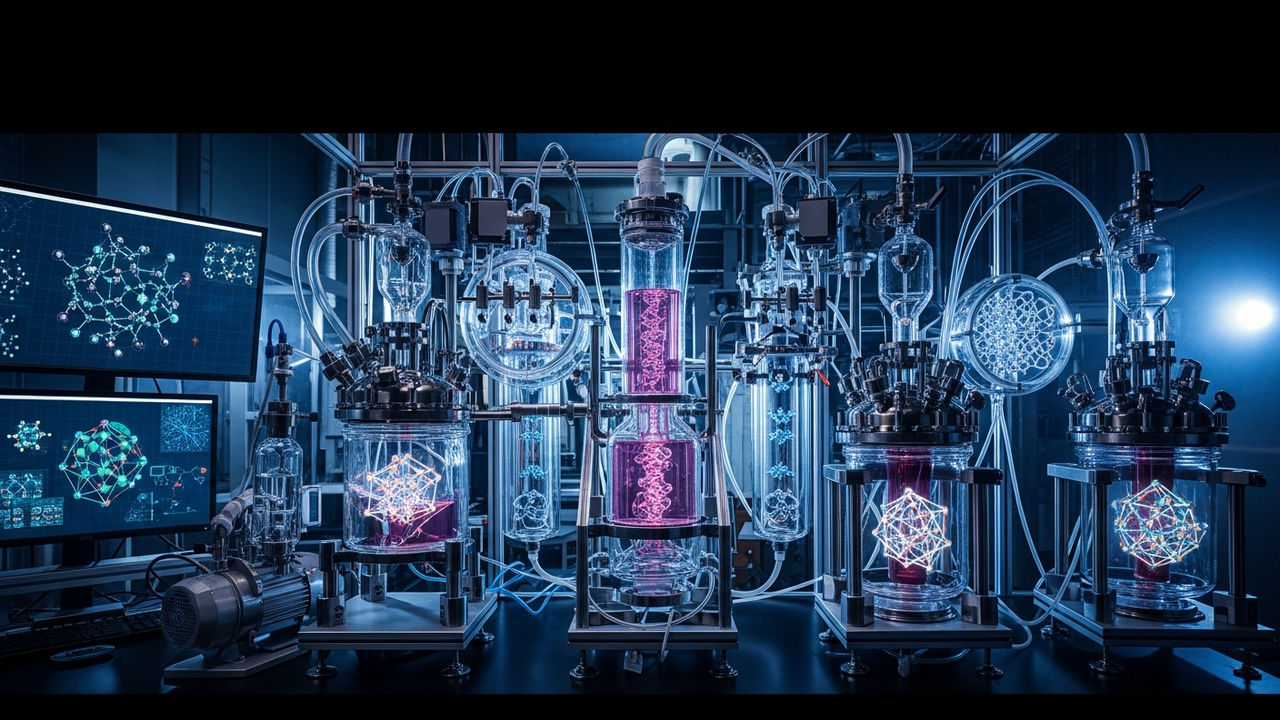
Continuous-flow synthesis is emerging as an innovative approach in nanocatalyst manufacturing, enabling the precise formation of nanostructures for scalable production by integrating reaction engineering and nanocatalyst design. Recent research published in OAE Publishing Inc.’s ‘Nanomaterials’ journal details how this technology significantly expands the design space for catalytic materials through enhanced control over key parameters such as residence time, reactant feeding, and interfacial confinement.
Technical / Clinical Details
In continuous-flow synthesis systems, reactants are continuously introduced, and nanoparticles are formed as they pass through a reaction zone. This process offers a significant advantage over batch synthesis by providing far stricter control over reaction conditions, including temperature, pressure, concentration, and mixing efficiency. Crucially, the nanostructural features that determine nanocatalyst performance—such as size, shape, crystallinity, and surface area—can be precisely tuned by controlling reactant feed rates, residence time in the reaction zone, and interfacial confinement through reactor design. For instance, maintaining a uniform reaction environment with short residence times allows for the high-efficiency synthesis of uniformly sized nanoparticles. Furthermore, utilizing devices like microreactors improves reactant mixing efficiency, leading to nanoparticles with narrower size distributions.
This review extends beyond mere nanoparticle synthesis, focusing also on structural integration to maximize catalyst activity and selectivity. This includes methods for uniformly dispersing nanoparticles onto support materials and forming composite nanostructures to achieve synergistic multi-functionality. Moreover, considering industrial implementation, challenges such as process stability, reproducibility, and long-term catalyst durability during continuous operation are discussed. Continuous-flow synthesis offers robust solutions to these challenges through automated control and optimization of reaction parameters, enabling the sustainable production of high-quality nanocatalysts.
Background & Context
Catalysts play an indispensable role across diverse fields, including the chemical industry, energy conversion, and environmental protection. Nanocatalysts, in particular, offer significantly superior activity and selectivity compared to conventional catalysts due to their high surface area and unique quantum effects. However, nanocatalyst synthesis has historically faced challenges related to low reproducibility, difficulty in scale-up, and high production costs. Continuous-flow synthesis technology is gaining attention as a critical means to overcome these hurdles and accelerate the commercialization of nanocatalysts. The development of this technology has the potential to revolutionize various sectors, including pharmaceutical manufacturing, fine chemical synthesis, clean energy technologies (e.g., fuel cells, hydrogen production), and exhaust gas treatment.
Strategic Significance & Outlook
The field of continuous-flow nanocatalyst synthesis is expected to experience rapid development. Key research directions include the application of AI and machine learning for reaction design and process optimization, and the enhancement of real-time control through in-line monitoring technologies. Furthermore, advancements will be made in the synthesis of more complex multi-component nanocatalysts and the development of novel reactor designs that enable precise structural control. These developments will facilitate the more efficient and sustainable production of nanocatalysts with high activity, selectivity, and durability, powerfully driving innovation across various industrial sectors. Ultimately, this technology is poised to contribute to improved energy efficiency, reduced environmental impact, and the creation of new products, making it indispensable for achieving a sustainable society.
Source: https://www.oaepublish.com/articles/enginfuture.2026.02
Get our weekly technology intelligence — free
Receive an infographic that lets you judge at a glance whether each field’s analysis report is worth reading.
Subscribe Free — Weekly Tech Intelligence
By subscribing, you’ll receive Troy-Technical’s weekly technology intelligence newsletter.
- Your email and selected fields are used only to deliver the newsletter.
- We never share your information with third parties.
- You can unsubscribe anytime via the link in each email.
See our Privacy Policy for details.
Takes about a minute · Unsubscribe anytime