Key Findings
Research published in MDPI’s ‘Coatings’ journal demonstrates that electrospun bio-based polylactic acid (PLA) nanofiber coatings possess extensive application potential in the biomedical field, due to their multifunctional, biodegradable, and bioactive properties. These uniform nanofiber structures offer a high surface-area-to-volume ratio and physical characteristics that mimic the extracellular matrix (ECM), holding significant promise as a next-generation coating platform with controlled release capabilities for drugs and growth factors.
Technical / Clinical Details
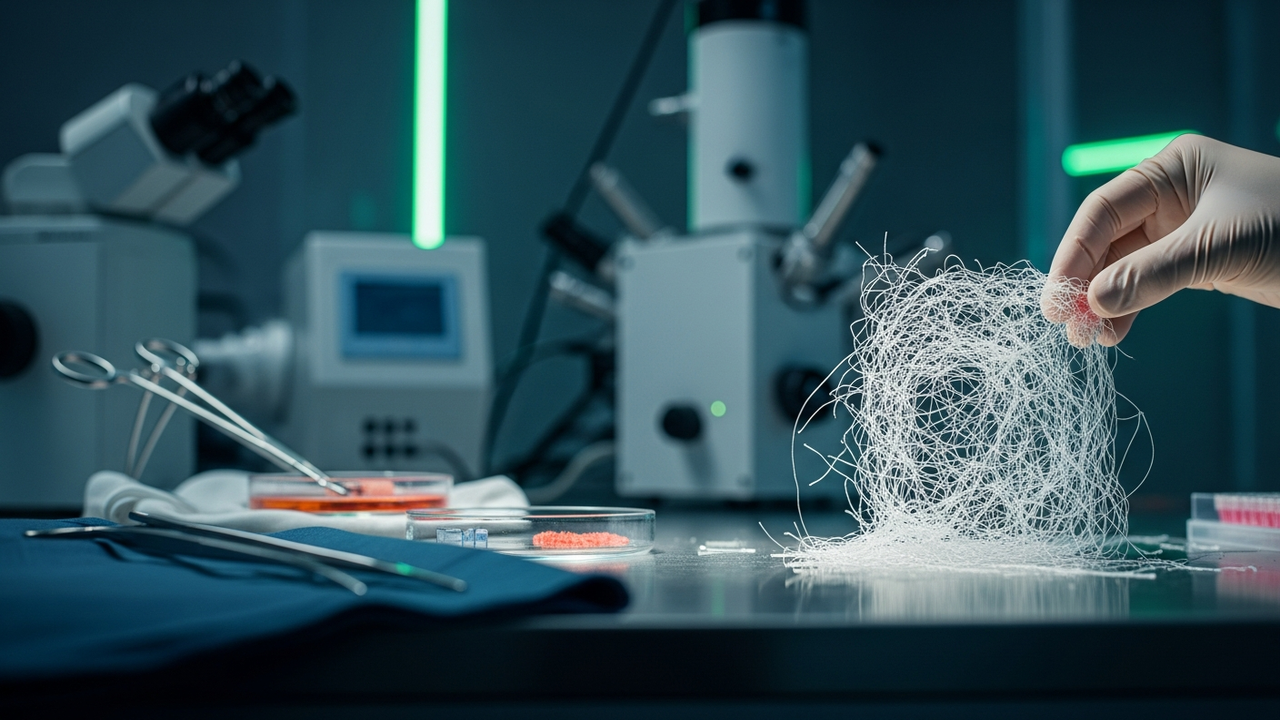
Electrospinning is a technique that produces extremely fine (nanoscale) fibers by electrospinning polymer solutions under high voltage. This study utilized polylactic acid (PLA), an environmentally friendly and biocompatible bio-based polymer, as the raw material. PLA’s property of degrading within the body makes it a particularly attractive option for medical implants and temporary scaffold materials.
Electrospun PLA nanofiber coatings exhibit the following properties and application potential:
- High Surface Area and Porosity: The unique nanofiber structure provides an exceptionally high surface-area-to-volume ratio and interconnected porosity. This not only promotes cell adhesion, proliferation, and differentiation but also allows for efficient adsorption and retention of drugs and growth factors, enabling their controlled release.
- Mimicry of Extracellular Matrix (ECM): Since the nanofiber diameter is comparable to the natural collagen fibers of the ECM, cells recognize this as a natural environment, exhibiting excellent biological responses. This is critically important for cell scaffolds in tissue engineering and regenerative medicine.
- Multi-functionality: By incorporating specific bioactive substances (e.g., antimicrobial agents, anti-inflammatory agents, growth factors), these coatings can simultaneously exhibit multiple functions such as infection prevention, inflammation suppression, and tissue regeneration promotion. For example, when applied to orthopedic implant surfaces, they can promote bone integration while simultaneously reducing the risk of bacterial infection.
- Biodegradability: PLA safely degrades within the body, ultimately turning into water and carbon dioxide. This allows its use as a ‘temporary implant’ that does not require removal surgery once its function is complete.
The study confirms that these coatings possess uniform fiber morphology and stable mechanical properties, laying a crucial foundation for their practical application.
Background & Context
In the biomedical field, there is a growing demand for more functional and biocompatible materials to improve patient treatment outcomes. Surface modification of medical implants, in particular, plays a crucial role in bio-integration, infection prevention, and promoting healing. Conventional materials often face issues of biocompatibility or functional limitations. This research addresses these challenges by leveraging nanotechnology, while also responding to modern society’s demand for sustainable materials. The combination of bio-based polymers and electrospinning technology enables both environmentally friendly manufacturing processes and high-performance medical materials.
Strategic Significance & Outlook
Research on electrospun bio-based PLA nanofiber coatings will likely progress towards further functional optimization and expansion of application scope. For instance, future focus will be on exploring surface modification techniques to elicit more complex biological responses, incorporating different bioactive agents, and precisely controlling release profiles through multi-layered structures. Furthermore, preclinical and clinical trials are anticipated to validate clinical applications in specific medical devices, such as orthopedic, cardiovascular, wound dressings, and drug delivery systems. Establishing large-scale production techniques and improving cost-effectiveness are also essential for the widespread adoption of this innovative technology. This research represents a significant step towards developing sustainable and personalized next-generation medical materials, holding great potential to significantly contribute to improving patients’ quality of life.
Source: https://www.mdpi.com/2079-6412/16/7/840
Get our weekly technology intelligence — free
Receive an infographic that lets you judge at a glance whether each field’s analysis report is worth reading.
Subscribe Free — Weekly Tech Intelligence
By subscribing, you’ll receive Troy-Technical’s weekly technology intelligence newsletter.
- Your email and selected fields are used only to deliver the newsletter.
- We never share your information with third parties.
- You can unsubscribe anytime via the link in each email.
See our Privacy Policy for details.
Takes about a minute · Unsubscribe anytime