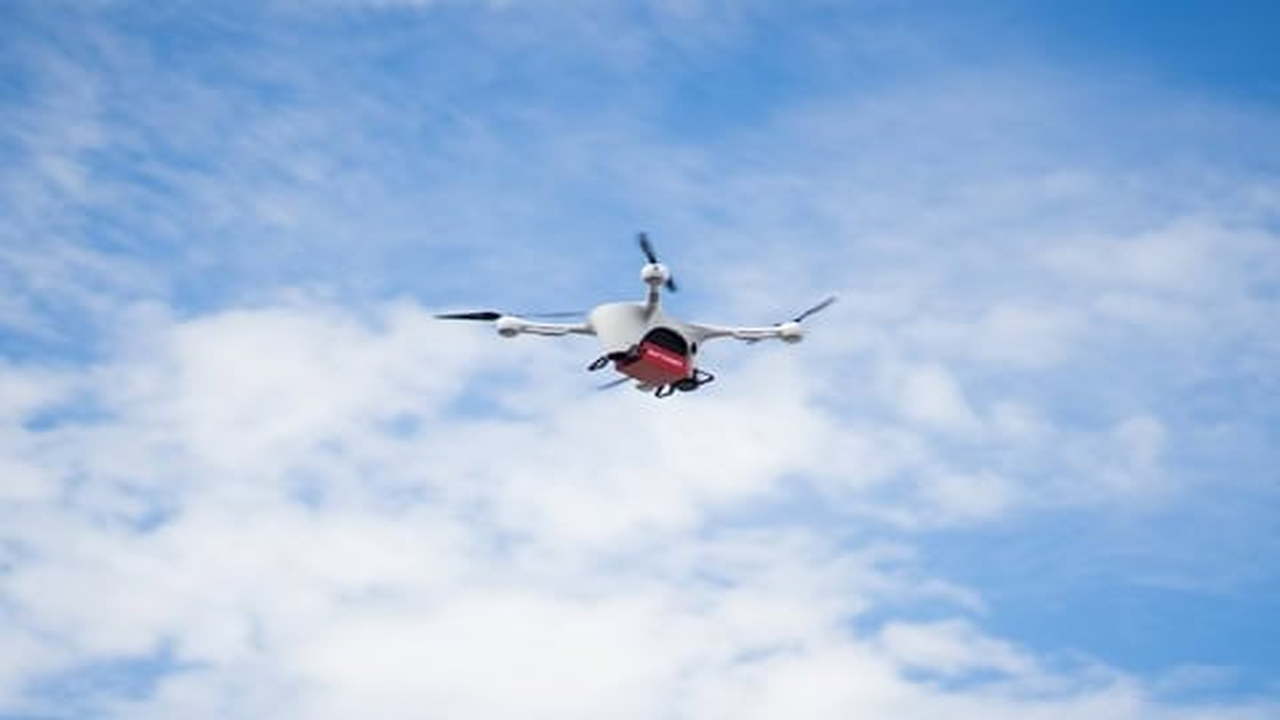
Background: Advancing Drone Delivery Amid Battery Limitations
Autonomous drone delivery platforms are poised to revolutionize logistics and reshape the future of transportation. However, the operational capabilities of drones—specifically flight range, payload capacity, and overall economic viability—are heavily dictated by the energy density of their onboard batteries. While existing lithium-ion battery technology has seen continuous improvements, it is approaching the theoretical limits of graphite anodes, creating an urgent demand for higher-density energy storage solutions to enable widespread and efficient drone delivery services.
Key Findings / Results: Silicon Anode Batteries Significantly Boost Drone Performance
Amprius Technologies, a leader in high-energy-density batteries, and Matternet, a pioneer in autonomous drone delivery, have announced a strategic partnership to dramatically enhance the performance of autonomous aerial delivery platforms. The core of this collaboration involves the integration of Amprius’s innovative silicon anode lithium-ion batteries.
- Integration into Existing Aircraft: Amprius’s silicon anode cells are already integrated into Matternet’s existing M2 aircraft, demonstrating their superior performance in real-world operations. This integration enables the M2 to achieve up to twice the energy density compared to traditional graphite-based batteries.
- Extended Range, Payload, and Economics: This significant increase in energy density directly translates into substantially longer flight ranges for drones and enhanced payload capacities, allowing them to carry heavier loads. Consequently, the operational efficiency and economic viability of drone delivery services are improved, facilitating broader and more cost-effective service deployment.
- Next-Generation Solutions and Mass Production: The companies are also collaboratively developing optimized battery solutions specifically for Matternet’s next-generation aircraft. Amprius aims to establish mass production capabilities for these specialized silicon anode cells to align with Matternet’s planned fleet expansion, scheduled to begin in early 2027. This highlights the critical need for a stable supply of high-performance batteries to scale drone delivery operations.
Technical Significance & Outlook: Accelerating Commercial Drone Delivery
The partnership between Amprius and Matternet has the potential to bring about transformative changes in the autonomous drone delivery industry. This technological advancement is expected to yield broad impacts and prospects:
- Expansion and Efficiency of Delivery Services: Enhanced battery performance will enable drones to deliver a wider variety of goods over greater distances and more rapidly. This will facilitate more efficient and economical urgent and routine deliveries of medical supplies, small packages, and groceries, particularly in urban areas and hard-to-reach locations.
- Expanded Application of Silicon Anode Technology in Aviation: This success validates silicon anode technology as a practical solution not only for EVs but also for high-value, safety-critical aviation sectors. This demonstration will likely motivate other aircraft manufacturers and drone developers to consider similar technology adoptions.
- Transformation of the Logistics Ecosystem: As high-performance drone delivery becomes more commonplace, it will complement or even partially replace existing logistics networks, forming a new ecosystem. This offers significant advantages, especially for last-mile delivery and serving areas with challenging access.
This strategic collaboration serves as a prime example of how next-generation battery technology is shaping the future of mobility and represents a crucial step in accelerating the commercialization of autonomous drone delivery.







Comments