Background: Battery Cost Reduction as the Key to EV Adoption
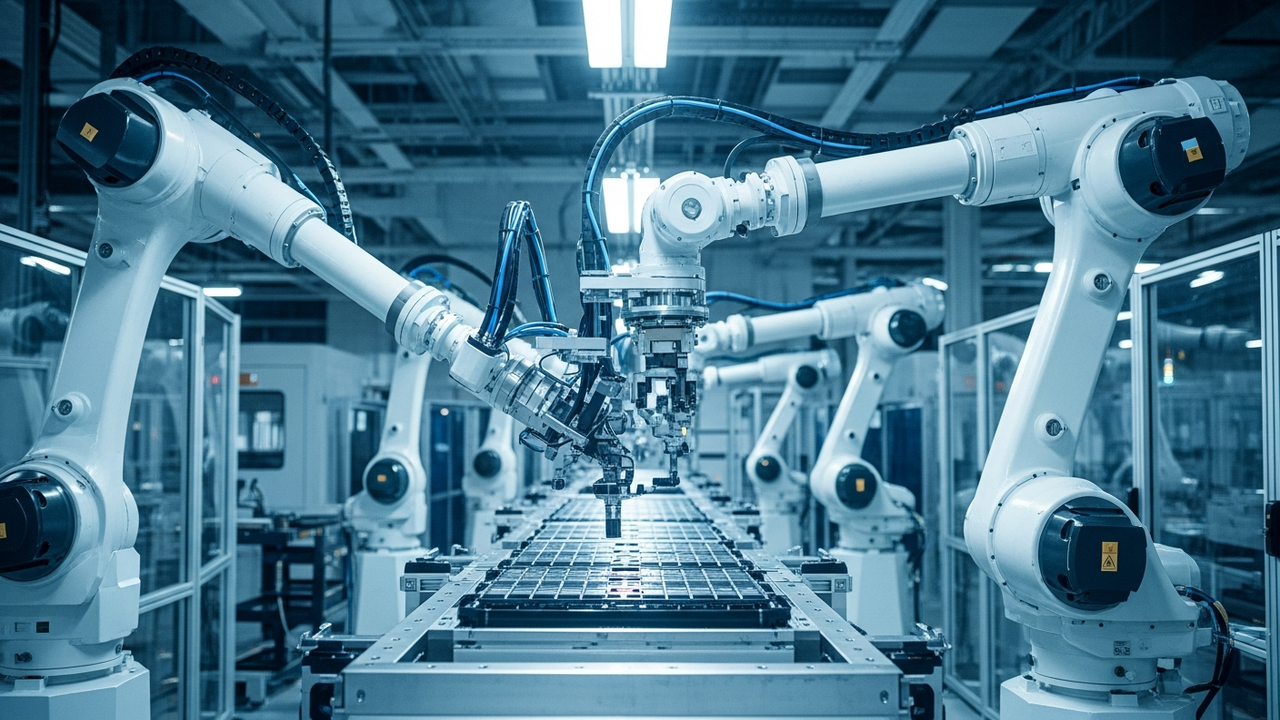
The cost of batteries remains one of the largest barriers to accelerating the widespread adoption of electric vehicles (EVs). A significant portion of battery cell manufacturing costs is attributed to raw materials and manufacturing processes. Specifically, conventional wet electrode manufacturing processes present challenges in terms of both cost and environmental impact due to the use of expensive solvents, energy-intensive drying steps, and complex solvent recovery systems. A fundamental innovation in manufacturing processes is deemed essential to bring sustainable and economically viable EVs to market.
Key Findings / Results: Cost and Environmental Benefits of Dry Electrode Manufacturing
Dry electrode manufacturing is a revolutionary technology that fundamentally addresses the challenges inherent in traditional wet processes. By eliminating the need for solvents and the drying step, this process offers significant advantages for battery production:
- Substantial Cost Reduction: Dry electrode manufacturing is reported to reduce battery production costs by over 50%. This is attributed to savings in solvent expenses, energy costs for drying, and reductions in both capital expenditure (CAPEX) and operational expenditure (OpEx).
- Reduced Energy Consumption and Carbon Emissions: The elimination of the solvent drying process leads to over a 75% reduction in energy consumption. This dramatically lowers carbon emissions from battery manufacturing, significantly improving the environmental footprint. Companies like Tesla emphasize this technology’s contribution to sustainable manufacturing.
- Increased Production Speed: The dry process achieves significantly faster production speeds, ranging from 15-30 meters per minute compared to 5-10 meters per minute for conventional wet processes. This enables rapid scaling of battery production capacity to efficiently meet increasing market demand.
Tesla is at the forefront of this technology. The company is actively leveraging dry electrode technology acquired from Maxwell Technologies, aiming to reduce battery cell costs to its target of $50/kWh by 2026. This has the potential to dramatically enhance the price competitiveness of EVs.
Technical Significance & Outlook: Transforming the EV Market and Standardizing Sustainable Manufacturing
The widespread adoption of dry electrode manufacturing processes will have broad impacts on the battery industry and the EV market, opening up significant prospects in the following areas:
- Dramatic Reduction in EV Prices: Halving battery costs holds the potential to make EV purchase prices comparable to, or even lower than, gasoline-powered cars. This would further accelerate EV penetration into the mass market, fundamentally transforming global mobility.
- Greening Battery Manufacturing: Substantial energy reduction and the elimination of solvent use dramatically lower the environmental footprint of battery manufacturing processes. This becomes an indispensable competitive advantage for battery manufacturers as environmental demands from consumers and regulators intensify.
- Ripple Effects of Technological Innovation: As major companies like Tesla adopt and promote dry processes, other battery manufacturers will be compelled to follow suit, accelerating overall innovation in battery manufacturing technology. This also opens up the possibility for even higher-performance and lower-cost batteries.
Dry electrode manufacturing is recognized as one of the most critical breakthroughs for democratizing EVs and achieving sustainability in the battery industry, rather than merely being a production technique improvement. Its standardization will significantly accelerate the transition to clean energy.








Comments