Key Findings
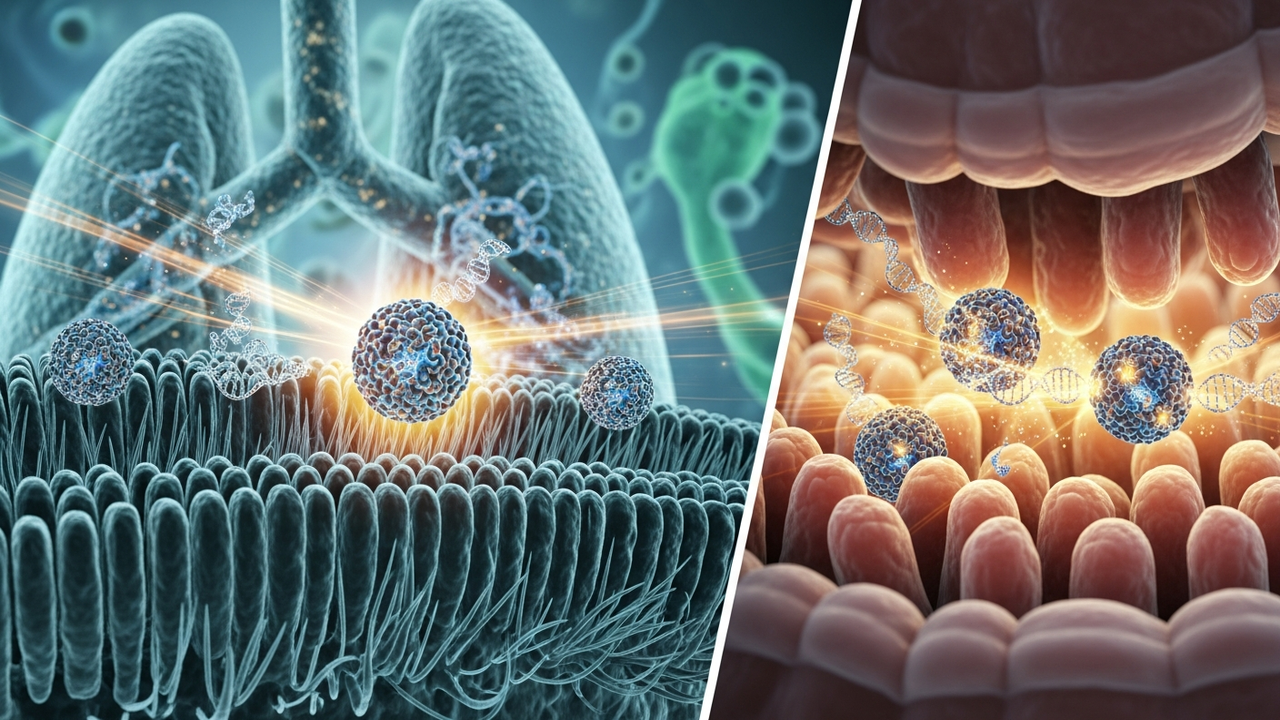
Lipid nanoparticles (LNPs) are making groundbreaking advancements in the delivery of nucleic acid therapeutics to respiratory and gastrointestinal mucosa. Conventional nucleic acid therapies have long been hampered in clinical application by multiple biological barriers, including enzymatic degradation, low cellular uptake, endosomal entrapment, and rapid systemic clearance. However, LNPs have emerged as an effective strategy to overcome these challenges, dramatically improving the stability and bioavailability of nucleic acids, and thereby accelerating the development of new treatments for respiratory and gastrointestinal diseases.
Technical and Development Details
- Nucleic Acid Delivery Barriers: Nucleic acids (mRNA, siRNA, plasmid DNA, etc.) need to reach the cytoplasm or nucleus to exert their therapeutic effects, but they face several barriers during this process:
- Enzymatic Degradation: They are easily degraded by nucleases present in blood and cells.
- Low Cellular Uptake: Being negatively charged, they have difficulty crossing the negatively charged cell membrane.
- Endosomal Entrapment: Even if taken up by cells, they often become trapped in endosomes and are subsequently degraded by lysosomes.
- Rapid Systemic Clearance: Bare nucleic acids are quickly cleared from the bloodstream by the kidneys and liver.
- LNP Mechanisms for Overcoming Barriers: LNPs are precisely engineered to address these barriers:
- Protection: The lipid bilayer physically encapsulates nucleic acids, protecting them from enzymatic degradation.
- Cellular Uptake: Ionizable lipids become positively charged in the acidic environment of endosomes, promoting fusion with the endosomal membrane and facilitating the release of nucleic acids into the cytoplasm.
- Extended Circulation Lifetime: PEGylated lipids prevent opsonization, thereby extending the LNP’s residence time in the bloodstream.
- Application for Mucosal Delivery: Respiratory and gastrointestinal mucosa represent important administration routes for local infections and inflammatory diseases, as well as systemic conditions. LNPs hold promise for efficiently delivering nucleic acids to the lungs as inhalable agents and to the gastrointestinal tract as oral agents. This offers non-invasive treatment options beyond injections, enhancing patient convenience.
Background and Industry Context
The therapeutic potential of nucleic acid drugs has been widely recognized following the success of COVID-19 mRNA vaccines. However, systemic administration via injection has been the predominant route, and local, non-invasive delivery to mucosal tissues like the respiratory and gastrointestinal tracts has remained a significant challenge. Mucosal tissues are often primary sites for disease onset, and successful local delivery offers the advantage of reducing systemic doses, minimizing side effects, and maximizing therapeutic efficacy. LNPs are positioned as a critical technology enabling progress in this field.Future Outlook
Advancements in LNP-mediated nucleic acid delivery to respiratory and gastrointestinal mucosa will profoundly impact future disease treatments. Specifically, the development of gene therapies and RNA vaccines for respiratory diseases such as asthma, chronic obstructive pulmonary disease (COPD), and cystic fibrosis, as well as gastrointestinal diseases like inflammatory bowel disease (IBD) and colorectal cancer, is expected to accelerate. Further optimizing LNP composition, enhancing mucosal barrier permeation, and conducting clinical trials to assess long-term safety and in vivo efficacy will be key future challenges. Overcoming these hurdles will position LNP-based mucosal delivery systems as a crucial tool for providing non-invasive and effective new treatments to patients.
Source: https://www.mdpi.com/2306-5354/13/8/884
Get our weekly technology intelligence — free
Receive an infographic that lets you judge at a glance whether each field’s analysis report is worth reading.
Subscribe Free — Weekly Tech Intelligence
By subscribing, you’ll receive Troy-Technical’s weekly technology intelligence newsletter.
- Your email and selected fields are used only to deliver the newsletter.
- We never share your information with third parties.
- You can unsubscribe anytime via the link in each email.
See our Privacy Policy for details.
Takes about a minute · Unsubscribe anytime