Key Findings
This study introduces ‘CataCon,’ a novel contrastive graph representation learning framework designed to efficiently predict optimal catalysts for chemical reactions. Built upon Graph Neural Networks (GNNs), CataCon generates rich structural embeddings for all reaction components and aligns critical features of reactions and catalysts through contrastive learning, thereby overcoming existing challenges in catalyst prediction. This holds the potential to significantly accelerate the processes of catalyst discovery and chemical synthesis.
Technical / Clinical Details
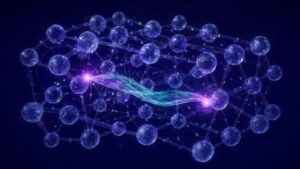
The core of the CataCon framework lies in its ability to transform chemical structures into numerical vectors (embedding representations) using GNNs. A chemical reaction consists of multiple chemical species, including reactants, products, solvents, and catalysts. CataCon represents each of these components as a graph and generates high-dimensional structural embeddings from individual graphs. The ‘contrastive learning’ approach is particularly crucial. This method trains the model to distinguish between ‘positive pairs’ (e.g., a specific reaction and an effective catalyst for it) and ‘negative pairs’ where the reaction does not proceed or is ineffective. Through this, CataCon can learn subtle relationships between the electronic and geometric features of a reaction and the activity, stability, and other characteristics of a catalyst. By aligning descriptors for chemical reactions (e.g., reaction type, key bonds) with catalyst descriptors (e.g., type of active metal, surface structure), the model enhances its ability to predict the most effective catalyst candidates for unknown reactions. Experimental evaluations showed that CataCon achieved predictive accuracy comparable to or superior to existing state-of-the-art (SOTA) catalyst prediction models, demonstrating particular advantages in generality for novel reactions and catalyst systems. This enables more rational and efficient high-throughput screening of catalyst candidates.
Background & Context
Catalysts play an indispensable role in various fields, including the chemical industry, energy conversion, and environmental protection. The discovery of new, high-performance catalysts is crucial for improving the efficiency and sustainability of these industries, but their development has traditionally been a time-consuming and costly bottleneck. The process of identifying optimal catalysts from a vast chemical space involves extensive experimental trial-and-error. The introduction of AI, particularly machine learning models like GNNs that can handle graph-structured data, is gaining attention as a groundbreaking approach to accelerate catalyst discovery in a data-driven manner. Frameworks like CataCon further deepen the application of AI in this field.
Strategic Significance & Outlook
The introduction of CataCon holds the potential to revolutionize the process of catalyst discovery. By enabling more efficient and accurate prediction of optimal catalysts, R&D timelines will be dramatically shortened, and chemical synthesis costs will be reduced. In the future, AI-driven catalyst prediction tools like CataCon may be integrated into autonomous laboratory (self-driving labs) systems, realizing ‘self-driving catalyst discovery’ where AI autonomously executes the entire process of catalyst design, synthesis, evaluation, and optimization. This is expected to accelerate innovation in the pharmaceutical, materials, chemical, and energy sectors, providing solutions to global challenges (e.g., clean energy, CO2 reduction) more rapidly. CataCon’s success clearly demonstrates that AI can become a powerful collaborator in solving complex scientific problems.
Source: https://pmc.ncbi.nlm.nih.gov/articles/PMC13371356/
Get our weekly technology intelligence — free
Receive an infographic that lets you judge at a glance whether each field’s analysis report is worth reading.
Subscribe Free — Weekly Tech Intelligence
By subscribing, you’ll receive Troy-Technical’s weekly technology intelligence newsletter.
- Your email and selected fields are used only to deliver the newsletter.
- We never share your information with third parties.
- You can unsubscribe anytime via the link in each email.
See our Privacy Policy for details.
Takes about a minute · Unsubscribe anytime