Background
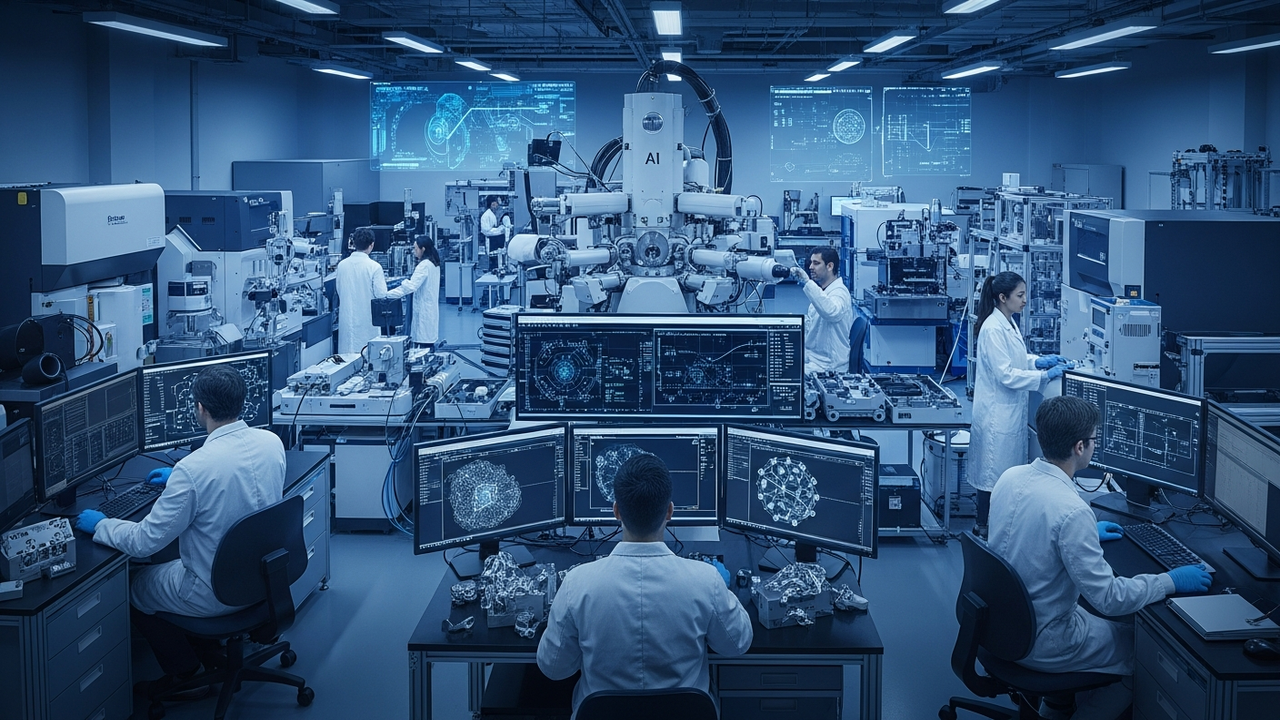
Nanoscale materials science is a critical driver of innovation across diverse sectors, including energy, electronics, and medicine. However, accurately characterizing their intricate nanoscale structures has long represented a significant research bottleneck. While powerful, advanced X-ray analysis techniques have traditionally been limited by the time-consuming nature of both data acquisition and subsequent analysis, severely constraining experimental throughput. The integration of Artificial Intelligence (AI) offers immense potential to accelerate data-driven approaches in scientific research, and tools like DONUT further contribute to the democratization of advanced research by enabling non-experts to perform sophisticated material analyses.
Key Findings
Scientists at Argonne National Laboratory have developed a transformative unsupervised machine learning tool, DONUT (Diffraction with Optics for Nanobeam by Unsupervised Training), which is poised to revolutionize nanoscale materials research. DONUT is capable of analyzing complex X-ray images from scanning X-ray nanodiffraction microscopy hundreds of times faster than conventional methods, enabling real-time interpretation of nanomaterial structures. This groundbreaking advancement significantly accelerates materials discovery, paves the way for autonomous ‘self-driving’ experiments, and democratizes access to advanced materials understanding by lowering the entry barrier for new users.
Technical Details
At its core, DONUT is a physics-aware neural network meticulously designed for high accuracy and unparalleled speed in interpreting complex X-ray diffraction patterns. Traditional X-ray diffraction data analysis typically demands extensive computational resources and specialized expertise, often requiring hours to days for thorough processing. DONUT, however, leverages an unsupervised learning approach to rapidly extract crucial information regarding material crystalline structures, internal strain, and defects directly from vast datasets of raw diffraction images. This real-time analytical capability empowers researchers to instantly monitor and react to material changes as they occur during an experiment, enabling dynamic adjustments to optimize experimental conditions on the fly. This not only opens new avenues for exploring more complex material systems and dynamic processes but also leads to substantial reductions in research time and cost.
Strategic Significance
The introduction of DONUT has the potential to fundamentally reshape the landscape of nanoscale materials research. Its real-time, high-speed analytical capabilities will not only accelerate the discovery and development of novel materials but also represent a crucial advancement towards realizing fully ‘autonomous laboratories.’ This visionary approach envisions AI systems independently designing, executing, analyzing experiments, and generating new hypotheses, thereby dramatically shortening the scientific discovery cycle. This technology is expected to be a game-changer, particularly in critical areas such as the development of next-generation battery materials, advanced catalysts, and high-performance semiconductors. Furthermore, by democratizing access to sophisticated material analysis for a wider array of users, DONUT will foster innovation from a broader range of disciplines, expanding the very frontiers of materials science. Argonne National Laboratory is committed to further developing this technology and making it accessible to the broader scientific community.
Source: https://www.azonano.com/news.aspx?newsID=41789
Get our weekly technology intelligence — free
Receive an infographic that lets you judge at a glance whether each field’s analysis report is worth reading.
Subscribe Free — Weekly Tech Intelligence
By subscribing, you’ll receive Troy-Technical’s weekly technology intelligence newsletter.
- Your email and selected fields are used only to deliver the newsletter.
- We never share your information with third parties.
- You can unsubscribe anytime via the link in each email.
See our Privacy Policy for details.
Takes about a minute · Unsubscribe anytime