Key Findings
A significant paper published in ‘Frontiers’ emphasizes the exceptional potential of Metal-Organic Frameworks (MOFs) as next-generation materials for gas separation membranes. This potential is largely attributed to their extraordinary design flexibility, including highly tunable pore structures, diverse chemical functionalities, and vast structural variability. The review elaborates on the critical importance of pore size engineering, functional group engineering, and hybridization strategies to significantly boost separation performance, especially for challenging separations such as hydrogen (H₂), carbon dioxide (CO₂), olefin/paraffin, and oxygen/nitrogen (O₂/N₂) mixtures.
Technical / Clinical Details
MOFs are crystalline porous materials constructed from metal clusters and organic linkers, possessing the unique advantage of precise structural design at the atomic level. This review delves into the designable features of MOFs, focusing specifically on their application as gas separation membranes. Pore size engineering optimizes the ‘molecular sieving effect,’ allowing selective permeation of gases based on differences in their kinetic diameters. Functional group engineering involves introducing specific functional groups into the MOF backbone to enhance affinity for particular gases (e.g., CO₂), thereby improving separation efficiency. Furthermore, hybridization strategies, integrating MOFs with polymers or other inorganic materials, are crucial for enhancing membrane mechanical strength, process tolerance, and stability while maintaining or improving separation performance. By combining these design strategies, it becomes possible to create customized, high-efficiency separation membranes for diverse gas mixtures.
Background & Context
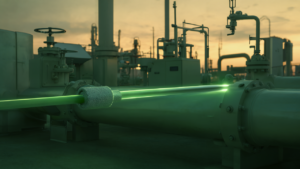
In the chemical and energy industries, gas separation processes are indispensable across various manufacturing stages, directly impacting product purity, energy consumption reduction, and environmental footprint. Traditional gas separation technologies, such as distillation and absorption, are often energy-intensive and entail high operational costs. Membrane separation technology has gained attention for its higher energy efficiency and lower environmental impact, but developing high-performance membrane materials remains a key challenge. MOFs, with their superior separation selectivity and permeability, are expected to provide an innovative solution to this challenge, showing promising applications in CO₂ capture, hydrogen purification, natural gas processing, and air separation.
Strategic Significance & Outlook
This comprehensive review on the designable features of MOFs and their application in gas separation membranes provides critical guidance for future research and development in the field. By fully leveraging the design flexibility of MOFs, the chemical and energy industries can achieve more efficient and sustainable processes. In particular, the development of tailor-made MOF membranes for specific industrial needs holds the potential to establish new standards for gas separation technology. Investors are likely to show strong interest in the market expansion of MOF-based gas separation membranes as an innovative technology contributing to energy efficiency and environmental sustainability. This technology is predicted to play an indispensable role in addressing global energy and environmental challenges.
Get our weekly technology intelligence — free
Receive an infographic that lets you judge at a glance whether each field’s analysis report is worth reading.
Subscribe Free — Weekly Tech Intelligence
By subscribing, you’ll receive Troy-Technical’s weekly technology intelligence newsletter.
- Your email and selected fields are used only to deliver the newsletter.
- We never share your information with third parties.
- You can unsubscribe anytime via the link in each email.
See our Privacy Policy for details.
Takes about a minute · Unsubscribe anytime