Key Findings
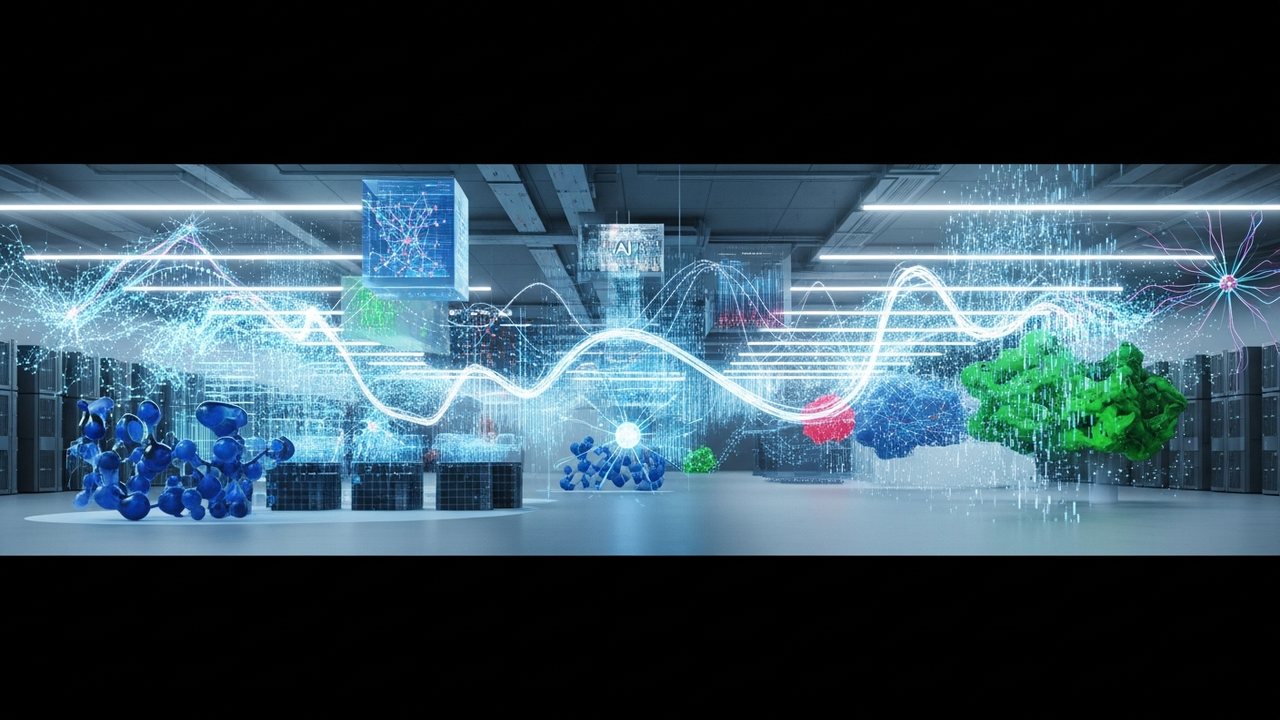
Domino Data Lab has announced its partnership with the U.S. Department of Energy’s Genesis Mission Consortium, marking a significant step towards accelerating AI-driven scientific discovery. This collaboration aims to dramatically shorten the development cycle for advanced materials, such as battery cathodes and titanium alloys, from traditional months to just days, by integrating AI-powered inverse design with high-performance computing (HPC). The AI’s capability to efficiently screen thousands of material candidates promises to revolutionize materials science R&D.
Technical / Clinical Details
Domino Data Lab will contribute its data science platform to the Genesis Mission, applying its expertise in AI-powered inverse design. This method begins by precisely defining desired material properties—such as energy density, strength, or thermal conductivity. The AI then works backward to predict optimal molecular structures and compositional combinations that meet these specifications. This allows researchers to bypass extensive manual experimentation, focusing resources on the most promising candidates identified by the AI. Furthermore, the combination of physics-based AI models and HPC resources dramatically enhances simulation accuracy and speed, leading to rapid material characterization and optimization. This demonstrates AI’s profound ability to understand material behavior and directly contribute to their design.
Background & Context
The discovery and deployment of advanced materials are critical for strategic sectors including energy, manufacturing, and defense. However, traditional material development processes are largely trial-and-error based, time-consuming, and costly, often requiring decades to bring new materials to market. The U.S. Department of Energy’s Genesis Mission seeks to overcome these bottlenecks by integrating AI and HPC to accelerate materials science. The participation of advanced AI solution providers like Domino Data Lab ensures that theoretical AI models are deeply embedded into practical material development processes, fostering faster innovation. This AI-driven approach is becoming essential for maintaining competitiveness and enabling next-generation technologies, particularly with the rapid evolution of battery materials and the growing demand for lighter, higher-performance alloys.
Strategic Significance & Outlook
This collaboration serves as a prime example of how powerful AI and HPC can be in transforming materials science. By combining Domino Data Lab’s technology with the resources of the Genesis Mission, there is increased potential for AI to autonomously design materials, predict their performance, and ultimately contribute to the realization of “self-driving laboratories.” In the future, this approach is expected to expand into other scientific domains, aiding in drug discovery, catalyst design, and quantum material exploration, among other challenges. Accelerated material development will be a cornerstone for economic growth, energy security, and the realization of a sustainable society.
Get our weekly technology intelligence — free
Receive an infographic that lets you judge at a glance whether each field’s analysis report is worth reading.
Subscribe Free — Weekly Tech Intelligence
By subscribing, you’ll receive Troy-Technical’s weekly technology intelligence newsletter.
- Your email and selected fields are used only to deliver the newsletter.
- We never share your information with third parties.
- You can unsubscribe anytime via the link in each email.
See our Privacy Policy for details.
Takes about a minute · Unsubscribe anytime