Key Findings
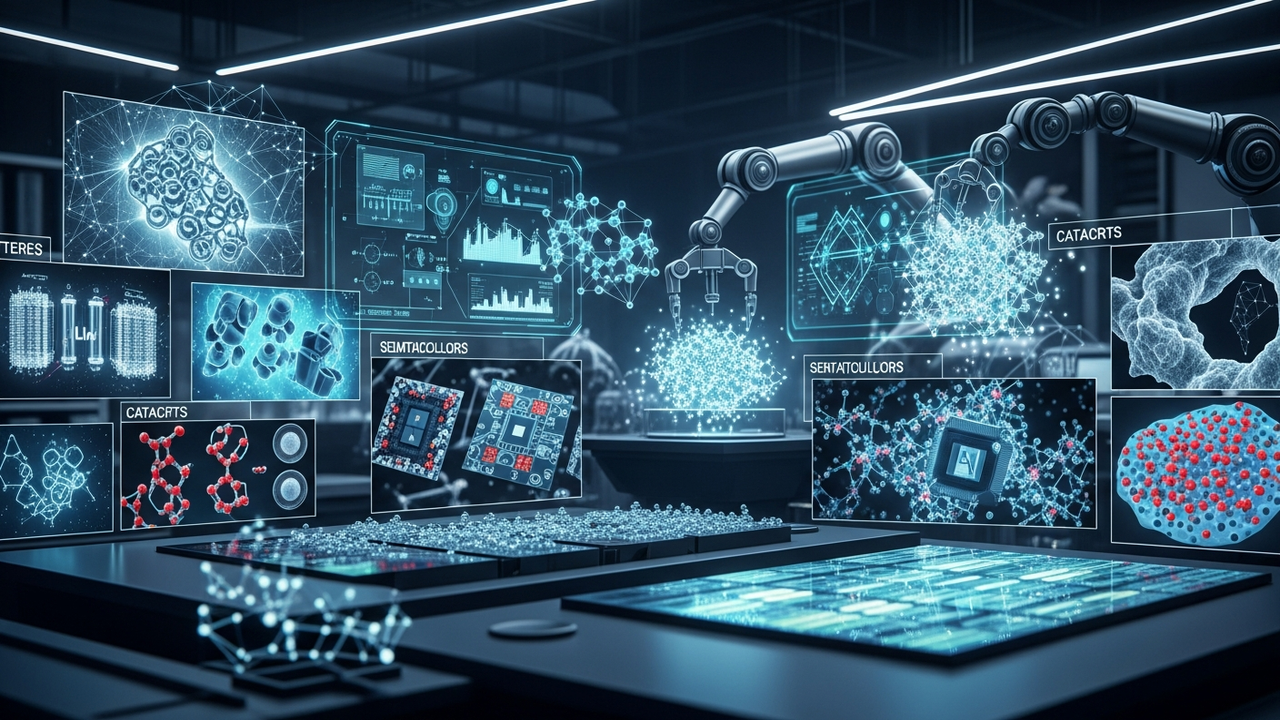
Deep Intelligent Pharma (DIP) has announced a strategic expansion of its AI technology into a materials science platform, aiming to dramatically accelerate the discovery and optimization of advanced materials across seven key fields, including battery materials, semiconductor materials, and chemical catalysts. This platform integrates AI, scientific computing, and materials informatics to enable precise prediction of material structures, efficient screening of promising candidates, and a deeper understanding of performance mechanisms, significantly curtailing traditional, often inefficient, trial-and-error processes.
Technical / Clinical Details
DIP’s materials science AI platform harnesses advanced machine learning algorithms and deep learning models to learn the complex correlations between material structures and their properties. Specifically, the platform first incorporates results from molecular simulations and quantum chemistry calculations into its AI models to predict the physical and chemical properties of new materials with high accuracy, based on known material data. Leveraging this predictive capability, it then virtually screens tens to hundreds of thousands of material candidates that could meet specific functional requirements (e.g., high energy density, superior conductivity, high catalytic activity). This dramatically reduces the need for manual experimentation by researchers, allowing them to focus resources on a select few of the most promising candidates. Furthermore, the platform provides atomic-level insights into material performance mechanisms—explaining why a particular structure or composition exhibits its observed performance. This “AI-guided, design-first” approach empowers scientists to make more data-driven decisions and streamline the entire development process.
Background & Context
Modern industries, encompassing energy, electronics, automotive, and chemicals, face an escalating demand for high-performance and sustainable advanced materials. However, the discovery and development of these materials have historically been time-consuming and costly, often requiring years or even decades for commercialization. Deep Intelligent Pharma has a proven track record of using AI to accelerate and improve the success rate of drug discovery in the pharmaceutical sector. Applying its AI technology to materials science holds great promise for solving similar bottlenecks in material development. Particularly, the rapid evolution of battery materials, the miniaturization and performance enhancement of semiconductors, and the search for more efficient chemical catalysts are critical challenges for maintaining global competitiveness, making AI-driven acceleration highly desirable.
Strategic Significance & Outlook
The expansion of DIP’s AI materials science platform has the potential to dramatically accelerate the pace of material innovation across multiple industrial sectors. By enabling AI to autonomously handle material design, prediction, screening, and mechanistic analysis, researchers can allocate their focus to more complex and strategic problems. This approach will significantly shorten the time-to-market for new materials, contribute to reduced manufacturing costs, enhanced product performance, and the realization of more sustainable industrial processes. In the long term, this platform is expected to become a core component of “self-driving laboratories,” making a future where AI manages the entire material lifecycle—from design to synthesis, characterization, and optimization—a tangible reality. This will lead to a significant leap in scientific discovery efficiency and widespread benefits across society.
Source: https://www.openpr.com/news/4600236/deep-intelligent-pharma-advances-ai-for-materials-science
Get our weekly technology intelligence — free
Receive an infographic that lets you judge at a glance whether each field’s analysis report is worth reading.
Subscribe Free — Weekly Tech Intelligence
By subscribing, you’ll receive Troy-Technical’s weekly technology intelligence newsletter.
- Your email and selected fields are used only to deliver the newsletter.
- We never share your information with third parties.
- You can unsubscribe anytime via the link in each email.
See our Privacy Policy for details.
Takes about a minute · Unsubscribe anytime