Key Findings
The 4th CEMDI-PAIMS Symposium, held in Montreal, saw robust discussions on how the multifaceted integration of computational materials science, artificial intelligence (AI), large-scale data, experimental insights, and international collaboration accelerates the new materials discovery process. This symposium specifically focused on the development of next-generation materials for energy and environmental applications.
Technical / Clinical Details
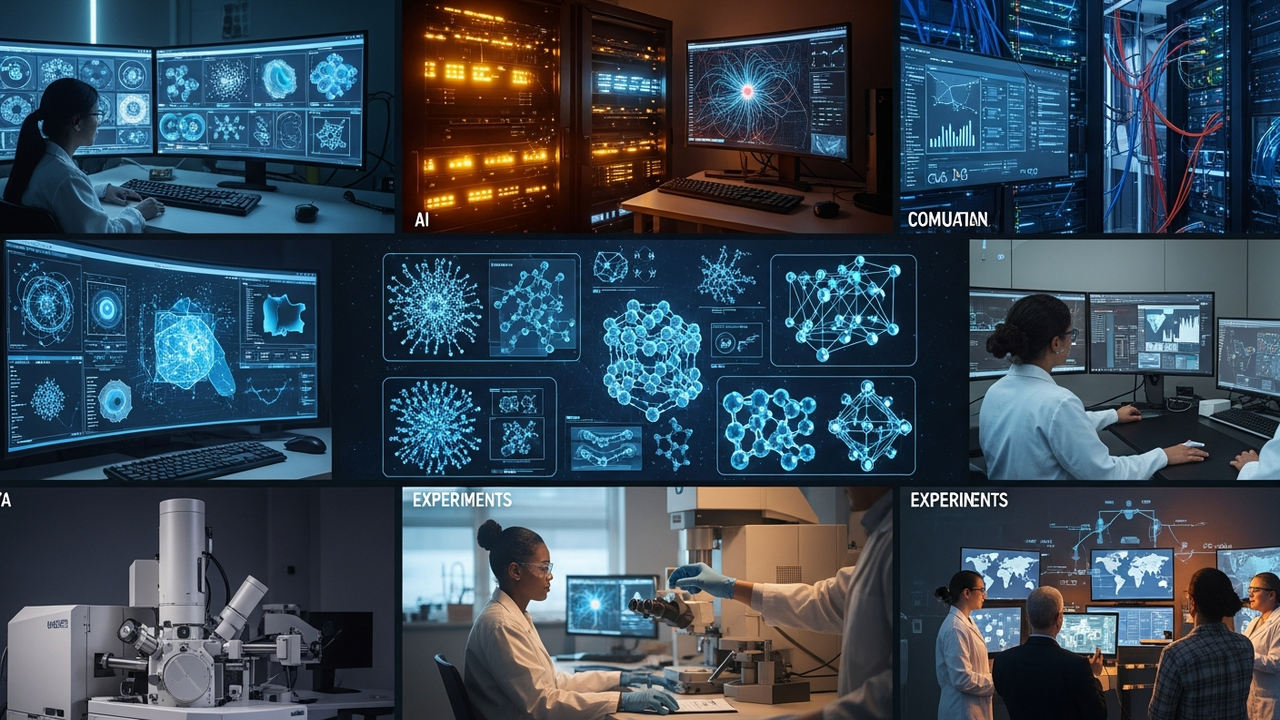
The symposium highlighted several approaches for accelerating materials discovery:
- Computational Modeling: Advanced computational methods such as Density Functional Theory (DFT), Molecular Dynamics (MD), and Monte Carlo simulations are used to predict atomic-level structures, electronic properties, and thermodynamic stability of materials. This efficiently narrows down the search space for promising material candidates.
- Artificial Intelligence (AI) and Machine Learning (ML): These learn complex nonlinear relationships between material composition and properties, predicting the performance of new materials. Inverse design approaches allow AI to autonomously propose compositions for materials with desired properties.
- Data-Driven Approaches: Large databases are constructed by integrating experimental data, computational data, and literature information, from which patterns and correlations are extracted to derive new scientific insights. Data quality and curation are key to success.
- Experimental Insights and Autonomous Labs: Progress in high-throughput experimental methods for validating computational and AI predictions, as well as autonomous laboratories (Self-Driving Labs) combining robotics and AI, was presented. This improves experimental efficiency and reproducibility, accelerating development cycles.
- International Collaboration: As a joint Canada-Japan initiative, researchers from different cultural backgrounds share knowledge and resources to create material solutions that address more complex global challenges.
The synergistic interaction of these elements is expected to accelerate the development of, for example, high-efficiency solar cell materials, CO₂ adsorption materials, high-performance thermoelectric materials, and next-generation battery materials.
Background & Context
Modern society faces global challenges such as climate change, energy security, and sustainable development, for which innovative materials technology is indispensable. However, traditional materials discovery processes have been a bottleneck for innovation due to their complexity and time constraints. This symposium, bringing together experts from diverse fields such as materials science, AI, data science, and engineering, aims to formulate new strategies and roadmaps to overcome these challenges through an interdisciplinary approach.
Strategic Significance & Outlook
The knowledge and collaborations discussed at the CEMDI-PAIMS Symposium will significantly accelerate materials innovation in the energy and environmental sectors. Particularly, the realization of closed-loop learning systems between computation and experimentation will dramatically improve the efficiency of materials discovery and shorten the time-to-market for new technologies. Such interdisciplinary and international collaborative frameworks are expected to remain indispensable models for generating solutions to complex scientific and societal challenges in the future.
Source: https://www.eurekalert.org/news-releases/1140001
Get our weekly technology intelligence — free
Receive an infographic that lets you judge at a glance whether each field’s analysis report is worth reading.
Subscribe Free — Weekly Tech Intelligence
By subscribing, you’ll receive Troy-Technical’s weekly technology intelligence newsletter.
- Your email and selected fields are used only to deliver the newsletter.
- We never share your information with third parties.
- You can unsubscribe anytime via the link in each email.
See our Privacy Policy for details.
Takes about a minute · Unsubscribe anytime