Key Findings
Aluminum alloy components are playing an indispensable role in enabling AI sensors to maintain high reliability and stability even under extreme temperature conditions. Machine learning algorithms are central to optimizing the thermal performance of these components, and AI-driven design systems can identify optimal configurations at a pace that far surpasses traditional engineering iterative processes.
Technical / Clinical Details
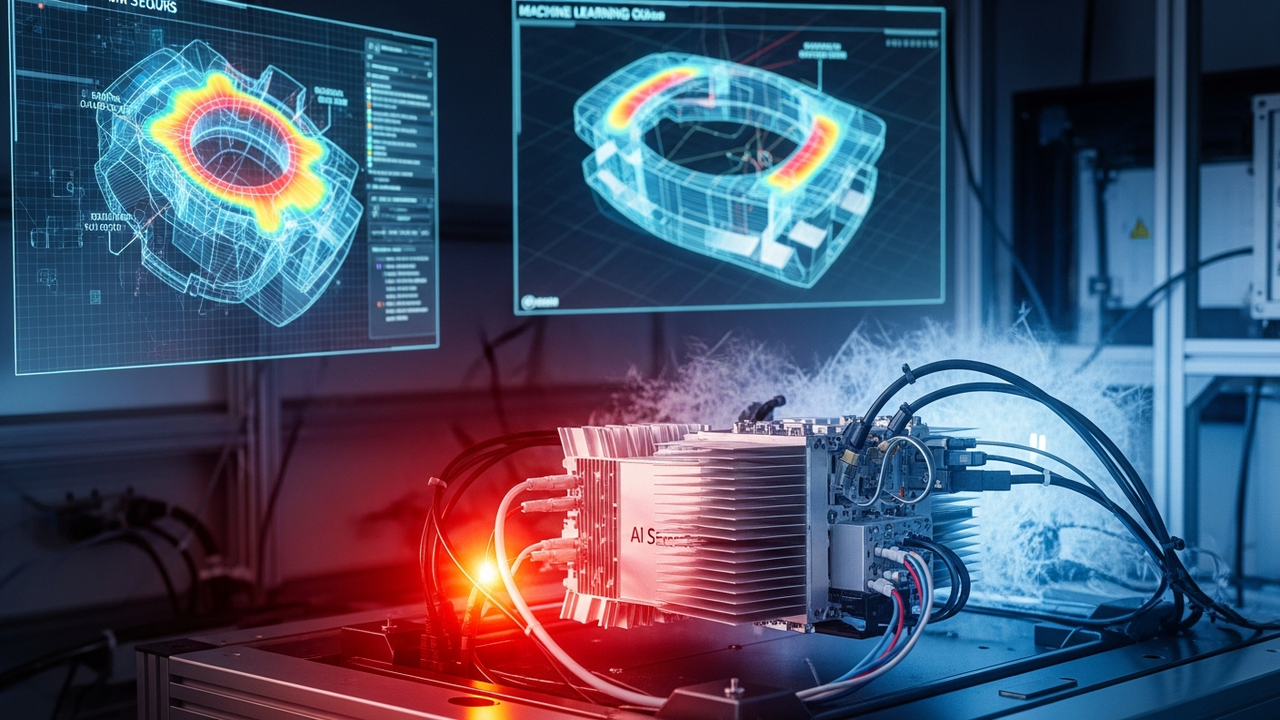
AI sensors in applications such as autonomous vehicles, industrial robots, and aerospace systems are often exposed to extremely high or low temperatures. In such environments, the electronic components of sensors are susceptible to thermal stress, risking performance degradation and failure. Aluminum alloys, with their excellent thermal conductivity, lightweight properties, and mechanical strength, offer an ideal solution to these challenges. Research involves using machine learning algorithms to optimize the geometric shape, material composition, and surface treatment of aluminum alloy components (e.g., heat sinks, casings). The AI-driven design system identifies optimal designs through steps such as:
- Data Collection: Gathering data on thermal performance from simulations, experiments, and historical design data.
- AI Model Training: Training AI models with collected data to learn relationships between material properties, geometry, and temperature distribution.
- Design Exploration: The AI model generates thousands of design candidates that satisfy multiple constraints, such as thermal conductivity, coefficient of thermal expansion, and lightweight requirements.
- Optimization and Validation: Identifying the most thermally efficient design among the generated candidates and validating it through detailed physical simulations or prototype testing.
This process allows for dramatically faster and more efficient design compared to manual engineering cycles, maximizing thermal performance while optimizing material usage.
Background & Context
The proliferation and expanding application range of AI technology are placing new demands on sensor technology. Particularly for AI systems deployed in harsh environments, the durability and reliability of sensor components are paramount. Traditional design methodologies involved lengthy and costly processes to find optimal thermal management solutions. The convergence of materials informatics, AI, and advanced materials engineering is key to resolving this bottleneck and accelerating the development of higher-performance and more robust AI sensors. This expands the possibilities of AI technology and fosters innovation across industries.
Strategic Significance & Outlook
The optimization of aluminum alloy components through AI-driven design systems will significantly enhance the reliability and lifespan of AI sensors, accelerating the deployment of AI applications in fields such as autonomous driving, space exploration, and smart factories. This technology is also applicable to other electronic devices where thermal management is critical and to the design of high-performance systems operating in harsh environments. The integration of materials science, AI, and manufacturing technologies is expected to become a standard approach in future product development, contributing to the realization of more robust and efficient intelligent systems. This reinforces the foundation for AI to function safely and effectively in a wider range of real-world environments.
Get our weekly technology intelligence — free
Receive an infographic that lets you judge at a glance whether each field’s analysis report is worth reading.
Subscribe Free — Weekly Tech Intelligence
By subscribing, you’ll receive Troy-Technical’s weekly technology intelligence newsletter.
- Your email and selected fields are used only to deliver the newsletter.
- We never share your information with third parties.
- You can unsubscribe anytime via the link in each email.
See our Privacy Policy for details.
Takes about a minute · Unsubscribe anytime