Key Findings
Scientists at the National Graphene Institute, University of Manchester, in collaboration with the UK’s National Physical Laboratory (NPL) and 15 international partner laboratories, have developed a groundbreaking new protocol for measuring graphene quality using Transmission Electron Microscopy (TEM). This achievement is set to form the foundation of the ISO/TS 21356-2 international standard, which is anticipated to be published in 2026, marking a critical milestone for the commercialization of graphene materials.
Technical / Clinical Details
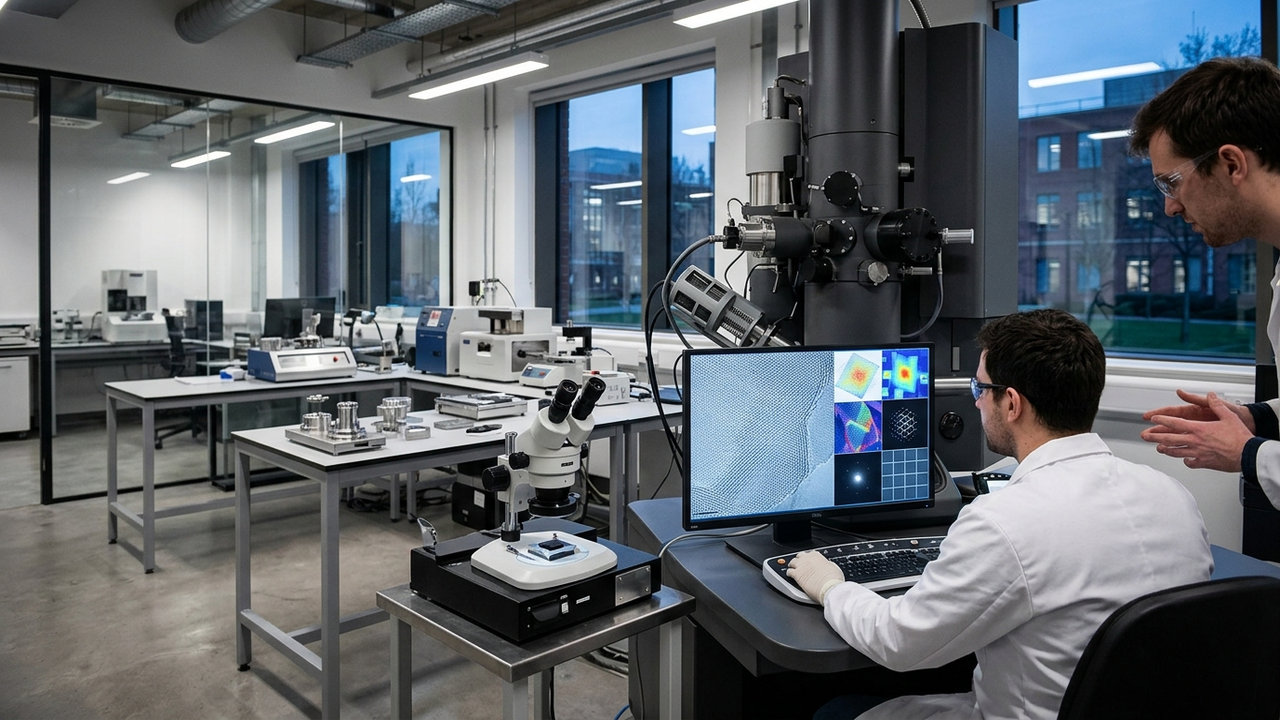
The newly developed protocol enables the high-precision evaluation of key graphene quality parameters, such as the number of layers, defect density, and crystal structure, with nanometer-scale resolution. While Transmission Electron Microscopy is a powerful tool capable of directly observing the atomic-level structure of graphene sheets, consistent interpretation and standardization of its results have demanded significant expertise and a unified approach. This new protocol establishes detailed procedures and criteria, allowing research institutions worldwide to assess graphene quality using identical methods. This capability will make it possible to objectively compare and verify the quality of graphene materials from different suppliers, substantially reducing uncertainty in graphene-based product development.
Background & Context
Graphene, often hailed as a ‘wonder material’ due to its extraordinary properties (high conductivity, strength, transparency, etc.), holds immense promise for applications across a wide array of fields, including electronics, energy, composite materials, and medicine. However, the lack of a stable supply of high-quality graphene and standardized, objective methods for its quality assessment have long been major barriers to commercialization. As numerous companies market products purportedly containing ‘graphene,’ the opacity of their quality has risked undermining the overall credibility of the industry. The establishment of this international standard is an indispensable step toward overcoming these challenges and fostering the healthy development of the graphene market.
Strategic Significance & Outlook
The introduction of the ISO/TS 21356-2 international standard will have a profound impact on the graphene industry. Firstly, quality standardization will strengthen trust between suppliers and users, making the graphene material supply chain more transparent and efficient. This is expected to shorten the lead time from R&D to product manufacturing, accelerating the introduction of innovative graphene-based products to the market. Specifically, the practical application of graphene will accelerate in areas such as high-performance sensors, next-generation batteries, lightweight composite materials, and flexible electronics. This contribution by the University of Manchester and its international partners lays the groundwork for unlocking graphene’s infinite potential and powerfully advancing technological innovation toward a sustainable society.
Source: https://www.facebook.com/groups/1008908201222470/posts/1279435634169724/
Get our weekly technology intelligence — free
Receive an infographic that lets you judge at a glance whether each field’s analysis report is worth reading.
Subscribe Free — Weekly Tech Intelligence
By subscribing, you’ll receive Troy-Technical’s weekly technology intelligence newsletter.
- Your email and selected fields are used only to deliver the newsletter.
- We never share your information with third parties.
- You can unsubscribe anytime via the link in each email.
See our Privacy Policy for details.
Takes about a minute · Unsubscribe anytime