Background
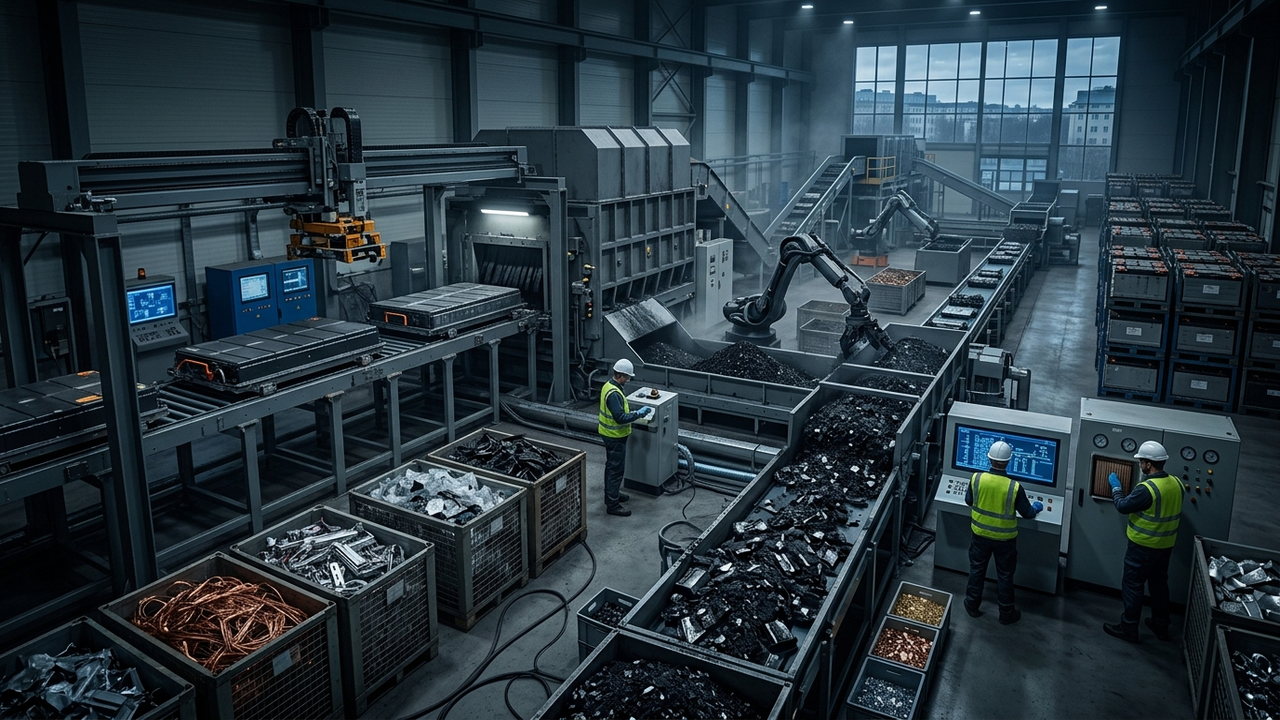
The European Union (EU) has established some of the world’s most stringent battery regulations, designed to enhance sustainability across the entire battery lifecycle. These progressive measures include setting ambitious recycling efficiency targets and mandating specific recycled content percentages in new batteries. While these regulations aim to bolster resource self-sufficiency and mitigate environmental impact, their successful implementation hinges on the economic viability of recycling processes. However, despite these robust policy frameworks, battery recycling operations within the EU consistently face significant economic challenges, as reported by ESS News, posing a substantial hurdle to the bloc’s ambitious circular economy objectives and threatening the overall sustainability of the battery supply chain.
Key Findings
A primary finding is that the costs associated with current battery recycling processes frequently outweigh the market value of the recovered secondary materials, making it difficult for recycling businesses to sustain operations. This economic unviability is driven by several complex technical and market factors. Technically, the inherent diversity of battery chemistries, such as lithium-ion and nickel-metal hydride, necessitates varied and often distinct recycling processes, which significantly increases the complexity and cost across collection, sorting, and material processing stages. Furthermore, large and intricate battery packs, particularly those from electric vehicles (EVs), demand sophisticated techniques and specialized equipment for safe dismantling and handling. The subsequent purification processes, essential for achieving the high purity levels required for valuable recovered materials like lithium, cobalt, and nickel, are also inherently costly.
Economically, the fluctuating market prices of virgin materials (newly mined raw materials) represent a major barrier. This volatility often means that recycled materials struggle to consistently maintain a competitive price advantage, directly undermining their economic feasibility. Exacerbating these issues, Europe’s current recycling infrastructure is struggling to adequately address the scale and complexity of these challenges. In contrast, many Asian nations, notably China, have more established recycling ecosystems that benefit from economies of scale, leading to more active and potentially cost-effective recycling operations. This disparity suggests that Europe may be lagging in terms of international competitiveness in this crucial sector.
Addressing these economic challenges is an urgent concern for EU policymakers, industry stakeholders, and research institutions. A multifaceted approach is imperative: firstly, technological innovation is crucial to reduce costs and enhance the efficiency of recycling processes, particularly through the development of versatile methods compatible with a broader array of battery chemistries. Secondly, robust policy support is needed to boost the market value of recycled materials, potentially through incentives for their utilization or integration with existing emissions trading schemes. Thirdly, optimizing and streamlining the collection, sorting, and logistics networks for end-of-life batteries is essential. Through these integrated efforts, Europe aims to construct a truly sustainable and economically viable battery circular economy, thereby aspiring to assert global leadership in this vital domain.
Source: https://www.ess-news.com/2026/08/28/battery-recycling-remains-uneconomic-in-europe/
Get our weekly technology intelligence — free
Receive an infographic that lets you judge at a glance whether each field’s analysis report is worth reading.
Subscribe Free — Weekly Tech Intelligence
By subscribing, you’ll receive Troy-Technical’s weekly technology intelligence newsletter.
- Your email and selected fields are used only to deliver the newsletter.
- We never share your information with third parties.
- You can unsubscribe anytime via the link in each email.
See our Privacy Policy for details.
Takes about a minute · Unsubscribe anytime








Comments