Key Findings
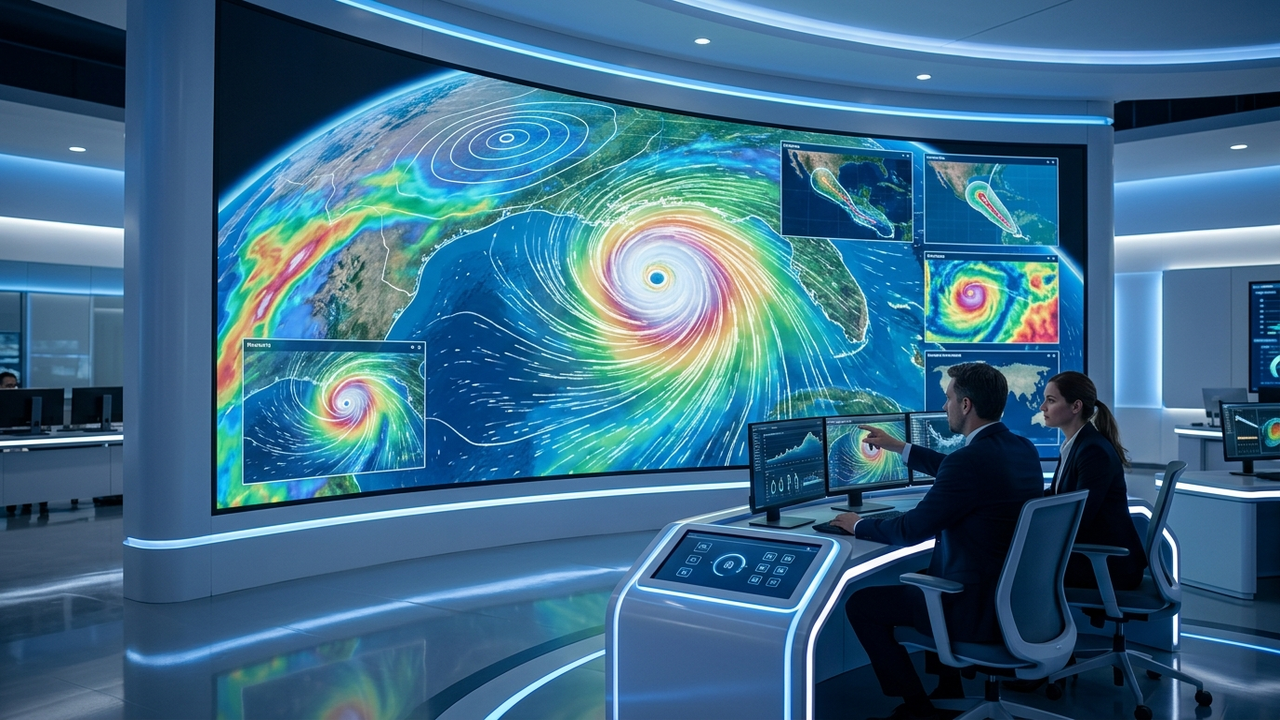
Google DeepMind has unveiled “WeatherNext 3,” the latest iteration of its weather forecasting AI model, positioning it as the most accurate global weather AI model to date. The model is reported to have achieved groundbreaking advancements specifically in the precision of cyclone prediction.
Technical Details
WeatherNext 3 is built upon sophisticated deep learning techniques integrated with vast meteorological datasets. Unlike traditional numerical weather prediction models that rely on complex physics-based simulations, AI models learn from historical weather patterns, enabling faster and more efficient forecasts. WeatherNext 3 demonstrated significant improvements in predicting the genesis, trajectory, and intensity of cyclones compared to conventional models. This is expected to directly enhance early warning systems for extreme weather events like typhoons and hurricanes, thereby improving disaster preparedness. While the detailed architecture and training data are not fully disclosed, drawing from the success of previous WeatherNext series, it likely utilizes diverse data sources including high-resolution satellite imagery, radar data, and ground-based observations.
Background & Context
As climate change intensifies and extreme weather events become more frequent globally, highly accurate weather forecasting is an indispensable societal infrastructure. Cyclones and other major storms cause immense damage to human lives and economies, making improvements in their prediction accuracy a long-standing challenge for the international community. Google DeepMind operates under the mission to accelerate scientific discovery through AI, and the WeatherNext series represents one of its flagship achievements. AI-driven weather forecasting is gaining attention for its ability to complement the limitations of traditional physics-based models, providing quicker and more detailed information.
Strategic Significance & Outlook
The introduction of WeatherNext 3 holds the potential to revolutionize the field of weather forecasting. More accurate cyclone predictions will enable governments, disaster management agencies, and residents to establish appropriate evacuation plans and preparations, directly mitigating damage. Furthermore, industries heavily reliant on weather, such as agriculture, aviation, and energy, will benefit from enhanced forecast precision, leading to improved operational efficiency and reduced economic losses. Looking ahead, further evolution of this technology is expected to extend its application to predicting localized extreme weather phenomena and long-term climate change, further contributing to global challenge resolution.
Source: https://deepmind.google/research/
Get our weekly technology intelligence — free
Receive an infographic that lets you judge at a glance whether each field’s analysis report is worth reading.
Subscribe Free — Weekly Tech Intelligence
By subscribing, you’ll receive Troy-Technical’s weekly technology intelligence newsletter.
- Your email and selected fields are used only to deliver the newsletter.
- We never share your information with third parties.
- You can unsubscribe anytime via the link in each email.
See our Privacy Policy for details.
Takes about a minute · Unsubscribe anytime









Comments