Key Findings
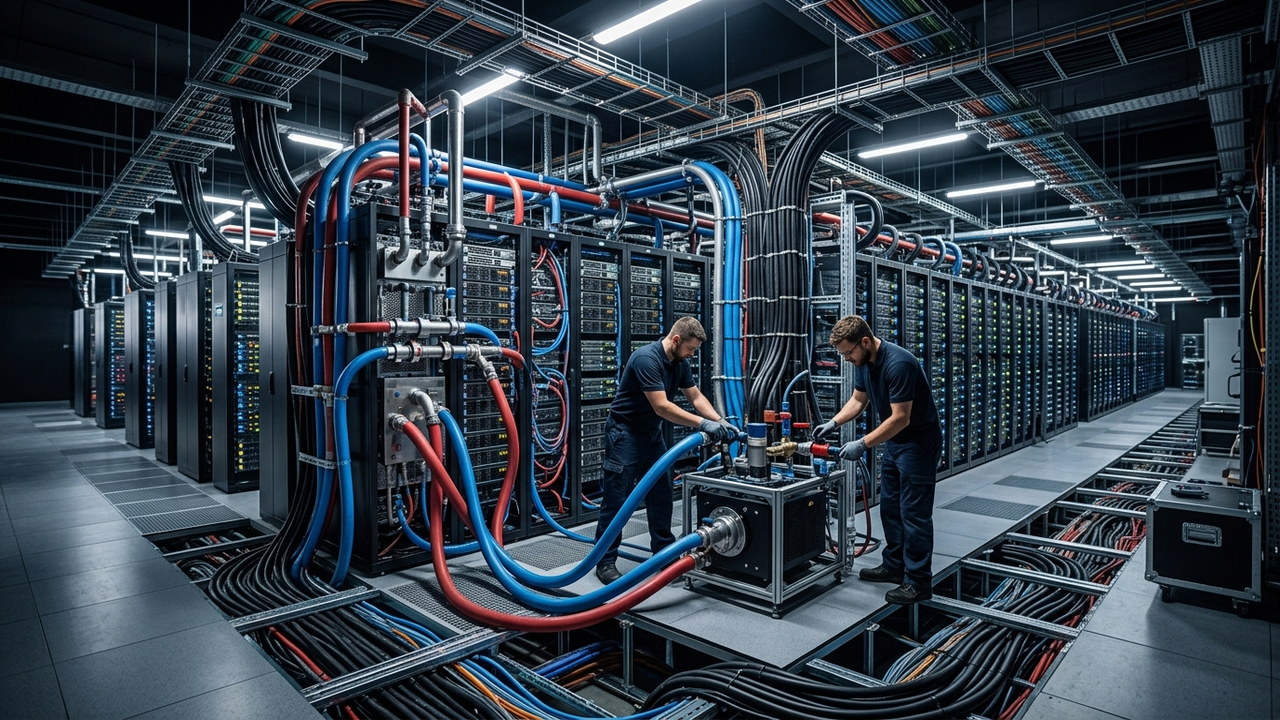
The escalating AI competition is causing unforeseen supply chain bottlenecks in power and cooling systems for AI data centers, which are struggling to keep up with increasingly demanding server requirements. Demand for critical components such as transformers, generators, power distribution systems, and cooling units has surged. To address these challenges, Bank of America projects that 70% of new AI data centers will adopt liquid cooling technology by 2030.
Technical Details
- AI workloads exhibit significantly higher power density and heat generation compared to traditional servers. For instance, an NVIDIA H100 GPU can consume up to 700W, several times that of conventional CPUs. This high density makes efficient thermal management challenging with air cooling alone.
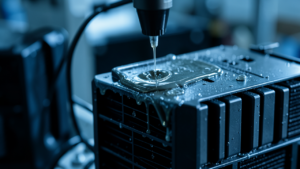
- Liquid cooling systems, particularly direct-to-chip liquid cooling and immersion cooling, offer substantially higher heat removal capabilities and are more energy-efficient than air cooling. These systems have the potential to improve data center Power Usage Effectiveness (PUE) and reduce operational costs.
- Supply chain bottlenecks are leading to extended manufacturing lead times and increased costs for these high-performance components, impacting the speed of AI infrastructure deployment globally.
Background & Context
The rise of generative AI necessitates unprecedented infrastructure investments for training and inference of large-scale AI models. Data centers are at the heart of this digital revolution, and their power consumption is dramatically increasing. In the United States alone, data center electricity consumption is projected to grow by 26% annually by 2026, making power supply and efficient cooling urgent issues. Current supply chains are ill-equipped to handle such a rapid shift in demand, posing a major constraint on new infrastructure builds.
Strategic Significance & Outlook
AI data center’s power and cooling bottlenecks present significant business opportunities for related hardware manufacturers and cooling solution providers. The transition to liquid cooling technology is also critical from an energy efficiency and sustainability perspective, prompting a paradigm shift in data center design and operation. Governments and industry bodies must address this challenge by stabilizing power supply and providing incentives for new technology adoption. In the long term, the realization of more efficient and sustainable AI infrastructure will support the broader adoption and advancement of AI technology, driving global innovation.
Get our weekly technology intelligence — free
Receive an infographic that lets you judge at a glance whether each field’s analysis report is worth reading.
Subscribe Free — Weekly Tech Intelligence
By subscribing, you’ll receive Troy-Technical’s weekly technology intelligence newsletter.
- Your email and selected fields are used only to deliver the newsletter.
- We never share your information with third parties.
- You can unsubscribe anytime via the link in each email.
See our Privacy Policy for details.
Takes about a minute · Unsubscribe anytime


Comments