Background
Cancer remains a leading cause of death, and treating tumors that have acquired radiation resistance is particularly challenging. PROTAC technology holds great promise for targeting proteins previously considered undruggable. Meanwhile, FLASH-RT is gaining attention as a next-generation radiotherapy due to its unique advantages. This study suggests that combining these two cutting-edge technologies could significantly improve treatment efficacy for refractory cancers, potentially transforming the paradigm of cancer therapy. This will serve as a strong driving force for researchers in both pharmaceutical and radiation oncology fields to develop novel combination therapies.
Key Findings
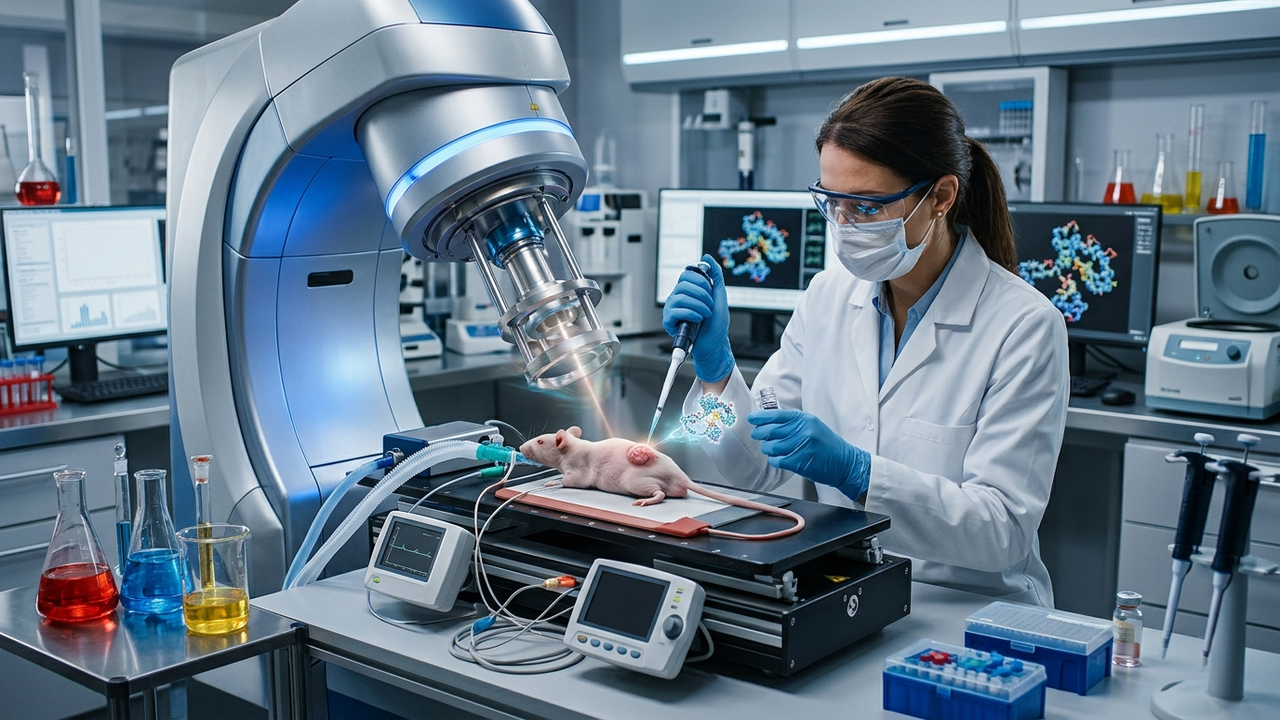
Research reported in PMC demonstrates that BRD4-targeting PROTAC nanoassemblies (APF) dramatically enhance the anti-tumor effects of ultra-high dose rate radiation therapy (FLASH-RT). APF efficiently delivered the BRD4 degrader ARV-771 to tumor cells, significantly amplifying radiation-induced reactive oxygen species (ROS) production and exacerbating DNA double-strand breaks (DSBs). In vivo models confirmed that the combined therapy of APF and FLASH-RT exhibited superior tumor suppression with minimal systemic toxicity. This groundbreaking discovery opens new avenues for combining PROTACs with radiation therapy in cancer treatment, holding the potential to revolutionize therapy for intractable cancers.
Technical Details and Mechanism
PROTACs (Proteolysis Targeting Chimeras) are innovative therapeutic modalities that degrade disease-associated proteins via the ubiquitin-proteasome system. In this study, ARV-771, a BRD4 (bromodomain-containing protein 4) degrader, was incorporated into nanoparticles to improve selective delivery to tumor cells and enhance intracellular uptake efficiency. FLASH-RT is a technique that delivers radiation at significantly higher dose rates than conventional radiotherapy, expected to boost tumor killing while reducing toxicity to normal tissues. APF promotes cancer cell apoptosis by inhibiting DNA repair mechanisms induced by FLASH-RT and increasing ROS production. This synergistic effect achieved potent anti-tumor efficacy unattainable with monotherapy.
Strategic Significance and Outlook
The combined therapy of BRD4-targeting PROTAC nanoassemblies and FLASH-RT holds significant potential as a crucial option in future cancer treatment. Future prospects include validating efficacy across various tumor types, evaluating long-term safety, and optimizing for clinical translation. Particular attention will be paid to how effective this approach proves against cancers resistant to conventional therapies and intractable solid tumors. Successful clinical application of this innovative technology could dramatically improve patient prognosis and quality of life for cancer patients globally.
Source: https://pmc.ncbi.nlm.nih.gov/articles/PMC13355409/
Get our weekly technology intelligence — free
Receive an infographic that lets you judge at a glance whether each field’s analysis report is worth reading.
Subscribe Free — Weekly Tech Intelligence
By subscribing, you’ll receive Troy-Technical’s weekly technology intelligence newsletter.
- Your email and selected fields are used only to deliver the newsletter.
- We never share your information with third parties.
- You can unsubscribe anytime via the link in each email.
See our Privacy Policy for details.
Takes about a minute · Unsubscribe anytime







Comments