Key Findings
The Australian battery storage sector is witnessing a dramatic revenue shift as the profitability of Frequency Control Ancillary Services (FCAS) markets has collapsed. This critical change is forcing developers to fundamentally rethink their choice between AC-coupled and DC-coupled hybrid designs, with energy arbitrage now becoming the dominant revenue stream for battery energy storage systems (BESS).
Technical / Clinical Details
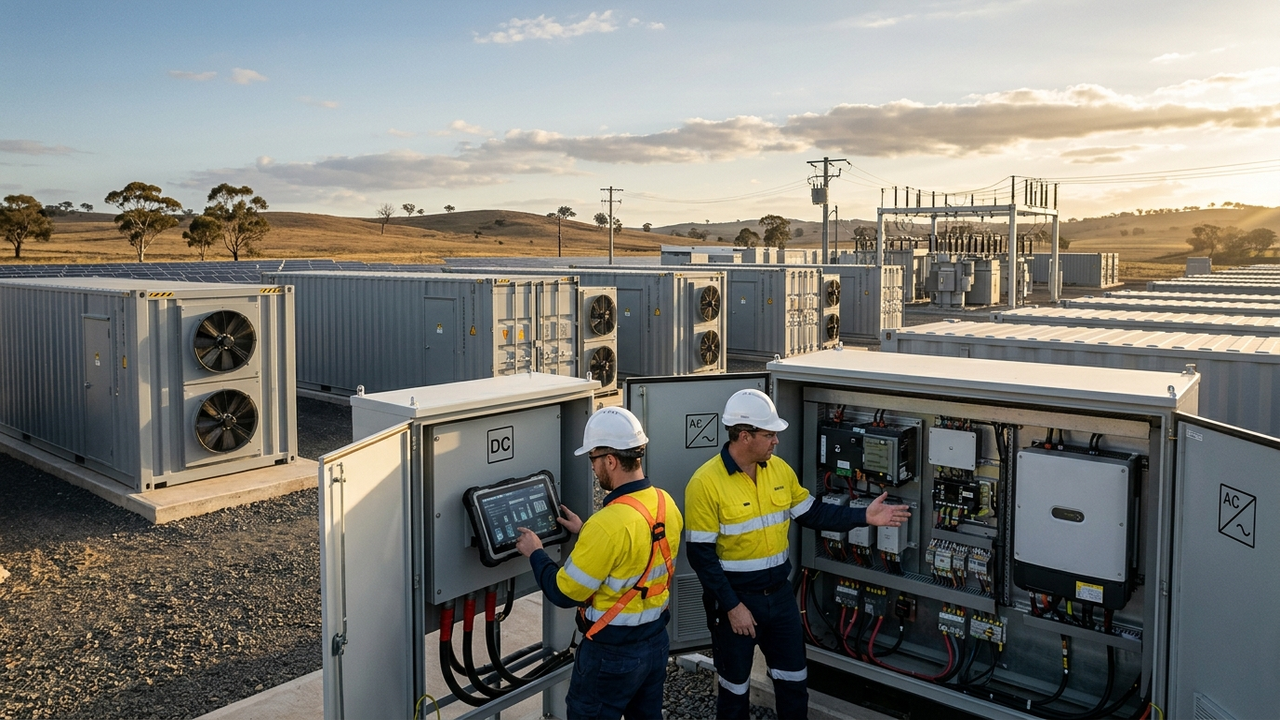
According to Kashish Shah, Senior Strategic Leader at Wartsila, battery systems must now increase their cycling in the energy market to perform more energy arbitrage, adapting to the diminished FCAS market. This shift dictates that developers will choose between AC-coupled and DC-coupled designs based on the system’s flexibility and the asset’s overall revenue strategy. While AC coupling typically integrates easily with existing solar PV plants and DC coupling offers higher efficiency for new builds, the new market dynamics prioritize long-term energy optimization over short-term grid services, influencing fundamental design choices.
Background & Context
Historically, FCAS markets offered highly lucrative revenue opportunities for battery storage projects in Australia. However, market saturation and increased competition have significantly eroded these margins. This evolution mandates that battery systems transition from being mere ancillary service providers to broader energy market participants. With the expansion of renewable energy generation, the focus is increasingly on maximizing revenue through energy price fluctuations, in addition to grid stabilization.
Strategic Significance & Outlook
This fundamental change in revenue structure will profoundly impact the economics of future battery storage projects, influencing technology selection and operational strategies. Developers are now compelled to explore diverse revenue opportunities and innovative design and operational models that maximize system flexibility. This transition marks a maturation of the Australian battery storage market, demanding new technologies and business models to ensure continued growth and profitability.
Get our weekly technology intelligence — free
Receive an infographic that lets you judge at a glance whether each field’s analysis report is worth reading.
Subscribe Free — Weekly Tech Intelligence
By subscribing, you’ll receive Troy-Technical’s weekly technology intelligence newsletter.
- Your email and selected fields are used only to deliver the newsletter.
- We never share your information with third parties.
- You can unsubscribe anytime via the link in each email.
See our Privacy Policy for details.
Takes about a minute · Unsubscribe anytime









Comments