Key Findings
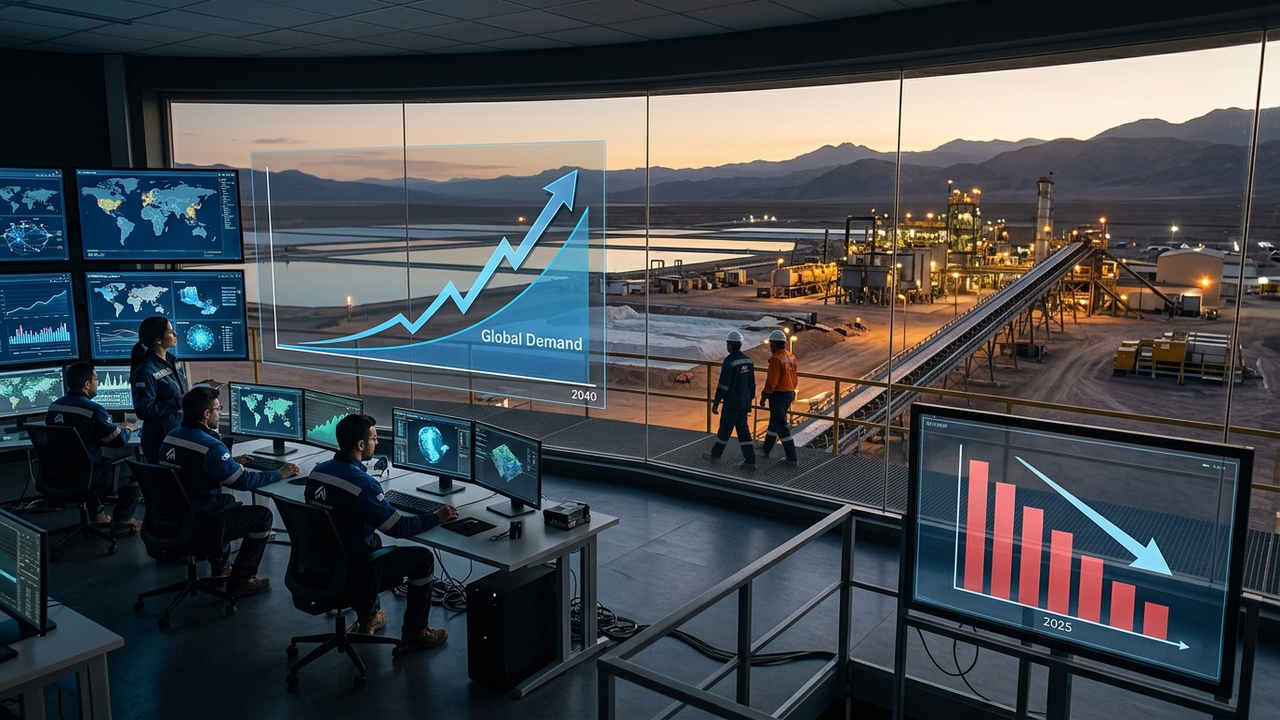
The ‘Global Critical Minerals Outlook 2026’ released by the International Energy Agency (IEA) provides a detailed analysis of the dynamics within critical mineral markets, central to the clean energy transition. Most notably, lithium demand is projected to experience the most dramatic growth, more than tripling by 2040. However, despite this robust demand forecast, global investment in the critical minerals sector for 2025 saw a 9% year-on-year decrease, marking the first significant decline since 2020.
Technical / Clinical Details
Lithium is expected to see overwhelming demand growth due to the widespread adoption of electric vehicle (EV) batteries and stationary energy storage systems (BESS). Other critical minerals such as nickel, graphite, and rare earths, essential for EV motors and renewable energy generation, are also projected for strong demand growth ranging from 50% to 90%. Conversely, cobalt demand growth is anticipated to be partially mitigated by the rapid expansion of lithium iron phosphate (LFP) battery adoption. As LFP batteries do not use cobalt, this shift could contribute to supply chain stabilization, although changes in nickel-cobalt-manganese (NCM) battery chemistries are partially offsetting this mitigating effect.
Background & Context
The decline in critical mineral investment in 2025 is a consequence of multiple converging factors. A significant drop was observed in investments in lithium-focused companies (approximately 40% down) and battery material companies overall (20% down). This trend is attributed to concerns over demand for cobalt-containing materials due to the shift towards LFP batteries, price declines stemming from perceptions of oversupply in certain minerals, and policy uncertainties in key markets, all contributing to investor caution. A delay in investment decisions for new projects could exacerbate future supply shortages, posing a threat to the achievement of clean energy transition goals.
Strategic Significance & Outlook
The IEA warns that if current investment trends persist, future supply shortages of critical minerals, including lithium, could severely impact the deployment of clean energy technologies. To avert such a scenario, enhanced policy support from governments, such as direct investment in exploration and development projects and the introduction of risk mitigation measures, is deemed essential. Furthermore, advancements in recycling technologies and the promotion of a circular economy are crucial pillars for supply stabilization. Researchers, engineers, and investors must focus on innovative solutions and strategies to bridge the gap between surging demand and decelerating investment. This Outlook highlights the urgent need for international cooperation to address the vulnerabilities in critical mineral supply chains and build a sustainable energy future.
Source: https://www.iea.org/reports/global-critical-minerals-outlook-2026/outlook
Get our weekly technology intelligence — free
Receive an infographic that lets you judge at a glance whether each field’s analysis report is worth reading.
Subscribe Free — Weekly Tech Intelligence
By subscribing, you’ll receive Troy-Technical’s weekly technology intelligence newsletter.
- Your email and selected fields are used only to deliver the newsletter.
- We never share your information with third parties.
- You can unsubscribe anytime via the link in each email.
See our Privacy Policy for details.
Takes about a minute · Unsubscribe anytime









Comments