Key Findings
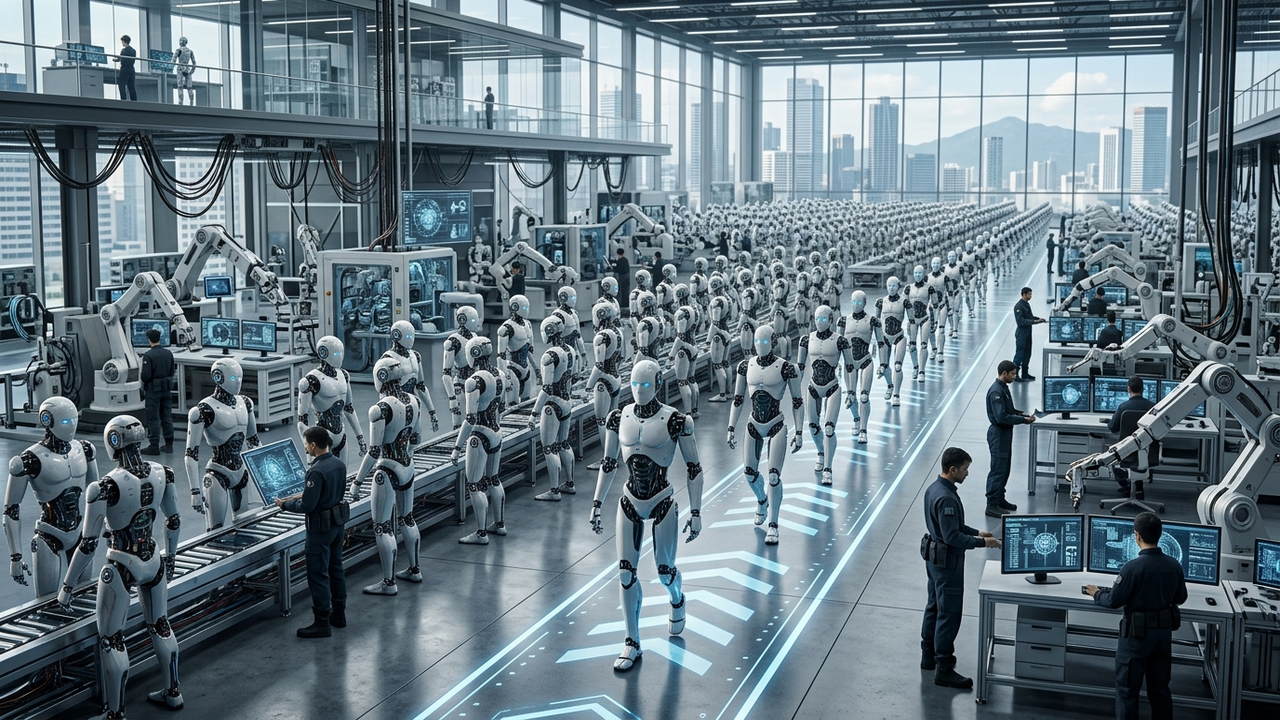
Japan is pursuing an ambitious physical AI sovereignty strategy, with the ‘Frontier Project’ at its core, aiming to translate the tacit knowledge of skilled factory workers into robot algorithms. The Ministry of Economy, Trade and Industry (METI) has allocated a substantial 387.3 billion yen (approximately $2.4 billion USD) for the project’s first year, with plans to invest up to 1 trillion yen over five years. The ultimate goal of this strategy is to deploy a staggering 10 million AI-powered robots across 18 key sectors in Japan by 2040, thereby constructing a fully technologically autonomous physical AI ecosystem.
Technical / Clinical Details
The Frontier Project integrates sensor technologies, AI-driven pattern recognition, reinforcement learning, and robot control engineering. High-precision sensors capture data on skilled workers’ hand movements, decision-making processes, and environmental adaptations, which then train AI models. This enables robots to acquire human-like flexibility and situational judgment, allowing them to autonomously perform complex manufacturing processes and infrastructure maintenance tasks. Crucially, the AI’s learning capabilities make it possible to handle delicate force adjustments and non-routine tasks that are challenging for traditional programming. The project extends beyond single-robot performance enhancements, encompassing research and development of multi-robot systems where AI-powered robot fleets collaborate to accomplish large-scale objectives.
Background & Context
Japan faces a severe demographic challenge with a shrinking workforce due to its aging population and declining birthrate, leading to critical labor shortages particularly in manufacturing, construction, and elder care. This physical AI sovereignty strategy is a national initiative not only to compensate for labor scarcity but also to enhance overall industrial productivity and maintain/strengthen international competitiveness. Furthermore, amidst rising geopolitical risks, ensuring the resilience and autonomy of technological supply chains in key industries is paramount for Japan’s economic security. The mass deployment of AI robots also serves as an effective means to digitize and pass on the expertise of highly skilled workers to future generations.
Strategic Significance & Outlook
This physical AI sovereignty strategy holds the potential to profoundly transform Japan’s industrial structure. With 10 million AI robots implemented across society by 2040, benefits are anticipated across diverse sectors, including complete automation of production lines, labor reduction in construction sites, logistics optimization, and improved quality of elder care. Should Japan’s physical AI technology set international standards, new industrial ecosystems could form, creating opportunities for technology exports and international joint development. This strategy represents a long-term vision for Japan to re-establish its position as a ‘technological superpower’ and achieve a sustainable society.
Source: https://www.youtube.com/watch?v=lWAPbD-2Hv8
Get our weekly technology intelligence — free
Receive an infographic that lets you judge at a glance whether each field’s analysis report is worth reading.
Subscribe Free — Weekly Tech Intelligence
By subscribing, you’ll receive Troy-Technical’s weekly technology intelligence newsletter.
- Your email and selected fields are used only to deliver the newsletter.
- We never share your information with third parties.
- You can unsubscribe anytime via the link in each email.
See our Privacy Policy for details.
Takes about a minute · Unsubscribe anytime









Comments