Background
The world faces urgent challenges demanding innovative new materials, particularly in sustainable energy solutions, decarbonization, and enhanced resource efficiency. Historically, material development has been a resource-intensive process, heavily reliant on time-consuming, costly, and iterative trial-and-error methodologies. Industrial leaders like Topsoe are now making a strategic move to integrate Artificial Intelligence (AI) into large-scale materials science, aiming to overcome these bottlenecks and accelerate the generation of breakthroughs. This initiative is expected to drive overall industrial innovation and significantly contribute to global environmental objectives.
Key Findings
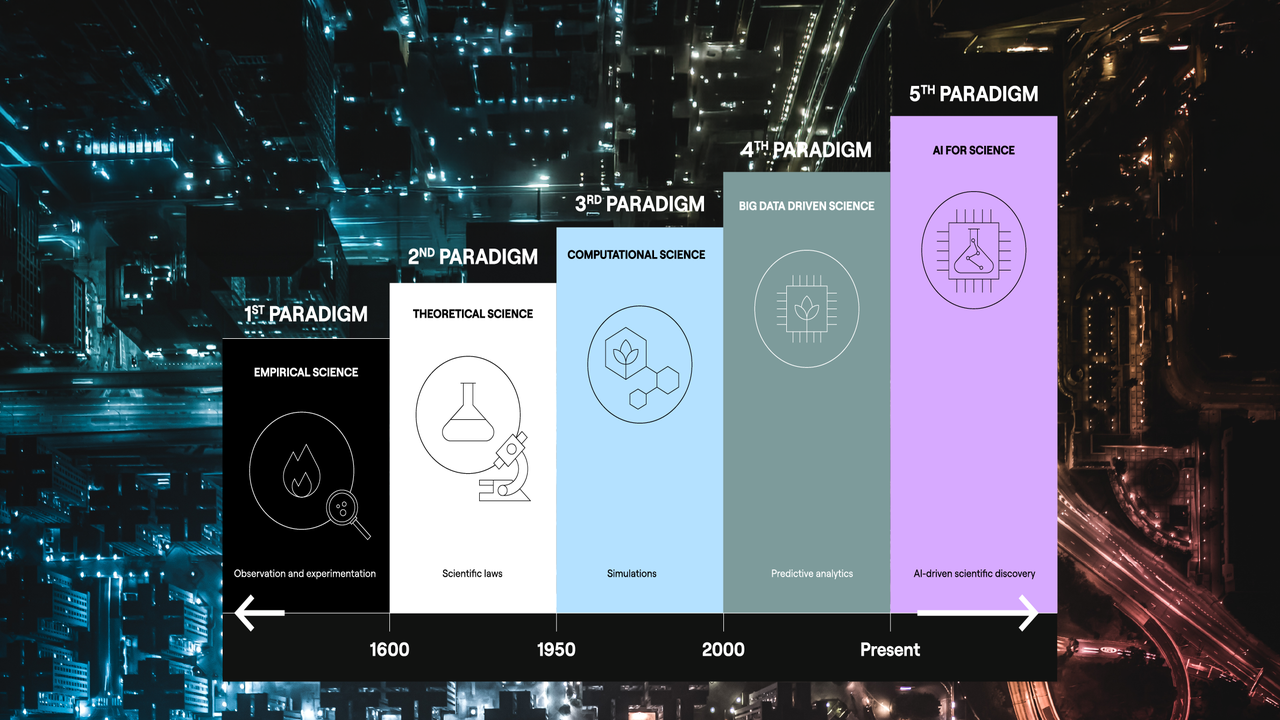
Topsoe, a global leader in catalyst technology, has announced that Artificial Intelligence (AI) is ushering in the “fifth paradigm” of materials science, poised to fundamentally transform how new materials are discovered and engineered. Within this new framework, Topsoe’s AI systems uniquely combine predictive and generative capabilities, meticulously trained to operate within fundamental physics constraints. These systems integrate vast volumes of data from diverse modalities, including visual representations, mathematical models, and extensive textual sources. Topsoe is actively deploying AI’s potential across critical domains such as heterogeneous catalysis, high-temperature electrolysis, and advanced battery materials. The company anticipates this will dramatically accelerate the material discovery process, enable the screening of far larger experimental spaces than previously imaginable, and ultimately lead to unexpected, groundbreaking findings that might have otherwise been overlooked.
Technical Details
- The Fifth Paradigm: Traditional materials science has progressed through four distinct paradigms: empirical observation, theoretical modeling, computational simulation, and big data analysis. AI integrates the strengths of these predecessors while adding a crucial new dimension of “autonomous discovery,” thereby establishing itself as the “fifth paradigm.”
- Fusion of Predictive and Generative AI: Topsoe’s approach leverages the synergy of two core AI types. Predictive AI learns from extensive datasets of existing materials to accurately forecast the properties of specific structures. Conversely, Generative AI takes desired material properties as input and autonomously proposes novel material structures or compositions designed to meet these specifications. This combined capability dramatically enhances both the efficiency and creativity inherent in the materials design process.
- Physics-Informed Constraints: A cornerstone of Topsoe’s AI systems is their training to not only identify patterns in data but also to rigorously incorporate fundamental laws and constraints from chemistry, physics, and materials science. This includes principles such as thermodynamic stability, feasible reaction pathways, and acceptable elemental bonding. This physics-informed approach ensures that AI-proposed materials are intrinsically realistic and physically viable, significantly reducing the need for unproductive and costly experimental trials.
- Multimodal Data Integration: The AI’s learning capabilities are empowered by integrating diverse forms of data. This comprehensive input includes computational simulation data, results from physical experiments, insights extracted from scientific literature, intricate crystal structure data, and detailed spectroscopic measurements. This holistic data integration fosters a more comprehensive and deeper understanding of material behavior, directly translating into improved prediction accuracy and more robust material designs.
- Key Application Areas: Topsoe is strategically applying its AI capabilities to accelerate development in several high-impact areas:
- Heterogeneous Catalysts: Essential for processes like green hydrogen production and various chemical syntheses.
- High-Temperature Electrolysis: Crucial for advanced Power-to-X (P2X) technologies, enabling conversion of renewable electricity into storable energy carriers.
- Battery Materials: Focusing on the design of high-performance, long-life battery chemistries for energy storage solutions.
Strategic Significance & Outlook
Topsoe’s AI-driven materials science initiatives are set to significantly strengthen its core business in catalyst technology and unlock new avenues for value creation, particularly in critical sectors such as green hydrogen, synthetic fuels, and sustainable chemicals. The anticipated dramatic reductions in material discovery lead times and associated costs will accelerate the market introduction of novel technologies and substantially enhance Topsoe’s competitive edge. Looking ahead, AI is expected to evolve further into an “AI co-scientist,” collaborating synergistically with human researchers to uncover entirely new material concepts and reaction pathways that were previously beyond reach. Through this forward-looking approach, Topsoe aims to globally drive innovation and contribute profoundly towards the realization of a sustainable society.