COMPANY PROFILE / Solid-State Battery
Stellantis
— Continuously acquiring joint ventures in liquid batteries while only the full-solid-state battery is advancing ahead
The mention of Stellantis with full-solid-state batteries is due to 2021 in the United StatesFactorialhe75 million dollarsto invest, and in June 2026began road tests with solid-state battery cells mounted on the development vehicle of the Dodge Charger Daytonafrom. On the other hand, the company withdrew from its partnership with LG Energy Solution in 2025 to exit the European battery joint ventureACCWe are fully impairing the investment. Folding back the liquid system while leaving only solid-state batteriesThis is a rare composition in this field. In this article, the scale of the automotive industry is kept to a minimum.what is being invested in all-solid-state batteries, who is collaborating with whom, and what are the goals?focuses on.
- Understand Stellantis in 30 seconds and its position in solid-state batteries
- About the logo and company name
- Where is this company in the world of solid-state batteries
- Company size (automotive industry is concise)
- Resources invested in solid-state batteries
- Previous efforts
- Future plans
- What is this company aiming for with solid-state batteries?
- Mapping of collaborations in the field of all-solid-state batteries
- Techniques and methods adopted
- Risks faced by this company
- Glossary / References / Claims and Corresponding References Table
1. Understanding Stellantis in 30 seconds and its position with solid-state batteries
Amsterdamregistered office as described in the 20-F filing
Milan/ParisEuronext Milan STLAM/Paris STLAP
(investment-type)Cells are not made in-house
(Nasdaq: FAC)$75 million in 2021
77Ahboth companies announced in April 2025
DaytonaStart of public road testing in June 2026
Companies working on solid-state batteriesAutomotive manufacturers, battery manufacturers, and startupsare divided into three types. Stellantis is one of themAutomotive manufacturersand does not create cellsacquires through investment and joint developmenttype fact. What sets us apart from other companies is,is in the process of reducing its overall investment in batteriesIt is. In 2025, the company decided to withdraw from its joint venture with LG Energy Solution in North America and invest in a battery joint venture in Europe.NextStar Energyfrom the withdrawal decision, investment in the European battery joint ventureACCof the full amount of write-downs, and also discontinued its hydrogen fuel cell business. Among these,solid-state batteries are still not stopped.. However, the mandatory disclosure for the fiscal year ending December 2025 in Form 20-F does not mention either ‘all-solid-state battery’ or ‘Factorial’. This drop is the most important clue when reading Stellantis.
2. Regarding logo and company name display
Note on notation: A holding company Stellantis N.V.(Dutch entity) and has an investment in Factorial.Stellantis Europe S.p.A.(formerly FCA Italy S.p.A., Turin, Italy) Stellantis Ventures B.V. two subsidiaries. Additionally, the development vehicle equipped with a solid-state battery isDodgea brand’s car, and Stellantis is Abarth・Alfa Romeo・Chrysler・Citroën・Dodge・DS・FIAT・Jeep・Lancia・Maserati・Opel・Peugeot・Ram・Vauxhall, etc. Holdings that bundle many brandsIn this article, we will distinguish between company names and brand names where necessary.
Official website:https://www.stellantis.com/en/news/press-releases/2024/october/stellantis-and-factorial-take-next-step-to-accelerate-the-future-of-electric-vehicles-with-solid-state-battery-technology3. Among the world of all-solid-state batteries, where is this company located?
4. Company Size (Automotive Business is Briefly Covered)
The automotive business itself is not the main topic of this article, so we will only focus on its size. fact. All values are cited from the Form 20-F for the fiscal year ending December 2025.
| Indicator (in millions of euros) | Fiscal year ending December 2024 | Fiscal Year Ending December 2025 |
|---|---|---|
| Operating income | 156,878 | 153,508 |
| Research and Development Expenses | 5,784 | 11,145 |
| Operating Profit/Loss (△ indicates loss) | 3,687 | △26,254 |
| Net Profit for the Period (△ indicates loss) | 5,520 | △22,332 |
| Item | Content |
|---|---|
| Units Shipped | 5,415 thousand units (2024) 5,484 thousand units(as of 2025) |
| average number of employees | 259,118 people (as of 2024) 253,654 people(as of 2025) |
| Headquarters | Amsterdam, Netherlands (Stellantis N.V.) |
| listed market | New York (NYSE: STLA), Euronext Milan (STLAM), Euronext Paris (STLAP) |
The number above isfor the entire company.It does not represent the scale of business for solid-state batteries. Not to mention, the ‘All-solid-state battery’ and ‘Factorial’ are not mentioned even once in the Form 20-F for the fiscal year ending December 2025. fact。 Research and development expenses increased from approximately 5.7 billion euros to nearly 11.1 billion euros by 2025, but according to the company’s explanation, the main reason isthe write-off of development costs due to the revision of product plans or project cancellationsand it was not because the investment in solid-state batteries increased Unconfirmed / Future. This company has no legal disclosurepress releases and the SEC filings of its investment partner, Factorialto read.
5. Resources invested in solid-state batteries
Stellantis publicly disclosed the amount isonlyone. The investment in Factorial in 2021 was $75 million. The other numbers are related to the listing of the company in the United States in 2026.Factorial-side disclosurecan be obtained. In this article, we will always specify which disclosure it is referring to.
| Resource types | The content that has been made public. | Classification |
|---|---|---|
| Investment abroad (amount and timing) | Invested $75 million in Factorial in 2021.Stellantis itself has recorded this amount in both press releases in October 2024 and April 2025. | fact |
| external investment (equity stake) | At the time of Factorial’s U.S. IPO,Stellantis Europe S.p.A. held 8,234,493 shares, and Stellantis Ventures B.V. held 435,502 sharesand total8,669,995 sharesheld. Series A common stock of9.5%and all shares8.1%equivalent | Fact (Disclosure of Investment Holdings) |
| external investment (additional loans) | in the convertible bonds due in August 2025Stellantis Ventures B.V. for $2 millionto be assumed (full balance as of December 31, 2025). The same amount is also being assumed by Mercedes-Benz’s investment subsidiary. | Fact (Disclosure of Investment Holdings) |
| Investment in external entities (governance) | Stellantis-related individualshave been appointed as a director of Factorial. Among the directors before the company went public were Michael Bly, who was employed by Stellantis Europe’s related companies, and Jon K. Nelson, CEO of Stellantis Financial Services, among others | Fact (Disclosure of Investment Holdings) |
| joint development agreement | The joint development agreement dated August 1, 2025replaced the contract dated November 20, 2021. It defines technical goals, milestones, and deliverables, and divides the development activities | Fact (Disclosure of Investment Holdings) |
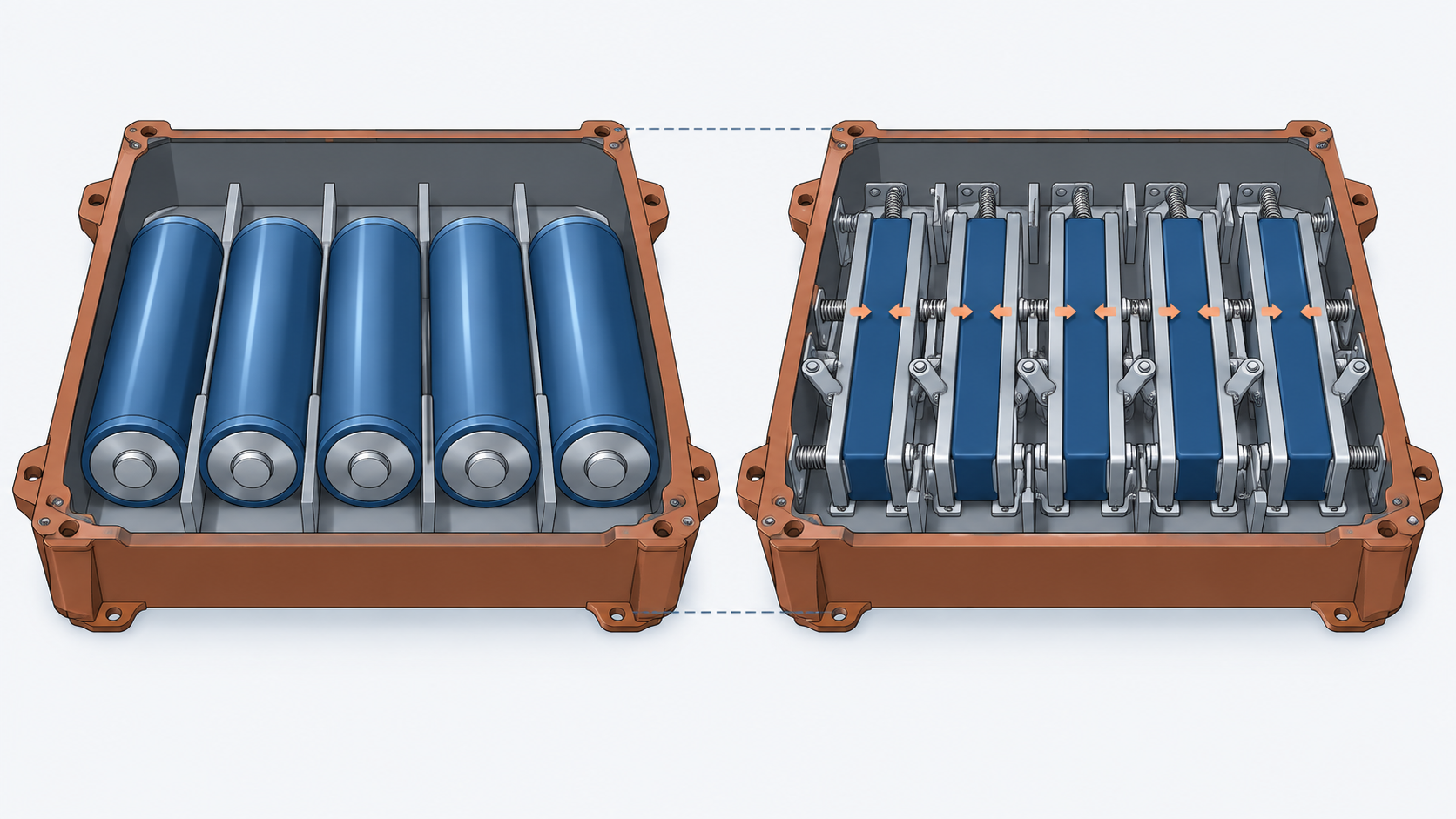
| among its own design assets | All-solid-state cells to be incorporated into existing battery packsStellantis has designed a new patented mechanical structure. The control system and pack design were also replaced | fact |
| person (full-time staff) | number of full-time staff for solid-state batteries | Not disclosed |
| money (investment amount) | Development costs and equipment investment for all-solid-state batteries excluding equity investments | Not disclosed |
| Collaboration with universities and research institutions | The university joint research on solid-state batteries could not be confirmed in the company’s official documents | Unconfirmed |
The most technically significant announcement for June 2026 is combining FEST cells with existing battery packs using a new mechanical structure.This description says. fact. When installing solid-state batteries in vehicles, it is usuallydesigned from scratchIt becomes necessary. Since the cells change in thickness due to charging and discharging, a mechanism that can be pressed from the outside is required, and this mechanism does not fit into the gaps of the existing packs.
Stellantis says thatpatented a mechanismto solve the problem Calculations in this article. In response to Mercedes’ air pressure actuator and BMW’s control of operating pressure, Stellantis has put forward a mechanical structure answer.mechanical structureIt becomes necessary. Stellantis has emphasized that ‘FEST has high compatibility with the manufacturing process of liquid lithium-ion batteries, and this is an important path to scale up.’ This is also in the same line of thinking. I want to make and publish the method without significantly changing what we already haveThis consistent stance can be read. The reason why companies that are cutting back on investments in batteries are continuing with only solid-state batteries is likely due to this.
6. Previous Efforts
| period | incident | Meaning |
|---|---|---|
| 2021 year | Invested 75 million dollars in Factorial.On November 20th of the same year, a joint development agreement was concluded | The only number Stellantis publicly disclosed regarding the amount |
| October 23, 2024 | Announced the demonstration fleet plan using vehicles based on the STLA Large platform.The first is Dodge Charger Daytona. It will be on public roads by 2026. FEST’s energy density exceeds 390Wh/kg as explained | STLA Large is said to be designed to support up to 2 million vehicles worldwide |
| April 24, 2025 | Successfully announced the verification of FEST cells in vehicle size.77Ah cell for375Wh/kg, over 600 cycles,charging from 15% to 90% in 18 minutes、−30℃〜45℃maximum4Cdischarge | cell-specific values were first made public |
| 2025 year | demonstration fleetfabricate the first one(Disclosure on the side of Factorial) | preliminary stage of public road testing |
| 2025 year | Meanwhile, battery joint venture with LG Energy Solutiondecision to withdraw from NextStar Energy(1.6 billion euros in costs). Battery joint venture in Europefull write-down of investment in ACC(500 million euros). The hydrogen fuel cell business will also be cut | Withdrawing from in-house production of liquid systems |
| August 1, 2025 | A joint development agreement with FactorialTo renegotiateReplacing the contract signed in November 2021 | Revised the technical goals and milestones |
| June 11, 2026 | Dodge Charger Daytona development car equipped with FEST cells and started road testing.First full-solid-state battery installation in Stellantis vehicles. It is the first integrated vehicle in North America. | Patented mechanical structure incorporated into existing packs. |
7. Future Plans
CalibrationVerification of pack performance, reliability, and safety
development vehicle programThe first car in June 2026 will be
The company is conducting a program of public road tests and calibration. to further verify the pack performance and reliability during charging and driving times, as well as vehicle safety.and states fact. This is not the next stage of the demonstration fleet.but rather the first unit of the demonstration fleet itself..
Next, all of the following are not recorded in official documents Unconfirmed / Future。
solid-state batteryProduction Start Year/mass-produced vehicle/factory that makes cells/ number of demonstration fleet/pack capacity (kWh) and vehicle range/ Whether additional funding has been provided for the factorial/Development costs and number of dedicated personnel for solid-state batteries. The target announced in October 2024, ‘By 2026 on public roads’, was met by the start of road testing with one development vehicle in June 2026, but No information has been publicly disclosed regarding the fleet size. The production timing and quantity based on reports will not be adopted in this article.
8. What does this company aim to achieve with solid-state batteries?
This part includes information that the company has not directly stated.Inferred from primary sources within the scope of what can be read.Along with the basis, I will write it down.
| What can be read | primary information | Classification |
|---|---|---|
| The intention to make cells in-houseno longer exists | Retired from the joint venture with LG by 2025 and fully impaired the investment in ACC. On the other hand, the investment in Factorial is maintained. | speculation |
| The aim isPerformance is not what we are focusing on; instead, cost and lightness | What is repeatedly mentioned in the announcement is ‘lightweight, efficient, and reducing customer costs’. The specific range of flight distance is not shown | speculation |
| We do not want to change the current method | ‘FEST has a high compatibility with the manufacturing process of liquid lithium-ion batteries, which is an important path for scaling up’, as the CTO explicitly stated | fact |
| The first application will behigh-performance vehicle | The chosen ones are the Dodge Charger Daytona and STLA Large. The company explains that this platform is for ‘large-scale production EV SUVs and high-performance vehicles’ | speculation |
| They believe that their added value lies in the pack design | They design the mechanical structure themselvesThey have obtained patentsThe cells themselves are made by Factorial | speculation |
| Investorshave not yet been sold to | There is no mention of full-solid-state batteries or Factorial in the Form 20-F for the fiscal year ending December 2025 | fact |
The heaviest point of this article isthe fact that full-solid-state batteries do not appear in the Form 20-Fat all fact. Form 20-F is a legal filing document submitted to the U.S. Securities and Exchange Commission, and it carries legal responsibility for its content. That’s why each company iswriting down the initiatives they consider important for investment judgment here. Toyota has explicitly stated its target for commercializing solid-state batteries by 20-F, and Honda also mentioned one of the next-generation batteries.
Stellantis is not doing this because it can’t talk about the results of this endeavor in the context of performance. It seems that it’s still not in a position to discuss the results.This is what can be read. Unconfirmed / Future. The same 20-F document, which devotes several pages to the joint venture of liquid battery systems, is combined with the fact that solid-state batteries are‘not at the stage of ‘money talk’ but rather ‘technology talk’.This arrangement is as follows. The press release is the communication from the technology department, and the 20-F document is the communication from the finance department. The distance between these two represents the current positioning of Stellantis in solid-state batteries.
9. Mapping of solid-state battery collaborations
10. Technology Approach Used
| Item | The content that has been made public. |
|---|---|
| Cell supplier | United StatesFactorial(Massachusetts). The technology isFEST®(Factorial Electrolyte System Technology) |
| Negative electrode | Lithium metal. FEST is explained by Factorial to be replaceable with lithium metal instead of graphite anode. |
| Electrolyte | Solid electrolyte. No indication whether it is a sulfide system or an oxide system.High compatibility with the manufacturing process of liquid lithium-ion batteries.stressed by Stellantis’ CTO |
| a validated cell | 77Ah, energy density375Wh/kg、600 cycles over(announced by both companies in April 2025) |
| charging | at room temperaturefrom 15% to over 90% in 18 minutes |
| operating temperature and output | −30℃〜45℃during operation. Discharge rate is maximum4C |
| method of packaging into the pack | Stellantis designed a patent-protected mechanical structureand integrated all-solid cells into existing battery packs. The control system and pack design were also adapted to meet automotive requirements |
| Explanation as of 2024 | FEST’s energy density isover 390Wh/kgIt was stated. The verification value in 2025 was 375Wh/kg, which is lower than this |
Announcement in October 2024‘Over 390Wh/kg’In the verification results of April 2025,「375Wh/kg」 fact. The decrease in numbers is not a retreat, but rather…The thing being measured has changedand it reads naturally Calculations in this article. The former is the value expressed as Factorial’s technical potential, and the latter is A cell with a size of 77Ah, which meets the requirements for over 600 cycles of life, 18-minute fast charging, and operation at -30℃It is.
In battery development, increasing energy density is relatively easy. By thickening the cathode, thinning the electrolyte, and applying high pressure, the numbers will improve. However, doing so will reduce the lifespan, make fast charging impossible, and prevent operation at low temperatures. The CEO of Factorial himself says ‘Battery development is a compromise technology,’Optimizing a single metric is simple, but achieving high energy density, long lifespan, fast charging, and safety in a vehicle-mounted size is the breakthrough.‘This is precisely the point they are making. When comparing cell numbers in this series, ‘the value that satisfies multiple conditions simultaneously’Please always confirm it.
11. The risks this company faces
| Risks | Content | Classification |
|---|---|---|
| The company as a whole is operating at a loss | For the fiscal year ending December 2025, operating losses are 26.25 billion euros and net losses for the period are 22.33 billion euros. Investment judgments regarding long-term themes will become stricter | fact |
| Reorganization of battery-related operations is underway | In the same year of 2025, withdrawal from NextStar Energy (1.6 billion euros), full impairment of ACC (0.5 billion euros), and also cancellation of hydrogen fuel cell projects | fact |
| not recorded in the mandatory disclosure | No mention of full-solid-state batteries or Factorial in Form 20-F, and it is not positioned as an important matter for investors | fact |
| does not have means to make cells | its own battery production is shrinking, and it is not clear where mass production will be entrusted | speculation |
| the investment partner is non-exclusive and collaborates with other companies | Factorial is developing a joint venture agreement with Mercedes-Benz, Hyundai Motor, and Kia. Mercedes-Benz is also a 8.1% shareholder of Factorial. | fact |
| The invested company has just gone public. | Factorial has just gone public in the United States through a SPAC in 2026 and does not have mass production experience. | speculation |
| The scale of the demonstration is unknown. | Only the start of road testing for one development vehicle has been announced. The number of vehicles in the fleet and cumulative mileage are not disclosed. | Unconfirmed / Future |
12. Glossary
- All-solid-state battery
- A battery that uses a solid electrolyte instead of a liquid. This allows for the use of new anode materials.
- FEST
- Factorial Electrolyte System Technology. The name for Factorial’s solid electrolyte technology.
- Ah (ampere moment)
- The amount of electricity stored in a cell. For vehicle use, it is generally considered that 40Ah or more is the standard.
- Wh/kg
- Energy per kilogram. Lithium-ion batteries in production are generally around 250 to 330 Wh/kg.
- 4C discharge
- It can pass four times the capacity current. It is a guideline for output that can be used up in 15 minutes.
- STLA Large
- Stellantis’ large vehicle common platform. Jeep, Dodge, Maserati, etc., use it.
- ACC
- Automotive Cells Company. A European battery joint venture in which Stellantis and others invest. Liquid system.
- Form 20-F
- An annual report submitted by a foreign company listed in the United States to the U.S. Securities and Exchange Commission. It is audited and carries legal responsibility.
 AI-generated conceptual diagram
13. Source
- Stellantis N.V. Form 20-F for the fiscal year ended December 31, 2025(filed with the U.S. SEC on February 26, 2026)。Net income, research and development expenses, operating profit, net income for the period, shipment volume, average number of employees, headquarters location, listing market, withdrawal from NextStar Energy and full impairment of ACC, termination of hydrogen fuel cell business.Used to confirm the absence of mention of all-solid-state batteries and Factorial. https://www.sec.gov/Archives/edgar/data/1605484/000160548426000021/stellantis-20251231.htm
- Stellantis Press release ‘Stellantis and Factorial Take Next Step to Accelerate the Future of Electric Vehicles with Solid-State Battery Technology’ (October 23, 2024)。$75 million investment in 2021, demonstration fleet using Dodge Charger Daytona, selection reasons for STLA Large, over 390 Wh/kg. https://www.stellantis.com/en/news/press-releases/2024/october/stellantis-and-factorial-take-next-step-to-accelerate-the-future-of-electric-vehicles-with-solid-state-battery-technology
- Stellantis Press release ‘Stellantis and Factorial Energy Reach Key Milestone in Solid-State Battery Development’ (April 24, 2025)。77 Ah cell, 375 Wh/kg, over 600 cycles, 15% to 90% charge in 18 minutes, -30°C to 45°C, 4C discharge, joint optimization of pack design. https://www.stellantis.com/en/news/press-releases/2025/april/stellantis-and-factorial-energy-reach-key-milestone-in-solid-state-battery-development
- Stellantis Press release ‘Stellantis and Factorial Integrate Advanced Solid-State Battery into Stellantis Development Vehicle and Launch Road Testing’ (June 11, 2026)。Installation on the Dodge Charger Daytona development vehicle, start of road testing, patented mechanical structure, CTO’s statement, list of Factorial investors. https://media.stellantisnorthamerica.com/newsrelease.do?id=27822
- Factorial Energy Inc. Form 424B3 (filed with the U.S. SEC on September 21, 2026)。Number and ownership percentage of Stellantis Europe S.p.A. and Stellantis Ventures B.V. shares, joint development agreement dated August 1, 2025, $2 million convertible bonds in August 2025, relationship with directors, FEST’s technology content, performance of the 77 Ah cell, production timing for the first demonstration fleet. https://www.sec.gov/Archives/edgar/data/2049662/000110465926109360/tm2618963d3_424b3.htm
14. Table of Correspondence between Claims and Sources
| Main Argument in the Body | Classification | Sources |
|---|---|---|
| Pure Profit · Research and Development Expenses · Operating Income · Net Income for the Current Period (2024, December 2025 period) | fact | Source 1 https://www.sec.gov/Archives/edgar/data/1605484/000160548426000021/stellantis-20251231.htm |
| Shipment Volume of 5,484 Thousand Units · Average Number of Employees 253,654 · Headquarters in Amsterdam · Listed Market | fact | Source 1 https://www.sec.gov/Archives/edgar/data/1605484/000160548426000021/stellantis-20251231.htm |
| Withdrawal from NextStar Energy (€1.6 billion), full impairment of ACC (€500 million), and termination of hydrogen fuel cell business | fact | Source 1 https://www.sec.gov/Archives/edgar/data/1605484/000160548426000021/stellantis-20251231.htm |
| Increase in research and development expenses in 2025 leading to a review of product plans and project cancellation | fact | Source 1 https://www.sec.gov/Archives/edgar/data/1605484/000160548426000021/stellantis-20251231.htm |
| The mention of solid-state batteries or Factorial is absent in Form 20-F. | fact | Search the full text of Reference 1 and verify https://www.sec.gov/Archives/edgar/data/1605484/000160548426000021/stellantis-20251231.htm |
| $75 million investment in Factorial in 2021 | fact | Source 2, 3 https://www.stellantis.com/en/news/press-releases/2024/october/stellantis-and-factorial-take-next-step-to-accelerate-the-future-of-electric-vehicles-with-solid-state-battery-technology |
| Demonstration fleet plan by Dodge Charger Daytona (October 2024) and selection rationale for STLA Large, including explanation of over 390Wh/kg | fact | Source 2 https://www.stellantis.com/en/news/press-releases/2024/october/stellantis-and-factorial-take-next-step-to-accelerate-the-future-of-electric-vehicles-with-solid-state-battery-technology |
| 77Ah cell with 375Wh/kg, over 600 cycles, rapid charging in less than 18 minutes, operating temperature range of -30°C to 45°C, 4C discharge | fact | Source 3 https://www.stellantis.com/en/news/press-releases/2025/april/stellantis-and-factorial-energy-reach-key-milestone-in-solid-state-battery-development |
| Scheduled for installation on the development vehicle and start of road tests on June 11, 2026, patented mechanical structure, CTO’s statement | fact | Source 4 https://media.stellantisnorthamerica.com/newsrelease.do?id=27822 |
| Mercedes-Benz, Hyundai Motor, and Kia are among the investors in Factorial | fact | Source 4 https://media.stellantisnorthamerica.com/newsrelease.do?id=27822 |
| Number of shares held: 8,669,995 shares · Series A common stock at 9.5% · 8.1% of total shares | Fact (Disclosure of Investment Holdings) | Source 5 https://www.sec.gov/Archives/edgar/data/2049662/000110465926109360/tm2618963d3_424b3.htm |
| Joint development agreement dated August 1, 2025 (replacing the one dated November 20, 2021), convertible bonds worth $2 million, relationship with directors, production of the first demonstration fleet | Fact (Disclosure of Investment Holdings) | Source 5 https://www.sec.gov/Archives/edgar/data/2049662/000110465926109360/tm2618963d3_424b3.htm |
| FEST is compatible with lithium metal, graphite, and silicon anodes, mass-produced lithium-ion batteries have a capacity of 250 to 330 Wh/kg | Fact (Disclosure of Investment Holdings) | Source 5 https://www.sec.gov/Archives/edgar/data/2049662/000110465926109360/tm2618963d3_424b3.htm |
| Classification of three types of all-solid-state batteries (Automotive / Battery / Startup) | Calculations in this article | Arrangement by this article. Company names are exemplified from the 23 companies in this series |
| Development costs and dedicated personnel numbers for all-solid-state batteries | Unconfirmed / Future | Non-disclosed. This article does not estimate either. |
| Production start year, production vehicle model, factory that makes cells, number of demonstration fleet vehicles, pack capacity and range | Unconfirmed / Future | Not recorded in references 1-5. Do not adopt reported values. https://media.stellantisnorthamerica.com/newsrelease.do?id=27822 |
| FEST’s solid electrolyte is either sulfide-based or oxide-based | Unconfirmed / Future | Not explicitly stated in official documents. This article does not estimate https://www.sec.gov/Archives/edgar/data/2049662/000110465926109360/tm2618963d3_424b3.htm |
| Research collaboration with universities and research institutions on all-solid-state batteries | Unconfirmed / Future | Unable to confirm from official materials. This article does not state that it does not exist. https://www.stellantis.com/en/news/press-releases/2025/april/stellantis-and-factorial-energy-reach-key-milestone-in-solid-state-battery-development |
| The company no longer has the intention to make cells themselves | speculation | The interpretation of this article based on the organization and maintenance of two liquid joint ventures and Factorial investment |
| The reading that the aim is not performance but cost and lightness | speculation | The interpretation of this article based on repeated expressions in the presentation |
| The reading that the first application will be for high-performance vehicles | speculation | The interpretation of this article from the selection of demonstration vehicles and platforms |
| The reading that we believe our company’s added value lies in the design of the pack | speculation | The interpretation of this article from the fact that we design the mechanical structure ourselves and obtain patents |
| The reading that the change from 390Wh/kg to 375Wh/kg is due to ‘the difference in what is being measured’ | speculation | The explanation of this article regarding the trade-offs in battery development |
| Solid-state batteries are still not ‘the money talk’ | speculation | Interpretation based on the absence of information in Form 20-F |
| Risk due to lack of means to make cells and the fact that the investment target has just gone public | speculation | Interpretation based on the structure of the partnership and the situation of the investment target |
Last Updated: September 23, 2026 / Troy Technical
The numbers in this article are based solely on the legal filings submitted by Stellantis to the U.S. Securities and Exchange Commission (SEC), the company’s official press releases, and the legal filings submitted by Factorial Energy to the SEC. We have not used estimates or values from news reports. The ‘estimates’ noted in this article are interpretations drawn from primary information and do not reflect the company’s public statements.