COMPANY PROFILE / OPTICAL COMMUNICATIONS & PHOTONICS
Fujikura
A cable maker that wires AI data centres by connecting light rather than emitting it
Fujikura is a wire and cable maker, yet in the year to March 2026 its Information and Communications segment alone posted sales of ¥653.0 billion and operating profit of ¥152.7 billion, earning about 80% of the company's total operating profit. What it sells is a complete "optical wiring kit": optical fibre, thin high-fibre-count cable, multi-fibre optical connectors, fusion splicers and even installation work. The simplest way to see the whole picture is that Fujikura is on the side that connects light, not a maker of parts that emit light or convert it to and from electricity, such as lasers or optical transceivers. This profile keeps the power cable, automotive parts and other businesses to a minimum and concentrates on what the company is putting into optical communications, who it is working with and where it is heading.
- Fujikura in 30 seconds, and where it stands in optical communications and photonics
- The logo and how the name is written
- Where the company sits in the optical communications landscape
- Scale (the group in brief)
- Resources committed to optical communications and photonics
- What it has done so far
- What comes next
- What the company is aiming for in optical communications and photonics
- Map of partnerships in optical communications and photonics
- Technologies, products and services
- The risks this company carries
- Glossary, references and claim-to-source audit
1. Fujikura in 30 seconds, and where it stands in optical communications and photonics
(fibre, cable and connectivity)On the components and materials side that handles optical "wiring"
DCI and carrier networksShips polarisation-maintaining fibre for CPO
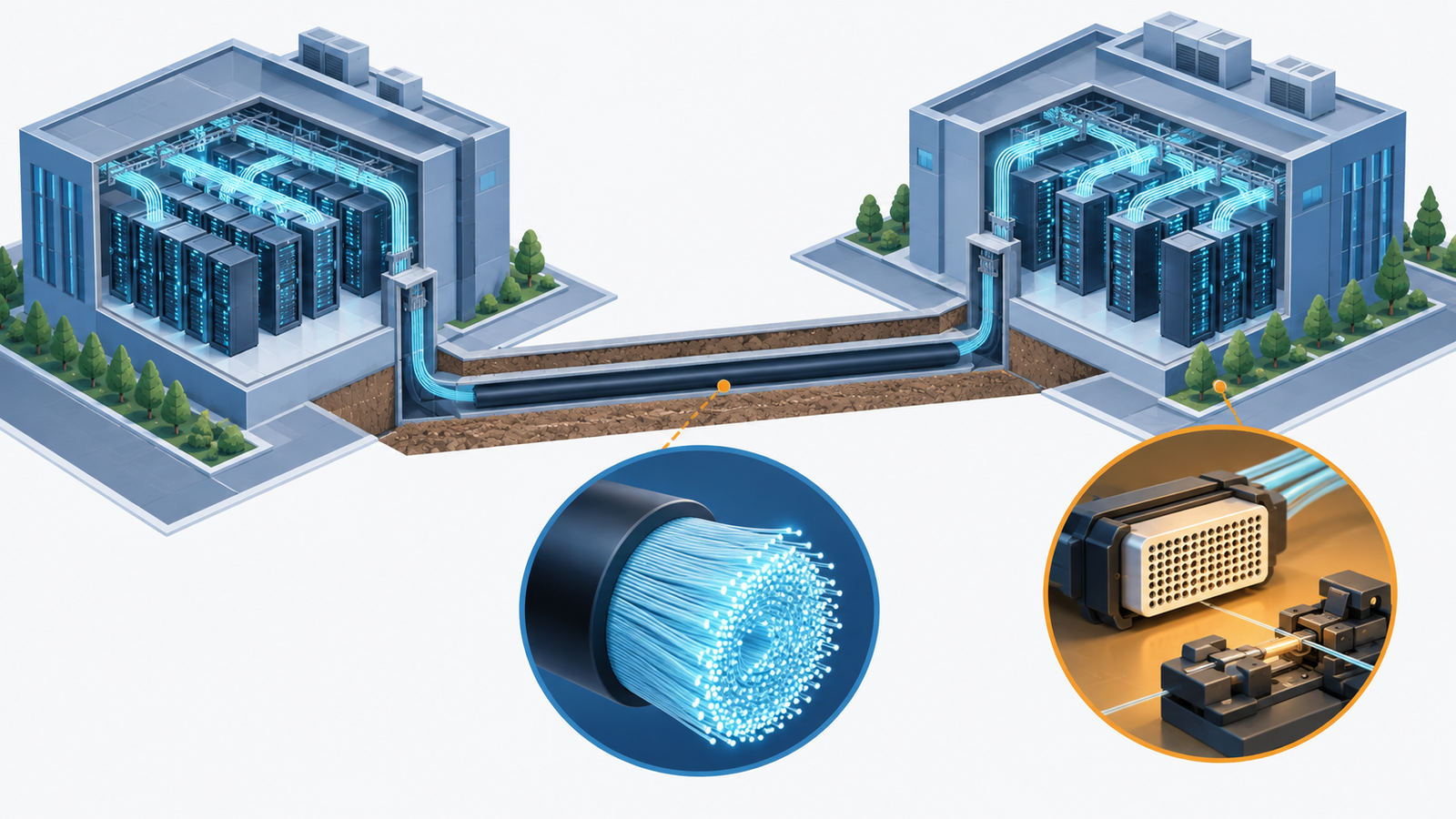
Companies involved in optical communications fall into three broad types: optical components & modules, chips & foundries, and network systems & carriers. Fujikura is on the optical components side, but its position differs from companies in the same category that make lasers, photodetectors or optical transceivers Sourced. The Annual Securities Report lists the main products of the Information and Communications segment as optical fibre, optical cable, telecommunication components, optical components, optical equipment, network equipment and construction work, and the company describes this as a total solution for building communication networks, spanning optical fibre cable, fusion splicers, optical connectors, optical components and telecommunications engineering. In other words, Fujikura is a company that supplies, as a complete set, the optical "wiring and connections" inside and outside data centres and between them. As more data centres are built for generative AI, the first thing that grows is the number of fibres and fibre counts, which puts the company in the position to benefit most directly.
2. The logo and how the name is written

The Fujikura logo is a trademark of the company. We have not recreated it with generated imagery;
the image was taken from the official website and is placed here as img/fujikura_logo.png.
A note on names: the legal entity is Fujikura Ltd. It changed its trade name from Fujikura Electric Wire Corporation to the present name in October 1992. AFL Telecommunications LLC (AFL), which handles optical fibre cable, connectivity components and installation in the U.S., is a wholly owned subsidiary; its sales in the year to March 2026 were ¥355.3 billion, more than 10% of consolidated sales. "AFL" in this article refers to this subsidiary.
Official site: https://www.fujikura.co.jp/3. Where the company sits in the optical communications landscape
In terms of where in the optical chain it operates, Fujikura's main battleground is wiring inside data centres, DCI (Data Center Interconnect) links between data centres, and carriers' optical fibre networks. It is also developing optical fibre couplers for submarine cable repeaters Sourced. In CPO (co-packaged optics), which replaces short electrical links inside data centres with light, it is involved not as a maker of optical transceivers or chips but as a supplier of the polarisation-maintaining fibre used inside. This is exactly the "fibre linking the external light source to the chip" discussed in our explainer on co-packaged optics.
4. Scale (the group in brief)
The size of the group as a whole is covered in a single table Sourced.
| Measure (¥ million) | Year to March 2024 | Year to March 2025 | Year to March 2026 |
|---|---|---|---|
| Consolidated net sales | 799,760 | 979,375 | 1,182,358 |
| Consolidated employees (people) | 50,254 | 51,262 | 50,586 |
| Consolidated R&D expenses | - | - | About 16,800 (¥16.8 billion) |
Because the company discloses its optical communications figures as the Information and Communications segment, that segment is all we need to look at. The segment's figures, not the group's, are the focus of this article Sourced.
| Information and Communications (¥ million) | Year to March 2025 | Year to March 2026 |
|---|---|---|
| Net sales (including inter-segment transactions) | 451,415 | 653,172 |
| Segment profit (operating profit basis) | 92,167 | 152,729 |
| Segment assets | 355,691 | 481,414 |
| Depreciation | 8,956 | 11,207 |
| Increase in property, plant, equipment and intangible assets | 15,373 | 18,263 |
| Employees (people, 31 March 2026) | - | 15,199 (plus 706 temporary) |
In the year to March 2026, the Information and Communications segment's sales to external customers of ¥652,977 million were 55.2% of consolidated net sales, and its segment profit of ¥152,729 million was 80.9% of group operating profit of ¥188,707 million Our calculation. The segment's operating margin was 23.4% (20.4% the year before), a level of profitability far removed from what is normal for a cable maker. By region, sales to customers located in the U.S. were ¥522.2 billion, 44.2% of consolidated net sales Our calculation. That is a group figure; no regional breakdown is disclosed for the Information and Communications segment alone.
5. Resources committed to optical communications and photonics
Four kinds of resource (people, money, outside investments and ties with public bodies) are set out below, as far as they could be confirmed in the Annual Securities Report and official announcements.
| Type of resource | What it is | Category |
|---|---|---|
| People (dedicated organisation and staff) | The Information and Communications segment has 15,199 employees (plus an average of 706 temporary employees, 31 March 2026), of whom 890 are at the parent company. Sakura Works, which has optical fibre manufacturing facilities, has 677 and Suzuka Works 95. R&D is handled by the New Business Creation and R&D division and by development departments within each business division | Sourced |
| Money (R&D) | R&D expenses in the Information and Communications segment were ¥11.5 billion (year to March 2026), 68.5% of consolidated R&D of ¥16.8 billion (the percentage is our calculation) | Sourced |
| Money (capital expenditure) | A next-generation plant for optical fibre and SWR® costing about ¥45 billion is being built at Sakura Works. In March 2026 the company decided to invest up to ¥300 billion in Japan and the U.S. (¥40 billion in Japan, up to ¥260 billion in the U.S.). A new SWR® plant costing about ¥10 billion started operating in February 2025. Investment to raise MT ferrule capacity to about 1.7 times the FY2024 level has been carried out | Sourced |
| Outside investments and joint ventures | US Conec Ltd. (U.S.), a maker of multi-fibre optical connector components, is an equity-method affiliate; an official release states that it is a joint venture of Corning, Fujikura and NTT Advanced Technology. Others include Fujikura Fiberhome Opto-Electronics Material Technology in China (a consolidated subsidiary with 60% of voting rights) and Nanjing Wasin Fujikura Optical Communication (an equity-method affiliate) | Sourced |
| Agreements with public bodies | The mid-term plan materials state that on 28 October 2025 the company signed a framework agreement with the U.S. Department of Commerce and was selected as a supplier of optical fibre cable (SWR®/WTC®) in the field of strengthening U.S. generative AI infrastructure | Sourced |
| Joint research with public research institutes | With NICT (Japan's National Institute of Information and Communications Technology) and Astrodesign, developed a 3 mm-diameter cable holding eight four-core multi-core fibres and deployed it in a working uncompressed 8K video system (announced March 2025) | Sourced |
| Acquisitions in optical communications | The Annual Securities Report for the year to March 2026 mentions no new acquisitions in optical communications | Not confirmed |
| Public funding in optical communications (NEDO and others) | No selection for subsidies or commissioned projects in optical communications and photonics appears in the primary sources we checked (the NEDO selection of August 2025 relates to quantum computing and is outside the scope of this article) | Not confirmed |
"Up to ¥300 billion" is the ceiling of the investment decided, not what was spent in the year to March 2026. The fixed assets actually added in the Information and Communications segment in that year came to ¥18,263 million Sourced. According to the mid-term plan materials, the ¥40 billion Japanese and up-to-¥260 billion U.S. projects are planned to ramp up in stages from 2030, which suggests that most of the spending will fall in FY2027 or later Not yet confirmed.
6. What it has done so far
| When | What happened | Why it matters |
|---|---|---|
| March 1910 | Fujikura Electric Wire Corporation founded (renamed Fujikura Ltd. in October 1992) | The starting point as a wire and cable maker |
| March 2005 | AFL Telecommunications LLC founded in the U.S. to manufacture and sell information and communications products (per the company history in the Annual Securities Report) | The core of today's U.S. business. Sales of ¥355.3 billion in the year to March 2026 |
| May 2009 | Fujikura Fiberhome Opto-Electronics Material Technology founded in China | A Chinese base for optical fibre products |
| February 2025 | A new SWR® plant starts operating at Sakura Works (investment about ¥10 billion, building about 3,000 m²). SWR® output expected to rise about 30% in fibre length terms | More ribbons for thin high-fibre-count cable |
| March 2025 | Announces TitaniaBend PANDA PM Fiber, co-developed with Corning, with sample shipments from FY2025. For optical transceivers of 800 Gbit/s and above | Polarisation-maintaining fibre used inside optical transceivers |
| March 2025 | With NICT and Astrodesign, deploys a transmission unit using four-core standard-diameter multi-core fibre in a working uncompressed 8K video system (described by the three companies as a world first) | Multi-core fibre used in a working system |
| July 2025 | Launches 13,824-fibre SWR®/WTC®. Twice the previous maximum (6,912 fibres) within an outer diameter of 40 mm or less. Already installed in hyperscale data centres outside Japan | Described by the company as a world first and the world's highest fibre count |
| October 2025 | The Information and Communications segment wins the Porter Prize, awarded by Hitotsubashi University's graduate business school | Recognition for a strategy of exiting conventional optical cable structures and specialising in intermittently bonded ribbon |
| 28 October 2025 | Signs a framework agreement with the U.S. Department of Commerce and is selected as a supplier of optical fibre cable for U.S. generative AI infrastructure | Based on the Japan-U.S. memorandum of understanding on strategic investment |
| FY2025 | Shipments of polarisation-maintaining fibre for CPO increase (per the R&D section of the Annual Securities Report) | A point of contact with CPO through components |
| March 2026 | Decides to invest up to ¥300 billion in Japan and the U.S. to expand production capacity for optical fibre and SWR®/WTC® to up to three times the current level | One of the largest capital investment plans in the company's history |
| March 2026 | Commercialises a 4,000-fibre SWR®/WTC® with a 23 mm outer diameter for Japanese data centres. Agrees with US Conec to strengthen manufacturing and sales of PRIZM® TMT expanded-beam ferrules and MMC connectors | Takes part in a common standard for very small multi-fibre optical connectors |
| April 2026 | Launches "100R", a new multi-fibre optical fusion splicer for up to 16 fibres | Aims to shorten connection work |
| May 2026 | Launches the 1,728-fibre Air Blown WTC® for air-blown installation (twice the previous maximum of 864 fibres). Publishes the 2028 Mid-term Business Plan | New products for DCI and the next three-year plan |
7. What comes next
The 2028 Mid-term Business Plan positions Information and Communications as the business that will drive growth in "information storage" and "information infrastructure", and says the company will concentrate human and financial resources on it Sourced. Over the three years it plans to allocate ¥300 billion to growth investment, ¥100 billion to strategic investment and ¥130 billion to other investment. On the product side, the plan cites higher output of MT/MMC ferrules and MMC-terminated trunk cables, more capacity for connectivity components at the plants in Vietnam, Mexico and Poland, and WTC® production equipment at the Morocco plant (targeted to start in the first half of FY2026). The plan assumes exchange rates of ¥150 to the US dollar for FY2026 and ¥145 from FY2027.
None of the following appears in the primary sources Not yet confirmed.
The plant location for the investment of up to ¥260 billion in the U.S.; sales by product for the Information and Communications segment (the split between cable, connectors, fusion splicers and installation; the mid-term plan materials give only growth-rate charts with no amount scale); shipment volumes and customers for polarisation-maintaining fibre for CPO; and the names of major customers (the Annual Securities Report states that no single customer accounts for 10% or more of consolidated sales). Figures such as "Fujikura's global share of optical fibre is X%" mostly rest on research-firm estimates, and this article does not use them.
8. What the company is aiming for in optical communications and photonics
This section goes beyond what the company says directly. It sets out inferences that can be drawn from primary sources, each with its basis.
| What can be read | Primary evidence behind it | Category |
|---|---|---|
| It will remain an all-round supplier of optical wiring and connections, not of parts that emit or convert light | The Annual Securities Report describes its strength as a total solution spanning optical fibre cable, fusion splicers, optical connectors, optical components and telecommunications engineering, and mentions no volume production plans for lasers or optical transceivers for communications (the company's fibre lasers are for materials processing) | Inference |
| It is turning the whole company into an information and communications company | In the FY2028 plan, Information and Communications accounts for 65.6% of sales and 90.5% of operating profit (percentages are our calculation). The plan states that human and financial resources will be concentrated on it | Inference |
| It is knowingly deepening its dependence on U.S. hyperscale data centres | U.S. sales are 44.2% of the consolidated total. The framework agreement with the U.S. Department of Commerce and the plan to invest up to ¥260 billion in the U.S. | Inference |
| It is entering CPO and photonic-electronic convergence through fibre-side components | Rising shipments of polarisation-maintaining fibre for CPO, and an R&D priority stated as contributing to the development of photonic-electronic convergence technologies such as CPO by applying PANDA fibre and image fibre technology | Inference |
| For multi-fibre optical connectors it has chosen to grow the market by sharing a standard with other companies | On the agreement with US Conec, the company writes that Corning and Sumitomo Electric Lightwave have each concluded similar agreements and that each company will work to spread and standardise the technology | Sourced |
In announcing the October 2025 Porter Prize, the company's release quotes the organisers' citation. It says that, taking the saturation of Japan's optical fibre market as its cue, the business completely withdrew from producing and selling optical cable of conventional structures (slotted-core and loose-tube), specialised in optical fibre cable using the intermittently bonded ribbon fibre it developed itself, and provides the full range of related products, including optical fibre, optical parts and components, fusion splicers and optical application products Sourced. Fujikura's strength, in other words, lies not in any single product but in combining cable design, splicers, components and installation to lower the customer's total cost. Our reading is that, rather than entering the race in fast-turnover high-speed parts such as optical transceivers, it is concentrating on wiring, whose volume is bound to rise with every new data centre Not yet confirmed.
9. Map of partnerships in optical communications and photonics
10. Technologies, products and services
| Product or service | What the primary sources say | Area of light |
|---|---|---|
| SWR® / WTC® | Ribbons of single fibres bonded intermittently (SWR®), housed in thin high-density cable wrapped with binding tape (WTC®). Sold as volume products in versions including 13,824 fibres (outer diameter 40 mm or less), 4,000 fibres for Japan (outer diameter 23 mm) and 1,728 fibres for air-blown installation | Inside data centres, DCI, carrier networks |
| Multi-fibre optical connector components | MT ferrules, ferrules for MMC connectors and MMC-terminated trunk cables. The PRIZM® TMT ferrule is an expanded-beam type with a lens moulded in one piece with the resin at its tip, cutting mating force by about 70% | Inside data centres |
| Polarisation-maintaining fibre | PANDA fibre. Shipments for CPO rose in FY2025. TitaniaBend PANDA PM Fiber supports bend radii of 5 mm or less and cuts bending loss by up to about 90% compared with earlier fibre (at the sample shipment stage) | Inside optical transceivers and CPO |
| Fusion splicers | Sold for installation work and also to factories making optical equipment for data centres. The "100R" splices up to 16 fibres at once, with automatic alignment and end-gap correction (launched April 2026) | Installation and manufacturing |
| Optical devices | Optical fibre couplers built into submarine cable repeaters, being developed as composite modules that integrate several parts | Submarine and long-haul |
| Next-generation optical fibre (research stage) | Multi-core fibre and hollow-core fibre, aiming for thinner, lower-loss and lower-latency fibre. Multi-core fibre has been deployed in a working system with NICT and others (8K video, 300 m) | Carrier networks, data centres |
| Telecommunications engineering | Optical cabling and connection work outside and inside data centres, mainly in the U.S. The mid-term plan materials describe this as the ability to provide "end-to-end" solutions | Inside and outside data centres |
A note on the performance figures. In the table above, the 13,824-, 4,000- and 1,728-fibre cables, the ferrules for MMC and the 100R are sold as volume products. TitaniaBend PANDA PM Fiber is at the sample shipment stage from FY2025 and is not a volume product. The multi-core fibre is an example of deployment in a working system (over a transmission distance of 300 m), not a product on general sale Sourced. "World first" and "world's highest" are both the company's own wording.
Inside the housing of an optical transceiver or CPO, there is no choice but to fold the fibre back at a radius of a few millimetres. That raises two problems: one is light leaking out at the bend (bending loss), and the other is breakage starting from tiny flaws on the glass surface (mechanical reliability). For the second, Fujikura and Corning explain that TitaniaBend adds a titanium-doped layer to the glass surface Sourced. Placing a titania-doped silica layer on the outside is a known design that leaves compressive stress in the surface layer, which can be expected to counteract the stress that opens up flaws Not yet confirmed. For the first problem, bending loss, the company says it used a fibre design that operates in single mode over short lengths.
SWR® is also a materials story. A ribbon in which single fibres are bonded intermittently rather than along their whole length combines the advantage of a "ribbon", which can be mass-fusion spliced, with the advantage of "single fibres", which can be rolled up and packed into a thin cable. The spacing of the bond points and the softness of the bonding resin are likely what decide whether 13,824 fibres can fit within an outer diameter of 40 mm Not yet confirmed. The thinking behind thinner, denser optical fibre is easier to place alongside our explainer on optical interconnects and SerDes.
11. The risks this company carries
| Risk | Substance | Category |
|---|---|---|
| Swings in demand | The Annual Securities Report says that, because its products are for infrastructure, they are affected by trends in capital investment and changes in customers' purchasing policies, and that large short-term swings in demand could affect results | Sourced |
| Concentration on the U.S. market | Sales to customers located in the U.S. are 44.2% of consolidated net sales. The subsidiary AFL alone accounts for about 30% of consolidated sales | Our calculation |
| Recovering large investments | The investment of up to ¥300 billion in Japan and the U.S. is planned to ramp up in stages from 2030. Nobody can yet confirm whether data-centre investment will still be as strong by then | Inference |
| Concentration of profit | The Information and Communications segment earns 80.9% of group operating profit, rising to about 90% in the FY2028 plan. Weakness in one segment hits the whole company directly | Our calculation |
| Exchange rates | The mid-term plan assumes ¥150 to the US dollar (FY2026) and ¥145 (FY2027 onwards). A stronger yen would push down sales and profit in yen terms | Sourced |
| Policy and trade | The Annual Securities Report cites U.S. tariff policy and geopolitical risk. The framework agreement with the U.S. Department of Commerce also depends on the policy continuing | Inference |
| Quality control | In October 2025 the company published its final report on the improper quality control cases in group products it announced in 2018 and 2019 (152 cases, 99 customers). The cases were not limited to optical products, but any recurrence would go straight to customer trust | Sourced |
12. Glossary
- SWR® / WTC®
- Registered trademarks of Fujikura. A ribbon of single fibres bonded intermittently (SWR®), and the thin high-density cable that houses it (WTC®).
- DCI
- Data Center Interconnect. Optical links that connect data centres to one another.
- MT ferrule
- A precision part for positioning and connecting many optical fibres at once. The heart of a multi-fibre optical connector.
- MMC
- The name of a very small form factor (VSFF) multi-fibre optical connector developed by US Conec, using a ferrule that shrinks the MT ferrule further.
- Polarisation-maintaining fibre (PANDA)
- Fibre that carries light while preserving its polarisation state. PANDA is the name of the structure Fujikura uses.
- CPO
- Co-Packaged Optics. Densely mounting optical components and semiconductor chips in the same package.
- Fusion splicing
- Joining optical fibre end faces by melting them with an electric arc. Connection loss is low.
- Multi-core fibre
- A fibre with several cores (paths for light) inside one strand. Raises transmission capacity at the same thickness.
13. References
- Fujikura Ltd. Annual Securities Report for the 178th fiscal period (1 April 2025 to 31 March 2026), filed 23 June 2026 (in Japanese). Company history, lines of business, affiliates, management policy, business risks, segment results, R&D activities, capital expenditure, headcount, segment information and sales by region. https://ssl4.eir-parts.net/doc/5803/yuho_pdf/S100YGP3/00.pdf
- Fujikura Ltd. 2028 Mid-term Business Plan (19 May 2026, in Japanese). Concentration of resources on Information and Communications, strategic investment of up to ¥300 billion in Japan and the U.S., the framework agreement with the U.S. Department of Commerce, sales and operating profit targets by segment, capital allocation, and investment amounts and production capacity by product. https://www.fujikura.co.jp/newsrelease/management/__icsFiles/afieldfile/2026/05/19/260519.pdf
- Fujikura Ltd. Press release: Agreement reached with US Conec to strengthen manufacturing and sales of PRIZM® TMT expanded beam ferrules and MMC connectors (11 March 2026; title of the English version, link to the Japanese release). The joint-venture make-up of US Conec, the separate agreements by Corning and Sumitomo Electric Lightwave, and the roughly 70% reduction in mating force. https://www.fujikura.co.jp/news/pressrelease/20260311prizm_tmtmmcus_conec.html
- Fujikura Ltd. Press release: Launch of the world's first 13,824-fibre SWR®/WTC® (18 July 2025, in Japanese). https://www.fujikura.co.jp/news/pressrelease/2025071813824swrwtc.html
- Fujikura Ltd. Press release: Sample shipments of "TitaniaBend PANDA PM Fiber" have begun (4 March 2025; title of the English version, link to the Japanese release). Co-development with Corning, reduced bending loss and the titanium-doped layer. https://www.fujikura.co.jp/news/pressrelease/20250304titaniabend_panda_pm_fiber.html
- Fujikura Ltd. Press release: Sakura business' New SWR® Factory Begins Operation (18 February 2025; title of the English version, link to the Japanese release). Investment of about ¥10 billion and expected output increase of about 30%. https://www.fujikura.co.jp/news/pressrelease/20250218swr.html
- NICT, Astrodesign and Fujikura Joint announcement: World's first deployment of a four-core standard-diameter multi-core fibre transmission unit in a working system handling uncompressed 8K video (27 March 2025, in Japanese). https://www.fujikura.co.jp/news/pressrelease/newsrelease/products/__icsFiles/afieldfile/2025/03/26/release20250327.pdf
- Fujikura Ltd. Press release: 4000-core SWR®/WTC® lineup now available (9 March 2026; title of the English version, link to the Japanese release). https://www.fujikura.co.jp/news/pressrelease/2026030913824swr_wtc.html
- Fujikura Ltd. Press release: Sales launch of a new multi-fibre optical fusion splicer (23 March 2026, in Japanese; the English version is titled "Sales of the new Mass Fusion Splicer Sales Launch"). https://www.fujikura.co.jp/news/pressrelease/20260323post_118.html
- Fujikura Ltd. Press release: Development and Sales Launch of "1728-fiber Air Blown WTC®" (8 May 2026; title of the English version, link to the Japanese release). https://www.fujikura.co.jp/news/pressrelease/202605084000swr_wtc.html
- Fujikura Ltd. Press release: Fujikura's Information and Communications business units Wins 2025 Porter Prize (9 October 2025; title of the English version, link to the Japanese release). Quotes the organisers' reasons for the award. https://www.fujikura.co.jp/news/pressrelease/202510092025_10.html
- Fujikura Ltd. Press release: Measures to prevent recurrence of inadequate quality control (QC) issues in some of Fujikura products and progress in confirming the safety of the affected products (Final Report) (31 October 2025; title of the English version, link to the Japanese release). https://www.fujikura.co.jp/news/pressrelease/20251031post_104.html
- Fujikura Ltd. Official website (source of the company name and logo image). https://www.fujikura.co.jp/
14. Claim-to-source audit
| Claim in the article | Category | Source |
|---|---|---|
| Legal name, English name, head office address, year of listing, founding in 1910 and the change of trade name in 1992 | Sourced | Reference 1 https://ssl4.eir-parts.net/doc/5803/yuho_pdf/S100YGP3/00.pdf |
| Consolidated net sales and headcount over time, consolidated R&D of ¥16.8 billion | Sourced | Reference 1 https://ssl4.eir-parts.net/doc/5803/yuho_pdf/S100YGP3/00.pdf |
| Information and Communications sales, segment profit, assets, depreciation and increase in fixed assets (years to March 2025 and 2026) | Sourced | Reference 1 https://ssl4.eir-parts.net/doc/5803/yuho_pdf/S100YGP3/00.pdf |
| The main products of the Information and Communications segment and the "total solution" description | Sourced | Reference 1 https://ssl4.eir-parts.net/doc/5803/yuho_pdf/S100YGP3/00.pdf |
| 15,199 employees in the segment, 677 at Sakura and 95 at Suzuka, R&D of ¥11.5 billion | Sourced | Reference 1 https://ssl4.eir-parts.net/doc/5803/yuho_pdf/S100YGP3/00.pdf |
| AFL Telecommunications LLC sales of ¥355.3 billion, equity-method affiliates including US Conec, 60% of voting rights in Fujikura Fiberhome Opto-Electronics Material Technology | Sourced | Reference 1 https://ssl4.eir-parts.net/doc/5803/yuho_pdf/S100YGP3/00.pdf |
| The next-generation plant at Sakura costing about ¥45 billion, the policy of up to ¥300 billion in Japan and the U.S. and up to three times capacity, about 1.7 times MT ferrule capacity, WTC® equipment in Morocco | Sourced | Reference 1 https://ssl4.eir-parts.net/doc/5803/yuho_pdf/S100YGP3/00.pdf |
| Rising shipments of polarisation-maintaining fibre for CPO, optical fibre couplers for submarine repeaters, research direction for next-generation optical fibre | Sourced | Reference 1 https://ssl4.eir-parts.net/doc/5803/yuho_pdf/S100YGP3/00.pdf |
| Sales by region (U.S. ¥522.2 billion), no major customer at 10% or more, risk disclosures on demand swings and political and economic conditions | Sourced | Reference 1 https://ssl4.eir-parts.net/doc/5803/yuho_pdf/S100YGP3/00.pdf |
| FY2028 Information and Communications sales of ¥1,050 billion and operating profit of ¥285 billion and other plan figures, exchange rate assumptions | Sourced | Reference 2 https://www.fujikura.co.jp/newsrelease/management/__icsFiles/afieldfile/2026/05/19/260519.pdf |
| Japan ¥40 billion and U.S. up to ¥260 billion, about four times FY2022, ramp-up in stages from 2030, capital allocation | Sourced | Reference 2 https://www.fujikura.co.jp/newsrelease/management/__icsFiles/afieldfile/2026/05/19/260519.pdf |
| The framework agreement with the U.S. Department of Commerce on 28 October 2025 and selection as a supplier | Sourced | Reference 2 https://www.fujikura.co.jp/newsrelease/management/__icsFiles/afieldfile/2026/05/19/260519.pdf |
| The PRIZM® TMT agreement with US Conec, US Conec's joint-venture make-up, the roughly 70% reduction in mating force | Sourced | Reference 3 https://www.fujikura.co.jp/news/pressrelease/20260311prizm_tmtmmcus_conec.html |
| Launch and specifications of 13,824-fibre SWR®/WTC® | Sourced | Reference 4 https://www.fujikura.co.jp/news/pressrelease/2025071813824swrwtc.html |
| TitaniaBend PANDA PM Fiber: co-development with Corning, up to about 90% lower bending loss, titanium-doped layer, sample shipment stage | Sourced | Reference 5 https://www.fujikura.co.jp/news/pressrelease/20250304titaniabend_panda_pm_fiber.html |
| Start of operation of the new SWR® plant, about ¥10 billion, expected output increase of about 30% | Sourced | Reference 6 https://www.fujikura.co.jp/news/pressrelease/20250218swr.html |
| Multi-core fibre deployment with NICT and Astrodesign (3 mm diameter, eight fibres, 300 m) | Sourced | Reference 7 https://www.fujikura.co.jp/news/pressrelease/newsrelease/products/__icsFiles/afieldfile/2025/03/26/release20250327.pdf |
| Commercialisation of 4,000-fibre SWR®/WTC® (outer diameter 23 mm) | Sourced | Reference 8 https://www.fujikura.co.jp/news/pressrelease/2026030913824swr_wtc.html |
| Features of the "100R" fusion splicer and its launch in April 2026 | Sourced | Reference 9 https://www.fujikura.co.jp/news/pressrelease/20260323post_118.html |
| Launch of the 1,728-fibre Air Blown WTC® (twice 864 fibres) | Sourced | Reference 10 https://www.fujikura.co.jp/news/pressrelease/202605084000swr_wtc.html |
| The Porter Prize and the citation on exiting conventional cable structures and specialising in intermittently bonded ribbon | Sourced | Reference 11 https://www.fujikura.co.jp/news/pressrelease/202510092025_10.html |
| The final report on improper quality control cases (152 cases, 99 customers) | Sourced | Reference 12 https://www.fujikura.co.jp/news/pressrelease/20251031post_104.html |
| 55.2% of sales, 80.9% of operating profit, operating margins of 23.4% and 20.4%, 44.2% U.S. share, 68.5% of R&D, 65.6% and 90.5% in the FY2028 plan | Our calculation | This article's division of figures from references 1 and 2 |
| The three types of optical communications company (optical components & modules, chips & foundries, network systems & carriers) | Our calculation | Our own classification. Companies shown are examples from those in this series |
| The plant location for the U.S. investment of up to ¥260 billion, sales by product, shipment volumes and customers for CPO fibre, names of major customers | Not yet confirmed | Not in references 1 and 2. Figures from press reports are not used https://ssl4.eir-parts.net/doc/5803/yuho_pdf/S100YGP3/00.pdf |
| New acquisitions in optical communications, public funding awarded in optical communications | Not yet confirmed | Not in the primary sources we checked. This article does not conclude that none exists https://ssl4.eir-parts.net/doc/5803/yuho_pdf/S100YGP3/00.pdf |
| The reading that most of the spending will fall in FY2027 or later | Not yet confirmed | This article's outlook, based on the "ramp up in stages from 2030" in reference 2 |
| The reading that it will remain an all-round supplier of optical wiring and connections | Inference | This article's interpretation of the total solution description in reference 1 and the citation in reference 11 |
| The reading that it is turning the whole company into an information and communications company | Inference | This article's interpretation of the segment plans in reference 2 |
| The reading that it is knowingly deepening its dependence on U.S. hyperscalers | Inference | This article's interpretation of the regional sales in reference 1 and the U.S. investment plan in reference 2 |
| The reading that it is entering CPO and photonic-electronic convergence through fibre-side components | Inference | This article's interpretation of the R&D description in reference 1 |
| The explanation that the titanium-doped layer acts as compressive stress in the surface, and that the bonding design of SWR® governs fibre count | Not yet confirmed | This article's explanation, based on general materials knowledge. The company has not described this mechanism |
| The risks of recovering large investments and of depending on policy continuing | Inference | This article's interpretation of references 1 and 2 |
Last updated 25 September 2026 / Troy Technical
Every figure in this article comes from the Annual Securities Report, mid-term business plan materials and press releases published by Fujikura Ltd., and from its joint announcement with NICT and others. No research-firm estimates or press-based figures have been used. Passages marked "Inference" are this article's interpretation of primary sources, not statements made by the company.