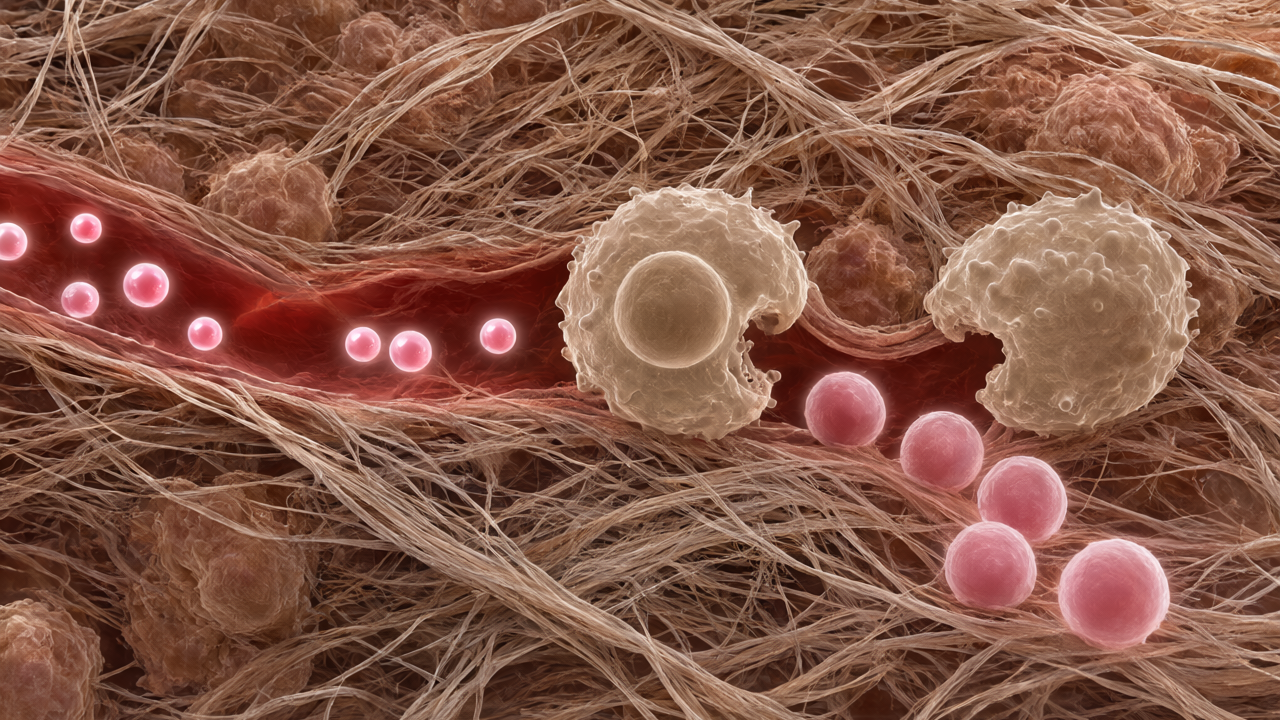
Researchers at Memorial Sloan Kettering Cancer Center (MSK) have unveiled a groundbreaking approach in cancer therapy, developing nanoparticles engineered to selectively target and eliminate specific immune cells responsible for creating the immunosuppressive fibrotic tissue surrounding tumors. This strategy holds the potential to dramatically improve the efficacy of immunotherapies in solid tumors, which are notoriously resistant to current treatments.
Key Findings
The MSK team focused on the role of fibrosis—the accumulation of stiff connective tissue—in cancer, noting its ability to impede immune cell infiltration into tumors and suppress immunotherapy responses. Their innovation involves nanoparticles designed to specifically target and deplete certain types of stromal macrophages that promote fibrosis. This nanoparticle delivery system is expected to remodel the tumor microenvironment, making it more permissive for immune cells like T cells to access the tumor, thereby bolstering the effectiveness of immunotherapies. This technology is particularly relevant for advanced liver and lung cancers, as well as breast and colorectal cancers, where fibrosis is a major contributor to treatment resistance.
Technical/Clinical Details
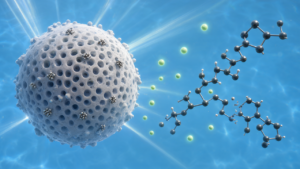
The developed nanoparticles are functionalized with ligands that specifically bind to surface markers on fibrosis-associated macrophages. Upon binding, the nanoparticles are internalized by these macrophages, where they release their therapeutic payload to neutralize or eliminate the cells. The therapeutic agent acts by inhibiting specific signaling pathways critical for macrophage survival and function. Unlike conventional drugs that can cause systemic side effects when administered broadly, this nanoparticle-mediated targeted delivery ensures the drug reaches only the intended cells, thus overcoming issues of non-specific toxicity. Researchers state that this expanded therapeutic window could give a ‘second chance’ to drugs previously deemed ineffective due to systemic limitations. Significant improvements in the response rates of solid tumors are anticipated, especially when combined with existing immunotherapies such as immune checkpoint inhibitors.
Background & Context
Solid tumors frequently exhibit resistance to immunotherapy due to their complex tumor microenvironment, particularly the presence of fibrosis. Fibrosis not only physically shields cancer cells but also recruits immunosuppressive cells (e.g., Tregs and TAMs) and releases immune-suppressing cytokines, enabling tumors to evade immune surveillance. Therefore, targeting fibrosis has emerged as a crucial strategy to enhance immunotherapy outcomes. Given the systemic side effects associated with current anti-fibrotic drugs, the precise delivery offered by nanoparticles represents a major advancement.
Strategic Significance & Outlook
This nanoparticle-based approach to targeting fibrosis has the potential to introduce a new paradigm in cancer treatment. Following rigorous preclinical validation of its efficacy and safety, the technology is expected to advance to clinical trials. There is strong potential for its development as a combination therapy, especially with existing immunotherapies like immune checkpoint inhibitors. This could significantly expand effective treatment options for many patients with solid tumors who currently have limited prognoses. Furthermore, the research may extend to other fibrotic diseases beyond cancer, such as liver and pulmonary fibrosis, broadening its therapeutic impact.
Source: https://www.mskcc.org/news/using-nanoparticles-to-target-fibrosis-in-cancer-and-other-diseases
Get our weekly technology intelligence — free
Receive an infographic that lets you judge at a glance whether each field’s analysis report is worth reading.
Subscribe Free — Weekly Tech Intelligence
By subscribing, you’ll receive Troy-Technical’s weekly technology intelligence newsletter.
- Your email and selected fields are used only to deliver the newsletter.
- We never share your information with third parties.
- You can unsubscribe anytime via the link in each email.
See our Privacy Policy for details.
Takes about a minute · Unsubscribe anytime





Comments