
Key Findings
New research conducted by scientists at Imperial College London suggests that producing cow-free milk through precision fermentation could achieve up to a 96% reduction in land use compared to traditional dairy farming. This finding underscores the profound environmental benefits of precision fermentation technology in the transition towards sustainable food systems.
Technical / Clinical Details
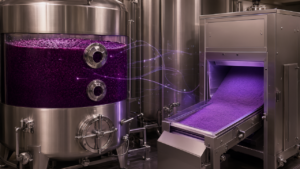
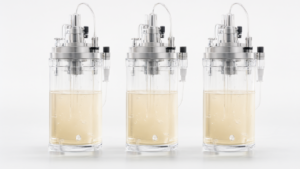
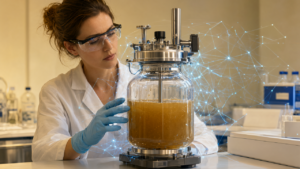
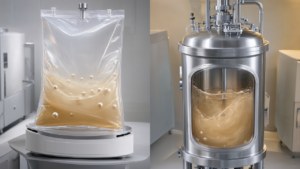
Precision fermentation is a biotechnological process that involves culturing genetically engineered microorganisms (typically yeast or bacteria) in controlled bioreactors to produce essential milk proteins such as casein and whey. Unlike the extensive pastures required for conventional dairy, these bioreactors operate with a significantly smaller footprint, enabling highly efficient production. The study assessed that precision fermentation for milk production would substantially save land otherwise used for cultivating feed crops, grazing, and associated infrastructure. Traditional dairy farming’s environmental impact spans land-use change, deforestation, water consumption, and greenhouse gas emissions (e.g., methane); precision fermentation has the potential to mitigate most of these. This technology is characterized by its high productivity, efficiently supplying necessary nutrients to microorganisms to generate large quantities of protein under optimized conditions.
Background & Context
The global food system is confronting a triple crisis of climate change, resource depletion, and increasing demands for sustainability. The dairy industry, in particular, has been criticized for its extensive land use and significant greenhouse gas emissions, contributing substantially to environmental burdens. While plant-based milks have offered one solution, they often present challenges in terms of nutritional equivalence, functionality, and flavor compared to conventional milk. Cow-free milk produced through precision fermentation offers a distinct approach, providing products with identical molecular structures to animal proteins, thereby closely matching traditional milk in nutritional value, flavor, and cooking properties. The Imperial College London study provides critical scientific backing for the environmental contributions of this nascent industry.
Strategic Significance & Outlook
These research findings strongly suggest that precision fermentation technology will play a central role in the future of sustainable food production. The dramatic improvement in land-use efficiency contributes to ecosystem preservation, biodiversity maintenance, and climate change mitigation efforts. As production costs continue to decrease, regulatory approvals expand, and consumer acceptance grows, precision fermentation-derived cow-free milk has the potential to become a major player in the global food market. This technology is applicable beyond dairy to other animal-derived product alternatives, serving as a driving force for accelerating the transition to a more sustainable and ethical food supply system.
Source: https://mymodernmet.com/precision-fermentation-milk/
Get our weekly technology intelligence — free
Receive an infographic that lets you judge at a glance whether each field’s analysis report is worth reading.
Subscribe Free — Weekly Tech Intelligence
By subscribing, you’ll receive Troy-Technical’s weekly technology intelligence newsletter.
- Your email and selected fields are used only to deliver the newsletter.
- We never share your information with third parties.
- You can unsubscribe anytime via the link in each email.
See our Privacy Policy for details.
Takes about a minute · Unsubscribe anytime





Comments