
Key Findings
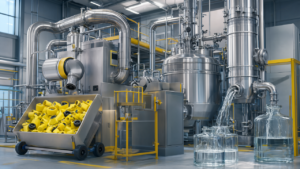
A groundbreaking laboratory demonstration has revealed an innovative recycling method capable of dissolving a 170-foot wind turbine blade and transforming its components into a diverse array of high-value products, including new blade material, plexiglass, superabsorbent polymer for diapers, and even edible potassium lactate – famously consumed as gummy bears by one of the chemists involved. This method represents a significant leap forward in overcoming the long-standing challenge of recycling traditional thermoset wind turbine blades.
Technical and Product Details
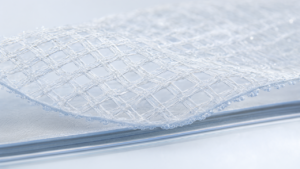
- Utilizing Thermoplastic Composite Resin: The new recycling technology employs a specialized thermoplastic composite resin, specifically polylactic acid (PLA) dissolved in methyl methacrylate (MMA), as the binding agent for the wind turbine blades. PLA is a biodegradable, bio-derived plastic, and MMA is a common organic compound.
- Efficient Depolymerization and Separation: Unlike traditional wind turbine blades, which use thermoset resins that are incredibly difficult to break down and separate once cured, this thermoplastic composite system can be easily depolymerized under specific conditions, such as mild heat or chemical treatment. This allows for the effective separation of the glass fibers from the resin components.
- Versatile Regenerated Materials: Post-decomposition, the recovered resin components can be:
- Re-utilized as a thermoplastic resin for manufacturing new wind turbine blades.
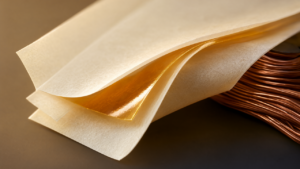
- Processed into raw material for plexiglass (PMMA, polymethyl methacrylate), a widely used transparent plastic.
- Converted into superabsorbent polymers, commonly found in hygiene products like diapers.
- Further transformed, through chemical processes, into potassium lactate, a compound also used as a food additive.
- High-Value Recycling: This technology goes beyond mere waste disposal by creating a diverse range of market-valuable products from the recovered materials, achieving ‘high-value recycling.’ This significantly contributes to establishing a near-zero-waste circular economy model for the wind industry.
Background and Industry Context
Wind power is rapidly expanding as a clean energy source; however, the disposal of end-of-life wind turbine blades has become a pressing global environmental concern. These blades, typically made from composite materials like fiberglass-reinforced plastics (FRP), are incredibly robust, making landfilling or incineration the primary disposal methods due to the technical and economic difficulties of recycling. This new technology offers a revolutionary solution to this persistent challenge, dramatically improving the sustainability of the wind energy sector.
Strategic Significance and Outlook
This innovative recycling technology is a crucial enabler for the wind power industry to build a truly sustainable future. If all future wind turbine blades were to be manufactured using such recyclable thermoplastic composite resins, it would lead to a substantial reduction in the environmental footprint across the entire blade lifecycle and promote efficient resource utilization. Accelerating investment and development for the practical implementation and scaling of this technology could pave the way for a global circular economy model for wind power.
Source: https://energiesmedia.com/one-170-foot-wind-turbine-blade/
Get our weekly technology intelligence — free
Receive an infographic that lets you judge at a glance whether each field’s analysis report is worth reading.
Subscribe Free — Weekly Tech Intelligence
By subscribing, you’ll receive Troy-Technical’s weekly technology intelligence newsletter.
- Your email and selected fields are used only to deliver the newsletter.
- We never share your information with third parties.
- You can unsubscribe anytime via the link in each email.
See our Privacy Policy for details.
Takes about a minute · Unsubscribe anytime






Comments