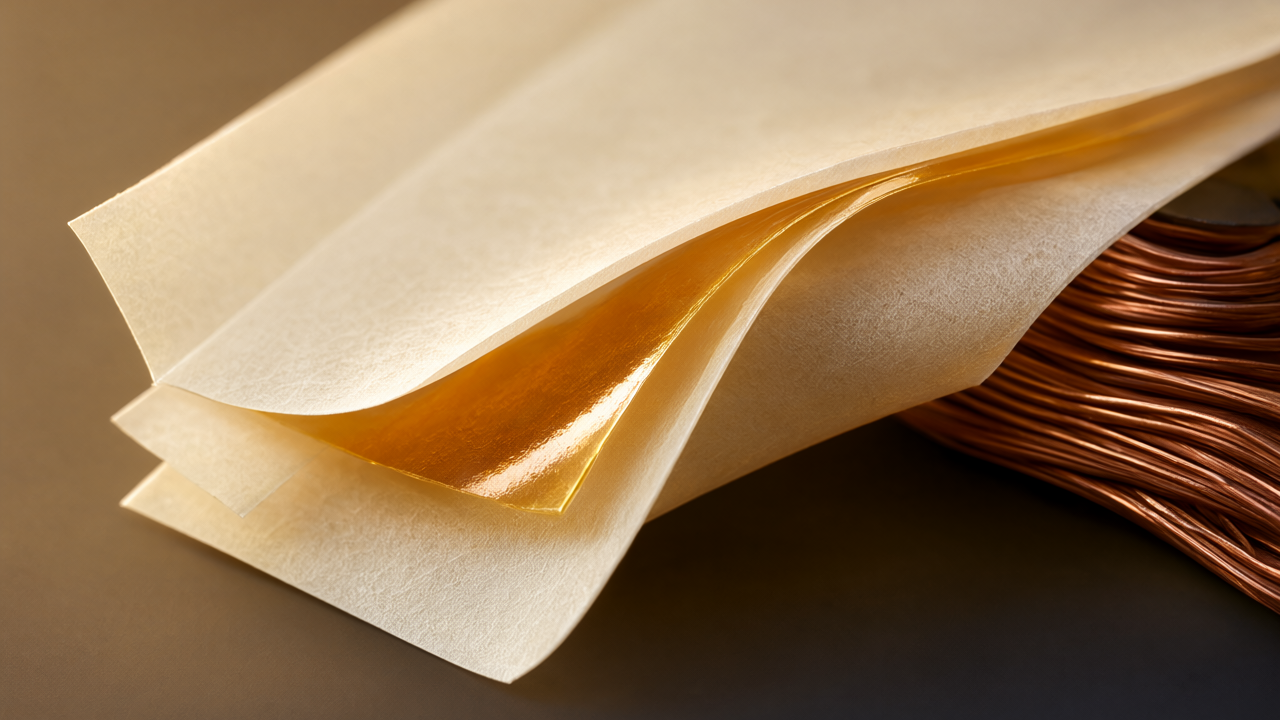
Key Findings: NHN Composite Paper Achieves 180°C Continuous Operating Temperature, Becoming Standard for Class H Electrical Insulation
The NHN (Nomex + Polyimide film + Nomex) flexible composite paper, used for electrical insulation, has successfully increased its continuous operating temperature to Class H (180°C) through an innovative design change that replaces the PET (polyethylene terephthalate) core with a polyimide film. This achievement has positioned NHN as the de facto standard flexible composite material for interlayer insulation in dry-type transformers, traction motor slots, and all other Class H windings.
Technical Details: Enhanced Thermal Endurance via Polyimide Core
Conventional composite papers, such as DMD (Dacron + Mylar + Dacron) and NMN (Nomex + Mylar + Nomex), primarily utilized PET film as their core, which limited their continuous operating temperature to Class B (130°C) or F (155°C). NHN fundamentally enhances thermal endurance by replacing this PET core with a polyimide film, renowned for its superior thermal stability and mechanical strength (often known by trade names like Kapton). While the outer Nomex layers provide mechanical protection and high dielectric strength, the central polyimide film elevates the overall thermal endurance to 180°C. This allows for applications in higher temperature environments, contributing to the miniaturization and higher power output of electrical equipment.
Background and Industry Context: Demand for High-Temperature Capability and Reliability
Modern electrical equipment, especially dry-type transformers and motors, increasingly demands insulation materials capable of withstanding higher operating temperatures for improved efficiency and miniaturization. Within transformers and motors, local hot spots generated by windings necessitate insulation materials with robust long-term thermal stress resistance. The advent of Class H insulation materials like NHN is crucial for meeting these requirements, thereby enhancing equipment reliability and lifespan. Its value is particularly recognized in sectors demanding high reliability, such as aerospace, railway, and industrial machinery.
Strategic Significance and Outlook: Evolution and Expansion of High-Performance Electrical Insulation
The establishment of NHN composite paper as a leading material in electrical insulation will continue to drive the development of high-performance electrical equipment. Polyimide film-based insulation materials, owing to their excellent properties, are expected to find applications in a broader range of high-temperature and high-stress environments, including next-generation EV motors, power converters for renewable energy systems, and high-frequency electronic components. Material manufacturers are anticipated to contribute to further advancements in electrical insulation technology and market expansion by developing composite materials tailored for even higher temperature classes or specific environmental conditions, such as humidity resistance or partial discharge resistance.
Source: https://sidanm.com/dmd-vs-nmn-vs-nhn-vs-aha-vs-pmp/
Get our weekly technology intelligence — free
Receive an infographic that lets you judge at a glance whether each field’s analysis report is worth reading.
Subscribe Free — Weekly Tech Intelligence
By subscribing, you’ll receive Troy-Technical’s weekly technology intelligence newsletter.
- Your email and selected fields are used only to deliver the newsletter.
- We never share your information with third parties.
- You can unsubscribe anytime via the link in each email.
See our Privacy Policy for details.
Takes about a minute · Unsubscribe anytime







Comments