TECHNOLOGY EXPLAINER
Oligonucleotide Therapeutics
— Behind a 20-base "sequence" lie half a million different molecules
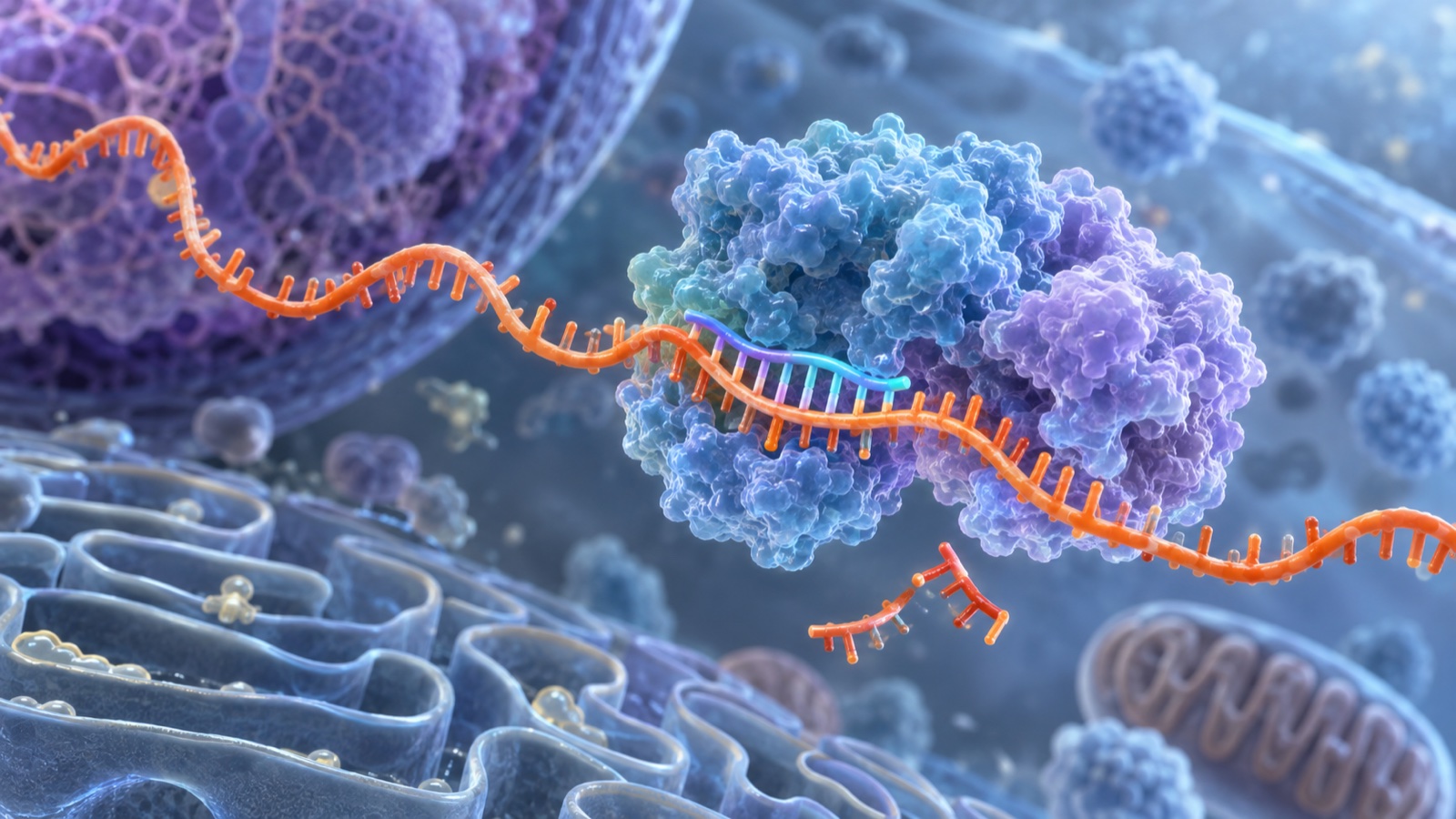
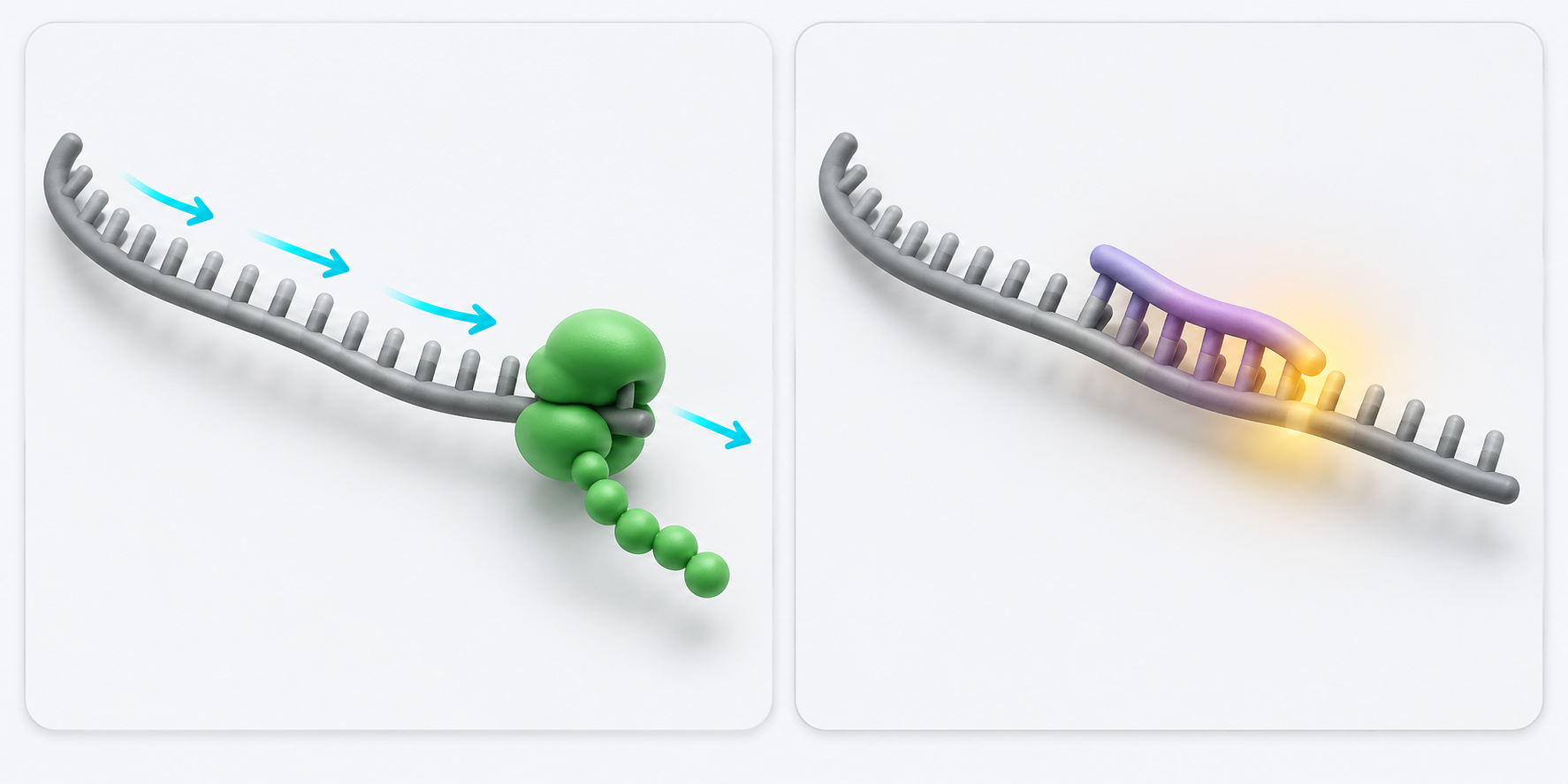
Oligonucleotide drugs are medicines made by chemically synthesizing short chains of DNA or RNA (oligonucleotides). The target is set by the base sequence, and behavior in the body is set by chemical modification. And merely replacing an oxygen of the backbone with sulfur turns a 20-base chain into a mixture of 219 stereoisomers.
- What an oligonucleotide drug is (the short version)
- Four types — antisense (two kinds), siRNA and aptamers
- Chemical modification — the sulfur in the backbone, and the 2′ position of the sugar
- Our calculation: how many molecules does a phosphorothioate create?
- A materials engineer's view 1: not a "single compound" but a "controlled mixture"
- GalNAc — three sugars carry the drug to the liver
- Off-target effects — a chance match of seven bases
- Solid-phase synthesis and purification — one base at a time, a four-step reaction repeated
- A materials engineer's view 2: 4 tonnes of raw materials for 1 kg of product
- Approved examples (those confirmed in regulators' published materials)
- Glossary / References / Claim-to-source audit
Sourced = stated in published material (link given)
Our calculation = a figure this article derived, with the assumptions spelled out
Not yet confirmed = a plan or target whose results have not been confirmed
Structural readings and interpretations of materials or process design are marked separately as Commentary. Inference is shown in bold.
This article is an explanation of chemistry, materials and manufacturing technology. It does not evaluate the efficacy or safety of any treatment and is not medical advice. It does not recommend any particular drug or treatment, nor argue the relative merits of drugs. Approval status and product compositions are quoted only where they appear in the published materials of regulators (FDA, PMDA and MHLW).
1. What an oligonucleotide drug is (the short version)
- What it is made of: Roberts and co-authors describe oligonucleotides as polymers of nucleic acid. Single-stranded antisense oligonucleotides are about 4–10 kDa and double-stranded siRNA is about 14 kDa; both are large, hydrophilic polyanions that therefore do not readily cross cell membranesSourced[Ref. 1]. They sit between the sizes of small-molecule drugs (a few hundred Da) and antibodies (about 150 kDa)
- What sets them apart: Khvorova and Watts name, as the key advantage of oligonucleotide drugs, that delivery and potency properties arise mainly from the chemical structure of the oligonucleotide, while the target is defined by the base sequenceSourced[Ref. 2]. It means that "where it acts" and "where it gets to" can be designed separately
- What is hard: Roberts and co-authors say that achieving efficient delivery to tissues other than the liver in particular remains a major constraintSourced[Ref. 1]. This is because nucleic acids cross membranes poorly, are degraded outside cells and are excreted by the kidneys
If you look only at the "sequence" of an oligonucleotide drug, you understand only half of it. Even with the same sequence, whether an oxygen in the backbone is replaced with sulfur, what is put at the 2′ position of the sugar, and what is attached at the end change how the molecule is degraded, which organ it reaches and how hard it is to manufacture and control. Khvorova and Watts named the molecular features that determine tissue distribution and metabolism the "dianophore", and say that for oligonucleotide drugs it is largely set by chemical modification of the sugar, base and phosphate backbone, whether the molecule is single- or double-stranded, and whether a targeting ligand is presentSourced[Ref. 2].
2. Four types — antisense (two kinds), siRNA and aptamers
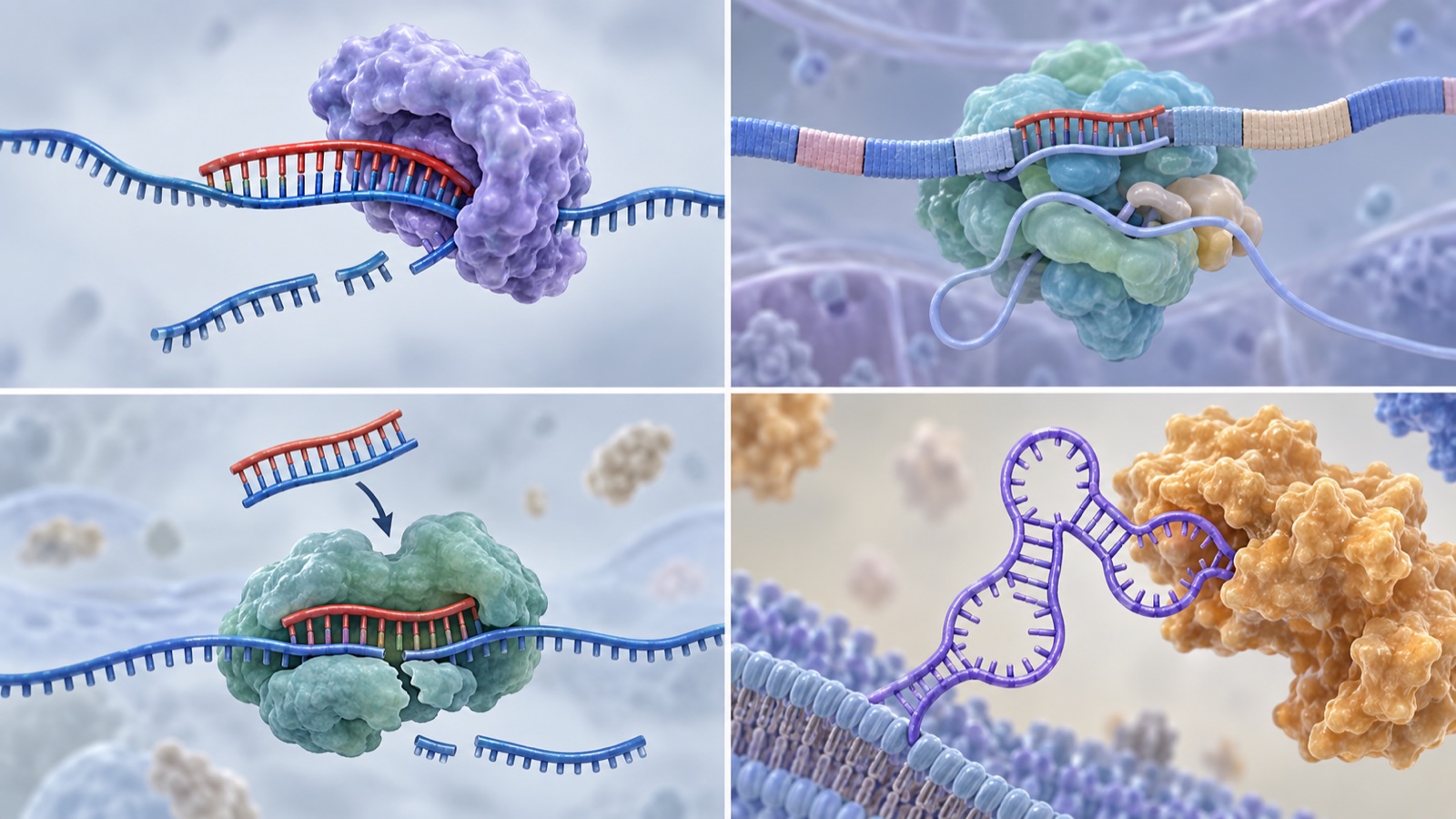
Approved oligonucleotide drugs fall broadly into four groups by how they work. The first three catch a target RNA by base-sequence complementarity, and the fourth, the aptamer, binds a protein by three-dimensional shape.
Show the original schematic with sources and numbers
Fig. 1 Conceptual diagram (vector drawing). The mechanism of each type is from the description in Roberts et al. (2020) [Ref. 1]. The split into four is this article's own and does not cover every mechanism of oligonucleotide drugs. It does not draw the shapes of RNA or enzymes.
| Type | What the paper says (Roberts et al. 2020) |
|---|---|
| Gapmer antisense | Made of an inner "gap" consisting mainly of DNA and two RNA-like wings modified with 2′-OMe or LNA, it binds the target transcript with high affinity. The resulting RNA-DNA duplex is a substrate for RNase H1, and the target is degraded |
| Steric-block antisense | Targets a splicing signal in the pre-mRNA and, depending on which signal is targeted, promotes exon skipping or inclusion |
| siRNA | Classically the "19+2" structure: a duplex of two 21-nucleotide RNA strands with 19 complementary bases and a 2-base overhang at the 3′ end. The guide strand directs AGO2, part of RISC, to the target, and when it is fully complementary the target is cut opposite positions 10 and 11 of the guide strand |
| Aptamer | Generally a single strand of about 20 to 100 nucleotides that folds into a defined secondary structure and acts as a ligand that interacts with a target protein through its three-dimensional shape and adaptive fit. It is obtained not by rational design but by SELEX, an in vitro evolution method |
All Sourced (Roberts et al. 2020 [Ref. 1]). The same paper also says that because aptamers have mainly been used against extracellular targets (such as receptors), the delivery problem is somewhat simplerSourced[Ref. 1].
3. Chemical modification — the sulfur in the backbone, and the 2′ position of the sugar
Natural DNA and RNA are quickly degraded in the body. Khvorova and Watts write that all antisense oligonucleotides require chemical modification to be sufficiently active in vivoSourced[Ref. 2]. There are three main places to modify: the backbone (phosphate), the 2′ position of the sugar, and the ends.
(1) The backbone — phosphorothioate (PS)
Roberts and co-authors say that introducing phosphorothioate (PS) linkages, in which one of the non-bridging oxygen atoms of the internucleotide phosphate group is replaced with sulfur, is widely used in therapeutic oligonucleotidesSourced[Ref. 1].
Khvorova and Watts say that the first chemical modification applied to antisense technology is still the most widely used: the phosphorothioate backbone, and put it this way: it was originally introduced to confer nuclease stability, but the major impact of phosphorothioate modification has turned out to be on the pharmacokinetics and uptake of oligonucleotidesSourced[Ref. 2].
PS modification has a clear two-sided nature. Summarizing Roberts and co-authorsSourced[Ref. 1]:
- Advantage: it has a dual effect: it confers nuclease resistance and at the same time promotes binding to proteins in plasma and inside cells. Binding to albumin and others prolongs circulation time and reduces renal excretion
- Advantage: interaction with intracellular proteins (such as nucleolin) also increases and is thought to promote accumulation in the nucleus. The nucleus is the site of action of antisense oligonucleotides that change splicing
- Drawback: it lowers binding affinity for the target. This is compensated by combining it with other kinds of modification
- siRNA is different: an siRNA with every linkage PS-modified is less active than the equivalent phosphodiester (PO) siRNA, so PS is usually placed only at the ends
(2) The 2′ position of the sugar
Roberts and co-authors say that 2′-O-methyl (2′-OMe), 2′-O-methoxyethyl (2′-MOE) and 2′-fluoro (2′-F) are the most common 2′ substituents, and that by replacing the nucleophilic 2′ hydroxyl of unmodified RNA they increase nuclease resistance, improving plasma stability, tissue half-life and, in turn, the duration of drug actionSourced[Ref. 1].
They add that these modifications also raise binding affinity for complementary RNA by favoring a 3′-endo (RNA-like) sugar pucker of the riboseSourced[Ref. 1]. However, these 2′-ribose modifications are not compatible with RNase H activity, so they are used in steric-block types or placed in the wings of a gapmerSourced[Ref. 1].
On how much affinity rises, Khvorova and Watts give the increase in duplex melting temperature (Tm) per modified baseSourced[Ref. 2].
| Modification | ΔTm per base | What the paper says |
|---|---|---|
| 2′-MOE | 0.9–1.7 °C | Among dozens of 2′-O-alkyl substituents tested, it emerged as one of the most useful analogs. It further raises nuclease resistance. The approved mipomersen and many drugs in clinical trials carry this modification |
| 2′-F | about 2.5 °C | The 2′-fluoro modification of RNA can also raise affinity |
| LNA | 4–8 °C | A ribose with the 2′ oxygen bridged to the 4′ carbon. It shows an unprecedented increase in affinity for RNA. The methylated analog is called cEt (constrained ethyl) |
| tcDNA | about 2 °C | Another conformationally constrained modification, based on a tricyclic backbone. Its affinity is lower than that of LNA, but it is considered promising for splice-modulating uses |
All Sourced (Khvorova and Watts 2017 [Ref. 2]). That paper cites Koshkin et al. (1998) and the 2′-O,4′-C-methylene-bridged form (Obika et al., 1998) as the original reports of LNASourced[Ref. 2].
Roberts and co-authors describe PMO (phosphorodiamidate morpholino oligonucleotide) as a charge-neutral nucleic acid chemistry in which the five-membered ribose heterocycle is replacedSourced[Ref. 1]. It is a design that remakes both the sugar and the backbone.
Viltolarsen, approved in Japan (VILTEPSO Intravenous Infusion 250 mg), is described in the PMDA review report as a synthetic oligonucleotide with a morpholino backbone, and its drug substance as a synthetic oligonucleotide of 21 nucleotide residues, a white powder, and amorphous (our translation of the Japanese report)Sourced[Ref. 11].
4. Our calculation: how many molecules does a phosphorothioate create?
This may be the part that surprises materials engineers most. Each PS linkage makes its phosphorus atom a stereocenter.
Roberts and co-authors say that adding one sulfur atom to a PS linkage creates a chiral center at each modified phosphorus, which can take either of two stereoisomeric forms called Sp and Rp, and that a 20-mer oligonucleotide with a fully PS backbone is therefore in practice a racemic mixture of 219 permutations (that is, more than 500,000 different molecules)Sourced[Ref. 1].
They add that the physicochemical properties of each stereocenter differ in terms of hydrophobicity and ionic character, nuclease resistance, target affinity and RNase H activitySourced[Ref. 1].
We recount following the paper's statement, and also calculate for other chain lengthsOur calculation.
- Premise: a chain of n bases has n − 1 internucleotide linkages
- Premise: each PS linkage takes either Sp or Rp, independently at each position
Calculation
- 20 bases (all PS): 219 = 524,288 (consistent with the paper's "more than 500,000")
- 18 bases (all PS): 217 = 131,072
- 21 bases (all PS): 220 = 1,048,576. Adding one base doubles the number of isomers
- PS only at the ends (a common siRNA design): with six PS positions, 26 = 64
Premises and limits: this is a count of combinations; it does not show that each isomer is actually formed in equal amounts. Nor does the large number of isomers by itself imply a quality or safety problem. The number is for grasping, in orders of magnitude, the situation seen in the next chapter, that the product "cannot be controlled as a single compound".
An oligonucleotide is extended one base at a time. If the coupling at each step is not perfect, shorter chains (deletion sequences) are left behind. Varying the yield per step, we calculate the fraction that grows to 20 basesOur calculation.
- Premise: reaching 20 bases takes 19 couplings
- Premise: the yield is the same at every step, and a chain that fails is not extended afterwards (in practice, failed ends are capped)
Calculation
- 98% per step: 0.9819 = about 68%
- 99% per step: 0.9919 = about 83%
- 99.5% per step: 0.99519 = about 91%
- For 40 bases at 99% per step: 0.9939 = about 68%. At the same yield, doubling the chain drops the purity of the crude product to what a 20-mer would have at 98% per step
Andrews and co-authors write that in actual manufacturing crude purities above 80% are not unusualSourced[Ref. 3], which is close to the "99% per step" level above (this article's comparison). Premises and limits: this calculation rests on the simplification of equal yields and does not show an actual impurity profile.
5. A materials engineer's view 1: not a "single compound" but a "controlled mixture"
In quality control, the half-million figure of the previous chapter means "cannot be separated and quantified". The MHLW notification "Points to consider in ensuring and evaluating the quality of oligonucleotide therapeutics" (in Japanese) deals with this situation head on.
In the notification's wording (our translation), for phosphorothioate-modified oligonucleotides, which are mixtures of many stereoisomers (where a non-bridging oxygen atom is replaced by sulfur), and for morpholino nucleic acids, where it is technically difficult to evaluate the distribution of stereoisomers of the active ingredient, the manufacturing steps and parameters that affect the stereochemistry at the phosphorus atom should be identified and defined appropriately, and the consistency of the stereoisomer distribution of the active ingredient should be explainedSourced[Ref. 9]
The shift taking place here is a familiar one for materials engineers (this article's commentary). If the specification cannot be guaranteed by analyzing the final product, guarantee it through process conditions. This is the approach long used for polymers with a molecular-weight distribution and for powders with a particle-size distribution.
The same notification takes the same stance on impurities. It says that oligonucleotide-related substances show similar physical and chemical properties, and it is often difficult to develop an analytical method that separates all of them, and that, where appropriate, a group of oligonucleotide-related substances can be controlled as one group of oligonucleotide-related substancesSourced[Ref. 9].
It further says that, given the characteristics of oligonucleotides, there is little point in applying the ICH M7 guideline to oligonucleotide-related substances, and that applying the reporting, identification and qualification thresholds given in ICH Q3A(R2) to oligonucleotide-related substances is not realisticSourced[Ref. 9]. The impurity-control framework made for small-molecule drugs does not work as it is.
The PMDA review report describes the drug substance of viltolarsen as a diastereomeric mixture having stereocenters on carbon atoms of the morpholine rings and on the 20 phosphorus atoms (our translation)Sourced[Ref. 11].
On the handling of related substances, the report records the applicant's explanation as follows (our translation). Oligonucleotide-related substances have similar chemical properties to one another and are difficult to separate and analyze individually. Because the impurity profile is consistent from lot to lot, the applicant considers it appropriate to control them as a group of impurities detected by the HPLC analysis used in the purity testSourced[Ref. 11].
The drug-substance specification includes content, description, identification (UV/VIS, IR, MS), pH, purity tests [clarity and color of solution, related substances (HPLC), residual solvents (GC)], water content, endotoxin, microbial limits and an assay (HPLC), and several synthesis and purification steps are designated as critical stepsSourced[Ref. 11] (the specific step names and parameters are in redacted parts of the review report).
The same notification has one more sentence that should be read from the procurement side.
In our translation, it says that because impurities contained in starting materials that are incorporated into the drug substance are considered high risk, the impurity profile of the starting materials needs to be examined thoroughly. Control of starting materials must then be positioned appropriately within the impurity control strategy, taking into account that opportunities for purification are limited in oligonucleotide manufacture compared with low-molecular-weight chemically synthesized drugs, and that there are limits to the separation and detection of oligonucleotide-related substances in the final productSourced[Ref. 9]
The remark that opportunities for purification are limited goes to the heart of this field (this article's commentary). In small-molecule synthesis, purity can be raised again at each intermediate by crystallization or extraction. An oligonucleotide, however, is basically grown to full length on the support and then put through chromatography just once. So quality cannot be rebuilt along the way. That is why impurities in the raw materials (phosphoramidites and others) are reflected directly in the impurity profile of the product.
From the side of those who supply the materials, this is a pattern in which "the purity specification of the monomer connects directly to the specification of the final product". It puts them in a position close to that of suppliers of monomers for polymerization or of high-purity chemicals for semiconductors (this article's commentary).
6. GalNAc — three sugars carry the drug to the liver
The clearest success so far in delivering oligonucleotide drugs is to the liver. The main player is the sugar modification GalNAc (N-acetylgalactosamine).
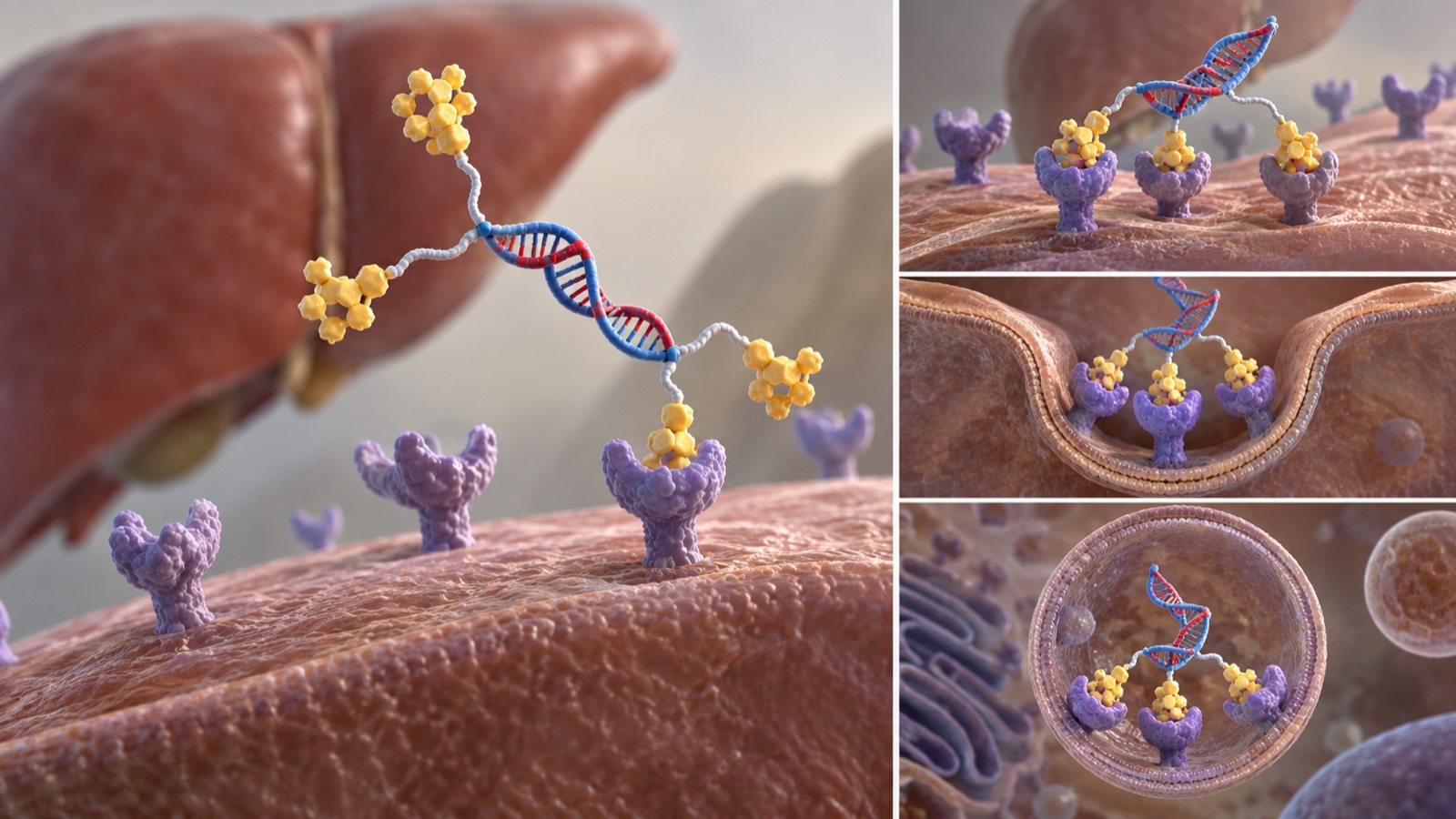
Roberts and co-authors explain that GalNAc is a sugar moiety that binds with high affinity (Kd = 2.5 nM) to asialoglycoprotein receptor 1 (ASGR1), which is highly expressed in the liver, and promotes the uptake of antisense and siRNA into hepatocytes by endocytosisSourced[Ref. 1].
The properties of the receptor matter too: ASGR1 is very highly expressed in the liver and is rapidly recycled to the cell membrane, which makes it an ideal receptor for effective liver-targeted deliverySourced[Ref. 1].
The release is also designed. The interaction between GalNAc and ASGR1 is pH-sensitive, and during acidification of the endosome the receptor and the oligonucleotide conjugate dissociate. The GalNAc moiety is then enzymatically degraded, and the oligonucleotide is freedSourced[Ref. 1].
Show the original schematic with sources and numbers
Fig. 4 Conceptual diagram (vector drawing). The description of each stage is from Roberts et al. (2020) [Ref. 1], and the fit of triantennary GalNAc with solid-phase synthesis from Nair et al. (2014) [Ref. 4]. The split into four stages is this article's own, and the drawing does not show the shape or size of cells, receptors or molecules.
The paper lists the reasons GalNAc conjugation is now the main strategy as high potency of silencing in the liver, small size compared with nanoparticle complexes, a well-defined chemical composition and low synthesis costSourced[Ref. 1].
It also gives figures for the gain in potency. GalNAc conjugation increased the potency of antisense about 7-fold in mice, and this was specific to the liver. In human patients it was about 30-foldSourced[Ref. 1]. It also says that GalNAc-conjugated antisense is delivered preferentially to hepatocytes in vivo, whereas unconjugated antisense is detected mainly in non-parenchymal cells of the liverSourced[Ref. 1].
In the abstract of Nair and co-authors' 2014 paper (JACS), one of the original reports on GalNAc conjugation, there is a sentence that is decisive from the materials and process side.
It says that ligands derived from GalNAc are compatible with the conditions of solid-phase oligonucleotide synthesis and deprotection, and the synthetic yields are comparable to those of standard oligonucleotidesSourced[Ref. 4]
That is, this ligand went into practical use because it can use the existing synthesizers and processes as they are (this article's commentary). When a new functional group is introduced, whether it fits the protecting-group strategy and deprotection conditions of the existing line decides whether it is adopted. This closely resembles the way only monomers that fit existing polymerization processes get put to practical use.
The paper reports that subcutaneous administration gave RNAi activity in the liver, and that optimizing the chemical modifications achieved a 5-fold improvement in potency in vivo over the parent design, with a 50% effective dose (ED50) of 1 mg/kg after a single dose, and that this enabled subcutaneous administration at therapeutically relevant doses in a volume of 1 mL or lessSourced[Ref. 4] (these are preclinical data in rodents. They do not show doses or effects in humans).
It matters that the condition "1 mL or less" is stated explicitly (this article's commentary). There is a practical upper limit to the volume that can be given in one subcutaneous injection. Raising potency is therefore also a question of whether the product can be made injectable: from the formulation side, higher potency is also a means of relaxing the constraints of solubility and volume.
7. Off-target effects — a chance match of seven bases
Being able to "set the target by sequence" is a strength of oligonucleotide drugs, but it is the flip side of a weakness: even a short match can produce an effect. This was shown in 2003 by an analysis of gene-expression profiles.
RNA interference had been thought to require nearly identical sequence between an siRNA and its cognate mRNA, but the results were differentSourced[Ref. 5].
The transcript profiles showed an siRNA-specific signature rather than a target-specific one, and included direct silencing of non-target genes that had only 11 contiguous bases of match with the siRNASourced[Ref. 5].
The conclusion was that siRNAs can cross-react with targets that have only limited sequence similaritySourced[Ref. 5].
Later work narrowed down which part of the match matters. The 2018 paper by Janas and co-authors (Nature Communications) explains that off-target effects of RNAi are driven mainly by binding of the seed region of the antisense strand (nucleotides 2 to 8) to complementary sites in the 3′ UTRSourced[Ref. 6].
On the liver toxicity seen in rats with GalNAc-conjugated siRNA, the abstract of that paper says the following.
The authors show that the rodent hepatotoxicity observed at excessive exposure can be attributed mainly to RNAi-mediated off-target effects, not to chemical modification or disruption of the RNAi pathwaySourced[Ref. 6].
The remedy was chemical modification. They report that these off-target effects can be mitigated by modulating seed pairing with thermally destabilizing chemical modifications, which significantly improves the safety profile of GalNAc-siRNA in ratsSourced[Ref. 6]. Specifically, they show a method that places a glycol nucleic acid (GNA) nucleotide at position 7 of the antisense strandSourced[Ref. 6].
We check by probability how common a "7-base match" or an "11-base match" isOur calculation.
- Premise: consider a sequence in which the four bases are arranged at random with equal probability (real sequences are not random)
Calculation
- Probability that 7 bases match by chance: 1 ÷ 47 = 1 ÷ 16,384. That is about one occurrence per 16,000 bases
- Searching 100,000 bases of sequence: 100,000 ÷ 16,384 = about 6 sites expected
- Probability that 11 bases match by chance: 1 ÷ 411 = 1 ÷ about 4.19 million
- Probability that all 19 bases match by chance: 1 ÷ 419 = 1 ÷ about 275 billion. A perfect match is very unlikely to occur by chance
This contrast shows the nature of the off-target problem (this article's commentary). A design that matches the full-length sequence is specific enough, yet what actually acts is a short partial match, so specificity cannot be guaranteed by the full length.
Premises and limits: the bases of real genomes and transcripts are not arranged at random, so this calculation is a rough estimate for getting a feel for orders of magnitude. It does not show how many sites actually match for a particular sequence, and it does not evaluate toxicity.
The MHLW "Guideline on nonclinical safety evaluation of oligonucleotide therapeutics" (in Japanese), dated 30 March 2020, divides off-target toxicity into two kinds (our translation)Sourced[Ref. 10].
- Hybridization-dependent off-target toxicity: toxicity caused by hybridizing to similar base sequences other than the target
- Hybridization-independent off-target toxicity: toxicity caused by the structure and physical and chemical properties of the oligonucleotide, without hybridization
It even writes the methods of evaluation separately. For the former, because the human and animal genome sequences differ, the guideline recommends not pursuing human safety in animal studies but evaluating it by in silico analysis using human genomic DNA and RNA information, or by in vitro gene-expression analysis with human cellsSourced[Ref. 10]. For the latter, it says that because it is caused by the physical properties of the oligonucleotide (chemical modifications and so on), the nonclinical safety evaluation of chemical products is considered a useful referenceSourced[Ref. 10].
The passage of the guideline just cited changes the order of development itself (this article's commentary). Toxicity that arises from the sequence cannot be checked in animals, because a different species has a different genome. That is why computation (in silico) and tests in human cells are positioned as the formal means of evaluation.
On the other hand, toxicity that arises from chemical modification is to be evaluated "in the same way as chemical products"Sourced[Ref. 10]. In other words, the safety evaluation of oligonucleotide drugs is structured so that it proceeds by different methods for "the sequence side" and "the materials side".
The materials engineer's involvement is clearly on the latter side (this article's commentary). The type of backbone modification, the end ligand, the salt form and the impurities: the parts evaluated as chemistry, independently of the sequence, are the areas in their charge. The same guideline also says that the animal species should be a rodent and a non-rodent, as for chemical productsSourced[Ref. 10].
8. Solid-phase synthesis and purification — one base at a time, a four-step reaction repeated
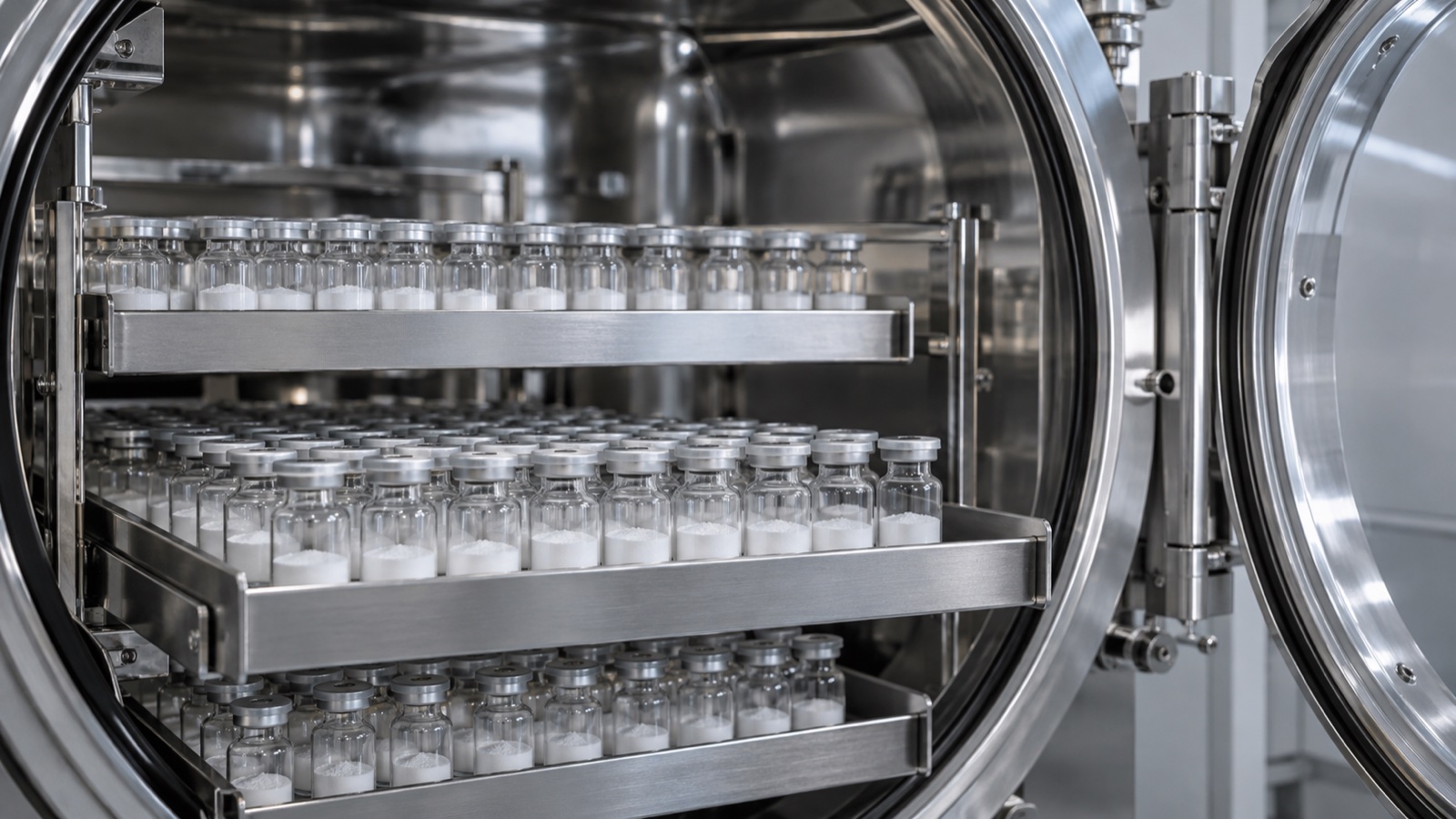
The manufacture of oligonucleotide drugs involves neither cell culture nor fermentation. Chemical reactions are repeated over and over in an instrument. Andrews and co-authors (a joint report by chemical-process staff at several pharmaceutical companies) summarize the picture as follows.
The manufacture of a single-stranded therapeutic oligonucleotide typically has four main elements: (1) oligonucleotide synthesis on a solid support, (2) cleavage from the support and removal of protecting groups, (3) purification by preparative chromatography, and (4) isolation by lyophilizationSourced[Ref. 3].
Oligonucleotides are synthesized by the phosphoramidite method on a solid support, which has been the mainstay of oligonucleotide synthesis for about 40 yearsSourced[Ref. 3]. The starting materials are phosphoramidite monomers derived from protected nucleosidesSourced[Ref. 3].
For the support, the paper says that controlled pore glass (CPG) pre-loaded with the first nucleotide has historically been used, and more recently polystyrene to which UnyLinker molecules are attached, and that the synthesis is fully automated under computer control, with reagents flowed through the column in sequenceSourced[Ref. 3].
| Step | What the paper says (Andrews et al. 2021) |
|---|---|
| 1. Detritylation | The dimethoxytrityl (DMT) protecting group on the 5′ hydroxyl is removed with a solution of an organic acid, typically dichloroacetic acid (DCA) in toluene |
| 2. Coupling | The next nucleoside phosphoramidite in the sequence is activated with an acidic activator and coupled to the 5′ hydroxyl of the growing oligonucleotide |
| 3. Oxidation / sulfurization | Iodine or a sulfurizing agent adds oxygen or sulfur to the phosphorus atom, giving either a phosphodiester or a phosphorothioate group. Whether a PS linkage is introduced is decided at this step |
| 4. Capping | Unreacted 5′ hydroxyls are capped with acetic anhydride, preventing further extension of chains that failed coupling and minimizing N−1 impurities |
| End of synthesis | A wash with an amine solution removes the cyanoethyl protecting groups from the phosphodiester / phosphorothioate backbone |
| Cleavage and deprotection | The full-length product is cleaved from the solid support, and the base-labile protecting groups are removed, typically by heating in aqueous ammonia. For oligonucleotides containing RNA, fluoride treatment is needed to remove the 2′-O-silyl protecting groups |
| Purification | Reverse-phase and anion-exchange chromatography are the most common. The final 5′-DMT group is often left on because its hydrophobicity can be used for the chromatographic separation |
| Isolation | Lyophilization. It is an energy-intensive operation (more than 2 kWh/kg) and is described as one of the main process bottlenecks |
All Sourced (Andrews et al. 2021 [Ref. 3]). The paper rates the whole process as a remarkable achievement, given the size and complexity of the molecule and the number of chemical transformations involved (about 80), to be able to synthesize, purify and isolate it with excellent yield (about 50%) and purity (about 90%)Sourced[Ref. 3].
On the atom economy of the raw materials, the paper says the following. The atom efficiency of the starting materials is low (for example, an average of 36% for the four deoxyribonucleoside phosphoramidites), because protecting groups are used extensively, and as a result most of the atoms of these raw materials are not incorporated into the drug substance and are discarded as wasteSourced[Ref. 3].
In particular it points out that the DMT group accounts for roughly one third of the mass of the deoxy phosphoramidites, and raises the study of alternative protecting groups of lower molecular weight. It adds, however, that using a DMT-protected phosphoramidite in the final cycle would probably still be advantageous, because it serves as a handle for purificationSourced[Ref. 3].
9. A materials engineer's view 2: 4 tonnes of raw materials for 1 kg of product
The report of Andrews and co-authors is especially valuable because five companies brought the mass balances of their actual processes together and published them. The metric is PMI (process mass intensity), a measure of the amount of raw materials needed to make 1 kilogram of isolated drug substanceSourced[Ref. 3].
The subjects are eight processes, including antisense and siRNA (with modifications such as MOE, LNA and cEt, and at different development phases)Sourced[Ref. 3].
PMI ranged from 3,035 to 7,023, with a mean of 4,299. These values lie between the PMI figures calculated for small-molecule drug substances (median 168–308) and for biologic drug substances (about 8,300)Sourced[Ref. 3].
Values divided by chain length are also given: PMI per nucleotide ranged from 152 to 251, with a mean of 199Sourced[Ref. 3].
| Way of breaking it down | What the paper says (Andrews et al. 2021) |
|---|---|
| By type of material | Organic materials and water are in about equal amounts. Wash solvent is half of the organic materials. The share of water is 51% in oligonucleotide processes and 28% in small-molecule processes, likely a consequence of using aqueous purification techniques |
| By process stage | The synthesis stage and the purification stage contribute most to PMI. The synthesis stage accounts for roughly half of the materials |
| By synthesis step | The detritylation step contributes most, accounting for nearly half of the materials used in the synthesis stage |
| Wash solvent | Half of the organic materials, contributing 25% of total PMI |
| Relation to development stage | No downward trend of PMI over time, as is usually seen for small molecules. The authors consider this to be because oligonucleotide manufacturing is a platform approach, in which the current best-practice conditions from earlier projects are applied to new compounds, so there are few opportunities to lower PMI during development |
All Sourced (Andrews et al. 2021 [Ref. 3]). Materials used to synthesize the phosphoramidites themselves, and materials for synthesizing ligands such as GalNAc intermediates, are not included in this tallySourced[Ref. 3].
We convert from the mean PMI and from the contents of approved productsOur calculation.
- Premise: take PMI as 4,299 (the mean of the eight products of Andrews and co-authors)Sourced[Ref. 3]
- Premise: Givlaari (givosiran) contains 189 mg in 1 mL per vialSourced[Ref. 7]
- Premise: Leqvio (inclisiran) contains 284 mg in 1.5 mL per syringeSourced[Ref. 7]
Calculation
- Per 1 kg of drug substance: 4,299 kg = about 4.3 tonnes of raw materials
- 189 mg (one vial): 0.189 g × 4,299 = about 813 g. More than 800 g of raw material corresponds to an amount of drug substance that would sit on a fingertip
- 284 mg (one syringe): 0.284 g × 4,299 = about 1.2 kg
- Amount of water: if 51% of PMI is water, then about 2.2 tonnes per kg of drug substance is water
- Amount of wash solvent: if it is 25% of total PMI, then about 1.1 tonnes per kg of drug substance
Premises and limits: this is a rough estimate that applies the mean PMI to individual products, and it is not the actual PMI of these products. The data of Andrews and co-authors are for eight products in development, and the product names are not disclosed. The synthesis of phosphoramidites and ligands is not included either.
This breakdown is the most interesting part (this article's commentary). The synthesis itself is fast. Andrews and co-authors write that all the reactions in the cycle are fastSourced[Ref. 3]. Yet in terms of material consumption, wash solvent accounts for half of the organic materials and 25% of total PMI, and the detritylation step alone uses nearly half of the materials of the synthesis stageSourced[Ref. 3].
It fits the reality better to think of solid-phase synthesis as a "washing process", not a "reaction process" (this article's commentary). A wash always follows each step, and that is repeated 19 times. The improvements the paper lists also concentrate thereSourced[Ref. 3].
- Reducing washes: minimize the less critical washes, such as those after coupling and after sulfurization
- Pushing reagents out with nitrogen pressure: no solvent is used to clear reagents from the column
- Reusing wash liquid: the cleaner solvent from the end of a wash is used at the start of the next wash of the same kind
- Removing void space in the column: use a dynamic axial compression column whose height changes as the synthesis proceeds, eliminating headspace and reducing the volume of the detritylation wash
- Omitting the capping step: it was recently shown that a by-product of the sulfurization reaction can act as the capping agent for chains that failed coupling, which made it possible to remove the capping step and to reduce the PMI of the synthesis stage by 14%
This is a typical insight of process design (this article's commentary). Watching only yield and reaction rate cannot improve half of the material efficiency. The last example, "using a by-product as a reagent and eliminating a step", is an idea that applies directly to improving any materials process.
On solvent selection, the paper, referring to the CHEM21 solvent guide, notes that dichloromethane (DCM) has been used as the detritylation solvent but has largely been replaced by toluene in large-scale manufacture, and that pyridine and triethylamine act as bases in oxidation, sulfurization, capping and backbone deprotection but are classified as "hazardous" because of their low occupational exposure limits, and it encourages the search for alternativesSourced[Ref. 3].
10. Approved examples (those confirmed in regulators' published materials)
The following lists only products that have a date of first approval (ORIG-1) in the FDA's Drugs@FDA and whose chemical composition could be confirmed in a label or a peer-reviewed review. Indications, clinical results and dosing are not covered. Only the chemical composition and approval date are given.
| Product (generic name) | Type and chemistry | First FDA approval | Notes |
|---|---|---|---|
| VITRAVENE (fomivirsen) | 21-base fully PS DNA (first-generation antisense) / intravitreal injection | 26 August 1998 (NDA 020961) | Roberts and co-authors call it the first approved oligonucleotide drug and write that it was withdrawn from use because of reduced clinical need |
| MACUGEN (pegaptanib sodium) | 27-base 2′-F / 2′-OMe-modified, PEGylated aptamer / intravitreal injection | 2004 (NDA 021756) | Roberts and co-authors call it the first approved aptamer. Drugs@FDA now lists it as discontinued |
| EXONDYS 51 (eteplirsen) | 30-base PMO (steric-block antisense) | 19 September 2016 (NDA 206488) | The type is from the table of Roberts et al. |
| SPINRAZA (nusinersen) | The label describes it as a modified antisense oligonucleotide in which the 2′ hydroxyl is replaced with a 2′-O-2-methoxyethyl group and the phosphate linkages are replaced with phosphorothioate linkages. Molecular weight 7,501.0 / intrathecal administration | 23 December 2016 (NDA 209531) | The label says to store at 2–8 °C without freezing and to protect from light |
| ONPATTRO (patisiran) | Lipid nanoparticle formulation of siRNA / intravenous infusion | 10 August 2018 (NDA 210922) | Roberts and co-authors call it the first approved RNAi drug. LNPs are covered in our explainers on lipid nanoparticles and mRNA medicines |
| GIVLAARI (givosiran) | siRNA covalently attached to a triantennary GalNAc ligand (2′-F / 2′-OMe) / subcutaneous injection. Molecular weight 17,245.56 (sodium salt), 16,300.34 as the free acid | 20 November 2019 (NDA 212194) | 189 mg in 1 mL per vial. The label says to store at 2–25 °C |
| VILTEPSO (viltolarsen) | PMO of 21 subunits. The five-membered ribofuranosyl ring is replaced by a six-membered morpholino ring, linked by uncharged phosphorodiamidate. Molecular weight 6,924.82 / intravenous infusion | 12 August 2020 (NDA 212154, accelerated approval) | In Japan it was approved on 25 March 2020 (approval number 30200AMX00428000) and is subject to the Conditional Early Approval System |
| LEQVIO (inclisiran) | Triantennary GalNAc-conjugated siRNA. Except at one position, the 2′ ribose moieties are 2′-F or 2′-OMe, and six phosphodiester linkages at the ends are phosphorothioate. Molecular weight 17,284.72 / subcutaneous injection | 22 December 2021 (NDA 214012) | 284 mg in 1.5 mL per syringe. The label says to store at room temperature, 20–25 °C |
| AMVUTTRA (vutrisiran) | Triantennary GalNAc-conjugated siRNA / subcutaneous injection. Molecular weight 17,290 (sodium salt), 16,345 as the free acid | 13 June 2022 (NDA 215515) | 25 mg in 0.5 mL |
| IZERVAY (avacincaptad pegol) | An RNA aptamer with a branched PEG of about 43 kDa covalently attached. Molecular weight about 56 kDa / intravitreal administration | 4 August 2023 (NDA 217225) | 2 mg in 0.1 mL (as oligonucleotide). The label says to store at 2–8 °C and not to freeze or shake |
Approval dates are from FDA Drugs@FDA [Ref. 8], chemical composition and storage conditions from each product's label [Ref. 7], and the types and standing of EXONDYS 51, ONPATTRO, VITRAVENE and MACUGEN from Roberts et al. (2020) [Ref. 1]Sourced. The Japanese approval of viltolarsen is from an MHLW administrative notice [Ref. 12] and the PMDA review report [Ref. 11]Sourced. For MACUGEN, Drugs@FDA gives 17 September 2004 as the action date of ORIG-1, whereas the approval letter PDF for the same application carries an electronic signature dated 17 December 2004, and the table of Roberts et al. says "December 2004". Because the dates do not agree, this table gives only "2004".
- Routes of administration are skewed toward "local" or "liver". The eye (intravitreal), intrathecal, and subcutaneous or intravenous delivery to the liver: the situation Roberts and co-authors describe, that delivery to tissues other than the liver remains a major goal, shows up directly in the lineup of approved productsSourced[Ref. 1]
- The approved siRNAs have similar molecular weights. Givosiran 17,245.56, inclisiran 17,284.72 and vutrisiran 17,290: all are triantennary GalNAc-conjugated siRNAs of almost the same massSourced[Ref. 7]. The numbers suggest that the same framework carries different sequences (this article's commentary)
- Antisense drugs fall into separate chemical lineages. The 2′-MOE fully PS type (nusinersen) and the uncharged PMO type (eteplirsen, viltolarsen)Sourced[Ref. 7]
- Storage conditions differ completely from product to product. Some are 2–8 °C without freezing, some 2–25 °C, and some room temperature at 20–25 °CSourced[Ref. 7]. It cannot be said that oligonucleotide drugs uniformly require cold transport (this article's commentary)
- There are two aptamers. Pegaptanib and avacincaptad pegol, both PEGylated and both given locally to the eyeSourced[Ref. 7]
- Oligonucleotide drugs set the target by sequence and set how they arrive by chemical modification. Khvorova and co-authors name this separation as the key advantage of oligonucleotide drugsSourced
- A fully PS 20-base chain is a mixture of 524,288 stereoisomersOur calculation. The MHLW notification says that, where evaluating the distribution is difficult, consistency should be explained through process parametersSourced
- GalNAc delivers to hepatocytes with three sugars. It binds at Kd = 2.5 nM and is designed to come off when the endosome acidifiesSourced
- Off-target effects arise from short partial matches. A 7-base match is calculated to appear about once per 16,000 basesOur calculation
- Manufacturing repeats a four-step reaction for every base. For a 20-mer, 19 cycles and 76 reactions, about 14 hoursOur calculation
- Washing is what limits material efficiency. About 4.3 tonnes of raw materials per kg of drug substanceOur calculation, of which wash solvent is 25% of total PMISourced
11. Glossary
- Oligonucleotide
- A short chain of nucleic acid. Therapeutic ones are often around 20 bases long.
- Antisense (ASO)
- A single-stranded nucleic acid complementary to a target RNA. There are degrading and steric-block types.
- Gapmer
- An antisense oligonucleotide with DNA in the middle and modified RNA-type wings. It uses RNase H.
- RNase H
- An enzyme that cuts the RNA strand of an RNA-DNA duplex. The workhorse of gapmers.
- siRNA
- A duplex of two 21-base strands. It loads into RISC containing AGO2 and cuts the target mRNA.
- RISC / AGO2
- The RNA-induced silencing complex and the cleaving enzyme at its center.
- Guide strand / passenger strand
- The two strands of an siRNA. The side complementary to the target is the guide strand.
- Seed region
- Positions 2 to 8 of the guide strand. A partial match here causes off-target effects.
- Aptamer
- A single-stranded nucleic acid that binds a protein through its three-dimensional shape. Obtained by SELEX.
- SELEX
- A method of repeating selection and amplification in vitro to pick out a desired aptamer.
- Phosphorothioate (PS)
- A backbone modification in which one non-bridging oxygen of the phosphate is replaced with sulfur.
- 2′-MOE
- A modification with a 2-methoxyethyl group at the 2′ position of the sugar. It raises resistance and affinity.
- LNA / cEt
- Nucleic acids with the 2′ and 4′ positions of the sugar bridged to lock the conformation. Affinity rises greatly.
- PMO
- Morpholino nucleic acid. Made of a six-membered ring and an uncharged backbone.
- GalNAc
- N-acetylgalactosamine. A sugar that binds ASGR1 on hepatocytes.
- ASGR1
- Asialoglycoprotein receptor 1. Highly expressed in the liver and rapidly recycled.
- Phosphoramidite method
- The synthesis method, in use for 40 years, that grows the chain one base at a time on a solid support.
- DMT group
- A protecting group on the 5′ hydroxyl. It is removed with acid at the start of each cycle and also serves as a purification handle.
- Capping
- An operation that blocks unreacted 5′ hydroxyls so that failed chains are not extended any further.
- N−1 impurity
- A by-product one base shorter than the target. It arises from failed coupling.
- PMI
- Process mass intensity. The mass of raw materials needed to obtain 1 kg of drug substance.
- Off-target
- An effect on an unintended target. There are sequence-derived and chemistry-derived kinds.
12. References (primary sources)
- Roberts T. C., Langer R., Wood M. J. A. "Advances in oligonucleotide drug delivery", Nature Reviews Drug Discovery 19(10), 673–694 (2020), DOI 10.1038/s41573-020-0075-7 — pmc.ncbi.nlm.nih.gov
- Khvorova A., Watts J. K. "The chemical evolution of oligonucleotide therapies of clinical utility", Nature Biotechnology 35(3), 238–248 (2017), DOI 10.1038/nbt.3765 — pmc.ncbi.nlm.nih.gov
- Andrews B. I. et al. (ACS GCI Pharmaceutical Roundtable, oligonucleotide working group) "Sustainability Challenges and Opportunities in Oligonucleotide Manufacturing", The Journal of Organic Chemistry 86(1), 49–61 (2021), DOI 10.1021/acs.joc.0c02291 — pmc.ncbi.nlm.nih.gov
- Nair J. K. et al. "Multivalent N-acetylgalactosamine-conjugated siRNA localizes in hepatocytes and elicits robust RNAi-mediated gene silencing", Journal of the American Chemical Society 136(49), 16958–16961 (2014), DOI 10.1021/ja505986a — pubmed.ncbi.nlm.nih.gov
- Jackson A. L. et al. "Expression profiling reveals off-target gene regulation by RNAi", Nature Biotechnology 21(6), 635–637 (2003), DOI 10.1038/nbt831 — pubmed.ncbi.nlm.nih.gov
- Janas M. M. et al. "Selection of GalNAc-conjugated siRNAs with limited off-target-driven rat hepatotoxicity", Nature Communications 9, 723 (2018), DOI 10.1038/s41467-018-02989-4 — pmc.ncbi.nlm.nih.gov
- DailyMed (U.S. National Library of Medicine) "FDA-approved labels (GIVLAARI, LEQVIO, SPINRAZA, IZERVAY, AMVUTTRA, VILTEPSO)" — dailymed.nlm.nih.gov
- FDA "Drugs@FDA: FDA-Approved Drugs" (date of first approval and marketing status for each NDA) — accessdata.fda.gov
- Ministry of Health, Labour and Welfare (MHLW), Pharmaceutical Evaluation Division "Points to consider in ensuring and evaluating the quality of oligonucleotide therapeutics" (in Japanese), Notification Yakusei-Yakushin-hatsu 0927 No. 3, 27 September 2018 (PDF) — pmda.go.jp
- Ministry of Health, Labour and Welfare (MHLW), Pharmaceutical Evaluation Division "Guideline on nonclinical safety evaluation of oligonucleotide therapeutics" (in Japanese), Notification Yakusei-Yakushin-hatsu 0330 No. 1, 30 March 2020 (PDF) — pmda.go.jp
- Pharmaceuticals and Medical Devices Agency (PMDA) "VILTEPSO Intravenous Infusion 250 mg: report on the deliberation results and review report" (in Japanese), 2020 (PDF) — pmda.go.jp
- Ministry of Health, Labour and Welfare (MHLW), Pharmaceutical Evaluation Division "Drugs approved as new drugs" (in Japanese), administrative notice of 25 March 2020 — mhlw.go.jp
13. Claim-to-source audit
| Claim in the text | Basis | Class |
|---|---|---|
| That oligonucleotides are polymers of nucleic acid, that single-stranded antisense is about 4–10 kDa and double-stranded siRNA about 14 kDa, large hydrophilic polyanions that do not readily cross cell membranes. That efficient delivery to tissues other than the liver remains a major constraint. The mechanisms of the gapmer, steric-block, siRNA and aptamer types (degradation by RNase H1, action on splicing signals, the 19+2 structure with AGO2 and RISC, cleavage opposite positions 10 and 11 of the guide strand, aptamers of about 20–100 nucleotides obtained by SELEX, and aptamers used mainly against extracellular targets). That phosphorothioate (PS) replaces one non-bridging oxygen with sulfur, confers nuclease resistance and protein binding, that binding to albumin prolongs circulation and reduces renal clearance, that interaction with nucleolin and others is thought to promote nuclear accumulation, that it lowers target affinity, and that an siRNA with every linkage PS-modified is less active than the equivalent PO siRNA so end-only modification is usual. That 2′-OMe, 2′-MOE and 2′-F are the most common 2′ substituents, replace the nucleophilic 2′ hydroxyl to improve resistance, plasma stability, tissue half-life and duration of action, and raise affinity by favoring a 3′-endo pucker, but are not compatible with RNase H activity. That PMO is a charge-neutral chemistry with the five-membered ribose replaced. That a fully PS 20-mer is a racemic mixture of 219 permutations (more than 500,000 different molecules) and that the physicochemical properties of each stereocenter differ in hydrophobicity and ionic character, nuclease resistance, target affinity and RNase H activity. That GalNAc binds ASGR1 with Kd = 2.5 nM, that ASGR1 is highly expressed in the liver and rapidly recycled to the membrane, that the interaction is pH-sensitive and dissociates on endosomal acidification, after which GalNAc is enzymatically degraded and the oligonucleotide freed, that triantennary GalNAc is typical, that GalNAc conjugation gave about 7-fold greater potency in mice and about 30-fold in human patients, that unconjugated antisense is detected mainly in non-parenchymal cells, and why GalNAc is chosen (high hepatic silencing potency, small size, well-defined chemical composition, low synthesis cost) | Roberts et al. (2020) Reference 1 https://pmc.ncbi.nlm.nih.gov/articles/PMC7419031/ | Sourced |
| That the key advantage of oligonucleotide drugs is that delivery and potency arise mainly from chemical structure while the target is defined by the base sequence. That the features determining tissue distribution and metabolism are called the "dianophore" and are largely set by chemical modification of sugar, base and phosphate backbone, single versus double strand, and the presence of a targeting ligand. That all antisense oligonucleotides need chemical modification to be active in vivo. That the first modification applied was the phosphorothioate backbone, introduced for nuclease stability but with its main impact on pharmacokinetics and uptake. The ΔTm per base of 0.9–1.7 °C for 2′-MOE, about 2.5 °C for 2′-F, 4–8 °C for LNA and about 2 °C for tcDNA, that 2′-MOE emerged as one of the most useful analogs among dozens of candidates and is used by mipomersen and others, and that LNA bridges the 2′ oxygen and 4′ carbon and its methylated analog is called cEt | Khvorova and Watts (2017) Reference 2 https://pmc.ncbi.nlm.nih.gov/articles/PMC5517098/ | Sourced |
| That the manufacture of a single-stranded therapeutic oligonucleotide has four main elements (solid-phase synthesis, cleavage and deprotection, purification by preparative chromatography, and isolation by lyophilization). That the solid-support phosphoramidite method has been the mainstay for about 40 years, that the starting materials are phosphoramidites derived from protected nucleosides, that supports have moved from CPG to polystyrene with UnyLinker, and that synthesis is fully automated with reagents flowed in sequence. The four-step cycle in the 3′ to 5′ direction (detritylation: dichloroacetic acid in toluene; coupling: acidic activator; oxidation / sulfurization: iodine or sulfurizing agent; capping: acetic anhydride, minimizing N−1 impurities) with a wash after each step, about 45 minutes per cycle, a 20-mer finished within 24 hours, and a final amine wash that removes the cyanoethyl protecting groups. Cleavage and deprotection by heating in aqueous ammonia, fluoride treatment for RNA-containing chains, and that crude purities above 80% are not unusual. That reverse-phase and anion-exchange chromatography are common and the 5′-DMT is used for separation. That lyophilization is an energy-intensive operation of more than 2 kWh/kg and one of the bottlenecks. About 80 chemical transformations overall, with a yield of about 50% and purity of about 90%. That the atom efficiency of the four deoxyribonucleoside phosphoramidites averages 36%, that the DMT group is about one third of the mass of the deoxy forms, and that DMT-protected material is advantageous in the final cycle. The definition of PMI and the values for eight products (3,035–7,023, mean 4,299, 152–251 per nucleotide with a mean of 199), the contrast with the small-molecule median of 168–308 and biologics at about 8,300, water at 51% (28% for small molecules), wash solvent as half of the organic materials and 25% of total PMI, the synthesis stage as about half of the materials, detritylation as nearly half of the synthesis-stage materials, no downward trend of PMI with development stage which the authors attribute to a platform approach, and that materials for phosphoramidite and ligand synthesis are outside the tally. The proposed improvements (fewer washes, pushing reagents out with nitrogen pressure, reusing wash liquid, a dynamic axial compression column, and omitting capping through a sulfurization by-product with a 14% PMI reduction). That DCM has been replaced by toluene and that pyridine and triethylamine are classified as hazardous because of low occupational exposure limits | Andrews et al. (2021) Reference 3 https://pmc.ncbi.nlm.nih.gov/articles/PMC8154579/ | Sourced |
| That GalNAc-derived ligands are compatible with solid-phase oligonucleotide synthesis and deprotection conditions and that synthetic yields are comparable to standard oligonucleotides. That subcutaneous administration gave RNAi-mediated gene silencing in the liver. That optimizing the chemical modifications gave a 5-fold potency improvement in vivo over the parent design with an ED50 of 1 mg/kg after a single dose, and that this enabled subcutaneous administration in a volume of 1 mL or less (all preclinical reports including rodents) | Abstract of Nair et al. (2014) Reference 4 https://pubmed.ncbi.nlm.nih.gov/25434769/ | Sourced |
| That RNA interference had been thought to require nearly identical sequence, that transcript profiles showed an siRNA-specific rather than target-specific signature and included direct silencing of non-target genes with only 11 contiguous bases of match, and that siRNAs can cross-react with targets of limited sequence similarity | Abstract of Jackson et al. (2003) Reference 5 https://pubmed.ncbi.nlm.nih.gov/12754523/ | Sourced |
| That RNAi-mediated off-target effects are driven mainly by binding of the seed region of the antisense strand (positions 2–8) to complementary sites in the 3′ UTR. That rodent hepatotoxicity seen with GalNAc-siRNA at excessive exposure can be attributed mainly to RNAi-mediated off-target effects, not to chemical modification or disruption of the RNAi pathway. That thermally destabilizing chemical modifications that modulate seed pairing mitigate off-target effects and significantly improve the safety profile in rats. The example of a glycol nucleic acid (GNA) nucleotide at position 7 of the antisense strand | Janas et al. (2018) Reference 6 https://pmc.ncbi.nlm.nih.gov/articles/PMC5818625/ | Sourced |
| The chemical composition, molecular weight, content and storage conditions of each product in the table of Chapter 10 (nusinersen: a 2′-O-2-methoxyethyl group and phosphorothioate linkages, molecular weight 7,501.0, 2–8 °C, do not freeze, protect from light. Givosiran: a triantennary GalNAc-conjugated siRNA with 2′-F / 2′-OMe, molecular weight 17,245.56 / 16,300.34 as the free acid, 189 mg in 1 mL, stored at 2–25 °C. Inclisiran: 2′-F or 2′-OMe at the 2′ ribose positions except one, and six terminal phosphorothioates, molecular weight 17,284.72, 284 mg in 1.5 mL, stored at 20–25 °C. Vutrisiran: molecular weight 17,290 / 16,345 as the free acid, 25 mg in 0.5 mL. Avacincaptad pegol: an RNA aptamer with a branched PEG of about 43 kDa, molecular weight about 56 kDa, 2 mg in 0.1 mL, stored at 2–8 °C, do not freeze or shake. Viltolarsen: a PMO of 21 subunits with a six-membered morpholino ring and uncharged phosphorodiamidate linkages, molecular weight 6,924.82, 250 mg in 5 mL per vial, and a statement that approval is based on accelerated approval) | FDA-approved labels on DailyMed Reference 7 https://dailymed.nlm.nih.gov/dailymed/ | Sourced |
| The FDA first-approval dates in the table of Chapter 10 (VITRAVENE 26 August 1998 / NDA 020961; MACUGEN NDA 021756; EXONDYS 51 19 September 2016 / NDA 206488; SPINRAZA 23 December 2016 / NDA 209531; ONPATTRO 10 August 2018 / NDA 210922; GIVLAARI 20 November 2019 / NDA 212194; VILTEPSO 12 August 2020 / NDA 212154; LEQVIO 22 December 2021 / NDA 214012; AMVUTTRA 13 June 2022 / NDA 215515; IZERVAY 4 August 2023 / NDA 217225). That MACUGEN is listed as discontinued. That the ORIG-1 action date of MACUGEN is given as 17 September 2004 while the electronic signature on the approval letter PDF is dated 17 December 2004, so this article did not fix a day | Each NDA summary and approval letter in FDA Drugs@FDA Reference 8 https://www.accessdata.fda.gov/scripts/cder/daf/index.cfm | Sourced |
| That, where evaluating the distribution of stereoisomers is technically difficult, the manufacturing steps and parameters affecting the stereochemistry at phosphorus should be defined and the consistency of the stereoisomer distribution explained. That developing an analytical method that separates all oligonucleotide-related substances is often difficult and that, where appropriate, they can be controlled as a group. That applying ICH M7 is of little significance and that applying the ICH Q3A(R2) thresholds as they are is considered unrealistic. That impurities in starting materials are high risk and, given limited opportunities for purification and limits to separation and detection, must be positioned within the control strategy | MHLW "Points to consider in ensuring and evaluating the quality of oligonucleotide therapeutics" (our translation) Reference 9 https://www.pmda.go.jp/files/000228569.pdf | Sourced |
| That off-target toxicity is divided into hybridization-dependent and hybridization-independent. That for the former, because human and animal genome sequences differ, evaluation by in silico analysis or in vitro gene-expression analysis with human cells is recommended. That for the latter, the nonclinical safety evaluation of chemical products is considered a useful reference. That a rodent and a non-rodent species should be used | MHLW "Guideline on nonclinical safety evaluation of oligonucleotide therapeutics" (our translation) Reference 10 https://www.pmda.go.jp/files/000234603.pdf | Sourced |
| That viltolarsen is a synthetic oligonucleotide with a morpholino backbone, that the drug substance is a white powder of 21 nucleotide residues and amorphous, and that it is a diastereomeric mixture with stereocenters on carbon atoms of the morpholine rings and on 20 phosphorus atoms. That the applicant explained that it is difficult to analyze oligonucleotide-related substances individually and appropriate to control them as a group of impurities, and that the impurity profile was consistent between lots. The drug-substance specification items, and that the drug product is an aqueous injection with 250 mg in 5 mL per vial whose excipients are sodium chloride, hydrochloric acid, sodium hydroxide and water for injection. That it is subject to the Conditional Early Approval System, that it is an orphan drug and a SAKIGAKE-designated drug, and that the deliberation results report is dated 6 March 2020 and the review report 19 February 2020 | PMDA report on deliberation results and review report, VILTEPSO Intravenous Infusion 250 mg (our translation) Reference 11 https://www.pmda.go.jp/drugs/2020/P20200408002/530263000_30200AMX00428_A100_1.pdf | Sourced |
| That in Japan "VILTEPSO Intravenous Infusion 250 mg" (Nippon Shinyaku Co., Ltd., approval number 30200AMX00428000) was approved as a new drug on 25 March 2020 | Annex to the MHLW administrative notice (25 March 2020) Reference 12 https://www.mhlw.go.jp/web/t_doc?dataId=00tc4855&dataType=1&pageNo=1 | Sourced |
| 524,288 for a fully PS 20-mer, 131,072 for 18 bases, 1,048,576 for 21 bases and 64 for six PS positions. 0.98, 0.99 and 0.995 to the 19th power as about 68%, about 83% and about 91%, and 0.99 to the 39th power as about 68%. A 7-base chance match as 1/16,384, about 6 expected sites per 100,000 bases, an 11-base match as 1/about 4.19 million and a 19-base match as 1/about 275 billion. 19 cycles x 4 steps = 76 reactions and 45 minutes x 19 = about 14 hours. From PMI 4,299, about 4.3 tonnes per kg of drug substance, about 813 g for 189 mg, about 1.2 kg for 284 mg, about 2.2 tonnes of water and about 1.1 tonnes of wash solvent | Our calculation. Equal yield at every step, random equiprobable arrangement of bases, and applying the mean PMI to individual products are all premises made in this article. Counts of combinations and probabilities do not show actual impurity ratios or toxicity and do not discuss therapeutic meaning | Our calculation |
| The manufacturing cost, manufacturing scale, actual PMI of each product, and the price and supply of phosphoramidites | Could not be confirmed in published primary sources within the scope of this survey, so they are not stated (commentary) | Commentary |
| The indications, clinical results, safety evaluation, dosing and relative merits of the products | This article is an explanation of chemistry, materials and manufacturing technology and does not evaluate therapeutic effect or safety. For approved products, only chemical compositions, approval dates and storage conditions found in regulators' published materials are quoted. The statements on ED50 in Chapter 6 and on liver toxicity in Chapter 7 quote what the papers reported from animal studies | Commentary |
| Which technology will solve delivery to tissues other than the liver, and whether stereocontrolled oligonucleotides will become mainstream | As of this survey (September 2026), no primary source showing arrival or a trend could be confirmed in this article | Not yet confirmed |
| The framing of guaranteeing stereoisomer control through the process rather than analysis of the final product, likened to controlling molecular-weight or particle-size distributions. Likening the case where starting-material purity stays in the product to the position of suppliers of polymerization monomers or high-purity chemicals. Reading solid-phase synthesis as a "washing process", not a "reaction process". The reading that specificity cannot be guaranteed by full length. The grouping that evaluation methods split between sequence-derived and chemistry-derived toxicity. The reading that the GalNAc ligand was adopted because it fits existing synthesis conditions. Positioning higher potency as a means of relaxing volume constraints. Reading reuse of the same framework from the similar molecular weights of approved products. The grouping of trends read from the table | This article's arrangement and commentary based on published content. Not views stated by the authors of the papers or by regulators | Commentary |
| That the figures combine AI-generated explanatory images (ImageGen) and vector drawings, kept distinct from real objects or measured images | Note by this article | Commentary |
Last updated 26 September 2026. Sources are limited to primary material (peer-reviewed papers, FDA-approved labels and Drugs@FDA, MHLW notifications and guidelines, and PMDA review reports). Because the article includes readings of chemical and process design, those are marked as Commentary and kept separate from sourced fact. The manufacturing cost, manufacturing scale, actual PMI of each product and the price and supply of raw materials could not be confirmed in published primary sources and are therefore not stated. The PMI data of Andrews et al. (2021) are for eight products in development, and the product names are not disclosed. This article is an explanation of chemistry, materials and manufacturing technology; it does not evaluate therapeutic effect or safety and is not medical advice. All figures are explanatory concept graphics. The figures combine AI-generated explanatory images (ImageGen) and vector drawings. The generated images are not real photographs, micrographs or measured data. The original schematics with numbers and sources are left in place, either shown directly or expandable beneath the new images.