TECHNOLOGY EXPLAINER
Pharmacokinetics and Preclinical Studies
— Before asking "does it work?", measure how much arrives and how long it stays
Before a drug is given to a person for the first time, there is a set procedure for checking how the body handles it (pharmacokinetics) and how safe it is, first in the test tube and then in animals. Much of that procedure is laid down in guidelines of the International Council for Harmonisation (ICH), and it is now moving toward fewer animal studies. And many of the hard problems in this field are phenomena that can be described in the language of materials: dissolving, sticking and being absorbed.
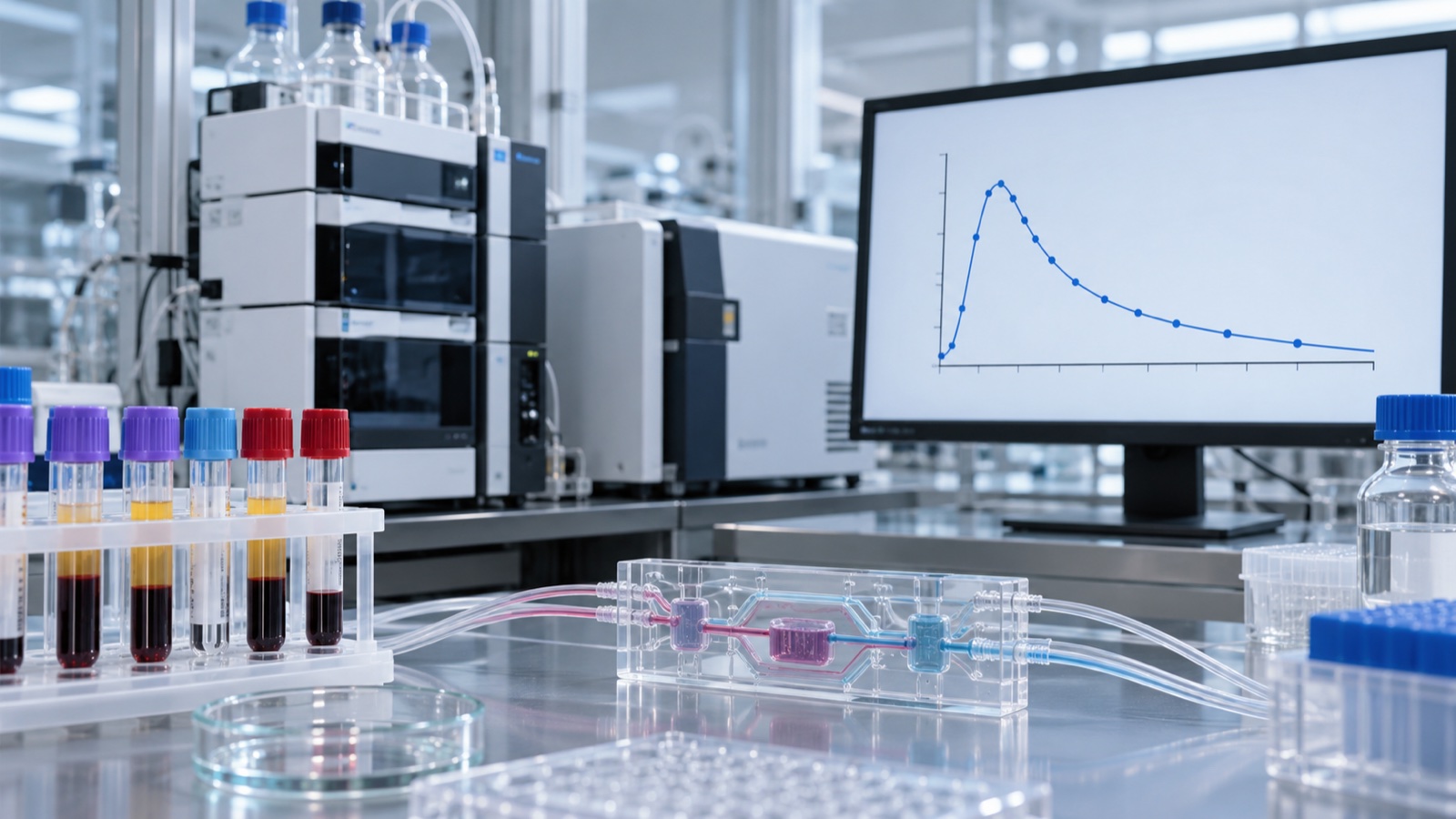
- Pharmacokinetics and preclinical studies in brief
- ADME — four processes in the body, and four numbers
- Half-life — how a drug lingers shapes the dosing design
- Absorption depends on dissolving and passing through
- A materials engineer's view (1): one crystal form can make a drug insoluble
- In vitro studies — predicting from liver fragments and cell membranes
- In vivo studies — what ICH M3(R2) specifies
- The first human dose — converting animal numbers to humans
- Biologics are treated differently — ICH S6(R1)
- Moves to reduce animal testing — law, regulators and Japan
- A materials engineer's view (2): the materials of the test system change the data
- What remains unconfirmed
- Glossary / References / Claim-to-source audit
Sourced = stated in published material (link given)
Our calculation = a figure this article derived from assumptions stated in the text
Not yet confirmed = a plan, target or outlook whose outcome has not been confirmed
Interpretations, such as how the material is organized or what it means for materials and process design, are marked separately as Commentary.
This article explains how the studies behind drug development work and where they meet materials technology. It does not cover how any individual drug is used, dosed, or how effective or safe it is, and it is not medical advice. The dose calculation in Chapter 8 is a hypothetical numerical example for understanding the regulatory conversion method, not the dose of any real drug.
1. Pharmacokinetics and preclinical studies in brief
- What pharmacokinetics (PK) is: Benet and Zia-Amirhosseini define pharmacokinetics as what the body does to the drug, and name four parameters as the basis for understanding it: clearance, volume of distribution, half-life and bioavailabilitySourced. It is the flip side of pharmacodynamics, which asks what the drug does to the body
- What preclinical (nonclinical) studies are: studies done before human clinical trials, in the test tube (in vitro) and in animals (in vivo). ICH M3(R2) says the nonclinical safety assessment needed for approval normally includes pharmacology studies, general toxicity studies, toxicokinetics and nonclinical pharmacokinetic studies, reproductive toxicity studies and genotoxicity studies, among othersSourced
- What is happening now: in the United States, a law amended in December 2022 now explicitly recognizes "nonclinical tests" other than animal studies (cell-based assays, organ chips, computer models and so on). In April 2025 the FDA published a roadmap to make animal studies the exceptionSourced
Whether a drug candidate reaches a person depends not only on how strongly it acts, but on whether it dissolves, whether it crosses membranes and how fast it disappears. And even in the test-tube assays used to predict these things, both the international guidelines and the literature say that the drug can be taken up by labware and membrane materials, changing the apparent concentrationSourced. Preclinical work is one of the stages where the most materials and process problems hide (our commentary).
2. ADME — four processes in the body, and four numbers
What a drug does inside the body is summarized as ADME, from Absorption, Distribution, Metabolism and Excretion. A drug taken by mouth dissolves in the gut and is absorbed, passes through the liver into the blood of the whole body, spreads into tissues, is metabolized in the liver and elsewhere, and leaves through the kidneys or in bile.
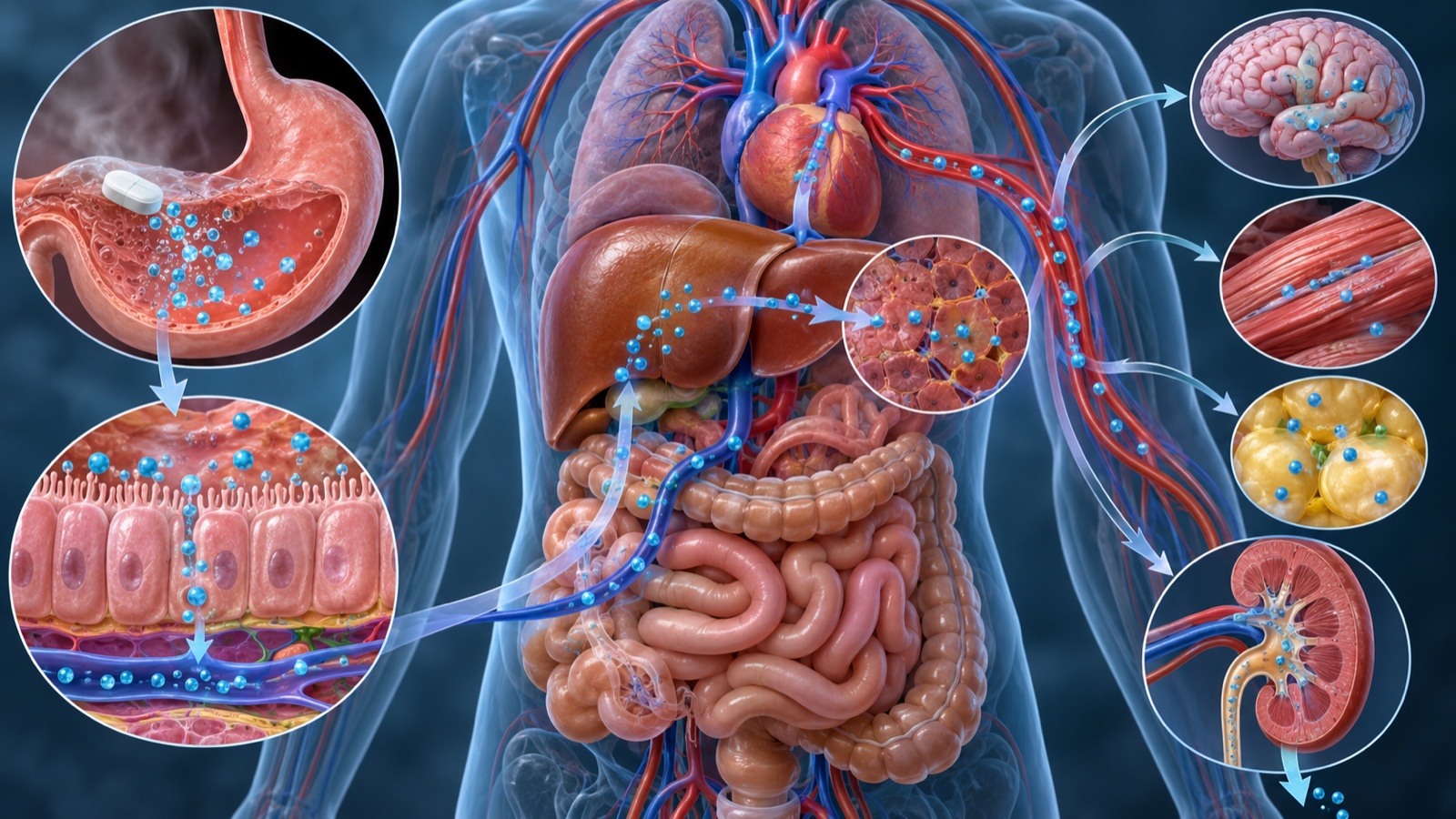
Show the original diagram with numbers and sources
Original diagram for Fig. 1 (vector drawing). The four basic parameters follow Benet and Zia-Amirhosseini (1995) [Ref. 1], and the solubility-and-permeability framing follows ICH M9 [Ref. 2]. The six-step division is our own organization and does not show the shape or position of any organ.
| Parameter | What it represents (plain-language paraphrase by this article) |
|---|---|
| Bioavailability | How much of the dose reaches the whole body, and how fast. In explaining bioequivalence, ICH M9 describes bioavailability as the rate and extent of drug absorptionSourced |
| Clearance | The body's capacity to remove the drug: the volume of blood cleared of drug per unit time |
| Volume of distribution | How far the drug spreads from the blood into tissue. An apparent "volume of liquid it is dissolved in" |
| Half-life | The time for the blood concentration to fall by half (Chapter 3) |
The choice of these four parameters is Sourced (Benet and Zia-Amirhosseini 1995 [Ref. 1]). The plain-language paraphrases in the right-hand column are our commentary.
3. Half-life — how a drug lingers shapes the dosing design
Toutain and Bousquet-Mélou caution about half-life as followsSourced.
The terminal plasma half-life is the time for the plasma concentration to fall by half after pseudo-equilibrium is reached, not the time needed to eliminate half the administered doseSourced
When absorption is not rate-limiting, half-life is a hybrid parameter controlled by plasma clearance and the extent of distribution. When absorption is rate-limiting, the terminal half-life reflects the rate and extent of absorption rather than elimination (flip-flop kinetics). Because half-life controls the degree of accumulation, the swings in concentration and the time taken to reach equilibrium, the authors say it is especially relevant to repeated-dosing regimensSourced.
Smith and colleagues state that volume of distribution is a major determinant of half-life and dosing frequency, and that for a similar Log P a basic molecule tends to have a larger volume of distribution than a neutral one, while acids tend to have a small oneSourced. In other words, the acid-base character and hydrophobicity of a molecule, properties familiar to any chemist, bear directly on whether a drug ends up being taken once or several times a day (our commentary).
To get a feel for the orders of magnitude, assume the simplest model: elimination is first-order and the body is a single uniform compartmentOur calculation.
- How levels fall: the concentration halves with each half-life. After 1 half-life 50% remains, after 2 it is 25%, after 3 12.5%, after 4 about 6.3%, and after 5 about 3.1%
- How levels build up: with repeated dosing at fixed intervals, the concentration approaches the steady state (where input and output balance) to 50% after 1 half-life, 87.5% after 3 and about 96.9% after 5
- Volume of distribution and clearance: in this model, half-life = 0.693 × volume of distribution ÷ clearance. For a volume of 70 L and clearance of 5 L/h, 0.693 × 70 ÷ 5 = about 9.7 hours. Doubling the volume of distribution doubles the half-life
Assumptions and limits: most real drugs have several compartments, and absorption and saturation also play a part, so they depart from this simple model. The example values (70 L, 5 L/h) are hypothetical numbers chosen for this article and do not describe any particular drug.
4. Absorption depends on dissolving and passing through
The international framework for sorting oral drug absorption is the Biopharmaceutics Classification System (BCS). ICH M9 divides drug substances into four classes by aqueous solubility and intestinal membrane permeabilitySourced.
ICH M9 also addresses excipients, which can affect absorption. It says excipients that may affect absorption include sugar alcohols (such as mannitol and sorbitol) and surfactants (such as sodium lauryl sulfate), and asks for their effect to be assessed mechanistically in terms of the amount of excipient, the mechanism of its effect and the absorption characteristics of the drugSourced. A regulatory document is thus saying outright that a drug's effect is not set by the active ingredient alone; the materials design of the formulation moves the numbers inside the body (our commentary).
A well-known rule of thumb on the physical-property side is the "rule of 5" of Lipinski and colleagues: absorption or permeation tends to be poor when a molecule has more than 5 hydrogen-bond donors, more than 10 acceptors, a molecular weight above 500, or a calculated Log P above 5Sourced. As we saw in our explainer on AI drug discovery and screening, even a computationally designed candidate can stall on solubility or on how fast it is metabolized.
5. A materials engineer's view (1): one crystal form can make a drug insoluble
On predicting solubility, Lipinski and colleagues write that at the development stage, solubility calculation shifts to predicting exact values, and that this is difficult because of polymorphismSourced. The same molecule dissolves differently if its crystal packing differs.
The best-known example is the anti-HIV drug ritonavir. Bauer and colleagues tell the story as followsSourced.
- The paper opens by recounting that in the summer of 1998, supplies of Norvir semi-solid capsules were threatened by a new, much less soluble crystal form of ritonavir
- The two forms have significantly different solubility. The more stable Form II has the molecule in an unusual conformation and forms a strong hydrogen-bonding network
- Nucleation of Form II is energetically unfavored, even with seeds, except in highly supersaturated solutions. It is thought to have appeared suddenly because a highly supersaturated solution coincided with probable heterogeneous nucleation by a degradation product
- One countermeasure was to develop a sensitive test for detecting trace amounts of seed crystals
This is the failure pattern most familiar to materials engineers (our commentary). A product launched in a metastable phase meets a more stable phase, and there is no going back. What happens with pigments, polymer crystallization and phase transitions in battery materials happens with drugs too. And the trigger was heterogeneous nucleation by a trace degradation product (an impurity): a small change in the process decides product performance (here, how readily it dissolves).
So absorption, the starting point of pharmacokinetics, begins in the territory of materials technology: crystal engineering, solid-state analysis (X-ray diffraction, solid-state NMR and so on) and excipient design. We can also read from this that in formulating poorly soluble drugs, excipient, crystallization and powder technologies sit where they decide performance (our commentary).
6. In vitro studies — predicting from liver fragments and cell membranes
Before a drug is given to people, tests are set up to predict its behavior in the body, in the test tube. ICH M3(R2) says that in vitro metabolism and plasma protein binding data for animals and humans, and systemic exposure data in the animal species used for repeat-dose toxicity studies, should generally be evaluated before the start of human clinical trialsSourced.
| What is tested | System used (as described in the guideline) | What it looks at |
|---|---|---|
| Membrane permeability | Caco-2 cells (a monolayer of cells derived from human colon cancer, grown on a membrane). To show that transport does not depend on active transport, the guideline asks for checks such as an efflux ratio (the ratio of apparent permeability coefficients in the reverse and forward directions) below 2 | Whether it crosses the gut wall (ICH M9) |
| Metabolism | Human liver microsomes (containing CYP450 and UGT; a pool from at least 10 donors is recommended), S9 fraction, cytosol, recombinant enzymes, hepatocytes and so on | Which enzymes metabolize it, and how fast (ICH M12) |
| Enzyme inhibition | For the major CYPs (CYP1A2, 2B6, 2C8, 2C9, 2C19, 2D6 and 3A), both reversible and time-dependent inhibition are evaluated | Whether it interferes with the metabolism of other drugs (ICH M12) |
| Enzyme induction | Human hepatocytes. The sensitivity of the system is confirmed when positive controls raise CYP1A2, 2B6 and 3A4 mRNA, usually by at least 6-fold | Whether it speeds up the metabolism of other drugs (ICH M12) |
| Protein binding | Plasma protein binding. When extrapolating in vitro results to humans, use the unbound (free) concentration | How much is actually available to act (ICH M3 and M12) |
All Sourced (ICH M9 [Ref. 2], ICH M12 [Ref. 7], ICH M3(R2) [Ref. 8]). The "What it looks at" column is a plain-language paraphrase by this article.
ICH M12 states that the limited stability of a drug during incubation, and non-specific binding (for example to labware, microsomes or hepatocytes), can also make in vitro enzyme inhibition and induction studies difficultSourced.
For that reason it says clinical extrapolation should use the actual free concentration within the test system, and that for highly hydrophobic drugs it is desirable to determine non-specific binding experimentally. In induction studies, if the measured concentration in the medium falls below 80% of the nominal concentration for reasons other than metabolism or transporters, the guideline asks that the effect be discussedSourced.
7. In vivo studies — what ICH M3(R2) specifies
ICH M3(R2) is a guideline, harmonized across Japan, the United States and Europe, on which nonclinical studies are needed, and by when, to support each stage of clinical trials (Step 4 on 11 June 2009). In Japan it was issued by notification on 19 February 2010 as guidance on nonclinical safety studies for the conduct of clinical trials and marketing authorization applications for pharmaceuticalsSourced.
| Longest duration of the clinical trial | Repeat-dose toxicity study in rodents | Repeat-dose toxicity study in non-rodents |
|---|---|---|
| Up to 2 weeks | 2 weeks | 2 weeks |
| Over 2 weeks, up to 6 months | Same as the clinical trial | Same as the clinical trial |
| Over 6 months | 6 months | 9 months |
All Sourced (ICH M3(R2) Table 1 [Ref. 8]). Footnotes give regional exceptions. As a rule, the studies are run in two mammalian species (one of them a non-rodent) for at least as long as the human trial.
Human metabolites also have a criterion. M3(R2) asks for nonclinical characterization only for metabolites that exceed 10% of total drug-related exposure in humans and are significantly higher than the maximum exposure in the toxicity studies, and says this should be done to support Phase 3. For drugs with a daily dose below 10 mg, a larger percentage may sometimes be used as the guideSourced.
8. The first human dose — converting animal numbers to humans
On estimating the first human dose, M3(R2) says that generally, the no-observed-adverse-effect level (NOAEL) from the nonclinical safety studies in the most appropriate animal species provides the most important informationSourced. So how is a rat's mg/kg turned into a human's mg/kg? FDA's 2005 guidance sets out the conversion methodSourced.
- Convert by body surface area: because body surface area scales with body weight to the power 0.67, the animal NOAEL (mg/kg) is divided by a species-specific factor to give the human equivalent dose (HED)Sourced
- Example factors (assuming a 60 kg human): divide by 12.3 for mouse, 6.2 for rat, 3.1 for rabbit and monkey, 1.8 for dog and 1.1 for minipigSourced
- Which species to use: without information on species relevance, the species giving the lowest HED (the most sensitive species) is taken as the most appropriateSourced
- Safety factor: the HED is divided by 10 by default to obtain the maximum recommended starting dose (MRSD). The factor is raised if there are concerns and may be lowered if there is reassuring informationSourced
Applying a rat's value directly to humans would overestimate by about 6-fold compared with body-surface-area conversion, for the same 1 mg/kg (because the divisor is 6.2)Our calculation. The guidance bases the conversion on the fact that body surface area scales with body weight to the power 0.67Sourced. Matching per unit area rather than per unit weight will be a familiar idea to engineers who think in terms of heat transfer or the specific surface area of particles (our commentary).
Assumptions and limits: the FDA guidance itself says that for some drugs direct conversion by body weight (mg/kg) may be more appropriate, so there is no single universal conversion methodSourced.
9. Biologics are treated differently — ICH S6(R1)
ICH S6(R1) says that for many biotechnology-derived pharmaceuticals, species specificity and tissue specificity of biological activity often mean that standard toxicity study designs in common animal species such as rats and dogs do not workSourced. Antibody and protein drugs may bind only to the human target.
| Issue | What ICH S6(R1) says |
|---|---|
| Relevant species | A relevant species is one in which the test material is pharmacologically active because the receptor or epitope (for a monoclonal antibody) is expressed. Toxicity studies in species that are not relevant are not recommended because they may be misleading |
| Number of species | Normally two relevant species are included. One species may suffice in some cases, for example when only one relevant species can be found |
| Genotoxicity | The range and type of genotoxicity studies normally run for pharmaceuticals are not applicable to biotechnology-derived pharmaceuticals and are not needed (except where there is a concern, such as a conjugated organic linker) |
| Non-human primates | Because the number of animals is often limited in non-human primate studies, this can be compensated for by more frequent and longer observation. Developmental toxicity studies are run only when non-human primates are the only relevant species |
All Sourced (ICH S6(R1), original July 1997, addendum 12 June 2011 [Ref. 10]). Our explainer on antibody drugs and ADCs covers antibody structure and manufacturing.
On 2 December 2025 the FDA published a draft guidance describing types of product for which, for certain kinds of monoclonal antibody, it considers the 6-month non-human primate toxicity study can be dropped or reduced. The announcement says a typical nonclinical program for a monoclonal antibody can use more than 100 non-human primates, and that it will instead bring in risk assessment integrating computational toxicology, organoids and real-world human safety dataSourced. Once finalized, the guidance is positioned to complement the S6 addendumNot yet confirmed.
10. Moves to reduce animal testing — law, regulators and Japan
The "3Rs" (Replacement, Reduction and Refinement of animal suffering) have long been in the international guidelines. ICH M3(R2) lists among its aims reducing animal use in line with the 3R principles (reduction, refinement, replacement)Sourced. In the past few years this has become concrete as law and regulatory policy.
| When | Who | What |
|---|---|---|
| 29 December 2022 | US Congress | Section 3209, "Animal Testing Alternatives," of Public Law 117-328 (Consolidated Appropriations Act, 2023) amended section 505 of the Federal Food, Drug, and Cosmetic Act. It replaced "preclinical tests (including tests on animals)" with "nonclinical tests," defining them as in vitro, in silico or in chemico tests, or non-human in vivo tests, and listing as examples cell-based assays, organ chips and microphysiological systems, computer modeling, other nonhuman or human biology-based methods such as bioprinting, and animal tests |
| 10 April 2025 | FDA | Announced a plan and roadmap to phase out animal-testing requirements for monoclonal antibodies and other drugs. It immediately encourages NAMs (new approach methodologies) data in IND applications. The roadmap aims, in the longer term (3 to 5 years), to make animal studies the "exception" rather than the "norm" |
| 2 December 2025 | FDA | Draft guidance on reducing non-human primate studies for monoclonal antibodies (Chapter 9) |
| 18 March 2026 | FDA | Draft guidance on general considerations for the use of NAMs in drug development. It set out four principles for validating NAMs (context of use, human biological relevance, technical characterization and fit for purpose). It does not cover drug-discovery uses |
| 20 April 2026 | FDA | Announced that it had met its Year 1 roadmap goals, citing among other things guidance updates supporting a move away from horseshoe-crab-derived endotoxin testing |
All Sourced (Public Law 117-328 [Ref. 12], FDA announcements and roadmap [Refs. 13 to 17]). The roadmap's "3 to 5 years" is a target and does not show that it will be achievedNot yet confirmed.
In Japan, Article 41 of the Act on Welfare and Management of Animals says that when animals are used for scientific purposes, consideration is to be given to using them appropriately, by using alternatives to the use of animals wherever possible, reducing the number of animals used wherever possible, and so on, and paragraph 2 requires methods that cause as little suffering as possibleSourced. On NAMs, the PMDA expects that raising the predictability of human safety, efficacy and pharmacokinetics will reduce dependence on animal experiments, says it has set up a NAMs working group inside the PMDA, and says it will proceed in cooperation with the National Institute of Health Sciences, the Japanese Center for the Validation of Alternative Methods (JaCVAM), industry and overseas regulators. It also states that it is aware of opinions that there are challenges, including acceptance by administrative authoritiesSourced.
11. A materials engineer's view (2): the materials of the test system change the data
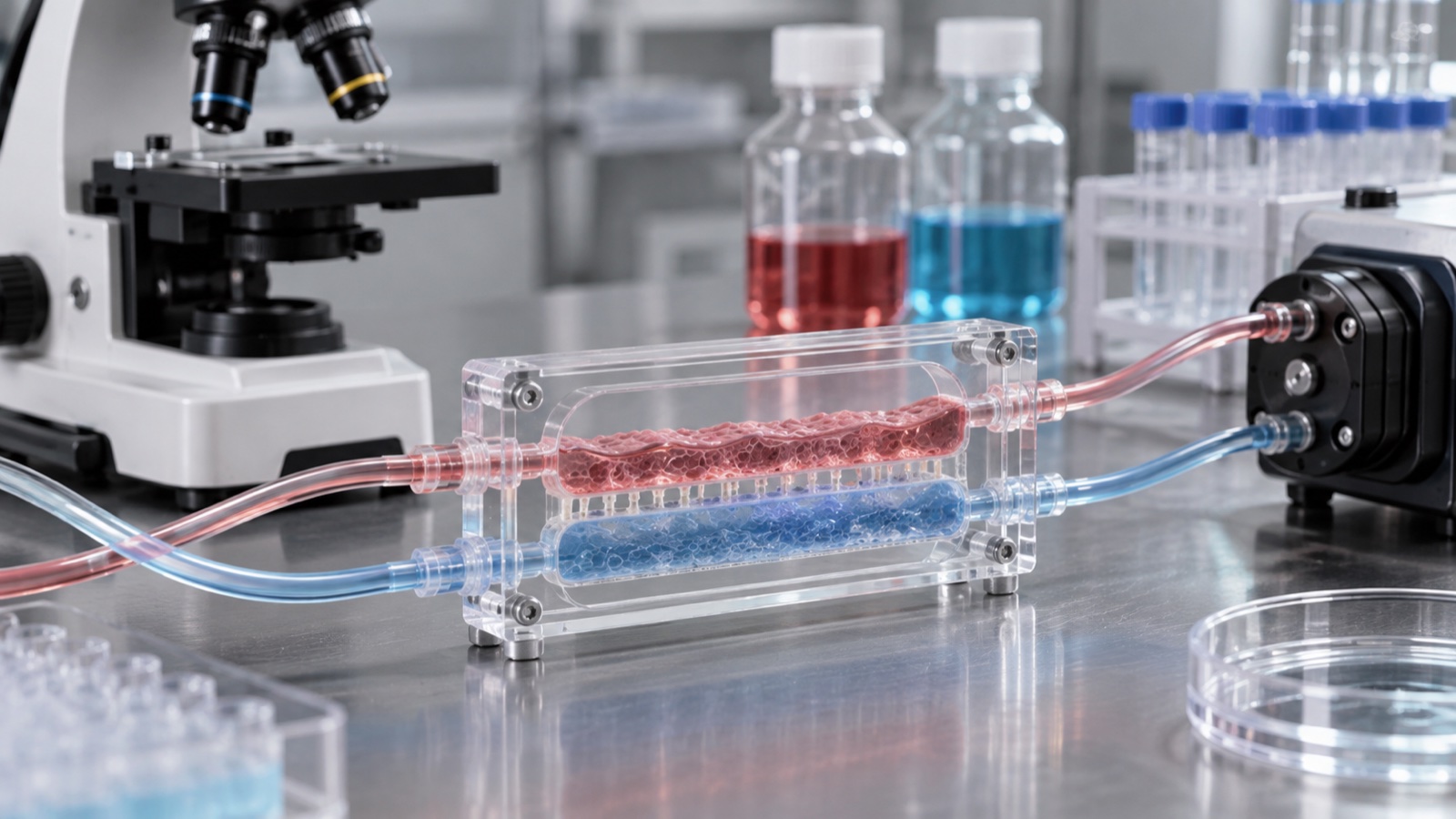
The "organ chips and microphysiological systems" named as examples in the US legal changeSourced have mostly been made of PDMS (polydimethylsiloxane), a type of silicone rubber. van Meer and colleagues examined its weakness quantitativelySourced.
- The paper says that while PDMS is convenient to manufacture, it has the disadvantage that it can absorb small molecules such as drugs. In an organ chip, this may affect the effective concentration of the drug
- Four cardiac drugs were placed on PDMS and on tissue-culture polystyrene (TCPS), and the remaining drug was measured by HPLC: bepridil fell by more than 80% in 3 hours, verapamil and nifedipine were absorbed 20 to 50% more than on TCPS, and Bay K 8644 showed no difference
- Absorption changed over time and, contrary to earlier claims, was not determined by hydrophobicity (Log P) alone. A relationship with topological polar surface area was suggested
- Commercial lipophilic coatings partly suppressed absorption, and the presence of cells also affected the free concentration
Our calculation: if a drug is 80% absorbed during a test, the concentration the cells actually receive is 20% or less of the nominal concentration. Measure the "concentration at which it starts to work" in that system and the drug will appear at least 5 times weaker than it is (1 ÷ 0.2 = 5)Our calculation.
As seen in Chapter 6, ICH M12 also lists non-specific binding to labware as a difficulty in testing and asks that the measured free concentration be usedSourced. Moving to animal-free testing raises the weight of the fact that "the test system itself is made of materials" (our commentary). The channel material (PDMS, a thermoplastic or glass), surface treatment, adhesives, tubing and culture vessels can all absorb, release or catalyze the drug. The "technical characterization (establishing scientific confidence through robust, reliable and reproducible methods)" that the FDA listed in its March 2026 draft guidanceSourced becomes, for a materials maker, the question "can you supply low-adsorption, low-leaching materials, with data?" (our commentary).
12. What remains unconfirmed
(1) How far animal studies will be replaced
The FDA roadmap sets a long-term (3 to 5 years) goal of making animal studies the exception. But both the March 2026 NAMs guidance and the December 2025 non-human primate guidance are drafts, and which studies will be replaced, when, and in which countries or regions has not been settledNot yet confirmed. How NAMs will be taken into the ICH guidelines also could not be confirmed at the time of our researchNot yet confirmed.
(2) The figure on the predictive value of animal studies
FDA announcements and the roadmap repeatedly state, in substance, that more than 90% of drugs that pass animal studies fail to gain FDA approvalSourced. This is a figure presented as the agency's view. Because the reasons for not being approved mix efficacy, safety and business decisions, this article does not treat it as a value that directly shows the predictive power of animal studies (our commentary).
(3) Standards for organ-chip materials
On the PDMS absorption problem, we could not find, within the scope of our research, a primary source showing which materials or surface treatments will become standardNot yet confirmed.
- Pharmacokinetics rests on four numbers. Clearance, volume of distribution, half-life and bioavailabilitySourced
- After 5 half-lives the concentration falls to about 3%, and with repeated dosing it reaches about 97% of steady state (simple model)Our calculation
- Absorption is classified on two axes, dissolving and passing through. High solubility means the highest single dose dissolves in 250 mL or lessSourced
- One crystal form can make a drug insoluble. With ritonavir, supply was threatened in 1998Sourced
- The animal no-observed-adverse-effect level is converted by body surface area and, by default, divided by a safety factor of 10Sourced
- The US has redefined "nonclinical tests" in law, and the FDA has set a goal of making animal studies the exceptionNot yet confirmed
- In a PDMS organ chip, there is an example where more than 80% of a drug was absorbed in 3 hours. The materials of the test system change the dataSourced
13. Glossary
- Pharmacokinetics (PK)
- What the body does to a drug: the time course of absorption, distribution, metabolism and excretion.
- ADME
- Absorption, distribution, metabolism and excretion: the four processes a drug undergoes in the body.
- Bioavailability
- The rate and extent to which an administered drug reaches the whole body.
- Clearance
- The body's capacity to remove a drug, expressed as the volume of blood cleared of drug per unit time.
- Volume of distribution
- An apparent volume expressing how far a drug spreads into tissue.
- Half-life
- The time for the blood concentration to fall by half once pseudo-equilibrium is reached.
- Steady state
- The state in repeated dosing where the amount going in balances the amount going out.
- BCS
- Biopharmaceutics Classification System. Divides drugs into four classes by solubility and membrane permeability.
- Caco-2 cells
- Cells derived from human colon cancer. Grown as a monolayer on a membrane to assess intestinal permeability.
- Liver microsomes
- A membrane fraction from liver cells. Contains metabolic enzymes such as CYPs.
- CYP (cytochrome P450)
- A group of enzymes responsible for the oxidative metabolism of many drugs.
- Polymorphism
- The same molecule forming crystals with different packing. Solubility can change.
- NOAEL
- No-observed-adverse-effect level. The highest dose at which no harmful effect was seen in a toxicity study.
- HED
- Human equivalent dose. An animal dose converted to humans, for example by body surface area.
- MRSD
- Maximum recommended starting dose. A guide to the upper limit of the first dose in humans.
- Microdose
- A study approach that examines behavior in the body using a very small amount that produces no pharmacological effect (for example, 100 µg or less in total).
- Relevant species
- An animal species in which a biologic is pharmacologically active.
- 3Rs
- Replacement, reduction and refinement (less suffering) in animal studies.
- NAMs
- New approach methodologies. A general term for animal-free methods such as in vitro, in silico and in chemico approaches.
- PDMS
- Polydimethylsiloxane. A silicone material often used for organ-chip channels.
14. References
- Benet, L.Z., Zia-Amirhosseini, P. "Basic principles of pharmacokinetics." Toxicologic Pathology 23(2), 115–123 (1995). doi:10.1177/019262339502300203 — pubmed.ncbi.nlm.nih.gov
- ICH "M9: Biopharmaceutics Classification System-Based Biowaivers." Final version, adopted 20 November 2019 (PDF) — database.ich.org
- Toutain, P.L., Bousquet-Mélou, A. "Plasma terminal half-life." Journal of Veterinary Pharmacology and Therapeutics 27(6), 427–439 (2004). doi:10.1111/j.1365-2885.2004.00600.x — pubmed.ncbi.nlm.nih.gov
- Smith, D.A., Beaumont, K., Maurer, T.S., Di, L. "Volume of distribution in drug design." Journal of Medicinal Chemistry 58(15), 5691–5698 (2015). doi:10.1021/acs.jmedchem.5b00201 — pubmed.ncbi.nlm.nih.gov
- Lipinski, C.A., Lombardo, F., Dominy, B.W., Feeney, P.J. "Experimental and computational approaches to estimate solubility and permeability in drug discovery and development settings." Advanced Drug Delivery Reviews 46(1-3), 3–26 (2001). doi:10.1016/S0169-409X(00)00129-0 — pubmed.ncbi.nlm.nih.gov
- Bauer, J. et al. "Ritonavir: an extraordinary example of conformational polymorphism." Pharmaceutical Research 18(6), 859–866 (2001). doi:10.1023/A:1011052932607 — pubmed.ncbi.nlm.nih.gov
- ICH "M12: Drug Interaction Studies." Final version, adopted 21 May 2024 (PDF) — database.ich.org
- ICH "M3(R2): Guidance on Nonclinical Safety Studies for the Conduct of Human Clinical Trials and Marketing Authorization for Pharmaceuticals." Step 4, 11 June 2009 (PDF) — database.ich.org
- Pharmaceuticals and Medical Devices Agency (PMDA) "ICH-M3: Timing of nonclinical studies for clinical trials" (in Japanese; domestic notification of 19 February 2010 and others) — pmda.go.jp
- ICH "S6(R1): Preclinical Safety Evaluation of Biotechnology-Derived Pharmaceuticals." Original 16 July 1997, addendum 12 June 2011 (PDF) — database.ich.org
- FDA (CDER) "Guidance for Industry: Estimating the Maximum Safe Starting Dose in Initial Clinical Trials for Therapeutics in Adult Healthy Volunteers." July 2005 (PDF) — fda.gov
- US Congress "Public Law 117-328 (Consolidated Appropriations Act, 2023)," Sec. 3209 Animal Testing Alternatives, 29 December 2022 — govinfo.gov
- FDA "FDA Announces Plan to Phase Out Animal Testing Requirement for Monoclonal Antibodies and Other Drugs." 10 April 2025 — fda.gov
- FDA "Roadmap to Reducing Animal Testing in Preclinical Safety Studies." April 2025 (PDF) — fda.gov
- FDA "FDA Releases Draft Guidance on Reducing Testing on Non-Human Primates for Monoclonal Antibodies." 2 December 2025 — fda.gov
- FDA "FDA Releases Draft Guidance on Alternatives to Animal Testing in Drug Development." 18 March 2026 — fda.gov
- FDA "FDA Achieves Year 1 Goals in Reducing Animal Testing in Drug Development." 20 April 2026 — fda.gov
- e-Gov Law Search Act on Welfare and Management of Animals (Act No. 105 of 1973), Article 41 (in Japanese) — laws.e-gov.go.jp
- Pharmaceuticals and Medical Devices Agency (PMDA) "New Approach Methodologies (NAMs)" (in Japanese) — pmda.go.jp
- van Meer, B.J. et al. "Small molecule absorption by PDMS in the context of drug response bioassays." Biochemical and Biophysical Research Communications 482(2), 323–328 (2017). doi:10.1016/j.bbrc.2016.11.062 — pmc.ncbi.nlm.nih.gov
15. Claim-to-source audit
| Claim in the text | Basis | Category |
|---|---|---|
| Pharmacokinetics is defined as what the body does to the drug, covering absorption, distribution and elimination; the four parameters at the base of understanding are clearance, volume of distribution, half-life and bioavailability | Benet and Zia-Amirhosseini (1995), abstract. Reference 1 https://pubmed.ncbi.nlm.nih.gov/7569664/ | Sourced |
| Bioavailability described as the rate and extent of drug absorption; the BCS divides drugs into four classes by solubility and intestinal permeability; definition of high solubility (the highest single dose dissolves completely in 250 mL or less of aqueous medium at pH 1.2 to 6.8 and 37 ± 1 °C, classified at the lowest solubility); definition of high permeability (absolute bioavailability of 85% or more, etc.); assessment with Caco-2 cells and the check of an efflux ratio below 2; sugar alcohols (mannitol, sorbitol) and surfactants (sodium lauryl sulfate) named as excipients that may affect absorption, with a request for mechanistic evaluation by amount, mechanism and absorption characteristics; adopted 20 November 2019 | ICH M9. Reference 2 https://database.ich.org/sites/default/files/M9_Guideline_Step4_2019_1116.pdf | Sourced |
| Terminal half-life is the time for the concentration to halve after pseudo-equilibrium, not the time to eliminate half the dose; when absorption is not rate-limiting it is a hybrid parameter controlled by clearance and the extent of distribution; when absorption is rate-limiting it shows flip-flop kinetics; it controls accumulation, concentration swings and time to equilibrium | Toutain and Bousquet-Mélou (2004), abstract. Reference 3 https://pubmed.ncbi.nlm.nih.gov/15601438/ | Sourced |
| Volume of distribution is a major determinant of half-life and dosing frequency; at a similar Log P, basic molecules tend to have a larger volume of distribution than neutral molecules, and acidic molecules a smaller one | Smith et al. (2015), abstract. Reference 4 https://pubmed.ncbi.nlm.nih.gov/25799158/ | Sourced |
| The "rule of 5" (absorption or permeation tends to be poor with more than 5 hydrogen-bond donors, more than 10 acceptors, molecular weight above 500 or calculated Log P above 5); at the development stage, solubility calculation shifts to predicting exact values and is difficult because of polymorphism | Lipinski et al. (2001), abstract. Reference 5 https://pubmed.ncbi.nlm.nih.gov/11259830/ | Sourced |
| In the summer of 1998 a new, much less soluble crystal form of ritonavir threatened the supply of Norvir semi-solid capsules; the two polymorphs differ significantly in solubility; Form II has an unusual conformation and a strong hydrogen-bonding network; nucleation of Form II is unfavored except in highly supersaturated solutions, and a coincidence of high supersaturation and probable heterogeneous nucleation by a degradation product is thought to explain its sudden appearance; a sensitive seed-detection test was developed | Bauer et al. (2001), abstract. Reference 6 https://pubmed.ncbi.nlm.nih.gov/11474792/ | Sourced |
| In vitro systems for metabolism (human liver microsomes containing CYP450 and UGT, with a pool from at least 10 donors recommended; S9; cytosol; recombinant enzymes; hepatocytes); the major CYPs to evaluate (1A2, 2B6, 2C8, 2C9, 2C19, 2D6, 3A) and evaluation of reversible and time-dependent inhibition; in induction studies, positive controls normally raise CYP1A2, 2B6 and 3A4 mRNA at least 6-fold; use of free concentration for extrapolation; limited stability during incubation and non-specific binding to labware, microsomes and hepatocytes can make studies difficult, determining non-specific binding experimentally is desirable for highly hydrophobic drugs, and effects should be discussed when the measured medium concentration is below 80% of nominal; adopted 21 May 2024 | ICH M12. Reference 7 https://database.ich.org/sites/default/files/ICH_M12_Step4_Guideline_2024_0521.pdf | Sourced |
| The range of studies included in the nonclinical safety assessment for approval; the aim of reducing animal use in line with the 3R principles (reduction, refinement, replacement); evaluating in vitro metabolism and plasma protein binding data and systemic exposure data for animals and humans before clinical trials, and having ADME and interaction information from test animals generally before Phase 3; nonclinical evaluation of human metabolites above 10% of total exposure and significantly higher than in toxicity studies, to support Phase 3, and the treatment of drugs with a daily dose below 10 mg; the safety pharmacology core battery (cardiovascular, CNS, respiratory) before human exposure; durations of repeat-dose toxicity studies (Table 1) and the principle of two species (one a non-rodent); genotoxicity (a gene mutation assay for single dosing, additional assessment of chromosomal damage for repeat dosing, the full battery completed before Phase 2); the NOAEL as the most important information for estimating the first human dose; microdose (total dose of 100 µg or less and 1/100 of the NOAEL or less, etc.); Step 4 on 11 June 2009 | ICH M3(R2). Reference 8 https://database.ich.org/sites/default/files/M3_R2__Guideline.pdf | Sourced |
| In Japan, M3(R2) was issued on 19 February 2010 as guidance on nonclinical safety studies for the conduct of clinical trials and marketing authorization applications for pharmaceuticals | PMDA ICH-M3 page. Reference 9 https://www.pmda.go.jp/int-activities/int-harmony/ich/0034.html | Sourced |
| For many biologics, species and tissue specificity often mean standard toxicity study designs in rats, dogs and so on do not work; the definition of a relevant species; toxicity studies in non-relevant species may be misleading; normally two species but one may suffice; the usual genotoxicity studies are not applicable and not needed for biologics (except where there is a concern such as an organic linker); more frequent and longer observation in non-human primate studies; developmental toxicity studies only when non-human primates are the only relevant species. Original 16 July 1997, addendum 12 June 2011 | ICH S6(R1). Reference 10 https://database.ich.org/sites/default/files/S6_R1_Guideline_0.pdf | Sourced |
| Conversion based on body surface area scaling with body weight to the power 0.67; species factors (mouse 12.3, rat 6.2, rabbit and monkey 3.1, dog 1.8, minipig 1.1, assuming a 60 kg human); the species with the lowest HED is the most sensitive and, by default, the most appropriate; the default safety factor of 10 and its raising or lowering; direct mg/kg conversion may be more appropriate in some cases. July 2005 | FDA guidance (MRSD). Reference 11 https://www.fda.gov/media/72309/download | Sourced |
| Section 3209 of Public Law 117-328 of 29 December 2022 amended section 505 of the Federal Food, Drug, and Cosmetic Act, replacing "preclinical tests (including tests on animals)" with "nonclinical tests"; the definition and examples of nonclinical tests (cell-based assays, organ chips and microphysiological systems, computer modeling, other nonhuman or human biology-based methods such as bioprinting, animal tests) | Public Law 117-328. Reference 12 https://www.govinfo.gov/content/pkg/PLAW-117publ328/html/PLAW-117publ328.htm | Sourced |
| On 10 April 2025 the FDA announced a plan and roadmap to phase out animal-testing requirements for monoclonal antibodies and other drugs, and immediately encourages submission of NAMs data in IND applications | FDA announcement (10 April 2025). Reference 13 https://www.fda.gov/news-events/press-announcements/fda-announces-plan-phase-out-animal-testing-requirement-monoclonal-antibodies-and-other-drugs | Sourced |
| The long-term (3 to 5 year) aim of making animal studies the exception rather than the norm in preclinical safety and toxicity studies; the statement that more than 90% of drugs that appear safe and effective in animals fail to gain FDA approval | FDA roadmap (a target, not a result). Reference 14 https://www.fda.gov/files/newsroom/published/roadmap_to_reducing_animal_testing_in_preclinical_safety_studies.pdf | Not yet confirmed |
| On 2 December 2025 the FDA published a draft guidance saying the 6-month non-human primate toxicity study can be dropped or reduced for certain types of monoclonal antibody; a typical nonclinical program can use more than 100 non-human primates; risk assessment integrating computational toxicology, organoids and real-world human safety data will be adopted; once finalized it will complement the S6 addendum guidance | FDA announcement (2 December 2025). Reference 15 https://www.fda.gov/news-events/press-announcements/fda-releases-draft-guidance-reducing-testing-non-human-primates-monoclonal-antibodies | Sourced |
| On 18 March 2026 the FDA published a draft guidance on validating NAMs; the four principles (context of use, human biological relevance, technical characterization, fit for purpose); it does not cover drug-discovery uses | FDA announcement (18 March 2026). Reference 16 https://www.fda.gov/news-events/press-announcements/fda-releases-draft-guidance-alternatives-animal-testing-drug-development | Sourced |
| On 20 April 2026 the FDA announced that it had met its Year 1 roadmap goals, citing among other things guidance updates supporting a move away from horseshoe-crab-derived endotoxin testing; the statement that more than 90% of drugs that pass animal studies fail to gain FDA approval | FDA announcement (20 April 2026). Reference 17 https://www.fda.gov/news-events/press-announcements/fda-achieves-year-1-goals-reducing-animal-testing-drug-development | Sourced |
| When animals are used for scientific purposes, consideration is to be given to using alternatives and reducing the number of animals (Article 41, paragraph 1) and to methods that cause as little suffering as possible (paragraph 2) | e-Gov Law Search, Act on Welfare and Management of Animals. Reference 18 https://laws.e-gov.go.jp/law/348AC1000000105 | Sourced |
| NAMs are expected to raise the predictability of human safety, efficacy and pharmacokinetics and so reduce dependence on animal experiments; a NAMs working group has been set up inside the PMDA; cooperation with JaCVAM, industry, academia and overseas regulators; awareness of opinions that there are challenges, including acceptance by administrative authorities | PMDA NAMs page. Reference 19 https://www.pmda.go.jp/review-services/0071.html | Sourced |
| PDMS can absorb small molecules such as drugs; of four cardiac drugs, bepridil fell by more than 80% in 3 hours, verapamil and nifedipine were absorbed 20 to 50% more than on TCPS, and Bay K 8644 showed no difference; absorption is time-dependent and not determined by hydrophobicity alone, with a relationship to topological polar surface area suggested; lipophilic coatings and the presence of cells affected absorption | van Meer et al. (2017). Reference 20 https://pmc.ncbi.nlm.nih.gov/articles/PMC5240851/ | Sourced |
| Concentrations remaining after 1 to 5 half-lives (50%, 25%, 12.5%, about 6.3%, about 3.1%) and approach to steady state (50%, 75%, 87.5%, 93.8%, about 96.9%). A hypothetical example with a volume of distribution of 70 L and clearance of 5 L/h giving a half-life of about 9.7 hours. Hypothetical doses of 100 mg and 500 mg giving high-solubility guides of 0.4 mg/mL and 2 mg/mL. Hypothetical NOAELs of 50 mg/kg (rat) and 10 mg/kg (dog) giving HEDs of about 8.1 and about 5.6 mg/kg, an MRSD of about 0.56 mg/kg and about 33 mg for 60 kg. Applying the rat value directly overestimates about 6-fold. 80% absorption makes a drug appear at least 5 times weaker | Our calculation. First-order, one-compartment model; the hypothetical volume of distribution, clearance, doses and NOAELs are assumptions set in this article and are neither values for a particular drug nor recommended doses | Our calculation |
| Which animal studies will be replaced, when, and in which countries or regions; how NAMs will be incorporated into the ICH guidelines; standards for organ-chip materials | As of the research for this article (September 2026), no primary source confirming these could be found. The FDA documents concerned are drafts | Not yet confirmed |
| The judgment not to treat "more than 90% fail to gain approval" as a direct measure of the predictive power of animal studies | It is a figure presented as the agency's view, and the reasons for non-approval are mixed, so it is distinguished as commentary by this article | Commentary |
| Plain-language paraphrases of the parameters; reading solubility as a property of the solid and ritonavir as a problem of metastable versus stable phases; the reading that formulation materials move the numbers inside the body; comparing body-surface-area conversion to area and volume scaling; the organization of how test-system materials may absorb, release or catalyze a drug, and its restatement as a question for materials makers; the one-line description of each BCS class; the organization in Figs. 4 and 6 | Organization and commentary by this article based on published content; not views expressed by the authors of the guidelines, agencies or papers | Commentary |
| Dose, effect and safety of individual drugs | Not covered: this article explains how the studies work. The figures in Chapter 8 are hypothetical examples to show the conversion method | Commentary |
| Figures combine ImageGen-generated explanatory images with vector drawings, distinguished from real objects and measured images | Note by this article | Commentary |
Last updated: 26 September 2026 / Sources are limited to primary sources (ICH guidelines, FDA guidance and announcements, US public law, Japanese e-Gov legislation, PMDA publications and peer-reviewed papers). Because the article includes readings of study design and of materials issues, these are separated as "Commentary" from sourced facts. On the timing of replacing animal studies, the incorporation of NAMs into ICH, and standards for organ-chip materials, we could not find a primary source confirming the position, so these are marked "Not yet confirmed." The FDA guidance documents of December 2025 and March 2026 are drafts. This article explains how the studies work; it does not evaluate or recommend the effect, safety or dose of any treatment, and it is not medical advice. All figures are explanatory concept diagrams. Figures combine ImageGen-generated explanatory images with vector drawings. Generated images are not photographs, microscope images or measured data of real objects. The original diagrams with numbers and sources are either shown as they are or kept in a form that expands below the new image.