INSTITUTION PROFILE / iPS CELLS & REGENERATIVE MEDICINE
FDA
The regulator that guards the entry point to the U.S. regenerative medicine market
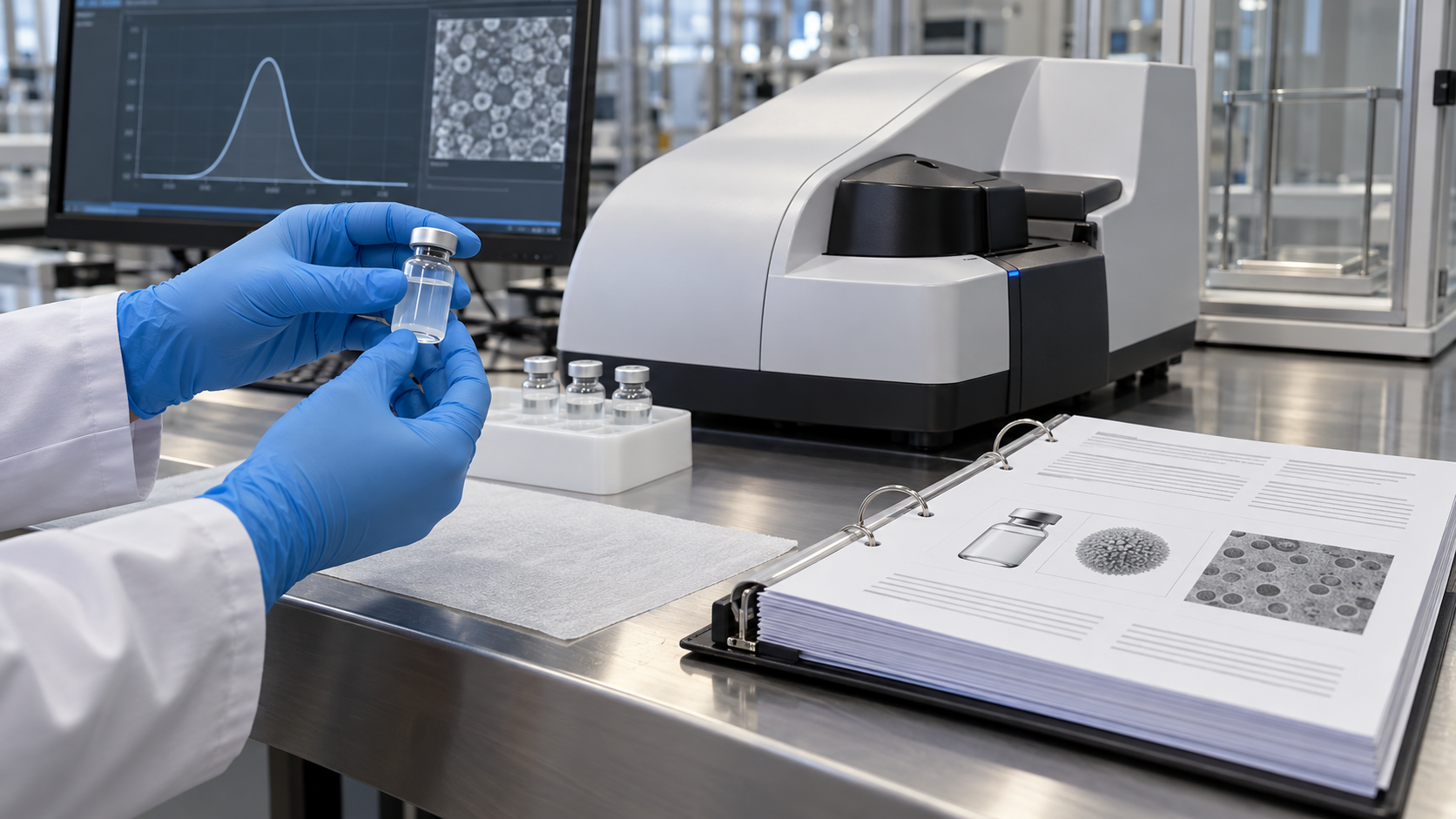
The FDA is an agency of the U.S. federal government. For regenerative medicine, cell therapy and gene therapy, including products made from iPS cells, it reviews and decides whether a clinical trial may begin and whether a product may be sold. It does not hand out research funding. This checkpoint applies to every company that wants to sell in the United States, including those based abroad. This profile looks at one question only: how much influence the FDA actually has over iPS cells and regenerative medicine.
- The FDA in 30 seconds
- What kind of body it is: the four types of influence
- What it does for iPS cells and regenerative medicine
- How far its influence reaches (powers and geography)
- Companies and organisations it deals with
- Outlook
- Glossary, references and claim-to-source audit
1. The FDA in 30 seconds
The FDA is the body that controls the entry point for getting regenerative medicine, cell therapy and gene therapy, including iPS cell-based products, to patients in the United States. It is not a funder of research. It is the party that reviews and decides whether a clinical trial may start and whether a product may be sold. Because this checkpoint applies to every company that wants to sell in the United States, Japanese and European companies cannot avoid it Sourced. At the same time, the FDA approves products one application at a time, and it cannot decide approvals in other countries.
2. What kind of body it is: the four types of influence
Unlike the companies in this series, the institutions that appear in coverage of iPS cells and regenerative medicine do not make cells themselves. What separates them is the route by which they influence the industry, and that gives four types.
The FDA's authority rests on statute. CBER's own introduction says that CBER regulates biological products under the Public Health Service Act and the Federal Food, Drug, and Cosmetic Act Sourced.
3. What it does for iPS cells and regenerative medicine
The FDA's role in regenerative medicine can be broken down as follows Sourced. Its system covers cell therapy, gene therapy and tissue-engineered products generally, not iPS cells alone.
| Role | What it involves | System or document behind it |
|---|---|---|
| Who reviews | OTP, within CBER, reviews cell and gene therapy products. OTP has six offices, 14 divisions and 33 branches, and was formed by reorganising the former OTAT | The page announcing OTP's establishment. The list of approved products is also published under OTP's name |
| Starting a trial | To begin a clinical trial in humans, the sponsor files an IND (investigational new drug application) and presents safety and quality information | Genome editing guidance (which refers to 21 CFR 312.23) |
| Expedited programme (RMAT) | Where a regenerative medicine product targets a serious condition and early clinical data suggest it can meet an unmet medical need, the sponsor can request designation when filing the IND or afterwards. The FDA notifies its decision within 60 days | The page on RMAT designation under section 3033 of the 21st Century Cures Act |
| Guidance | Published guidance includes expedited programmes for regenerative medicine therapies (February 2019, final) and human gene therapy products incorporating human genome editing (January 2024, final) | The page for each guidance document |
| Where human cell and tissue products draw the line | A product that meets all four conditions, such as minimal manipulation and use for the same function it performed in the body, falls into a category (the "section 361" category) that needs only registration and controls, not marketing approval. A product that does not meet them needs approval | 21 CFR 1271.10 and the July 2020 guidance |
| Warnings on unapproved products | The FDA tells consumers that stem cells, adipose-derived cells, cord blood, exosomes and similar products are widely sold without approval, and it takes reports of adverse events | The FDA's consumer information (June 2021) |
Of the conditions in 1271.10, "minimal manipulation" is the first hurdle Sourced. iPS cells go through heavy processing: they are generated, cultured and differentiated into the target cells. They therefore do not meet this condition, and are likely to be subject to a Biologics License Application (BLA) (our interpretation). A company selling an iPS cell-derived product in the United States should therefore expect to assemble its cell manufacturing process and quality control documentation and go through OTP review.
The list of approved cellular and gene therapy products (updated 17 September 2026) includes CAR-T cell therapies for blood cancers and a genome-editing treatment for sickle cell disease Sourced. In the product names and manufacturers we checked against the list, we found no product identifiable as iPS cell-derived Our calculation.
4. How far its influence reaches (powers and geography)
| Aspect | What the FDA has | What it does not have |
|---|---|---|
| Powers | Reviewing the start of trials, approving products for sale, granting designations under expedited programmes such as RMAT, applying the categories for human cell and tissue products, and warning the public about unapproved products | Allocating research funding, or setting reimbursement and prices (the FDA's overview document describes its mission as regulation and lists neither) |
| Geography | Products sold in the United States. About 96% of biologics sold are imported, and there are 697 registered foreign facilities handling biologics. Japanese and European companies are covered too | Decisions on approvals in other countries. Authority over other countries' research ethics or systems |
| Scale | 20,593 staff (FTE, whole FDA) and a budget of about US$7 billion. OTP has six offices, 14 divisions and 33 branches | Staff numbers or budget for CBER or OTP alone (not given in the references) |
| International reference point | It publishes its guidance and the documents behind its approvals | Power to make other countries' regulators follow it |
The staff and budget figures are for the FDA as a whole, which also covers food, tobacco, animal drugs and more Sourced. OTP, which handles iPS cells and regenerative medicine, is only one part of it. Also, the absence of iPS cell-derived products from the approved list does not mean the FDA refuses to approve iPS cell-derived therapies. The FDA's system covers cell therapy in general, and the references do not say that iPS cell-derived products are treated differently.
5. Companies and organisations it deals with
The FDA is not a company's partner. It is the party that reviews companies' applications. We show only the relationships that can be confirmed from FDA publications.
Examples of approvals confirmed in FDA publications
| Product (as the FDA writes it) | Manufacturer (as the FDA writes it) | What the FDA documents show |
|---|---|---|
| CASGEVY (exagamglogene autotemcel) | Vertex Pharmaceuticals Incorporated | Approved 8 December 2023. The first FDA-approved treatment to use genome editing technology (FDA news release) |
| TREGZI (allogeneic regulatory T-cell immunotherapy) | Orca Biosystems Inc | Approval letter dated 1 July 2026. Used with hematopoietic stem cell transplantation from a matched donor in adults with blood cancers |
| ABECMA, BREYANZI | Celgene, Juno (both part of Bristol-Myers Squibb) | Listed among the approved products |
| KYMRIAH, ITVISMA | Novartis (the FDA names the relevant subsidiaries) | Listed among the approved products |
Note: none of these is an iPS cell-derived product. They are examples of the kinds of cell and gene therapy the FDA has actually approved. Manufacturer names follow the FDA's list and the individual product pages Sourced.
6. Outlook
| What the evidence suggests | Primary information it rests on | Category |
|---|---|---|
| If an iPS cell-derived product is ever approved in the United States for the first time, the OTP office responsible for cell therapy and human tissue manufacturing controls will be at the centre of the manufacturing and quality review | OTP is organised into three offices for manufacturing controls (chemistry, manufacturing and controls, or CMC), covering gene therapy, cell therapy and human tissue, and plasma proteins, plus offices for clinical work, pharmacology and toxicology, and review management | Inference |
| For regenerative medicine products, using expedited programmes such as RMAT will become a standard part of development planning | RMAT is set out in the 21st Century Cures Act and can be requested at the IND stage, and the FDA notifies its decision within 60 days. The final 2019 guidance explains the programme | Inference |
| When the first iPS cell-derived product will be approved | The approved products list (updated 17 September 2026) contains no product identifiable as iPS cell-derived | Not yet confirmed |
7. Glossary
- CBER
- The Center for Biologics Evaluation and Research. The part of the FDA that handles vaccines, blood products, cell and gene therapies and similar products.
- OTP
- CBER's Office of Therapeutic Products. It reviews cell therapies and gene therapies.
- IND
- An investigational new drug application. The procedure in which a sponsor gives the FDA safety and quality information before starting a clinical trial in humans.
- BLA
- A Biologics License Application, the application for marketing approval of a biological product. Cell therapies and gene therapies are approved in this form.
- RMAT
- Regenerative Medicine Advanced Therapy designation. A programme that speeds up development of regenerative medicine products for serious conditions.
- HCT/P
- Human cells, tissues, and cellular and tissue-based products. A product that meets conditions such as minimal manipulation falls into a category that does not need marketing approval.
8. References
- FDA FDA at a Glance (January 2026 edition): fiscal 2025 budget of about US$7 billion and its funding split, 20,593 FTE, about 96% of biologics sold being imported, the number of registered biologics facilities, and locations. https://www.fda.gov/media/154548/download
- FDA FDA History: the start of its present regulatory work under the 1906 Pure Food and Drugs Act, and the adoption of its present name in 1930. https://www.fda.gov/about-fda/fda-history
- FDA Center for Biologics Evaluation and Research (CBER) introduction page: mission and governing statutes. https://www.fda.gov/about-fda/fda-organization/center-biologics-evaluation-and-research-cber
- FDA Establishment of the Office of Therapeutic Products: OTP's launch, the reorganisation of the former OTAT, and the structure of six offices, 14 divisions and 33 branches. https://www.fda.gov/vaccines-blood-biologics/cellular-gene-therapy-products/establishment-office-therapeutic-products
- FDA Approved Cellular and Gene Therapy Products: the list of approved products under OTP's remit, updated 17 September 2026. https://www.fda.gov/vaccines-blood-biologics/cellular-gene-therapy-products/approved-cellular-and-gene-therapy-products
- FDA Regenerative Medicine Advanced Therapy Designation: RMAT requirements, requests at the IND stage and notification within 60 days. Updated 4 November 2025. https://www.fda.gov/vaccines-blood-biologics/cellular-gene-therapy-products/regenerative-medicine-advanced-therapy-designation
- FDA Guidance "Expedited Programs for Regenerative Medicine Therapies for Serious Conditions" (February 2019, final). https://www.fda.gov/regulatory-information/search-fda-guidance-documents/expedited-programs-regenerative-medicine-therapies-serious-conditions
- FDA Guidance "Human Gene Therapy Products Incorporating Human Genome Editing" (January 2024, final). https://www.fda.gov/regulatory-information/search-fda-guidance-documents/human-gene-therapy-products-incorporating-human-genome-editing
- FDA Guidance "Regulatory Considerations for Human Cells, Tissues, and Cellular and Tissue-Based Products: Minimal Manipulation and Homologous Use" (July 2020, final). https://www.fda.gov/regulatory-information/search-fda-guidance-documents/regulatory-considerations-human-cells-tissues-and-cellular-and-tissue-based-products-minimal
- U.S. Code of Federal Regulations (eCFR) 21 CFR 1271.10 Are my HCT/P's regulated solely under section 361 of the PHS Act …: the four conditions for the section 361 category. https://www.ecfr.gov/current/title-21/chapter-I/subchapter-L/part-1271/subpart-B/section-1271.10
- FDA Important Patient and Consumer Information About Regenerative Medicine Therapies (3 June 2021): a warning about unapproved regenerative medicine products. https://www.fda.gov/vaccines-blood-biologics/consumers-biologics/important-patient-and-consumer-information-about-regenerative-medicine-therapies
- FDA TREGZI product page: BLA 125868, manufacturer Orca Biosystems Inc, approval letter dated 1 July 2026. https://www.fda.gov/vaccines-blood-biologics/tregzi
- FDA News release "FDA Approves First Gene Therapies to Treat Patients with Sickle Cell Disease" (8 December 2023): Casgevy is the first FDA-approved treatment to use genome editing technology. https://www.fda.gov/news-events/press-announcements/fda-approves-first-gene-therapies-treat-patients-sickle-cell-disease
9. Claim-to-source audit
| Claim in the article | Category | Source |
|---|---|---|
| Full name, headquarters location, status as an agency within HHS, fiscal 2025 budget of about US$7 billion (51% federal, 49% user fees), 20,593 FTE | Sourced | Reference 1 https://www.fda.gov/media/154548/download |
| Regulatory work beginning in 1906 and the present name adopted in 1930 | Sourced | Reference 2 https://www.fda.gov/about-fda/fda-history |
| CBER regulating biological products under the Public Health Service Act and the Federal Food, Drug, and Cosmetic Act | Sourced | Reference 3 https://www.fda.gov/about-fda/fda-organization/center-biologics-evaluation-and-research-cber |
| OTP's launch, the reorganisation of the former OTAT, and the structure of six offices, 14 divisions and 33 branches | Sourced | Reference 4 https://www.fda.gov/vaccines-blood-biologics/cellular-gene-therapy-products/establishment-office-therapeutic-products |
| The list of approved cellular and gene therapy products (including products from Vertex, Orca Biosystems, the BMS group and Novartis), updated 17 September 2026 | Sourced | Reference 5 https://www.fda.gov/vaccines-blood-biologics/cellular-gene-therapy-products/approved-cellular-and-gene-therapy-products |
| RMAT requirements, requests at the IND stage and notification within 60 days | Sourced | Reference 6 https://www.fda.gov/vaccines-blood-biologics/cellular-gene-therapy-products/regenerative-medicine-advanced-therapy-designation |
| The final guidance on expedited programmes for regenerative medicine (February 2019) | Sourced | Reference 7 https://www.fda.gov/regulatory-information/search-fda-guidance-documents/expedited-programs-regenerative-medicine-therapies-serious-conditions |
| The guidance on gene therapy incorporating human genome editing (January 2024) and the information to be presented in an IND | Sourced | Reference 8 https://www.fda.gov/regulatory-information/search-fda-guidance-documents/human-gene-therapy-products-incorporating-human-genome-editing |
| The guidance on minimal manipulation and homologous use (July 2020) | Sourced | Reference 9 https://www.fda.gov/regulatory-information/search-fda-guidance-documents/regulatory-considerations-human-cells-tissues-and-cellular-and-tissue-based-products-minimal |
| The four conditions for the section 361 category (minimal manipulation, homologous use only, no combination with other substances, and no systemic effect) | Sourced | Reference 10 https://www.ecfr.gov/current/title-21/chapter-I/subchapter-L/part-1271/subpart-B/section-1271.10 |
| The warning about the sale of unapproved stem cell and similar products, and the taking of adverse event reports | Sourced | Reference 11 https://www.fda.gov/vaccines-blood-biologics/consumers-biologics/important-patient-and-consumer-information-about-regenerative-medicine-therapies |
| TREGZI's manufacturer and the approval letter dated 1 July 2026 | Sourced | Reference 12 https://www.fda.gov/vaccines-blood-biologics/tregzi |
| Casgevy's approval date and its status as the first approved treatment to use genome editing technology | Sourced | Reference 13 https://www.fda.gov/news-events/press-announcements/fda-approves-first-gene-therapies-treat-patients-sickle-cell-disease |
| About 96% of biologics sold being imported, and 697 registered foreign facilities | Sourced | Reference 1 https://www.fda.gov/media/154548/download |
| The four types of institution, and the selection of approved products | Our calculation | Our own classification and selection (products chosen from references 5, 12 and 13) |
| No product identifiable as iPS cell-derived on the approved list | Our calculation | The result of this article's check of the product names and manufacturers in reference 5 |
| iPS cell-derived products involve heavy processing and are likely to be subject to a BLA | Inference | This article's reading of the "minimal manipulation" condition in reference 10 |
| The first two points in the outlook (section 6) | Inference | This article's reading of references 4, 6 and 7 |
| When the first iPS cell-derived product will be approved | Not yet confirmed | Not stated in reference 5; this article does not estimate it |
| Staff numbers or budget for CBER or OTP alone | Not yet confirmed | Not stated in references 1, 3 and 4; this article does not estimate them |
Last updated 1 October 2026 / Troy Technical
All figures come from the FDA's official website and guidance and from federal regulations. Items marked "Inference" are this article's reading of the primary information. This article is not medical advice.