TECHNOLOGY EXPLAINER
Biomarkers in Body Fluids
— How far can another fluid stand in for blood?
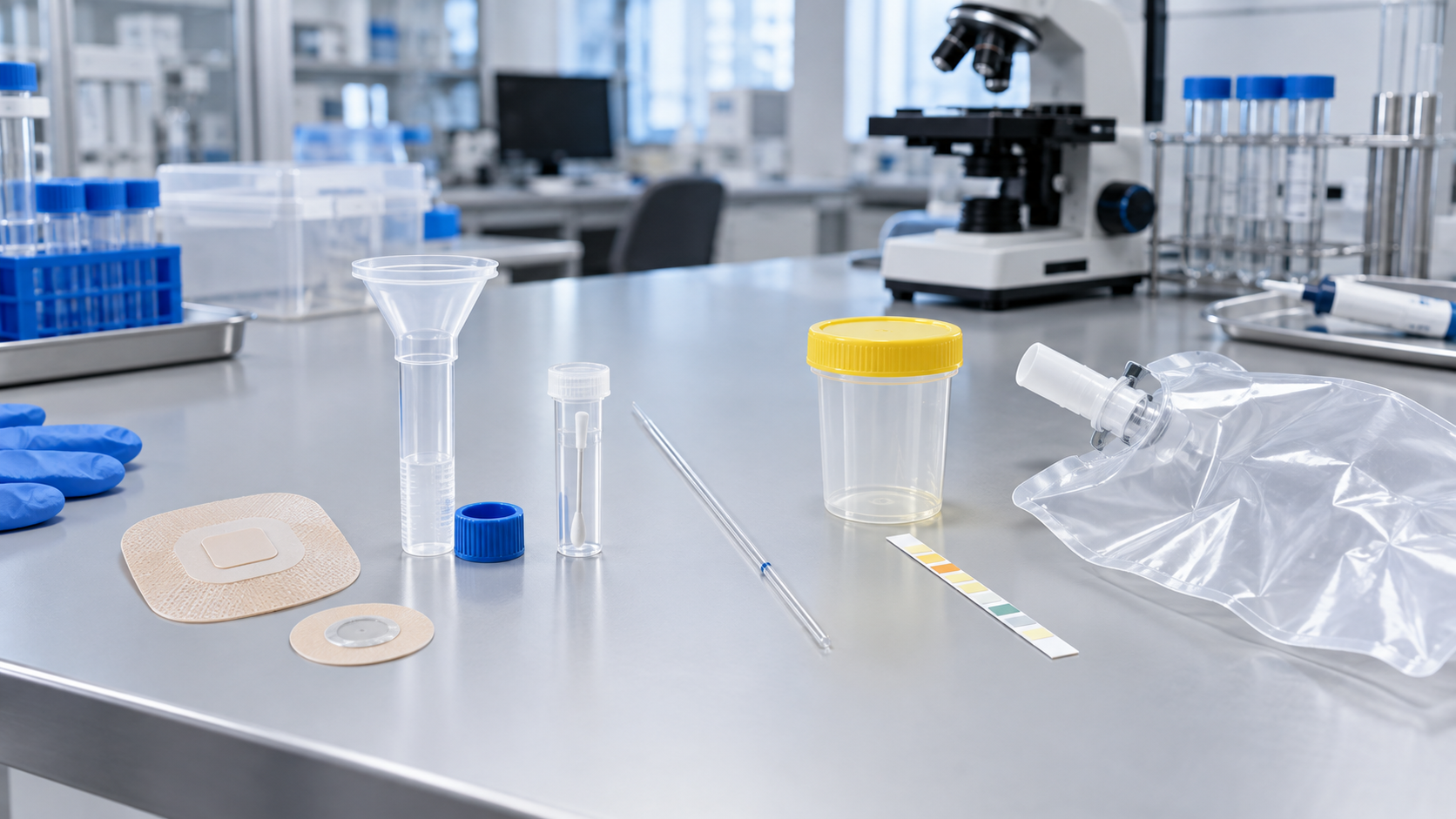
The wish to learn about the body from sweat, saliva, tears, interstitial fluid, urine or breath without drawing blood is easy to understand, but how each fluid relates to blood differs from fluid to fluid. A review states that measurements in these fluids mostly aim to obtain surrogates for circulating analyte concentrations in blood, while the fluid itself often presents the greatest challenge: sample volume, secretion rate, filtration, variable pH and salinity, analyte breakdown and other factors. This article sets out, from the viewpoint of materials, principles, measurement conditions and regulation, what can be confirmed as in practical use from official regulatory documents and what is still at the research stage.
- What body-fluid biomarkers are (the short version)
- A map of body fluids: how each connects to blood
- Examples of analytes: glucose, lactate, ketones, cortisol, sodium/potassium
- Our calculation: what the interstitial-fluid "lag" means in minutes
- Measurement conditions: collection, dilution, pH, temperature
- A materials engineer's view (1): a sweat-sensor stack is designed for small volumes, contamination and temperature
- A materials engineer's view (2): "correlates with" is not "stands in for blood"
- What is in practical use (as far as official documents confirm) and what is research
- What is still hard, and what could not be confirmed
- Glossary / References / Claim-to-source audit
Sourced = stated in a published source (link given)
Our calculation = a value this article calculated from stated assumptions
Not yet confirmed = a plan, a target, or something for which no result could be confirmed
Interpretation of material design is marked "Commentary" and kept separate.
This article explains materials, principles, measurement conditions and regulation. It is not advice on diagnosis, treatment or medication, or on how to read a measured value or reference range, and it does not rank any product or company.
The definition of biomarkers and the logic of clinical endpoints are covered in the explainer on biomarkers and clinical endpoints in this series (aimed at drug development) and are not repeated here.
1. What body-fluid biomarkers are (the short version)
- Purpose: measurements in biofluids such as interstitial fluid, saliva, tears and sweat mostly aim to obtain surrogates for circulating analyte concentrations in blood Sourced [Reference 1].
- The difficulty: the same review says the biofluid itself often presents the greatest challenge in terms of sample volumes, secretion rates, filtration, active analyte channels, variable pH and salinity, analyte breakdown and other confounding factors Sourced [Reference 1].
- The present state: for sweat, one review sums up that correlations between sweat and blood have not been established for most constituents, with perhaps the exception of ethanol Sourced [Reference 2]. On the other hand, several regulator-authorized products continuously measure glucose in interstitial fluid Sourced (Section 8).
Which fluid to measure is a question of physiology before it is a question of sensors. However good the sensor, if the relationship between the fluid and blood is not settled, what the measured value represents is not settled either (Commentary).
2. A map of body fluids: how each connects to blood
Sweat: "correlation with blood is not established for most constituents"
Baker and Wolfe (2020) reviewed the physiological mechanisms that determine sweat composition and concluded that correlations between sweat and blood have not been established for most constituents, with perhaps the exception of ethanol Sourced [Reference 2]. It is well accepted that elevated sweat sodium and chloride is a useful screening tool for cystic fibrosis, but sweat electrolyte concentrations are not predictive of hydration status or sweating rate, and sweat metabolite concentrations are not a reliable biomarker for exercise intensity or other physiological stressors. Research on glucose, cytokines and cortisol is too limited to suggest that sweat is a useful surrogate for blood. Final sweat composition is shaped not only by extracellular solute concentrations but by secretion and reabsorption mechanisms, sweat flow rate, byproducts of sweat-gland metabolism, skin-surface contamination and sebum, among other factors.
On the other hand, Moyer and colleagues (2012) harvested sweat from the forearms of seven subjects with diabetes by a perfusion method and reported a strong correlation between sweat glucose and blood-glucose-meter values across 23 studies. The authors note that skin-surface glucose can confound the measurement, so sweat must be harvested in a way that prevents contamination Sourced [Reference 5].
Interstitial fluid: a little behind blood
In interstitial fluid, which continuous glucose monitors (CGMs) measure, glucose appears later than in blood. Basu and colleagues (2013) studied eight healthy adults in the overnight fasted state: microdialysis catheters were placed in the abdominal subcutaneous space, tracer glucose was given as intravenous boluses, and plasma and interstitial fluid were sampled over time. The mean time lag from plasma to interstitial fluid was 5.3 to 6.2 minutes Sourced [Reference 7]. This is the value for these conditions (healthy adults, fasted, abdominal subcutaneous tissue). After a meal or exercise, at other sites, or in people with disease, it is not necessarily the same.
Saliva, tears, urine and breath
- Saliva: Vining and colleagues (1983) reported that salivary cortisol concentration was directly proportional to serum unbound (free) cortisol, that its relationship to serum total cortisol was markedly non-linear, and that blood–saliva equilibrium was very fast, much less than 5 minutes Sourced [Reference 8].
- Tears: Lane and colleagues (2006) measured tear glucose after a carbohydrate load in 121 subjects (with and without diabetes) and observed a correlation with capillary blood glucose, but said that in the clinical setting this may not prove practical because of technical limitations Sourced [Reference 10]. Park and colleagues (2024) used a smart contact lens to measure basal tears, excluding reflex tears that weaken the relationship with blood glucose, and estimated a personalized lag time [Reference 11]. Kim and colleagues (2017) tested a contact-lens sensor that measures tear glucose and intraocular pressure in a live rabbit and a bovine eyeball [Reference 12].
- Urine: test strips for glucose and ketones in urine have classes in the U.S. Code of Federal Regulations (Section 8). Because urine is stored in the bladder before it is passed, it probably carries information closer to an average over a period than blood at the moment of collection (Commentary).
- Breath: a review states that breath acetone varies with many factors, including diet composition, caloric restriction, exercise and pulmonary factors Sourced [Reference 13].
3. Examples of analytes: glucose, lactate, ketones, cortisol, sodium/potassium
For each analyte and fluid, what can be confirmed in papers and regulatory documents is set out. Each study differs in subjects and conditions, and the table is not a ranking.
| Analyte | Fluid | What can be confirmed | Status |
|---|---|---|---|
| Glucose | Interstitial fluid | CGMs measure interstitial fluid [Reference 1]. The "integrated CGM (iCGM)" has a class in the U.S. Code of Federal Regulations [Reference 21] | Confirmed in regulatory documents |
| Glucose | Sweat | Strong correlation between perfusion-harvested sweat and blood-glucose-meter values (seven subjects with diabetes, 23 studies); skin-surface glucose can confound [Reference 5]. A wearable sweat sensor reported [Reference 4]. "Research on glucose is too limited to suggest that sweat is a useful surrogate for blood" [Reference 2] | Research stage |
| Glucose | Tears | Correlation of tear glucose with capillary blood glucose in 121 subjects; technical limitations in practice [Reference 10]. Smart-lens reports (effect of reflex tears) [Reference 11] | Research stage |
| Glucose | Urine | The urinary glucose (nonquantitative) test system is a Class II device in 21 CFR 862.1340 [Reference 22] | Confirmed in regulatory documents |
| Lactate | Sweat | Measured with a wearable sweat sensor [Reference 4]. In a six-runner study, blood and sweat lactate correlated under normal conditions but not under hot conditions; the authors concluded that "sweat lactate concentration does not consistently reflect blood lactate concentration" [Reference 6] | Research stage |
| Ketones | Interstitial fluid (continuous) | In August 2026 the FDA granted a De Novo request for an integrated system that continuously measures glucose and ketone (beta-hydroxybutyrate) (DEN250049, prescription) [Reference 18] | Confirmed in regulatory documents |
| Ketones | Urine | The ketones (nonquantitative) test system is in 21 CFR 862.1435 as Class I (exempt from premarket notification) [Reference 23] | Confirmed in regulatory documents |
| Ketones | Breath | Breath acetone varies with diet, caloric restriction, exercise and pulmonary factors [Reference 13] | Research stage |
| Cortisol | Saliva | Salivary cortisol proportional to serum unbound cortisol and non-linear with total cortisol (1983 report) [Reference 8] | Research report |
| Cortisol | Sweat | Low nanomolar in sweat. Saliva–sweat correlation and a smartwatch-type prototype with an aptamer FET [Reference 9]. A sweat sensor using an MIP [Reference 15]. "Research on cortisol is too limited to suggest that sweat is a useful surrogate for blood" [Reference 2] | Research stage |
| Sodium / potassium | Sweat (diagnosis) | Elevated sweat sodium and chloride is well accepted as a screening tool for cystic fibrosis [Reference 2]. Iontophoresis devices (sweat stimulation and collection) and chloride test systems have classes in the U.S. Code of Federal Regulations [References 16, 24 and 27] | Confirmed in regulatory documents |
| Sodium / potassium | Sweat (wearable) | A sweat sensor array including Na⁺ and K⁺ sensors reported [Reference 4]. A review also states that "sweat electrolyte concentrations are not predictive of hydration status or sweating rate" [Reference 2] | Research stage |
All Sourced (papers and regulatory documents). "Confirmed in regulatory documents" means that the type and use of the device has a regulatory class or authorization; it does not mean any individual wearable sweat sensor has been authorized. FDA clearance (510(k)), De Novo authorization and approval (PMA) are different systems.
4. Our calculation: what the interstitial-fluid "lag" means in minutes
Treat the mean time lag reported by Basu and colleagues (5.3 to 6.2 minutes) [Reference 7] as the time constant τ of a first-order lag (exponential catch-up), and estimate how far the interstitial side has followed when blood glucose changes in a step Our calculation.
- Formula: fraction reached = 1 − exp(−t/τ). About 63% at t = τ, and 90% at t = 2.3τ
- Time to reach 90%: τ = 5.3 min → 2.3026×5.3 ≈ 12.2 min. τ = 6.2 min → 2.3026×6.2 ≈ 14.3 min
Assumptions and limits: treating the "mean time lag" as the time constant of a first-order lag is an assumption made here, not the paper's interpretation. Real lags can differ in the same person with circumstances (after a meal, after exercise) and with site. A real CGM reading also contains sensor response and signal-processing delay in addition to this physiological lag (Commentary). This calculation gives only an order of magnitude for the delay; it does not show device performance or how to use a device.
5. Measurement conditions: collection, dilution, pH, temperature
In body-fluid measurement, conditions on the sample side move the signal independently of sensor performance. What papers and reviews confirm is organized here.
| Condition | As described in papers and regulatory documents | Source |
|---|---|---|
| Collection: skin surface | Skin-surface glucose can confound sweat measurement. Sweat composition is also influenced by skin-surface contamination and sebum. In the wearable trials, the skin was cleaned with alcohol swabs before the sensors were worn | Moyer et al. [Reference 5], Baker and Wolfe [Reference 2], Gao et al. [Reference 4] |
| Collection: stimulation and recovery | For diagnosis, the FDA has cleared a device that stimulates sweat by pilocarpine iontophoresis and collects it, limited to use in a clinical laboratory (Macroduct Advanced, 510(k) K180627). The regulation says the device uses direct current to introduce ions and induce sweating, and that for cystic fibrosis diagnosis the sweat is collected and its composition and weight determined | FDA [Reference 16], 21 CFR 890.5525 [Reference 27] |
| Collection: tears | Reflex tears weaken the relationship with blood glucose, so the design measured basal tears only | Park et al. [Reference 11] |
| Volume and secretion rate | Sample volume, secretion rate, filtration, active analyte channels, variable pH and salinity, and analyte breakdown are the challenges. With laser-patterned microcapillary channels for sweat uptake a signal appeared promptly, but with a simple punched hole no significant signal was produced for 6 minutes | Heikenfeld et al. [Reference 1], Parlak et al. [Reference 15] |
| Dilution | The authors explain that the fall in sweat lactate and glucose concentrations as sweating increased is expected from a dilution effect. Sweat composition is also influenced by sweat flow rate | Gao et al. [Reference 4], Baker and Wolfe [Reference 2] |
| pH | The pH of body fluids varies. In on-body sweat, calcium concentration rose as pH fell | Heikenfeld et al. [Reference 1], Nyein et al. [Reference 14] |
| Temperature | A design measures skin temperature at the same time to calibrate the sensors' response (on-board temperature compensation). Under hot conditions (30 °C), the correlation between sweat and blood lactate seen under normal conditions (20 °C) was not found (six runners) | Gao et al. [Reference 4], Takei et al. [Reference 6] |
| Calibration | The Na⁺ and K⁺ sensors were calibrated at one point in a standard solution (1 mM KCl, 10 mM NaCl) before each use. The authors state that no calibration was needed for the glucose and lactate sensors | Gao et al. [Reference 4] |
| Breath conditions | Breath acetone varies with diet, caloric restriction, exercise and pulmonary factors (gas exchange). Pulmonary factors should be controlled to optimize the sample for measurement | Anderson [Reference 13] |
All Sourced (papers and regulatory documents). How large each condition's effect is depends on fluid, device, person and time, so no general correction amount can be derived from here.
6. A materials engineer's view (1): a sweat-sensor stack is designed for small volumes, contamination and temperature
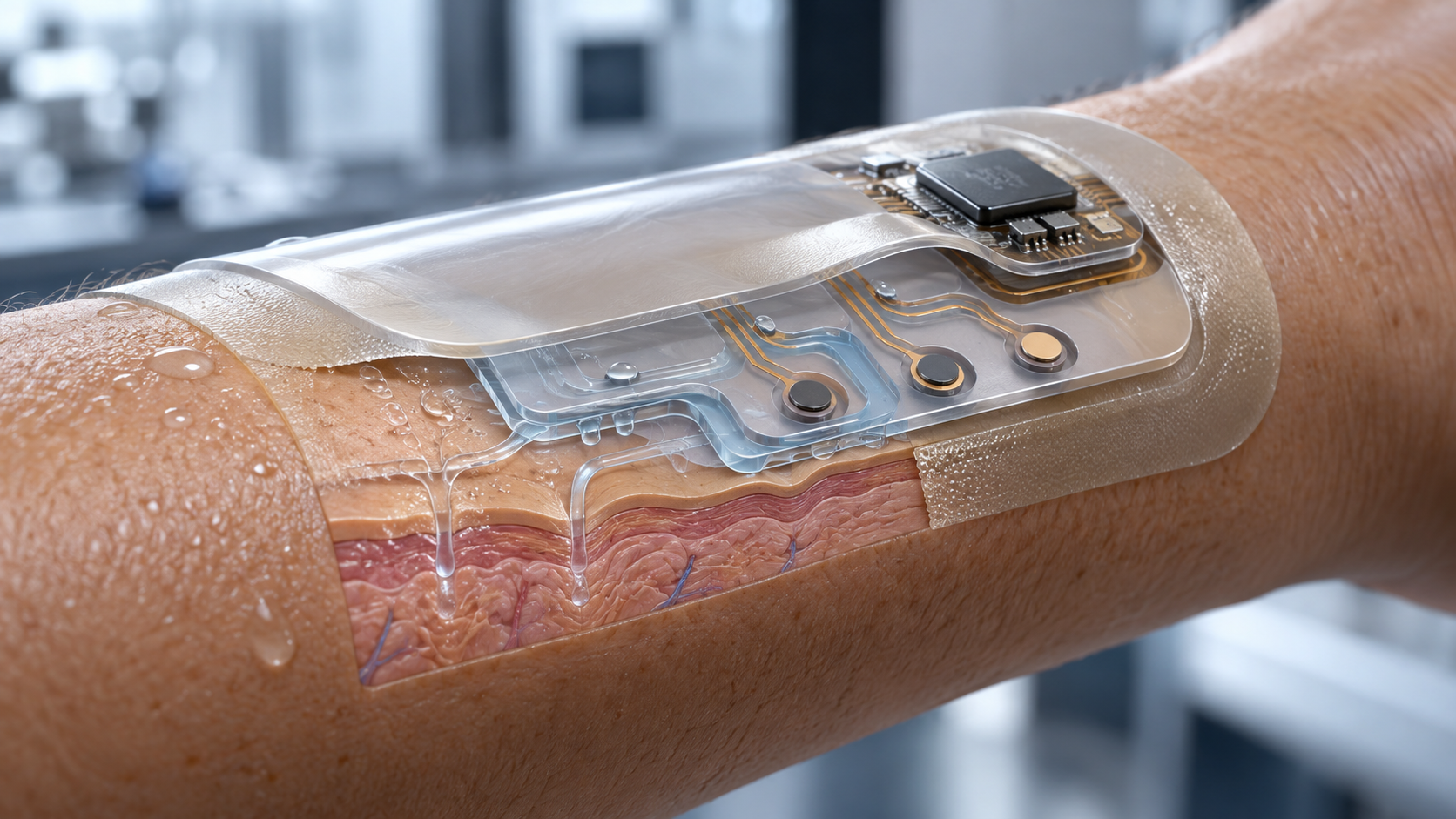
Gao and colleagues (2016) reported a mechanically flexible, fully integrated sensor array that simultaneously measures sweat metabolites (glucose, lactate), electrolytes (Na⁺, K⁺) and skin temperature Sourced [Reference 4]. From the methods of the paper, the material construction can be pulled out as follows.
- Substrate: 100-µm-thick moisture-resistant PET. 30 nm chromium and 50 nm gold by electron-beam evaporation, insulated with parylene C (500 nm), with the electrode area (3 mm diameter) opened by plasma etching
- Glucose and lactate sensors: glucose oxidase / lactate oxidase immobilized in a permeable film of chitosan and carbon nanotubes. Prussian blue as the mediator brings the reduction potential to about 0 V (versus Ag/AgCl), so the sensors run without an external power source
- Na⁺ and K⁺ sensors: ion-selective electrodes with a PVC / sebacate-ester membrane containing sodium ionophore X and valinomycin (for potassium)
- Reference electrode: Ag/AgCl. The ion-selective side shares a reference electrode coated with PVB (polyvinyl butyral)
- Compensation: skin temperature is measured and readings are compensated in real time for temperature changes. Na⁺ and K⁺ are calibrated at one point before use
Three points follow (Commentary).
- Sweat is a "small, slow, variable" sample: the enzyme-immobilizing film is also a permeable film that mediates what passes. The authors say a thinner Prussian blue layer gives better sensitivity, which is essential for the low glucose levels in sweat [Reference 4]
- Temperature compensation is also a materials issue: enzyme reactions depend on temperature, so a temperature sensor is put on the same substrate to compensate. The thermal contact with the skin (substrate, adhesion) governs how good the compensation is
- Contamination and adhesion: because skin-surface contamination confounds measurement [Reference 5], adhesion, sealing and cleaning to the skin are design issues before the sensor. Skin adhesion is covered in the explainer on patch sensors and skin adhesion in this series, and electrode-interface materials and enzyme immobilization in the explainer on enzymes and electrode-interface materials
View the original SVG schematic, source notes and numerical details
7. A materials engineer's view (2): "correlates with" is not "stands in for blood"
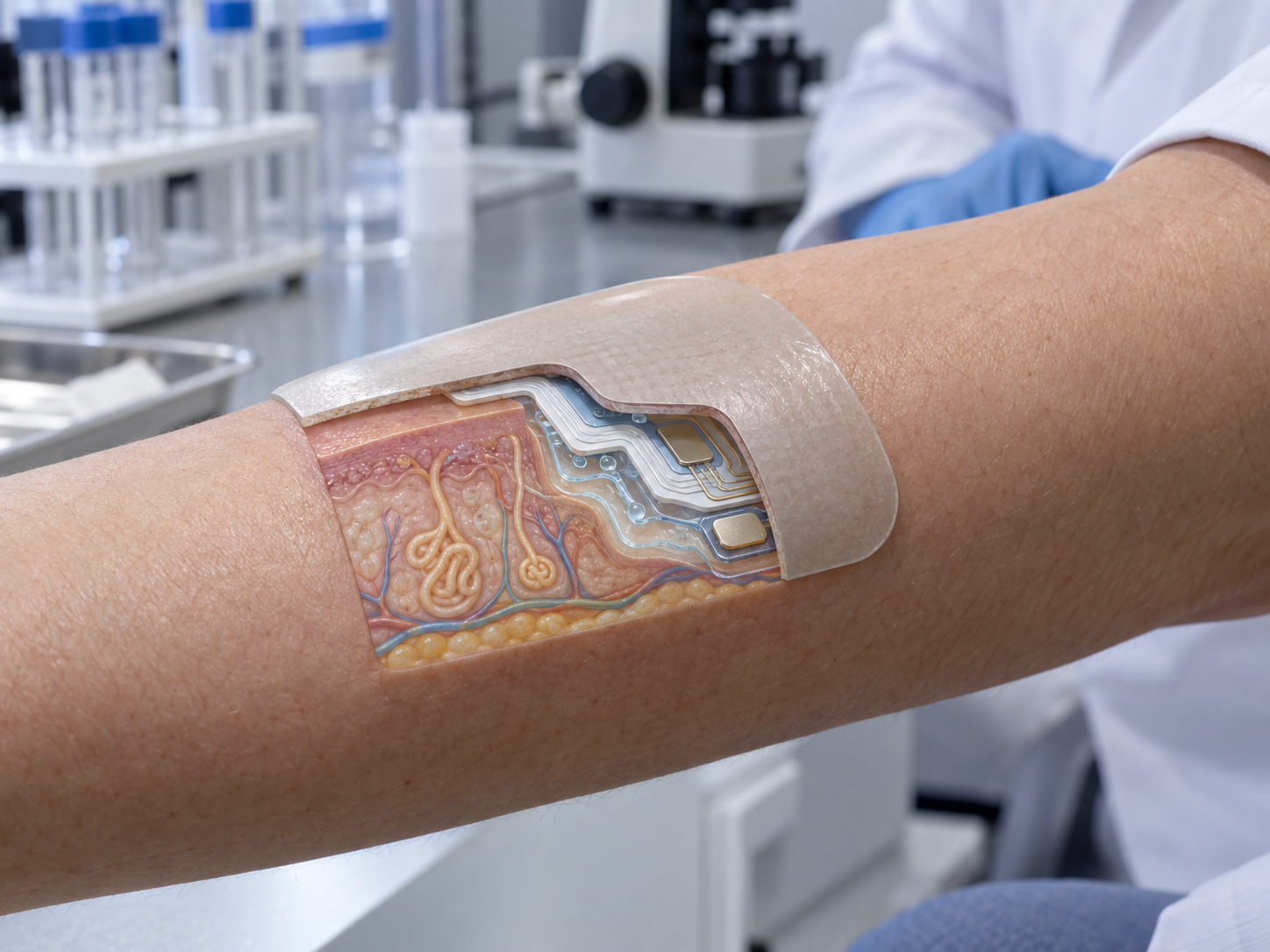
When reading reports on the relationship between a body fluid and blood, these points are worth checking (this article's own organization, with the supporting papers).
- Proportional to what: salivary cortisol was proportional to serum unbound cortisol, not to total cortisol, and its relationship with total cortisol was non-linear [Reference 8]. Even "in blood" can mean a different fraction is being measured
- How much it lags: about 5 to 6 minutes in interstitial fluid, and a personalized lag time estimated for tears [References 7 and 11]. The lag can vary with conditions and person
- Whether it holds when conditions change: sweat lactate correlated with blood lactate under normal conditions but not under hot conditions (a small six-runner study) [Reference 6]
- Whether contamination and collection were controlled: the sweat glucose result is for conditions in which skin-surface contamination was avoided during harvesting [Reference 5]
- Whether it was compared with a reference method on simultaneous samples: the regulation for integrated CGMs requires clinical data comparing values with blood glucose in specimens collected in parallel, measured on an FDA-accepted laboratory method that is precise and accurate and traceable to a higher-order reference Sourced [Reference 21]. The burden of tying a fluid's value to blood lies not in an individual paper's correlation but in the parallel comparison and the acceptance criteria applied to its result
In materials work, when a degradation test is linked to the life of a real product, one checks whether the mechanism that acts under accelerated conditions is the same in service. It is the same stance. It also overlaps with the idea of surrogate endpoints in the explainer on biomarkers and clinical endpoints in this series.
8. What is in practical use (as far as official documents confirm) and what is research
"Practical use" differs in meaning depending on whether a device type and use has a regulatory class or an individual product is authorized. What could be confirmed is set out as the regulatory documents state it.
| Fluid and use | What the regulatory documents confirm | Class and source |
|---|---|---|
| Interstitial-fluid glucose (integrated CGM) | 21 CFR 862.1355: an integrated continuous glucose monitoring system (iCGM) is a device that automatically measures glucose in bodily fluids continuously or frequently; Class II (special controls). The clinical data must include a comparison with blood glucose values in specimens collected in parallel, measured on a laboratory method. Dexcom G6: De Novo DEN170088, decision date 27 March 2018 (classification name: integrated continuous glucose monitoring system, factory calibrated; product code QBJ). Stelo: 510(k) K234070, cleared on 5 March 2024 (the FDA issued an administrative letter dated 15 August 2024 correcting a typo in the clearance date). An over-the-counter (OTC) iCGM for people 18 years and older not on insulin. The FDA form says the user is not intended to take medical action based on the device output without consultation with a qualified healthcare professional | U.S. Code of Federal Regulations [Reference 21], FDA De Novo database [Reference 19], FDA 510(k) [Reference 20]. De Novo and 510(k) are different systems |
| Interstitial-fluid glucose + ketones | Libre Duo 10 Day: De Novo DEN250049. FDA classification order of 25 August 2026 (corrected on 26 August 2026 for an inconsistency in a labeling special control). A prescription device, indicated for the management of diabetes in persons age 2 years and older, to monitor glucose and ketone (beta-hydroxybutyrate) levels in real time. Generic name: integrated continuous glucose ketone monitoring system (21 CFR 862.1354, Class II). The special controls also require a comparison of ketone sensor values with blood ketone values collected in parallel | FDA classification order [Reference 18] |
| Sweat diagnosis (cystic fibrosis) | Macroduct Advanced Model 3710: 510(k) K180627, 27 July 2018. Limited to clinical-laboratory use by qualified medical personnel, for "stimulation and collection of sweat from humans for analysis for the diagnosis of cystic fibrosis". 21 CFR 890.5525 (iontophoresis device, Class II). Chloride measurement falls under 21 CFR 862.1170 (chloride in plasma, serum, sweat and urine; Class II). A Wescor chloride analyzer is recorded as 510(k) K121823 (27 March 2013) | FDA [References 16 and 17], U.S. Code of Federal Regulations [References 24 and 27] |
| Breath | NIOX MINO: 510(k) K072816, 3 March 2008. Measures nitric oxide in human breath. 21 CFR 862.3080 (breath nitric oxide test system, Class II): measurement of changes in fractional nitric oxide in expired breath "aids in evaluating an asthma patient's response to anti-inflammatory therapy, as an adjunct to established clinical and laboratory assessments of asthma". The breath-alcohol test system is 21 CFR 862.3050 (Class I, exempt from premarket notification) | FDA [Reference 28], U.S. Code of Federal Regulations [References 25 and 26] |
| Urine | Urinary glucose (nonquantitative) test system: 21 CFR 862.1340 (Class II). Ketones (nonquantitative) test system: 21 CFR 862.1435 (Class I, exempt from premarket notification; identification of ketones in "urine and other body fluids") | U.S. Code of Federal Regulations [References 22 and 23] |
| Wearable sensors for sweat, tears and saliva (glucose, lactate, cortisol and so on) | Regulatory clearance or authorization could not be confirmed in this article's search. On 3 October 2026 this article searched the FDA's public database (openFDA 510(k)) for device names containing "sweat" and examined 18 records: sweat stimulation and collection devices, chloride analyzers, drug-testing sweat patch containers, a patch for treating excessive sweating and so on. None was a wearable sensor measuring glucose or lactate in sweat. This is a search by name, not an exhaustive check | This article's own check (Commentary). Research reports: [References 4, 9, 11, 12 and 15] |
Clearance or approval is a judgment for a specific intended use and does not mean "safe and accurate however it is used". FDA 510(k) clearance, De Novo authorization and PMA approval are different systems. That a device type appears in the U.S. Code of Federal Regulations does not mean any individual product is authorized.
9. What is still hard, and what could not be confirmed
(1) The relationship between sweat and blood needs checking constituent by constituent
For sweat, the correlation with blood has not been established for most constituents [Reference 2], and research on glucose, cytokines and cortisol is described as limited. Another review (2019) likewise says that the utility of sweat composition as a biomarker for human physiology is currently limited and that more research is needed on the relations between sweat and blood solute concentrations [Reference 3]. At the same time, some have been confirmed to be useful under conditions: glucose by the perfusion method [Reference 5], and Na⁺ and Cl⁻ for diagnosis [Reference 2].
(2) Small studies and narrow conditions
The sweat-lactate study had six runners [Reference 6], the interstitial-lag measurement eight healthy adults (fasted) [Reference 7], and the sweat-glucose study seven subjects [Reference 5]. This article could not confirm in the primary sources it consulted any results extending these to after meals, exercise, people with disease, or long wear.
(3) Regulatory authorization of wearable sensors for sweat and tears
Could not be confirmed in the scope of this article. Not yet confirmed
(4) How to read values and reference ranges
This article does not cover how to read measured values or reference ranges. Their meaning differs by fluid and by conditions, and individual judgment requires consulting a healthcare professional.
- Most body-fluid measurements aim to stand in for blood, but the fluid itself is the greatest challenge Sourced
- Interstitial fluid lags blood glucose by about 5 to 6 minutes (8 healthy adults, fasted, abdominal subcutaneous tissue). Under a first-order assumption, reaching 90% takes about 12 to 14 minutes Our calculation
- For sweat, correlation with blood is not established for most constituents. Diagnostic use is for cystic fibrosis electrolytes and the like Sourced
- Collection, dilution, pH and temperature move the signal. Sweat sensors prepare with measures such as an on-board temperature sensor Sourced
- "Correlates with" is not "stands in for". Check what it is proportional to, the lag, the conditions and simultaneous sampling against a reference method (Commentary)
- What official documents confirm as in practical use includes interstitial-fluid CGMs, diagnostic devices for sweat, and breath and urine test systems. Authorization of wearable sensors for sweat, tears or saliva could not be confirmed Sourced
10. Glossary
- Biomarker
- A molecule measured as an indicator of the state of the body. Its definition and its relation to clinical endpoints are covered in the explainer on biomarkers and clinical endpoints in this series.
- Surrogate
- Using a value measured in another body fluid in place of the value you would measure in blood.
- Interstitial fluid (ISF)
- The fluid that fills the spaces between cells under the skin. What CGMs measure.
- Time lag
- The offset between a change in blood and its appearance in another fluid.
- First-order lag
- A simple model that catches up with a change exponentially. Expressed by a time constant τ.
- Reflex tears
- Tears that increase temporarily with stimulation; distinguished from basal tears.
- Unbound (free) cortisol
- Cortisol in blood that is not bound to proteins. Reported to be proportional to the concentration in saliva.
- Iontophoresis
- Introducing ions of a drug through the skin with a weak direct current. In sweat diagnosis it is used to induce sweating.
- iCGM
- Integrated continuous glucose monitoring system, a type of CGM that has a class in the U.S. Code of Federal Regulations.
- 510(k) / De Novo
- Premarket pathways of the FDA for medical devices: 510(k) shows substantial equivalence to an existing device; De Novo classifies a new type of device.
- Ion-selective electrode
- An electrode with a membrane that responds to a specific ion, used to measure Na⁺ or K⁺.
- Prussian blue
- A pigment used as a mediator that lets hydrogen peroxide produced by an enzyme reaction be measured at a low potential.
- Parylene C
- A polymer insulating film deposited from the gas phase; it covers electrodes thinly and uniformly.
- Dilution effect
- The fall in the concentration of dissolved constituents as the amount of sweat increases.
- On-board compensation
- Correcting for effects such as temperature by calculation on the sensor board itself.
11. References
- Heikenfeld J et al. "Accessing analytes in biofluids for peripheral biochemical monitoring", Nat Biotechnol 2019;37:407-419 — doi.org
- Baker LB, Wolfe AS. "Physiological mechanisms determining eccrine sweat composition", Eur J Appl Physiol 2020;120:719-752 — doi.org
- Baker LB. "Physiology of sweat gland function: the roles of sweating and sweat composition in human health", Temperature 2019;6:211-259 — doi.org
- Gao W et al. "Fully integrated wearable sensor arrays for multiplexed in situ perspiration analysis", Nature 2016;529:509-514 — doi.org
- Moyer J et al. "Correlation between sweat glucose and blood glucose in subjects with diabetes", Diabetes Technol Ther 2012;14:398-402 — doi.org
- Takei N et al. "Differential patterns of sweat and blood lactate concentration response during incremental exercise in varied ambient temperatures: a pilot study", Temperature 2024;11:247-253 — doi.org
- Basu A et al. "Time lag of glucose from intravascular to interstitial compartment in humans", Diabetes 2013;62:4083-4087 — doi.org
- Vining RF et al. "Salivary cortisol: a better measure of adrenal cortical function than serum cortisol", Ann Clin Biochem 1983;20:329-335 — doi.org
- Wang B et al. "Wearable aptamer-field-effect transistor sensing system for noninvasive cortisol monitoring", Sci Adv 2022;8:eabk0967 — doi.org
- Lane JD et al. "Tear glucose dynamics in diabetes mellitus", Curr Eye Res 2006;31:895-901 — doi.org
- Park et al. "In-depth correlation analysis between tear glucose and blood glucose using a wireless smart contact lens", Nat Commun 2024;15:2828 — doi.org
- Kim J et al. "Wearable smart sensor systems integrated on soft contact lenses for wireless ocular diagnostics", Nat Commun 2017;8:14997 — doi.org
- Anderson JC. "Measuring breath acetone for monitoring fat loss: review", Obesity 2015;23:2327-2334 — doi.org
- Nyein HYY et al. "A wearable electrochemical platform for noninvasive simultaneous monitoring of Ca2+ and pH", ACS Nano 2016;10:7216-7224 — doi.org
- Parlak O et al. "Molecularly selective nanoporous membrane-based wearable organic electrochemical device for noninvasive cortisol sensing", Sci Adv 2018;4:eaar2904 — doi.org
- U.S. Food and Drug Administration (FDA) 510(k) K180627 (Macroduct Advanced Model 3710): letter, indications and summary, 27 July 2018 (PDF) — www.accessdata.fda.gov
- FDA 510(k) database: K121823 (Wescor chloride analyzer), 27 March 2013 — www.accessdata.fda.gov
- FDA De Novo DEN250049 (Libre Duo 10 Day): classification order, August 2026 (corrected version of 26 August) (PDF) — www.accessdata.fda.gov
- FDA De Novo database: DEN170088 (Dexcom G6), 27 March 2018 — www.accessdata.fda.gov
- FDA 510(k) K234070 (Stelo Glucose Biosensor System): letter and indications for use (PDF) — www.accessdata.fda.gov
- U.S. Code of Federal Regulations 21 CFR 862.1355, Integrated continuous glucose monitoring system — www.ecfr.gov
- U.S. Code of Federal Regulations 21 CFR 862.1340, Urinary glucose (nonquantitative) test system — www.ecfr.gov
- U.S. Code of Federal Regulations 21 CFR 862.1435, Ketones (nonquantitative) test system — www.ecfr.gov
- U.S. Code of Federal Regulations 21 CFR 862.1170, Chloride test system — www.ecfr.gov
- U.S. Code of Federal Regulations 21 CFR 862.3050, Breath-alcohol test system — www.ecfr.gov
- U.S. Code of Federal Regulations 21 CFR 862.3080, Breath nitric oxide test system — www.ecfr.gov
- U.S. Code of Federal Regulations 21 CFR 890.5525, Iontophoresis device — www.ecfr.gov
- FDA 510(k) K072816 (NIOX MINO): letter and summary, 3 March 2008 (PDF) — www.accessdata.fda.gov
12. Claim-to-source audit
| Claim in the text | Basis | Label |
|---|---|---|
| That body-fluid measurements mostly aim to obtain surrogates for circulating analyte concentrations in blood; that CGMs measure interstitial fluid; that the fluid is often the greatest challenge in sample volume, secretion rate, filtration, active channels, variable pH and salinity, and analyte breakdown | Abstract of the Nat Biotechnol 2019 review[Reference 1] https://doi.org/10.1038/s41587-019-0040-3 | Sourced |
| That correlations between sweat and blood are not established for most constituents (perhaps except ethanol); that elevated sweat sodium and chloride is a well-accepted screening tool for cystic fibrosis; that sweat electrolytes are not predictive of hydration status or sweating rate; that research on glucose, cytokines and cortisol is limited; that sweat composition is influenced by secretion and reabsorption, flow rate, gland metabolism, skin-surface contamination and sebum | Abstract of the Eur J Appl Physiol 2020 review[Reference 2] https://doi.org/10.1007/s00421-020-04323-7 | Sourced |
| That the utility of sweat composition as a biomarker for human physiology is currently limited and that more research is needed on the relations between sweat and blood solute concentrations | Abstract of the Temperature 2019 review[Reference 3] https://doi.org/10.1080/23328940.2019.1632145 | Sourced |
| The integrated wearable sweat sensor array: simultaneous measurement of glucose, lactate, Na⁺, K⁺ and skin temperature; PET substrate (100 µm); chromium 30 nm / gold 50 nm; parylene C 500 nm; electrode diameter 3 mm; chitosan + carbon nanotube + enzyme film; Prussian blue; Na⁺/K⁺ ion-selective membranes (PVC / sebacate ester); PVB-coated reference electrode; on-board temperature compensation; one-point Na⁺/K⁺ calibration (1 mM KCl, 10 mM NaCl); no calibration for glucose and lactate (authors' statement); the dilution-effect explanation; skin cleaning before wearing | Abstract and text of the Nature 2016 paper (open-access version)[Reference 4] https://doi.org/10.1038/nature16521 | Sourced |
| That perfusion-harvested sweat glucose correlated strongly with blood-glucose-meter values in seven subjects with diabetes (23 studies), and that skin-surface glucose can confound | Abstract of the Diabetes Technol Ther 2012 paper[Reference 5] https://doi.org/10.1089/dia.2011.0262 | Sourced |
| That in six runners, blood and sweat lactate correlated under normal conditions (20 °C) but not under hot conditions (30 °C), and the conclusion that sweat lactate does not consistently reflect blood lactate | Abstract of the Temperature 2024 paper[Reference 6] https://doi.org/10.1080/23328940.2024.2375693 | Sourced |
| That in eight healthy adults, overnight fasted, with abdominal subcutaneous microdialysis and intravenous tracer boluses, the mean time lag from plasma to interstitial fluid was 5.3 to 6.2 minutes | Abstract of the Diabetes 2013 paper[Reference 7] https://doi.org/10.2337/db13-1132 | Sourced |
| That salivary cortisol is proportional to serum unbound cortisol, non-linear with total cortisol, and equilibrates between blood and saliva in much less than 5 minutes | Abstract of the Ann Clin Biochem 1983 paper[Reference 8] https://doi.org/10.1177/000456328302000601 | Sourced |
| That cortisol in sweat is at low nanomolar levels; the saliva–sweat correlation and a smartwatch-type prototype with an aptamer FET | Abstract of the Sci Adv 2022 paper[Reference 9] https://doi.org/10.1126/sciadv.abk0967 | Sourced |
| That in 121 subjects tear glucose after a carbohydrate load correlated with capillary blood glucose, and that in the clinical setting this may not prove practical because of technical limitations | Abstract of the Curr Eye Res 2006 paper[Reference 10] https://doi.org/10.1080/02713680600976552 | Sourced |
| That a smart contact lens measured basal tears excluding reflex tears and estimated a personalized lag time | Abstract of the Nat Commun 2024 paper[Reference 11] https://doi.org/10.1038/s41467-024-47123-9 | Sourced |
| That a contact-lens sensor measuring tear glucose and intraocular pressure was tested in a live rabbit and a bovine eyeball | Abstract of the Nat Commun 2017 paper[Reference 12] https://doi.org/10.1038/ncomms14997 | Sourced |
| That breath acetone varies with diet composition, caloric restriction, exercise and pulmonary factors, and that pulmonary factors should be controlled to optimize the sample | Abstract of the Obesity 2015 review[Reference 13] https://doi.org/10.1002/oby.21242 | Sourced |
| That a wearable platform measured Ca2+ and pH in sweat, urine and tears, and that in on-body sweat calcium concentration rose as pH fell | Abstract of the ACS Nano 2016 paper[Reference 14] https://doi.org/10.1021/acsnano.6b04005 | Sourced |
| The effect of laser-patterned microcapillaries in a wearable cortisol MIP sweat sensor (with a punched-hole tape, no significant signal until 6 minutes after application); the sweat cortisol concentration of 0.02 to 0.5 µM cited | Text of the Sci Adv 2018 paper (open-access version)[Reference 15] https://doi.org/10.1126/sciadv.aar2904 | Sourced |
| Macroduct Advanced Model 3710: 510(k) K180627, 27 July 2018, 21 CFR 890.5525, limited to clinical-laboratory use, stimulation and collection of sweat for analysis for the diagnosis of cystic fibrosis, pilocarpine iontophoresis | FDA 510(k) letter and indications for use[Reference 16] https://www.accessdata.fda.gov/cdrh_docs/pdf18/K180627.pdf | Sourced |
| The Wescor chloride analyzer (including a sweat chloride analyzer in its name): 510(k) K121823, 27 March 2013 | FDA 510(k) database record[Reference 17] https://www.accessdata.fda.gov/scripts/cdrh/cfdocs/cfpmn/pmn.cfm?ID=K121823 | Sourced |
| Libre Duo 10 Day: De Novo DEN250049; classification order of 25 August 2026 (corrected 26 August); prescription; age 2 years and older; real-time glucose and ketone (beta-hydroxybutyrate); 21 CFR 862.1354, Class II; the special control requiring a comparison with blood ketone values collected in parallel | FDA De Novo classification order[Reference 18] https://www.accessdata.fda.gov/cdrh_docs/pdf25/DEN250049.pdf | Sourced |
| Dexcom G6: De Novo DEN170088, decision date 27 March 2018, classification name (integrated continuous glucose monitoring system, factory calibrated), product code QBJ | FDA De Novo database[Reference 19] https://www.accessdata.fda.gov/scripts/cdrh/cfdocs/cfpmn/denovo.cfm?ID=DEN170088 | Sourced |
| Stelo: 510(k) K234070, cleared 5 March 2024; administrative letter dated 15 August 2024; OTC iCGM; people 18 years and older not on insulin; the statement that the user is not intended to take medical action without consulting a healthcare professional | FDA 510(k) letter and indications for use[Reference 20] https://www.accessdata.fda.gov/cdrh_docs/pdf23/K234070.pdf | Sourced |
| 21 CFR 862.1355: identification of the iCGM, Class II, and the special control requiring comparison with blood glucose values in specimens collected in parallel, measured on an FDA-accepted laboratory method | U.S. Code of Federal Regulations[Reference 21] https://www.ecfr.gov/current/title-21/section-862.1355 | Sourced |
| 21 CFR 862.1340 (urinary glucose, nonquantitative, Class II); 862.1435 (ketones, nonquantitative, Class I, exempt, urine and other body fluids); 862.1170 (chloride, plasma, serum, sweat and urine, Class II) | U.S. Code of Federal Regulations[Reference 22] https://www.ecfr.gov/current/title-21/section-862.1340[Reference 23] https://www.ecfr.gov/current/title-21/section-862.1435[Reference 24] https://www.ecfr.gov/current/title-21/section-862.1170 | Sourced |
| 21 CFR 862.3050 (breath alcohol, Class I, exempt); 862.3080 (breath nitric oxide, Class II); 890.5525 (iontophoresis device, Class II) | U.S. Code of Federal Regulations[Reference 25] https://www.ecfr.gov/current/title-21/section-862.3050[Reference 26] https://www.ecfr.gov/current/title-21/section-862.3080[Reference 27] https://www.ecfr.gov/current/title-21/section-890.5525 | Sourced |
| NIOX MINO: 510(k) K072816, 3 March 2008, measures nitric oxide in human breath, 21 CFR 862.3080, measurement according to ATS guidelines | FDA 510(k) letter and summary[Reference 28] https://www.accessdata.fda.gov/cdrh_docs/pdf7/K072816.pdf | Sourced |
| The first-order formula (fraction reached = 1 − exp(−t/τ)) and the times of about 12.2 and 14.3 minutes to 90% for τ = 5.3 and 6.2 minutes | Our calculation. Treating the mean time lag as the time constant of a first-order lag is our assumption, not the paper's interpretation. Real lags can vary with conditions and person. It does not show device performance or how to read a value | Our calculation |
| Regulatory authorization of wearable sensors for sweat, tears or saliva | Not confirmed in this article's search (3 October 2026; 18 records with "sweat" in the device name in the openFDA 510(k) database, none a wearable sensor measuring sweat glucose or lactate; no tear or saliva wearable found). A search by name, not an exhaustive check | Not yet confirmed |
| Broad validation of the relationship between sweat, tears or saliva and blood after meals, during exercise, in people with disease, or over long wear | Not confirmed in the primary sources consulted for this article | Not yet confirmed |
| The readings that which fluid to measure is a question of physiology, that urine carries information closer to an average, that whether a fluid can be called a substitute depends on how conditions are matched, that temperature compensation is also a materials issue, the reading of the sweat-sensor stack, the grouping into five conditions, and the account of the arrows in the map | This article's own organization and interpretation of published content; not views expressed by the authors of the papers or by the regulator | Commentary |
| That Figs. 1, 3, 4 and 6 are explanatory drawings, that Fig. 2 includes our calculation, and that the hero image and Fig. 5 are AI-generated images | Our note | Commentary |
Last updated 3 October 2026. Sources are limited to primary material (peer-reviewed papers, official FDA documents and the U.S. Code of Federal Regulations). Interpretation of material design is marked Commentary and kept separate from sourced fact. Regulatory authorization of wearable sensors for sweat, tears or saliva, and broad validation of the relationship between those fluids and blood after meals, during exercise, in people with disease or over long wear, are not stated, because no primary source could be confirmed. This article does not cover how to read measured values or reference ranges. The calculation in Section 4 is an estimate with stated assumptions that shows an order of magnitude for the delay. All figures are explanatory concept graphics. Figs. 1, 2, 3, 4 and 6 are vector drawings; the hero image and Fig. 5 are AI-generated images, and none of them shows a real product, skin structure or measurement result.