TECHNOLOGY EXPLAINER
Molecularly Imprinted Polymers (MIPs)
— Turning a "cast in plastic" into an artificial receptor for small molecules
A molecularly imprinted polymer (MIP) is made by solidifying a polymer around the molecule you want to catch, the template, and then washing the template out, leaving cavities that match its shape and the arrangement of its functional groups. Without antibodies or enzymes, it can act as an "artificial receptor" for small molecules such as drugs, hormones and sugars. It can also be built by electropolymerization directly on an electrode. On the other hand, how well it "binds" looks different depending on the kind of experiment, and polymer-materials design problems such as template removal and integration with the transducer decide performance. Within the scope of this article, no regulatory authorization of a sensor using a MIP as its recognition element could be confirmed.
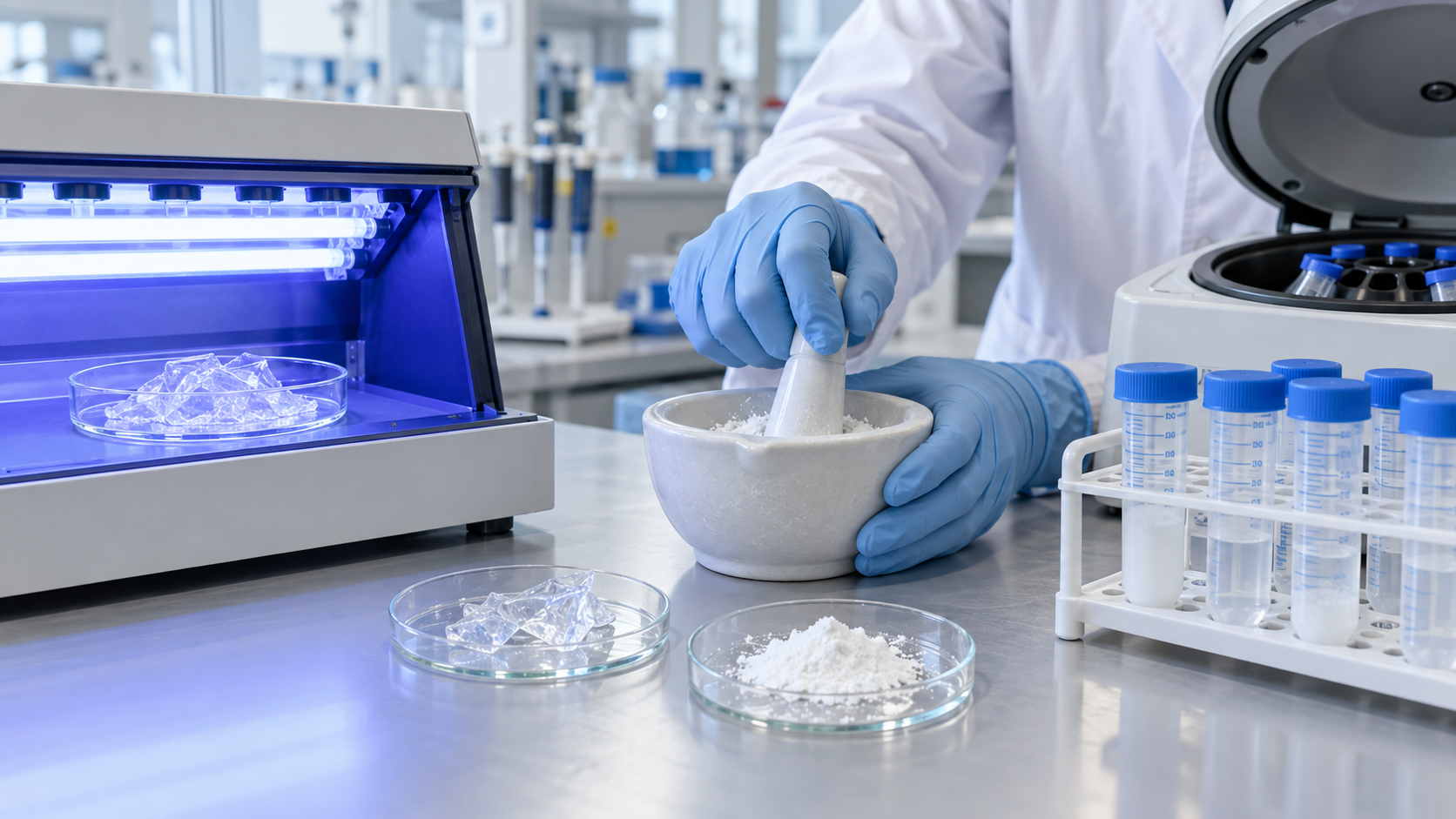
- What a molecularly imprinted polymer is (the short version)
- The idea of synthesis: template molecules and cavities
- Our calculation: an upper bound on the number of cavities, from the amount of template
- Building it on an electrode: electropolymerization
- A materials engineer's view (1): removing the template changes the polymer itself
- Use as an artificial receptor for small molecules: drugs, hormones, sugars, metabolites
- How selectivity is evaluated
- A materials engineer's view (2): between the MIP and the transducer
- What can be confirmed about practical use, and what is still research
- What is still hard, and what could not be confirmed
- Glossary / References / Claim-to-source audit
Sourced = stated in a published source (link given)
Our calculation = a value this article calculated from stated assumptions
Not yet confirmed = a plan, a target, or something for which no result could be confirmed
Interpretation of material design is marked "Commentary" and kept separate.
This article explains materials, principles and evaluation. It is not advice on diagnosis, treatment or medication, or on how to read a measured value, and it does not rank any product or company.
1. What a molecularly imprinted polymer is (the short version)
- What it is: a 1994 review described molecular imprinting as "an emerging methodology for the creation of selective recognition sites in synthetic polymers", in which functional monomers are polymerized in the presence of an important molecule (template) Sourced [Reference 1].
- What it can do: in 1993, MIPs made against theophylline and diazepam served as "antibody mimics" and were reported to measure drug levels in human serum with results comparable to a well-established immunoassay Sourced [Reference 3].
- What is hard: how selectivity is shown changes with the type of experiment [Reference 12]; removing the template changes the polymer's structure [Reference 8]; and in a real sensor, performance is set by how the MIP is combined with the transducer [Reference 9].
The "selectivity" of a MIP is not a constant that the material is born with. It is a property of the whole system: formulation, polymerization method, template removal, how it is built into the device, and how it is evaluated (Commentary).
2. The idea of synthesis: template molecules and cavities
The idea of a MIP is to "solidify a polymer around a template, remove the template, and keep the mould". Work on polymers built with enzyme-like structure and their use for resolving racemates was reported by Wulff and colleagues in 1973 (from the title of the paper) Sourced [Reference 2]. In biosensing, a method in which the template and a functional monomer interact weakly in solution before polymerization (non-covalent imprinting) is widely used (Commentary).
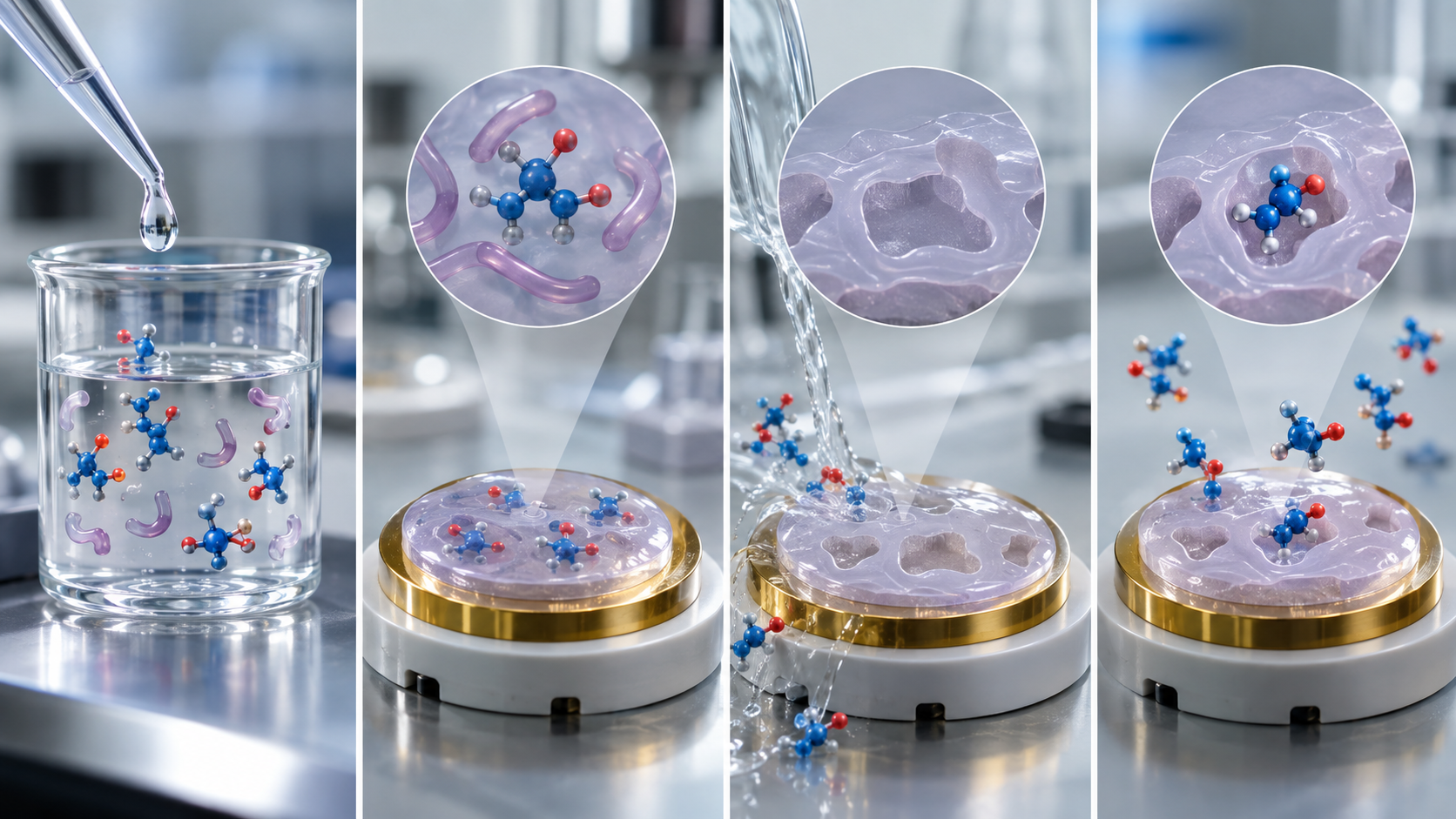
View the original SVG schematic, source notes and numerical details
A formulation example: bulk polymerization for cortisol
Parlak and colleagues make the MIP for their wearable cortisol sensor by bulk polymerization. The conditions are as follows Sourced [Reference 9].
| Item | As described in the paper |
|---|---|
| Template | Cortisol, 0.2 mmol |
| Functional monomer | Methacrylic acid (MAA), 1.2 mmol |
| Cross-linker | Ethylene glycol dimethacrylate (written EDMA in the paper), 3.6 to 12 mmol depending on the optimization |
| Initiator | AIBN, 0.2 mol% of the template |
| Polymerization | Degassed with nitrogen in a solvent; UV irradiation for 30 hours at room temperature or 4 °C |
| Post-treatment | Mechanically ground, then washed with acetic acid/methanol (8:2, v/v) to remove the template |
| Control | A non-imprinted polymer (NIP) made under the same conditions without the template |
All Sourced (the methods of Parlak et al. 2018, Science Advances [Reference 9]). These are the conditions of one paper, not a standard formulation for MIPs. The paper states that the choice of solvent strongly affects imprinting efficiency.
3. Our calculation: an upper bound on the number of cavities, from the amount of template
From the formulation in Section 2, we estimate a theoretical upper bound, assuming that each template molecule makes one cavity and that all of them are usable Our calculation.
- Polymer mass: molar masses (values assumed here): MAA 86.09, EGDMA 198.22, cortisol 362.46 g/mol. MAA 1.2 mmol = 103 mg. EGDMA 3.6 mmol = 714 mg (2,379 mg for 12 mmol). Polymer without template ≈ 817 mg (about 2.48 g with 12 mmol of cross-linker)
- Cavity upper bound: 0.2 mmol ÷ 0.817 g ≈ 0.245 mmol/g (≈ 0.081 mmol/g with 12 mmol cross-linker). Multiplying by the Avogadro constant gives about 4.9×10¹⁶ to 1.5×10¹⁷ per mg
- For comparison: the paper cites a cortisol concentration in sweat of 0.02 to 0.5 µM [Reference 9]. The number of molecules in 1 µL of sweat is ≈ 1.2×10¹⁰ at 0.02 µM and ≈ 3.0×10¹¹ at 0.5 µM
- Ratio: the cavity upper bound in 1 mg of MIP is about 1.6×10⁵ to 1.2×10⁷ times the number of molecules in 1 µL of sweat
Assumptions and limits: in reality, not every template becomes a cavity, some template cannot be removed, and some cavities are not at the surface. The fraction of cavities that can be used for binding, and how strongly they bind, were not confirmed here. All the calculation shows is that when measuring a small molecule at low concentration, the limit may lie not in the number of cavities but in binding strength, selectivity, and the sample reaching the cavities (Commentary).
4. Building it on an electrode: electropolymerization
In biosensors, MIPs are not only ground to powder and coated on; a common approach is to polymerize them directly on the electrode into a film. The electrode is dipped into a solution of monomer and template, and a potential or current is applied so that the polymer grows on the electrode surface. The film adheres to the electrode, and its thickness can be set through the charge passed (Commentary).
- Sugar (glucose): in 1999 Malitesta and colleagues reported electrosynthesized poly(o-phenylenediamine) imprinted with glucose as the recognition element of a quartz crystal microbalance (QCM) sensor for glucose. The authors call it "the first case of an electrosynthesized polymer molecularly imprinted by a neutral template" and say that an XPS comparison supports a templating effect Sourced [Reference 4].
- Drug (sulfadimethoxine): Turco and colleagues reported an imprinted polypyrrole sensor that combines galvanostatic deposition on a gold electrode with template removal by overoxidation. They found that the electrolyte used in electropolymerization affected sensing performance and film morphology (observed by atomic force microscopy) Sourced [Reference 5].
- Hormone (cortisol): Dykstra and colleagues reported cortisol-imprinted polypyrrole synthesized in situ on the working electrode [Reference 6].
5. A materials engineer's view (1): removing the template changes the polymer itself
A 2026 review of template removal from electropolymerized MIPs calls it "a critical yet often underexplored step" that directly influences cavity integrity, selectivity and sensor performance Sourced [Reference 8]. Focusing on polypyrrole (PPy) and poly(o-phenylenediamine) (PoPD), it compares immersion-based removal with electrochemical cleaning and sums up that solvent composition, pH and applied potential affect polymer structure, doping state, swelling behaviour and electrochemical properties. Protonation/deprotonation, overoxidation and polymer–template interactions govern both removal efficiency and degradation pathways, and the review says that the suitable removal strategy differs between PPy and PoPD.
Turco and colleagues also examined films made under different overoxidation conditions by XPS and showed a correlation between the film's chemical structure and its rebinding ability [Reference 5]. Three points follow (Commentary).
- Removal is not a neutral operation: the potential and solvent used to pull the template out also move the polymer's charge state and swelling. How much template was removed and how good the remaining cavities are are separate questions
- There are many design variables: Dykstra and colleagues describe the synthesis of cortisol-imprinted polypyrrole as a "high dimensional design space", built a machine-learning model from sensors made with 72 sets of synthesis parameters, and report raising sensitivity 1.5-fold Sourced [Reference 6]. Trial and error alone cannot keep up
- Design the monomer–template match: the title of the paper by Fernando and colleagues puts "maximizing monomer/template affinity" forward as a route to rational design of electropolymerized MIPs [Reference 7] (from the title)
This resembles the way adhesion and encapsulation work says that "surface treatment and cure conditions decide the interface". The ideas in the polymers and adhesives/encapsulants explainers of this series carry over directly.
6. Use as an artificial receptor for small molecules: drugs, hormones, sugars, metabolites
Examples that can be confirmed in papers are set out for the small molecules that MIPs most often target. Because the targets, samples, formats and conditions differ, the numbers are not a ranking.
| Target | Report | MIP and measurement format | Sample and conditions (as the authors describe them) |
|---|---|---|---|
| Drugs (theophylline, diazepam) | Vlatakis et al. 1993 Nature [Reference 3] | Imprinted polymers as "antibody mimics" in a radiolabelled ligand-binding assay (molecularly imprinted sorbent assay) | Drug levels in human serum measured with results comparable to a well-established immunoassay; cross-reactivity profiles similar to those of antibodies |
| Drug (sulfadimethoxine) | Turco et al. 2015 Biosens Bioelectron [Reference 5] | Imprinted overoxidized polypyrrole on gold, amperometry | Linear range 0.15 to 3.7 mM, limit of detection 70 µM, reproducibility RSD 4.2%. Recovery from spiked milk 97±3% and 96±8% (0.2 and 0.4 mM) |
| Sugar (glucose) | Malitesta et al. 1999 Anal Chem [Reference 4] | Glucose-imprinted electrosynthesized poly(o-phenylenediamine) on a QCM | Scatchard analysis described as giving information on equilibrium and binding sites. Measurement in real samples was not confirmed here |
| Hormone (cortisol) | Parlak et al. 2018 Sci Adv [Reference 9] | A bulk-polymerized MAA/EGDMA MIP dispersed in plasticized PVC, built into an organic electrochemical transistor (OECT) | Calibration in artificial sweat; sweat (50 to 100 µL) from two subjects measured and compared with ELISA; on-body test on the forearm after exercise |
| Hormone (cortisol) | Mugo et al. 2020 Anal Bioanal Chem [Reference 10] | A poly(GMA-co-EGDMA) MIP on a carbon-nanotube/cellulose-nanocrystal film on PDMS, a flexible electrochemical sensor | Limit of detection 2.0 ng/mL, dynamic range 10 to 66 ng/mL, response in 3 minutes, reproducibility RSD 2.6%. Described as blind to glucose, epinephrine, β-estradiol and methoxyprogesterone, and four orders of magnitude more sensitive than its NIP |
| Metabolite (tryptophan) | Xu et al. 2023 Anal Chim Acta [Reference 11] | An imprinted membrane formed by dopamine self-polymerization, built into a semi-interpenetrating hydrogel of zwitterionic PSBMA and PEDOT:PSS, an anti-fouling wearable sensor | In real sweat, results described as comparable to a commercial ELISA |
All Sourced (abstracts or text of each paper). Each study differs in target, sample, format and scale, and human validation is often limited to a small number of subjects, so none of this shows clinical performance.
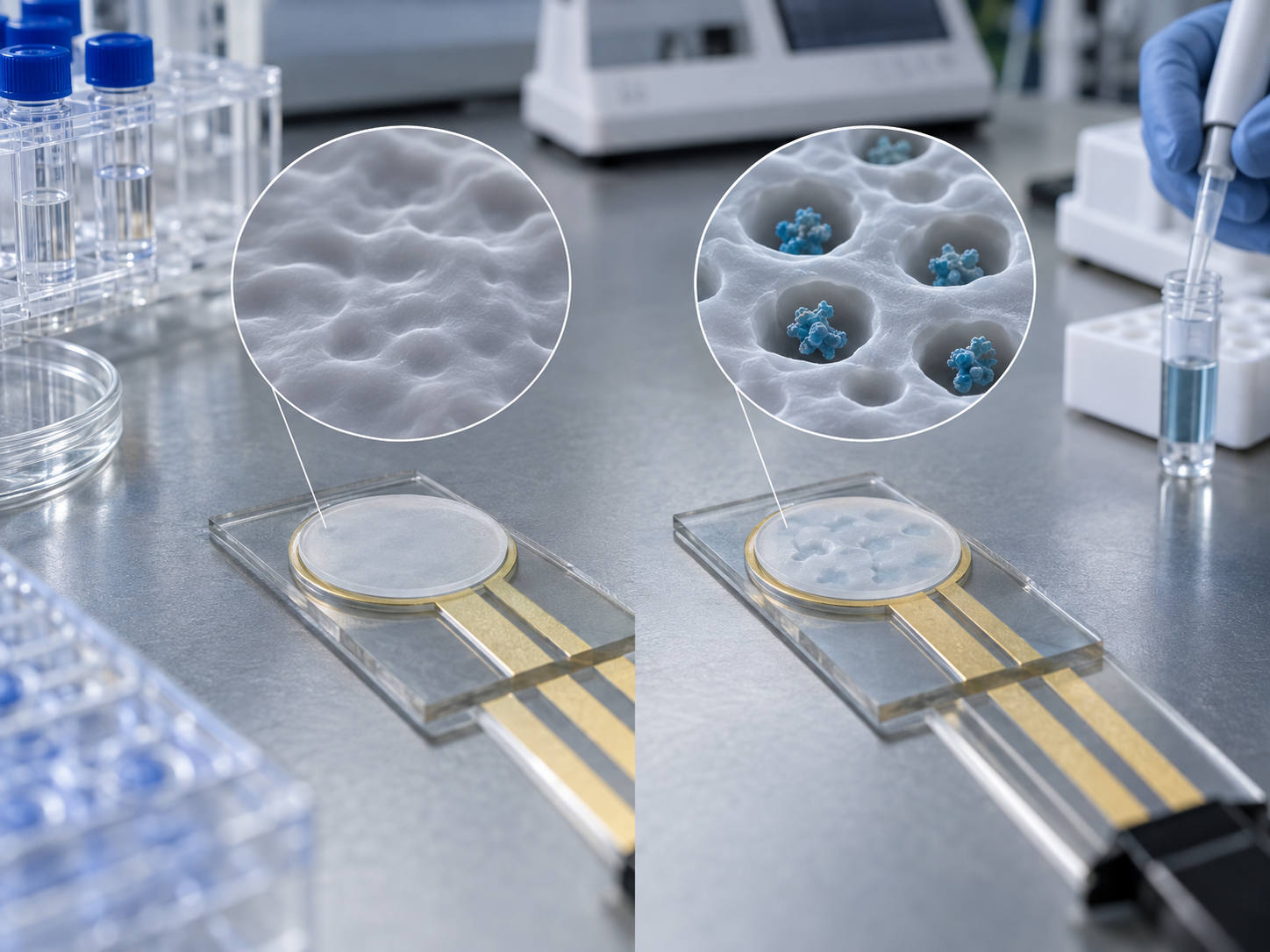
7. How selectivity is evaluated
MIP papers say the polymer is "selective", but how that is shown is not uniform. Becskereki and colleagues point out that different experiments may differ substantially in what they tell about the same imprinted polymer's selectivity Sourced [Reference 12]. They analyze selectivity in batch adsorption, binding assays, chromatography, solid phase extraction, sensors, membranes and catalysts, give examples of problems with each, and suggest practical method design. They also say that the cross-reactivity used in competitive binding assays (the ratio of the IC50 values of interferent and analyte) is only a rough estimate of analytical selectivity Sourced [Reference 13].
The control NIP is made under the same conditions without the template [Reference 9]. But the template can change solution properties (polarity, viscosity) and the arrangement of monomers before polymerization, so there is no guarantee that the NIP has the same porosity or functional-group density as the MIP (Commentary). Parlak and colleagues measured the pore-size distributions of MIP and NIP separately and also compared them by AFM and SEM [Reference 9]. A figure such as "the MIP responds many times more than the NIP" should be read asking whether the effect of the cavities is mixed with a difference in the polymer itself.
8. A materials engineer's view (2): between the MIP and the transducer
Parlak and colleagues report an important observation about how the MIP is built into the sensor Sourced [Reference 9].
- When the MIP was deposited directly on the PEDOT:PSS channel, molecules diffused straight to the transducer surface and selectivity was lost
- They therefore made a membrane in which the MIP (40% by weight) is entrapped in a plasticized PVC matrix, which regulates ion transport between the channel and the electrolyte
- Adding this membrane lowered the OECT's peak transconductance (gm) by a factor of about 3, which they say did not prevent the device from working as a sensor
- The substrate is a flexible SEBS elastomer. Sweat is taken up through laser-patterned microcapillary channels; with a simple punched hole in medical tape, no significant signal was produced until 6 minutes after the sensor was applied
What this suggests is that a MIP's "selectivity" comes as a set with the design of ion and molecule transport through the whole membrane (Commentary). Good cavities are wasted if there is a background pathway. The ideas in the explainer on polymer blends and fillers, the handling of plasticized PVC, and the joining of elastomers and conductors (the explainer on polyurethanes and elastomers) all apply here. Xu and colleagues also built the imprinted membrane into a hydrogel of zwitterionic PSBMA and PEDOT:PSS to suppress fouling in sweat [Reference 11]. Hydrogel design is covered in the explainer on hydrogels in this series.
9. What can be confirmed about practical use, and what is still research
| Category | What can be confirmed | Source |
|---|---|---|
| Sample preparation (solid-phase extraction) | Affinisep sells "AFFINIMIP® SPE" solid-phase extraction cartridges that use MIPs (estrogens, mycotoxins, antibiotics and others). The estrogens product is described as cartridges that "selectively clean and concentrate Estrogens prior to analysis by HPLC" (manufacturer's stated value). These are pre-analysis preparation materials, not sensors | Manufacturer's page [Reference 15] |
| Biosensors and measurement (research stage) | Measurements of drugs (serum), hormones (sweat), sugar (QCM) and metabolites (sweat) have been reported in papers. Human validation is often limited to a small number of subjects or spike-recovery | The papers [References 3 to 6 and 9 to 11] |
| Review assessment | A 2022 review states that it highlights the progression of MIP-sensor technologies' translation into commercially available sensors (abstract). Individual product names and regulatory categories were not confirmed here | Mustafa et al. [Reference 14] |
| Regulatory authorization (medical devices) | Could not be confirmed. On 3 October 2026 this article searched the openFDA 510(k) database for device names containing "imprinted" and "molecularly imprinted" and found no match. This is a search by name and not an exhaustive check | This article's own check (Commentary) |
Clearance or approval is a judgment for a specific intended use and does not mean "safe and accurate however it is used". FDA 510(k) clearance, De Novo authorization and PMA approval are different systems.
10. What is still hard, and what could not be confirmed
(1) Template removal, and template left behind
Section 5 showed that removal conditions change the polymer's structure and performance [Reference 8]. As for the possibility that residual template leaks out later and affects the reading, this article could not confirm a primary source that quantified it. Not yet confirmed
(2) Selectivity is not shown in a uniform way
A claim of selectivity means different things in different experiments [References 12 and 13]. When comparing numbers across papers, one needs to check the evaluation format, the control, the interferents and the sample.
(3) The scale of validation on real samples
The human sweat measurements of Parlak and colleagues involved two subjects. The paper reports a relative standard deviation of 35% (n=2) for the on-body response against the best fit of the calibration, and 5% (two measurements) for the comparison with ELISA [Reference 9]. Large-scale validation or systematic comparison with other methods could not be confirmed in the primary sources this article consulted.
(4) Sweat sampling and fouling
It has been reported that how sweat is taken up (with or without microcapillary channels) changes when a signal appears [Reference 9], and that fouling in sweat is a problem [Reference 11]. Sampling and measurement conditions for each body fluid are covered in the explainer on biomarkers in body fluids in this series.
(5) Regulatory category
This article could not confirm regulatory authorization of a medical device with a MIP as its recognition element. Medical-device categories are covered in the explainer on device approval categories and home use in this series.
- A MIP is polymerized in the presence of a template, which is then removed to leave cavities. Reports of it as an "antibody mimic" for measuring drugs date from 1993 Sourced
- For a formulation with 0.2 mmol of template, the theoretical cavity upper bound is about 1016 to 1017 per mg of MIP, about 105 to 107 times the number of molecules in 1 µL of sweat Our calculation
- Electropolymerization builds the film in place on the electrode. Template-removal conditions change the polymer's structure and performance Sourced
- How selectivity looks depends on the evaluation format. Read it by combining the NIP, analogues, real samples and a cross-check with another method Sourced
- How the MIP is built in can decide selectivity. One report found that depositing it directly lost selectivity, and dispersed it in a PVC membrane instead Sourced
- The commercial product that can be confirmed is for analytical sample preparation (solid-phase extraction). Regulatory authorization as a sensor could not be confirmed Sourced
11. Glossary
- Molecularly imprinted polymer (MIP)
- A polymer made by polymerizing around a template molecule and then removing the template, leaving cavities that suit that molecule.
- Template
- The target molecule (or an analogue of it) used to form the shape of the cavities.
- Functional monomer
- A monomer that interacts weakly with the template and places functional groups in the cavity, for example methacrylic acid.
- Cross-linker
- A molecule that links polymer chains into a network and holds the cavity shape, for example ethylene glycol dimethacrylate.
- NIP
- Non-imprinted polymer: a control made under the same conditions without the template.
- Bulk polymerization
- Polymerization in which the mixture is solidified as it is, then ground into particles.
- Electropolymerization
- Growing a polymer film on an electrode surface by applying a potential or current.
- Overoxidation
- Oxidizing a conducting polymer at high potential to change its properties. Used in some cases to remove the template.
- Polypyrrole (PPy)
- A conducting polymer that is easy to electropolymerize.
- Poly(o-phenylenediamine) (PoPD)
- A polymer that forms thin, nearly insulating films by electropolymerization.
- QCM
- Quartz crystal microbalance: measures a mass change on a surface as a change in frequency.
- OECT
- Organic electrochemical transistor: a device whose channel conductivity changes with ions in an electrolyte.
- Cross-reactivity
- A measure of how much a similar molecule responds, often expressed as a ratio of IC50 values of interferent and target.
- Scatchard analysis
- An analysis of bound versus free amounts that gives the number and strength of binding sites.
- Biofouling
- Adhesion of proteins and other substances to a surface, which disturbs a sensor's signal.
12. References
- Mosbach K. "Molecular imprinting", Trends Biochem Sci 1994;19:9-14 — doi.org
- Wulff G et al. "Enzyme-analogue built polymers and their use for the resolution of racemates", Tetrahedron Lett 1973;14:4329-4332 — doi.org
- Vlatakis G et al. "Drug assay using antibody mimics made by molecular imprinting", Nature 1993;361:645-647 — doi.org
- Malitesta C et al. "Molecularly imprinted electrosynthesized polymers: new materials for biomimetic sensors", Anal Chem 1999;71:1366-1370 — doi.org
- Turco A et al. "Electrochemical sensor for sulfadimethoxine based on molecularly imprinted polypyrrole: study of imprinting parameters", Biosens Bioelectron 2015;63:240-247 — doi.org
- Dykstra G et al. "Electropolymerized molecularly imprinted polymer synthesis guided by an integrated data-driven framework for cortisol detection", ACS Appl Mater Interfaces 2022;14:25972-25983 — doi.org
- Fernando A et al. "Toward rational design of electrogenerated molecularly imprinted polymers (eMIPs): maximizing monomer/template affinity", ACS Appl Polym Mater 2021;3:4523-4533 — doi.org
- Ojeda et al. "Template removal strategies in electropolymerized molecularly imprinted polymers: mechanisms, challenges, and perspectives", Sensors 2026;26:3742 — doi.org
- Parlak O et al. "Molecularly selective nanoporous membrane-based wearable organic electrochemical device for noninvasive cortisol sensing", Sci Adv 2018;4:eaar2904 — doi.org
- Mugo SM et al. "Flexible molecularly imprinted electrochemical sensor for cortisol monitoring in sweat", Anal Bioanal Chem 2020;412:1825-1833 — doi.org
- Xu et al. "An anti-fouling wearable molecular imprinting sensor based on semi-interpenetrating network hydrogel for the detection of tryptophan in sweat", Anal Chim Acta 2023;1283:341948 — doi.org
- Becskereki G et al. "The selectivity of molecularly imprinted polymers", Polymers 2021;13:1781 — doi.org
- Becskereki G et al. "The selectivity of immunoassays and of biomimetic binding assays with imprinted polymers", Int J Mol Sci 2021;22:10552 — doi.org
- Mustafa et al. "Molecularly imprinted polymers in diagnostics: accessing analytes in biofluids", J Mater Chem B 2022;10:7418-7449 — doi.org
- Affinisep AFFINIMIP® SPE Estrogens (solid-phase extraction cartridges; manufacturer's page, checked 3 October 2026) — www.affinisep.com
13. Claim-to-source audit
| Claim in the text | Basis | Label |
|---|---|---|
| That a 1994 review describes molecular imprinting as polymerizing functional monomers in the presence of an important molecule (template) to create selective recognition sites in synthetic polymers; the then-current view that commercial use for chiral separation and as antibody mimics was becoming realistic | Abstract of the Trends Biochem Sci 1994 review[Reference 1] https://doi.org/10.1016/0968-0004(94)90166-x | Sourced |
| That work on enzyme-analogue built polymers and their use for resolving racemates was reported in 1973 | Title of the Tetrahedron Lett 1973 paper[Reference 2] https://doi.org/10.1016/s0040-4039(01)87213-0 | Sourced |
| That MIPs made against theophylline and diazepam were used as antibody mimics and measured drug levels in human serum with results comparable to a well-established immunoassay; cross-reactivity profiles similar to antibodies | Abstract of the Nature 1993 paper[Reference 3] https://doi.org/10.1038/361645a0 | Sourced |
| That glucose-imprinted electrosynthesized poly(o-phenylenediamine) was used as the recognition element of a QCM glucose sensor; that it is the first case with a neutral template; Scatchard analysis and an XPS comparison | Abstract of the Anal Chem 1999 paper[Reference 4] https://doi.org/10.1021/ac980674g | Sourced |
| The imprinted overoxidized polypyrrole on gold for sulfadimethoxine: galvanostatic deposition, template removal by overoxidation, effect of electrolyte, XPS correlation of film chemistry and rebinding, linear range 0.15 to 3.7 mM, limit of detection 70 µM, RSD 4.2%, spiked-milk recovery 97±3% and 96±8% | Abstract of the Biosens Bioelectron 2015 paper[Reference 5] https://doi.org/10.1016/j.bios.2014.07.045 | Sourced |
| That cortisol-imprinted polypyrrole was synthesized in situ on the working electrode; 72 sets of synthesis parameters, a Gaussian-process machine-learning model, and a 1.5-fold sensitivity gain | Abstract of the ACS Appl Mater Interfaces 2022 paper[Reference 6] https://doi.org/10.1021/acsami.2c02474 | Sourced |
| That the title of the paper puts maximizing monomer/template affinity forward as a route to rational design of electropolymerized MIPs | Title of the ACS Appl Polym Mater 2021 paper[Reference 7] https://doi.org/10.1021/acsapm.1c00575 | Sourced |
| That template removal from electropolymerized MIPs is a critical step influencing cavity integrity, selectivity and performance; that solvent composition, pH and applied potential affect structure, doping state, swelling and electrochemical properties; that the suitable removal strategy differs between PPy and PoPD | Abstract of the 2026 review in Sensors[Reference 8] https://doi.org/10.3390/s26123742 | Sourced |
| The bulk-polymerization recipe for the cortisol MIP (template 0.2 mmol, MAA 1.2 mmol, EDMA 3.6 to 12 mmol, AIBN 0.2 mol%, UV for 30 hours, wash with acetic acid/methanol 8:2) and the NIP; that depositing the MIP directly on PEDOT:PSS lost selectivity; the plasticized PVC membrane at 40 wt%; the roughly threefold fall in gm; the laser-patterned microcapillaries versus a punched-hole tape (6 minutes); the layer arrangement; selectivity tests with progesterone, cortisone and testosterone; the non-responding NIP device; sweat from two subjects compared with ELISA (RSD 35% and 5%); the cited sweat concentration of 0.02 to 0.5 µM | Text of the Sci Adv 2018 paper (open-access version)[Reference 9] https://doi.org/10.1126/sciadv.aar2904 | Sourced |
| The poly(GMA-co-EGDMA) cortisol MIP sensor: limit of detection 2.0 ng/mL, dynamic range 10 to 66 ng/mL, response in 3 minutes, RSD 2.6%, no response to the interferents, four orders of magnitude more sensitive than the NIP | Abstract of the Anal Bioanal Chem 2020 paper[Reference 10] https://doi.org/10.1007/s00216-020-02430-0 | Sourced |
| That an imprinted membrane formed by dopamine self-polymerization, built into a PSBMA/PEDOT:PSS semi-interpenetrating hydrogel, gave an anti-fouling tryptophan sensor with results comparable to a commercial ELISA in real sweat | Abstract of the Anal Chim Acta 2023 paper[Reference 11] https://doi.org/10.1016/j.aca.2023.341948 | Sourced |
| That different experiments may differ substantially in what they tell about the same imprinted polymer's selectivity; that cross-reactivity (a ratio of IC50 values) is only a rough estimate of analytical selectivity | Abstracts of the Polymers 2021 and Int J Mol Sci 2021 papers[Reference 12] https://doi.org/10.3390/polym13111781[Reference 13] https://doi.org/10.3390/ijms221910552 | Sourced |
| That a 2022 review highlights the progression of MIP-sensor technologies' translation into commercially available sensors | Abstract of the J Mater Chem B 2022 review[Reference 14] https://doi.org/10.1039/d2tb00703g | Sourced |
| That Affinisep sells solid-phase extraction cartridges that use MIPs (AFFINIMIP® SPE Estrogens and others), described as selectively cleaning and concentrating estrogens prior to HPLC analysis | Manufacturer's page (manufacturer's stated value)[Reference 15] https://www.affinisep.com/products/ready-to-use-kits-spe-and-mips/estrogens/ | Sourced |
| The theoretical cavity upper bound per 0.2 mmol of template (0.245 to 0.081 mmol/g; about 4.9×10¹⁶ to 1.5×10¹⁷ per mg of MIP), the number of molecules in 1 µL of sweat (about 1.2×10¹⁰ at 0.02 µM, about 3.0×10¹¹ at 0.5 µM) and their ratio (about 1.6×10⁵ to 1.2×10⁷ times) | Our calculation. Molar masses (MAA 86.09, EGDMA 198.22, cortisol 362.46 g/mol), the assumption that every template becomes a usable cavity, and the Avogadro constant of 6.022×10²³ /mol are assumptions made here. These are not measures of the actual number of cavities or binding strength | Our calculation |
| Regulatory authorization of a medical device with a MIP as its recognition element | Not confirmed in this article's search (3 October 2026, device names containing "imprinted" in the openFDA 510(k) database; no match). A search by name, not an exhaustive check | Not yet confirmed |
| Quantification of residual template leaking out later and affecting the reading | No primary source could be confirmed within the scope of this article | Not yet confirmed |
| The readings that MIP selectivity is a property of the system, that removal is not a neutral operation, that a NIP does not always make a control under the same conditions, the five-way grouping of selectivity checks, that selectivity comes as a set with transport design, and that electropolymerized films adhere to the electrode with thickness set by charge | This article's own organization and interpretation of published content; not views expressed by the authors of the papers | Commentary |
| That Figs. 1, 3, 5 and 6 are explanatory drawings, that Fig. 2 includes our calculation, and that the hero image and Fig. 4 are AI-generated images | Our note | Commentary |
Last updated 3 October 2026. Sources are limited to primary material (peer-reviewed papers and a manufacturer's page). Interpretation of material design is marked Commentary and kept separate from sourced fact. Regulatory authorization of a medical device with a MIP as its recognition element, quantification of template leaking from residual template, and large-scale human validation of MIP sensors are not stated, because no primary source could be confirmed. The formulation in Section 2 is that of one paper by Parlak and colleagues, not a standard formulation for MIPs; the calculation in Section 3 is a theoretical upper bound and does not show the actual number of cavities. All figures are explanatory concept graphics. Figs. 1, 2, 3, 5 and 6 are vector drawings; the hero image and Fig. 4 are AI-generated images, and none of them shows a real film structure, cavity shape or product.